On This Page
Description
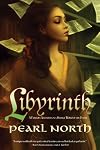
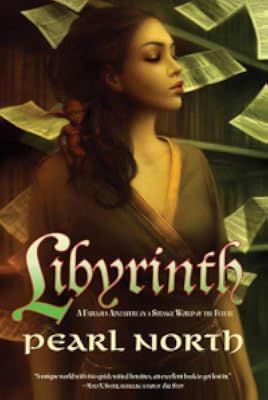
In a distant future where Libyrarians preserve and protect the ancient books that are housed in the fortress-like Libyrinth, Haly is imprisoned by Eradicants, who believe that the written word is evil, and she must try to mend the rift between the two groups before their war for knowledge destroys them all.Tags
Recommendations

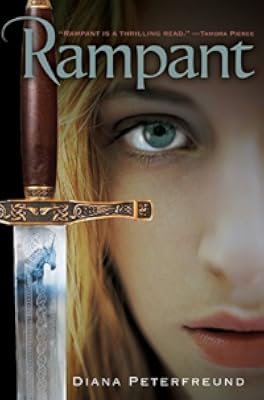
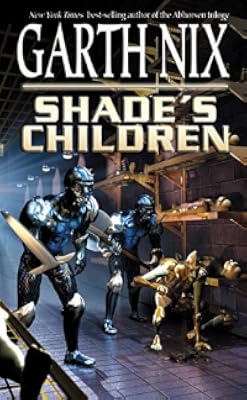
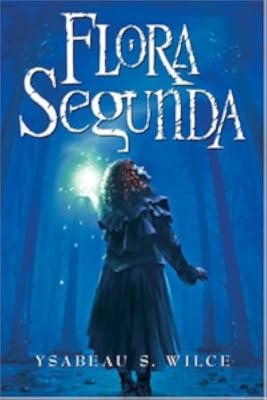
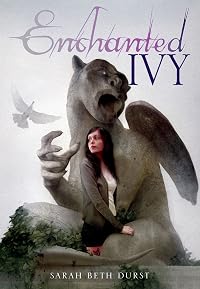



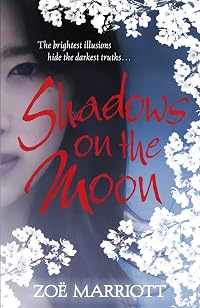
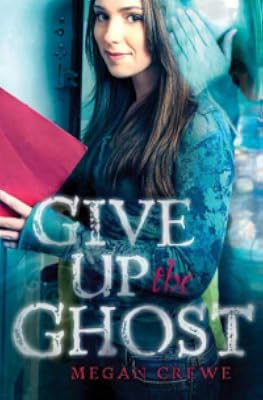
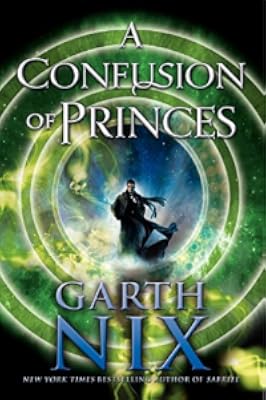
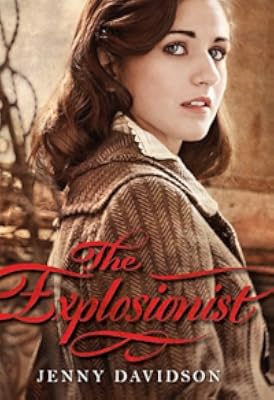

Member Recommendations
reconditereader All-powerful libraries with arcane technology hide big social secrets.
Member Reviews
Pearl North is the pseudonym of another author, but this is apparently her first young adult novel. Thought I'd make that distinction since on Amazon it claims its from a debut author, technically true, but not really.
For a book nut like myself Libyrinth was a really fun read--the book has dozens of quotes from all sorts of famous literary works (The Diary of Anne Frank, Tale of Two Cities, Life of Pi) and technical manuals (Glenn's Complete Bicycle Manual). For the most part the quotes correspond almost perfectly with the current situation in fact, making me look at the quotes I could recognize easily with a different perspective. More than that though, North gives each book a distinct personality. Theselaides for instance is a bully show more and Anne Frank has a softer, gentler voice. Some are loud, some are high pitched, and some have a dark feeling to them.
I suppose its every book-lover's dream to live in a cavernous dwelling with so many books and shelves that one could literally become lost forever. The Libyrinth as a place sounded so perfectly suited to me that like Haly I found myself utterly hating the Eradicants (Singers) on principle alone. I can't begin to fathom a mentality that believes to liberate a book you have to burn it, but on the other hand I can't believe that as a people they wouldn't want to share their knowledge.
Haly was undoubtably my favorite character, but I grew to find Nod a really funny character. A revealation closer to the end made me want to go 'ew ew ew', but it made sense within the characterization of Nod and his attitude. I found myself tense and irritated by her friend Clauda, who seemed to be more interested in bungling around then forming a plan for much of the book. Impulsive is probably how best to describe Clauda until a major setback forces her to think long and hard. Selene by comparison ran hot and cold with me, depending on how she was acting in a situation. She was kind of contradictory--on the one hand not wishing to be Queen and on the other disliking her mother for not spending more time with her and extreme in her judgements.
The book begins with Haly, Clauda and Selene together before they venture out and then branches off to follow either Haly's adventures with the Eridicants or a combination of Selene and Clauda's adventures in Selene's homeland. The stories then separate farther as Clauda and Selene separate, but finally converge at the climax. The big Redemption the Eradicants believe in.
Its hard to put down, I won't lie. I read it during my Otakon trip and repeatedly found myself wanting to carry it with me even though it wasn't feasible with my plans. I wanted to snatch moments whenever I could to find out what mysteries Clauda uncovers or debates of religion Haly engages in. The end is satisfying and appropriate--in the beginning I wouldn't have thought it possible, but after everything Haly learns and experiences (as well as everyone else) I felt it was the only viable option left to save their civilization. show less
For a book nut like myself Libyrinth was a really fun read--the book has dozens of quotes from all sorts of famous literary works (The Diary of Anne Frank, Tale of Two Cities, Life of Pi) and technical manuals (Glenn's Complete Bicycle Manual). For the most part the quotes correspond almost perfectly with the current situation in fact, making me look at the quotes I could recognize easily with a different perspective. More than that though, North gives each book a distinct personality. Theselaides for instance is a bully show more and Anne Frank has a softer, gentler voice. Some are loud, some are high pitched, and some have a dark feeling to them.
I suppose its every book-lover's dream to live in a cavernous dwelling with so many books and shelves that one could literally become lost forever. The Libyrinth as a place sounded so perfectly suited to me that like Haly I found myself utterly hating the Eradicants (Singers) on principle alone. I can't begin to fathom a mentality that believes to liberate a book you have to burn it, but on the other hand I can't believe that as a people they wouldn't want to share their knowledge.
Haly was undoubtably my favorite character, but I grew to find Nod a really funny character. A revealation closer to the end made me want to go 'ew ew ew', but it made sense within the characterization of Nod and his attitude. I found myself tense and irritated by her friend Clauda, who seemed to be more interested in bungling around then forming a plan for much of the book. Impulsive is probably how best to describe Clauda until a major setback forces her to think long and hard. Selene by comparison ran hot and cold with me, depending on how she was acting in a situation. She was kind of contradictory--on the one hand not wishing to be Queen and on the other disliking her mother for not spending more time with her and extreme in her judgements.
The book begins with Haly, Clauda and Selene together before they venture out and then branches off to follow either Haly's adventures with the Eridicants or a combination of Selene and Clauda's adventures in Selene's homeland. The stories then separate farther as Clauda and Selene separate, but finally converge at the climax. The big Redemption the Eradicants believe in.
Its hard to put down, I won't lie. I read it during my Otakon trip and repeatedly found myself wanting to carry it with me even though it wasn't feasible with my plans. I wanted to snatch moments whenever I could to find out what mysteries Clauda uncovers or debates of religion Haly engages in. The end is satisfying and appropriate--in the beginning I wouldn't have thought it possible, but after everything Haly learns and experiences (as well as everyone else) I felt it was the only viable option left to save their civilization. show less
Yearly book burnings! An Eradicant whose formal title is Censor! The destruction of a library so large it has been etymologically merged with a labyrinth! Aren't you mad? You're supposed to be. The whole premise of this book is set up assuming that we, the readers, will agree that the Libyrarians and their literate allies are right while the Eradicants, who are convinced that even viewing words on a page will blind them, are wrong. But we learn, right along with Haly who is captured by the Eradicants early on, that there are two side to every story. No one, no civilization, is all good or all bad, regardless of how they look to those on the outside. Much of our time with Haly is spent getting to know more about the Eradicant show more civilization and their interest in Haly. It is definitely tense and intense at times, but the real action is with those Haly left behind.
After Haly is captured, Clauda and Selene are left alone to save her and the Libyrinth. Their only connection, up to this point, is Haly. Clauda is a servant in the kitchen and Haly's best friend; they were children together. Haly is Selene's clerk, and Selene is the near the top of the Libyrinthian hierarchy (Oh, and a princess in her hometown, the only place still left outside of Eradicant control that can lend an army to defend the Libyrinth). She and Clauda practically come from two different worlds, even though they come from the same place. As they try to gather allies to the Libyrinth they uncover plot after plot and intrigue after intrigue. They have to learn to trust each other (because they can hardly trust anyone else) and work together.
Also, and this will be vague to avoid getting too spoiler-y, one of them is queer. There is ogling of hot female soldiers, there is thanking of Theselaides that they come from the Libyrinth where no one bats an eye at two girls or two guys together, and there is some major crushing that may or may not lead to lurv by the end of this story.
And the books talk to Haly. They talk to her. She doesn't just hear a book start to finish; they offer useful quotes based on conversations in the room or what's going on in Haly's head. There are 10 pages of references for quotes that appear throughout the book. As someone who is constantly writing down and saving quotes from book of all kinds and who has always thought it would be both possible and amazing to tell a story using mostly quotes from other fictions (the soundtrack of a life, only books!), I find this unbelievably cool.
My only problem with Libyrinth is that it's the start of a trilogy. Now, I'm not freaking out because I Need to Know what happens; I'm upset because I don't. The ending was great and really satisfying. I really loved this book and I hope the sequels add to it rather than just dragging it out. Judging by the writing here, I'll also enjoy the next two books, even if I can't imagine where the story could possibly go from here.
Book source: Philly Free Library show less
After Haly is captured, Clauda and Selene are left alone to save her and the Libyrinth. Their only connection, up to this point, is Haly. Clauda is a servant in the kitchen and Haly's best friend; they were children together. Haly is Selene's clerk, and Selene is the near the top of the Libyrinthian hierarchy (Oh, and a princess in her hometown, the only place still left outside of Eradicant control that can lend an army to defend the Libyrinth). She and Clauda practically come from two different worlds, even though they come from the same place. As they try to gather allies to the Libyrinth they uncover plot after plot and intrigue after intrigue. They have to learn to trust each other (because they can hardly trust anyone else) and work together.
Also, and this will be vague to avoid getting too spoiler-y, one of them is queer. There is ogling of hot female soldiers, there is thanking of Theselaides that they come from the Libyrinth where no one bats an eye at two girls or two guys together, and there is some major crushing that may or may not lead to lurv by the end of this story.
And the books talk to Haly. They talk to her. She doesn't just hear a book start to finish; they offer useful quotes based on conversations in the room or what's going on in Haly's head. There are 10 pages of references for quotes that appear throughout the book. As someone who is constantly writing down and saving quotes from book of all kinds and who has always thought it would be both possible and amazing to tell a story using mostly quotes from other fictions (the soundtrack of a life, only books!), I find this unbelievably cool.
My only problem with Libyrinth is that it's the start of a trilogy. Now, I'm not freaking out because I Need to Know what happens; I'm upset because I don't. The ending was great and really satisfying. I really loved this book and I hope the sequels add to it rather than just dragging it out. Judging by the writing here, I'll also enjoy the next two books, even if I can't imagine where the story could possibly go from here.
Book source: Philly Free Library show less
I don't use star ratings, so please read my review!
Avid readers often describe books as telling them the tales they contain, but imagine what it would be like if books actually talked to you. Libyrinth takes readers to a faraway world, in an unimaginable future where books are a threatened resource.
Haly was born in the Libyrinth, and is well on the way to being settled there for the rest of her life. But she keeps an unusual secret: She hears books talking to her, reciting their words. This makes it difficult for her to endure the yearly ritual in which the Eradicants – those who believe printed words are dead, and must be released – come to the Libyrinth to burn books.
But this year is different, as the hidden “Book of the show more Night” may have been discovered. This tome contains the lore of the ancients who made vast weapons of destruction.
Only Haly’s unique talent can unlock this book’s secrets, and thus she becomes a prize that both sides would kill to possess.
Although this is a young adult book, it speaks volumes on the subject of censorship. The Libyrarians and Eradicants both advocate the preservation of knowledge, but they take different approaches. While this does lead to a portrayal of book-burning, it also allows the author to show varying methods of saving and sharing information.
Such methods allow for some wonderfully sly jokes that reference familiar stories and rhymes in our own world. All the quotes that the books whisper to Haly are referenced at the end of this novel, so see how many you can identify before peeking!
Libyrinth also is a satisfyingly complex action story. More factions than just Libyrarians and Eradicants want the lost book’s forbidden knowledge, and the vast Libyrinth itself holds more secrets than are contained within books.
While a few aspects of the narrative are a bit abrupt, perhaps the upcoming sequel will address some of these issues.
Libyrinth is a thought-provoking look at censorship, and at how truly precious knowledge is. All bibliophiles should have this on their shelves.
This review originally appeared in the Davis Enterprise on September 17, 2009. show less
Avid readers often describe books as telling them the tales they contain, but imagine what it would be like if books actually talked to you. Libyrinth takes readers to a faraway world, in an unimaginable future where books are a threatened resource.
Haly was born in the Libyrinth, and is well on the way to being settled there for the rest of her life. But she keeps an unusual secret: She hears books talking to her, reciting their words. This makes it difficult for her to endure the yearly ritual in which the Eradicants – those who believe printed words are dead, and must be released – come to the Libyrinth to burn books.
But this year is different, as the hidden “Book of the show more Night” may have been discovered. This tome contains the lore of the ancients who made vast weapons of destruction.
Only Haly’s unique talent can unlock this book’s secrets, and thus she becomes a prize that both sides would kill to possess.
Although this is a young adult book, it speaks volumes on the subject of censorship. The Libyrarians and Eradicants both advocate the preservation of knowledge, but they take different approaches. While this does lead to a portrayal of book-burning, it also allows the author to show varying methods of saving and sharing information.
Such methods allow for some wonderfully sly jokes that reference familiar stories and rhymes in our own world. All the quotes that the books whisper to Haly are referenced at the end of this novel, so see how many you can identify before peeking!
Libyrinth also is a satisfyingly complex action story. More factions than just Libyrarians and Eradicants want the lost book’s forbidden knowledge, and the vast Libyrinth itself holds more secrets than are contained within books.
While a few aspects of the narrative are a bit abrupt, perhaps the upcoming sequel will address some of these issues.
Libyrinth is a thought-provoking look at censorship, and at how truly precious knowledge is. All bibliophiles should have this on their shelves.
This review originally appeared in the Davis Enterprise on September 17, 2009. show less
Books may speak to you sometimes but likely not in the same way they speak to Haly, the protagonist of Libyrinth. In this far future Earth, Haly hears books speaking their stories to her.
Haly works as a Libyrarian clerk in the Libyrinth, a fortress dedicated to preserving books. The books must be preserved against the Eradicants, a powerful group who fear books, forbid their followers from learning to read, and seek to destroy all books save The Book of the Night (a book rumored to hold all of the wisdom of the ancients, including the secret of creating Eggs, a chief power source).
When Haly hears the Eradicants plotting to locate The Book of the Night (which consequently would lead to their destruction of all other books once they show more possessed this one), she knows she must set out to find the book first. Along with Clauda, her friend from the kitchen and, Selene, her Libyrarian employer, Haly sets off to find The Book of the Night. By story's end, they learn a great deal about each other, about themselves, and about the history of the schism between the Libyrarians and the Eradicants.
Readers must be willing to engage fully in a alternate, unfamiliar reality in order not to be completely discombobulated within the world that North has built. Libyrinth's a highly intertextual book, including lines from numerous classics that Haly hears speaking to her (a helpful guide to which lines come from which books is provided at the end). Those who are willing to engage will find much food for thought within Libyrinth--about religion, about stereotypes, about reading, and more.
In Libryinth, the idea of reading as a right, a privilege, and a road to understanding self, others, and the world is reinforced. Libyrinth is a paean to the power of the written word--to move, to change, and to inspire those who are brave enough to read. show less
Haly works as a Libyrarian clerk in the Libyrinth, a fortress dedicated to preserving books. The books must be preserved against the Eradicants, a powerful group who fear books, forbid their followers from learning to read, and seek to destroy all books save The Book of the Night (a book rumored to hold all of the wisdom of the ancients, including the secret of creating Eggs, a chief power source).
When Haly hears the Eradicants plotting to locate The Book of the Night (which consequently would lead to their destruction of all other books once they show more possessed this one), she knows she must set out to find the book first. Along with Clauda, her friend from the kitchen and, Selene, her Libyrarian employer, Haly sets off to find The Book of the Night. By story's end, they learn a great deal about each other, about themselves, and about the history of the schism between the Libyrarians and the Eradicants.
Readers must be willing to engage fully in a alternate, unfamiliar reality in order not to be completely discombobulated within the world that North has built. Libyrinth's a highly intertextual book, including lines from numerous classics that Haly hears speaking to her (a helpful guide to which lines come from which books is provided at the end). Those who are willing to engage will find much food for thought within Libyrinth--about religion, about stereotypes, about reading, and more.
In Libryinth, the idea of reading as a right, a privilege, and a road to understanding self, others, and the world is reinforced. Libyrinth is a paean to the power of the written word--to move, to change, and to inspire those who are brave enough to read. show less
In a dystopian world that still has remnants of our world (namely, books) there is a major caste divide: those who read and those who don’t. Those who don’t are Singers. They believe that the written word is a murdered word and the only way to set it free is to burn it. For this reason, they are also known as Eradicants. Haly Is among those who can read and lives in the Libyrinth and can hear the books speaking in her head. She’s learned to keep this gift under wraps, since it freaks some people out, but when the Singers find out, they take it to mean she is their Redeemer. Haly’s friend Clauda uses her gift for learning gossip to learn a few things about the city of Ilyses, and how some of their ancient technology may just help show more them win the war against the Eradicants.
I really enjoyed this. It captures what is important about the written as well as spoken word. The characters are women the reader can really sympathize with and cheer on. It’s the first book in a trilogy, and I’ll be looking into the next books soon, for sure. show less
I really enjoyed this. It captures what is important about the written as well as spoken word. The characters are women the reader can really sympathize with and cheer on. It’s the first book in a trilogy, and I’ll be looking into the next books soon, for sure. show less
Anytime I hear about a book that has librarians in it, or one where books are very prominent in some way, I can't help but want to read it. Unfortunately, this one was a bit of a slog for me - the only reason I finished it well before my ILL due date was because I wasn't allowing myself to start reading Moribito until I finished this.
I really like all the book quotes sprinkled throughout the text. The author seemed to have quotes available for all kinds of situations, and, joy of joys, the selection of books quoted from was extremely varied. These quotes didn't just come from classics (as in, the books your high school English teacher made you read because the stuff you really wanted to read was considered crap) - there's stuff from show more books I've read and enjoyed (Anne McCaffrey's Dragonflight, Yann Martel's Life of Pi, E.B. White's Charlotte's Web, etc.), stuff from books I've never read but now think I should hunt down (P.G. Wodehouse's Right Ho, Jeeves, Douglas Adams's The Hitchhiker's Guide to the Galaxy, etc.), and random non-fiction. Even better, the author doesn't force you to figure out where all these quotes come from (although this may be more for legal reasons than anything else). If you want, you can puzzle out all the quotes as you read, but there are several pages at the end of the book that list all the quotes and their citations. Sadly, there are no page numbers for where they can be found in North's book, only chapter numbers, and none of the citations include page numbers. It's still better than nothing, though.
Unfortunately, there just wasn't enough stuff I liked in addition to the quotes. Most of the characters didn't interest me, or I actively disliked them. The Eradicants were the main ones I hated - while I could understand and appreciate their feelings that knowledge was meant to be shared, their belief that books, knowledge that could not automatically be shared by all, should be burned turned me off. Since I find it hard to believe that every one of the Eradicants throughout their whole history would be so blind as to not realize that at least some of the books they were burning held knowledge that they didn't have, it ends up looking like what they actually believe is that if everyone can't have certain knowledge then no one should be able to have it. At least the Libyrarians were only guilty of not making their knowledge more widely available, either by setting up literacy programs available to anyone interested (although it seemed like something like that was available, maybe...) or by doing public readings of their books.
There were snippets of romance, but North didn't do enough with them for my tastes. Haly and a young Singer end up together - not a huge surprise. I was wondering what North would do with the revelation, relatively early in the book, that Clauda is a lesbian, and the answer was, "nothing." Clauda blushes over a few nude or semi-clothed ladies in Ilysies (the people at the Libyrinth apparently have more hangups about nudity than the people in Ilysies), and I kind of wondered whether a few bits with Clauda and Selene and Selene talking about Clauda were going to morph into an end-of-the-book relationship between the two of them. Nope. I guess the whole thing was just a throwaway detail. As far as I can tell, none of the other characters in the book even find out about Clauda's secret. Maybe North or her publishers were hoping that parents would find out about "the lesbian character" and make a big fuss, thereby boosting the book's sales?
One thing I think is kind of interesting, since e-books are on my mind, is that the future North writes about in this book can't exist without print books and can't include e-books. Eggs power the machines of the Ancients - even if the people in this book could find an e-book reader that was still working and load some e-books into it, I don't know that they'd necessarily want to waste their few remaining eggs on it. Heck, they have problems keeping the Libyrinth powered up, and it wasn't until the very end of the book that they got enough power to be able to activate a feature of the Libyrinth that would allow Libyrarians to actually find specific books. Print books can believably be around in Haly's world, because we have actual examples of books that have survived for hundreds of years and can survive for longer. E-books in Haly's world would stretch the boundaries of believability a bit too far. Although...is it really possible that so many 21st century books would survive to be housed in the Libyrinth? Apparently even acid-free paper is only supposed to last two or three hundred years. That's still longer than I imagine an e-book would last, but maybe not long enough for the world of Libyrinth to be possible.
By the way, in case you haven't read a post of mine that's mentioned it, I'm definitely a print book kind of person. I have a feeling North might be, too.
Anyway, with my TBR pile threatening to take over my apartment, I'm starting to think I need to quit requesting books via ILL that I only think I might like. I didn't hate this book and don't feel like I wasted a few hours of my life reading it, but finishing the book doesn't clear up a little more of my bookshelf and apartment space the same way reading one of the books I own would. If I had liked this book more, that wouldn't be as much of an issue. However, I didn't really like the book's pacing, and North couldn't seem to decide whether she wanted this book to be science fiction or fantasy, which is something that has annoyed me with other things (Sharon Shinn's Samaria books and Scrapped Princess, to name a few examples). I don't mind soft science fiction - in fact, I tend to prefer it to hard science fiction - but I like books to be clear about what it is they are. Haly's ability to hear books automatically put this book in the realm of fantasy for me, and the confusing bit near the end about Haly being not quite human, an attempt, I'm guessing, to make Haly's abilities less fantasy and more science fiction, was too little, too late.
(Original review, with read-alikes, posted on A Library Girl's Familiar Diversions.) show less
I really like all the book quotes sprinkled throughout the text. The author seemed to have quotes available for all kinds of situations, and, joy of joys, the selection of books quoted from was extremely varied. These quotes didn't just come from classics (as in, the books your high school English teacher made you read because the stuff you really wanted to read was considered crap) - there's stuff from show more books I've read and enjoyed (Anne McCaffrey's Dragonflight, Yann Martel's Life of Pi, E.B. White's Charlotte's Web, etc.), stuff from books I've never read but now think I should hunt down (P.G. Wodehouse's Right Ho, Jeeves, Douglas Adams's The Hitchhiker's Guide to the Galaxy, etc.), and random non-fiction. Even better, the author doesn't force you to figure out where all these quotes come from (although this may be more for legal reasons than anything else). If you want, you can puzzle out all the quotes as you read, but there are several pages at the end of the book that list all the quotes and their citations. Sadly, there are no page numbers for where they can be found in North's book, only chapter numbers, and none of the citations include page numbers. It's still better than nothing, though.
Unfortunately, there just wasn't enough stuff I liked in addition to the quotes. Most of the characters didn't interest me, or I actively disliked them. The Eradicants were the main ones I hated - while I could understand and appreciate their feelings that knowledge was meant to be shared, their belief that books, knowledge that could not automatically be shared by all, should be burned turned me off. Since I find it hard to believe that every one of the Eradicants throughout their whole history would be so blind as to not realize that at least some of the books they were burning held knowledge that they didn't have, it ends up looking like what they actually believe is that if everyone can't have certain knowledge then no one should be able to have it. At least the Libyrarians were only guilty of not making their knowledge more widely available, either by setting up literacy programs available to anyone interested (although it seemed like something like that was available, maybe...) or by doing public readings of their books.
There were snippets of romance, but North didn't do enough with them for my tastes. Haly and a young Singer end up together - not a huge surprise. I was wondering what North would do with the revelation, relatively early in the book, that Clauda is a lesbian, and the answer was, "nothing." Clauda blushes over a few nude or semi-clothed ladies in Ilysies (the people at the Libyrinth apparently have more hangups about nudity than the people in Ilysies), and I kind of wondered whether a few bits with Clauda and Selene and Selene talking about Clauda were going to morph into an end-of-the-book relationship between the two of them. Nope. I guess the whole thing was just a throwaway detail. As far as I can tell, none of the other characters in the book even find out about Clauda's secret. Maybe North or her publishers were hoping that parents would find out about "the lesbian character" and make a big fuss, thereby boosting the book's sales?
One thing I think is kind of interesting, since e-books are on my mind, is that the future North writes about in this book can't exist without print books and can't include e-books. Eggs power the machines of the Ancients - even if the people in this book could find an e-book reader that was still working and load some e-books into it, I don't know that they'd necessarily want to waste their few remaining eggs on it. Heck, they have problems keeping the Libyrinth powered up, and it wasn't until the very end of the book that they got enough power to be able to activate a feature of the Libyrinth that would allow Libyrarians to actually find specific books. Print books can believably be around in Haly's world, because we have actual examples of books that have survived for hundreds of years and can survive for longer. E-books in Haly's world would stretch the boundaries of believability a bit too far. Although...is it really possible that so many 21st century books would survive to be housed in the Libyrinth? Apparently even acid-free paper is only supposed to last two or three hundred years. That's still longer than I imagine an e-book would last, but maybe not long enough for the world of Libyrinth to be possible.
By the way, in case you haven't read a post of mine that's mentioned it, I'm definitely a print book kind of person. I have a feeling North might be, too.
Anyway, with my TBR pile threatening to take over my apartment, I'm starting to think I need to quit requesting books via ILL that I only think I might like. I didn't hate this book and don't feel like I wasted a few hours of my life reading it, but finishing the book doesn't clear up a little more of my bookshelf and apartment space the same way reading one of the books I own would. If I had liked this book more, that wouldn't be as much of an issue. However, I didn't really like the book's pacing, and North couldn't seem to decide whether she wanted this book to be science fiction or fantasy, which is something that has annoyed me with other things (Sharon Shinn's Samaria books and Scrapped Princess, to name a few examples). I don't mind soft science fiction - in fact, I tend to prefer it to hard science fiction - but I like books to be clear about what it is they are. Haly's ability to hear books automatically put this book in the realm of fantasy for me, and the confusing bit near the end about Haly being not quite human, an attempt, I'm guessing, to make Haly's abilities less fantasy and more science fiction, was too little, too late.
(Original review, with read-alikes, posted on A Library Girl's Familiar Diversions.) show less
Pearl North's identity was a little mysterious, so after some digging, I found that she is also Anne Harris. I'd liked two out of three of her books that I'd read - only remembering that they were kind of awesomely weird. So is this one. On a far away planet in the far future, there is an enormous library crippled by failing high tech and threatened by book burners. Its books speak inside the head of one girl clerk. Somehow most of the books featured seem to be from the author's personal library (there is a bibliography). The familiarity of the books jars with the far flung story - which is awesomely weird. It's a hero's journey (two heroines) with monsters, queens, priests and singers. I'll be sure to check out the sequel.
Members
- Recently Added By
Published Reviews
ThingScore 33
Among this novel's pleasures are the many anonymous quotations scattered throughout, snatches of prose that Haly hears as she goes about her chores, [...] all of which are carefully identified at the end. The complex moral issues posed by this thoughtful and exciting tale are just as fascinating
added by snurp
The book might have been "edgy." But this book was predictable, simple, and flat. Even though there were parts I appreciated, I just can't recommend it to anyone.
added by snurp
Every once in a while my response to a book makes me wonder if I've read a different version of the text than everyone else. I have a feeling this is going to be one of those times.
added by snurp
Lists

fictional librarians
53 works; 19 members

GraceCollection TBR/To Buy List
106 works; 1 member
Author Information

32+ Works 802 Members
Some Editions
Awards and Honors
Notable Lists
Series

Common Knowledge
- People/Characters
- Haly; Selene; Clauda; Nod; Gyneth; Queen Thela (show all 7); Siblea
- Important places
- Plains of Ayor; Ilysia; Libyrinth
- Dedication
- For my sister Betsy,
who read Charlotte's Web to me
every night when I was four. - First words
- The wind howled and the flames roared, but the books, as they died, merely fell silent.
- Last words
- (Click to show. Warning: May contain spoilers.)She would get up in a moment, but just then she stretched instead, and listened as Gyneth's soft, strong voice wound through all the other voices of those he loved.
- Blurbers
- Snyder, Maria V.; Koja, Kathe; Durst, Sarah Beth
Classifications
- Genres
- Fiction and Literature, Teen, Tween, Young Adult, Fantasy
- DDC/MDS
- 813.6 — Literature & rhetoric American literature in English American fiction in English 2000-
- LCC
- PZ7 .N815 .L — Language and Literature Fiction and juvenile belles lettres Fiction and juvenile belles lettres Juvenile belles lettres
- BISAC
Statistics
- Members
- 269
- Popularity
- 120,399
- Reviews
- 19
- Rating
- (3.36)
- Languages
- English
- Media
- Paper, Ebook
- ISBNs
- 3
- ASINs
- 3