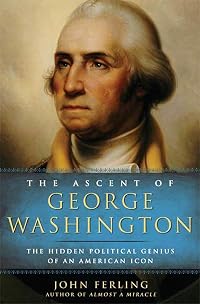
The Ascent of George Washington: The Hidden Political Genius of an American Icon
by John Ferling
On This Page
Description
Even compared to his fellow founders, George Washington stands tall. Our first president has long been considered a stoic hero, holding himself above the rough-and-tumble politics of his day. Now historian John Ferling peers behind that image, carefully burnished by Washington himself, to show us a leader who was not only not above politics, but a canny infighter--a master of persuasion, manipulation, and deniability. In the War of Independence, Washington used his skills to steer the show more Continental Army through crises that would have broken less determined men; he squeezed out rivals and defused dissent. Ending the war as a national hero, Washington "allowed" himself to be pressed into the presidency, guiding the nation with the same brilliantly maintained pose of selfless public interest. Ferling argues that not only was Washington one of America's most adroit politicians--the proof of his genius is that he is no longer thought of as a politician at all.--From publisher description. show lessTags
Recommendations




Member Recommendations
Member Reviews
When I started John Ferling's The Ascent of George Washington: The Hidden Political Genius of an American Icon (forthcoming, Bloomsbury) I thought how on earth can anyone have anything new to say about George Washington as politician? But I'm happy to say that the book is worth the time, since Ferling manages to package his subject in a different way than most of the conventional Washington biographies do.
Ferling's major argument here is that Washington was a tremendously skilled political actor, who managed throughout his career to maneuver himself into optimal circumstances (without, for the most part, getting his hands dirty in the process). Ferling calls Washington a "canny political infighter - a master of persuasion, manipulation, show more and deniability," and uses the book to provide numerous examples of how Washington exercised those skills to his advantage. Among the situations Ferling examines closely are Washington's experiences during the French & Indian War; his handling of the Conway Cabal and of the Newburgh Conspiracy; and the partisan pressures of the 1790s.
Throughout his career, Ferling argues, Washington looked to improve his own reputation and standing (often at the expenses of others) in quiet but powerful ways, deploying surrogates, scapegoating his rivals, and deftly keeping himself on top of the political, military and economic heap by any means necessary. But the point isn't to diminish Washington's reputation, Ferling writes, it's to recognize that such actions were exactly what was necessary to hold the United States together during the dark days of the Revolution and keep the nation going following ratification of the Constitution.
Well-written and researched, with excellent endnotes. A fine book.
http://philobiblos.blogspot.com/2009/04/book-review-ascent-of-george-washington.... show less
Ferling's major argument here is that Washington was a tremendously skilled political actor, who managed throughout his career to maneuver himself into optimal circumstances (without, for the most part, getting his hands dirty in the process). Ferling calls Washington a "canny political infighter - a master of persuasion, manipulation, show more and deniability," and uses the book to provide numerous examples of how Washington exercised those skills to his advantage. Among the situations Ferling examines closely are Washington's experiences during the French & Indian War; his handling of the Conway Cabal and of the Newburgh Conspiracy; and the partisan pressures of the 1790s.
Throughout his career, Ferling argues, Washington looked to improve his own reputation and standing (often at the expenses of others) in quiet but powerful ways, deploying surrogates, scapegoating his rivals, and deftly keeping himself on top of the political, military and economic heap by any means necessary. But the point isn't to diminish Washington's reputation, Ferling writes, it's to recognize that such actions were exactly what was necessary to hold the United States together during the dark days of the Revolution and keep the nation going following ratification of the Constitution.
Well-written and researched, with excellent endnotes. A fine book.
http://philobiblos.blogspot.com/2009/04/book-review-ascent-of-george-washington.... show less
According to this biography, George Washington was neither disinterested, nonpartisan, nor for that matter any great military strategist. He was, however, a born administrator & a political animal of genius. Above even these gifts was his extraordinary skill at constructing, staging, & manipulating the public perception of his persona.
What remains, then, of Washington's "greatness" after reading this book? His character - if not disinterested, then hotly devoted to the future & welfare of the new American nation. Plus the accomplishment, still much to his own credit, of consolidating the young republic. By way of a counterrevolution that only he, in semi-conspiration with his vizier Andrew Hamilton, clearly saw as necessary & show more desirable.
One of the rare accounts in which a political idol is not diminished by the revelation of his human imperfections. If anything, his ability comes out enhanced. Singular & thought-provoking. show less
What remains, then, of Washington's "greatness" after reading this book? His character - if not disinterested, then hotly devoted to the future & welfare of the new American nation. Plus the accomplishment, still much to his own credit, of consolidating the young republic. By way of a counterrevolution that only he, in semi-conspiration with his vizier Andrew Hamilton, clearly saw as necessary & show more desirable.
One of the rare accounts in which a political idol is not diminished by the revelation of his human imperfections. If anything, his ability comes out enhanced. Singular & thought-provoking. show less
George Washington looks over my shoulder as I write this. An old schoolhouse reproduction of the famous unfinished Gilbert Stuart "Athenaeum" portrait of Washington hangs on the wall behind me. This is the iconic Washington, the Washington of the dollar bill, the American demigod. This is the Washington of myth, the one who chopped down the cherry tree and could not tell a lie. But in his excellent new book, historian John Ferling reveals a different, less admirable, more human Washington—one who might have chopped down the cherry tree and then found a scapegoat on whom to pin the blame.
"What is most remarkable about Washington's ascent," Ferling writes, "is that he emerged an unsurpassed hero from two wars in which he committed show more dreadful—even spectacular—blunders and was personally responsible for only marginal successes." As Ferling demonstrates, Washington wasn't a spectacular commander in the field, but he was an able administrator and a skilled politician who knew how to build support for his political agenda while at the same time crafting an image of himself as a disinterested public servant who was entirely above politics. Ferling untangles the man from the myth, but argues that, for the purposes of holding together the fragile United States in its infancy, the myth of Washington was as important as the reality. Washington was a necessary man, whose innate skills were supplemented by careful image making to make him the fixed point around which American Independence coalesced. Even his political critics, like Thomas Jefferson, acknowledged this much.
The George Washington who emerges from Ferling's clear and cogent political biography is often far from admirable. His ascent is littered with the careers of men who crossed him, or who were made to take the fall for his blunders. Washington was a seasoned land speculator, and many of his policies and actions seemed to have been motivated primarily by a desire to protect and promote his investments in western land. In 1781, when the allied French commander Rochambeau recommended surrounding Cornwallis's army at the mouth of the Chesapeake, Washington stubbornly insisted on his long-cherished plan of laying siege to British-occupied New York. It was only through some deft maneuvering by Rochambeau that Washington was coaxed south to Yorktown. But in the successful aftermath, Washington was quick to take all the credit, just as he was quick to disclaim any blame when things went wrong.
Washington is also revealed as a master manipulator, and it's intriguing to watch the political dance engaged in by Washington and Alexander Hamilton, who was even more masterful at pulling political strings. Together, Washington and Hamilton invented the American economy, setting it on a path toward successful market capitalism. At the same time, in classic conservative fashion, their policies advanced the interests of the rich—men like themselves—at the expense of the poor. For example, the burden of the infamous whiskey tax of 1791 fell disproportionately on poor western farmers, and provoked the Whiskey Rebellion of 1794. In his retirement from office, Washington set up his own whiskey distillery, knowing that he could exploit a tax loophole that favored eastern distillers.
Although I've read numerous books on the Revolutionary period and the early Republic, Ferling's explanations are among the most lucid I've read. He's an academic historian (a professor emeritus at the University of West Georgia), but he writes in an accessible style that rarely takes anything for granted, while still respecting the intelligence of his readers.
In the end, George Washington seems like an ur-Reagan—a skilled political actor who knew how to make the most of the role in which he was cast, and who became the avatar of a wider and more enduring conservative movement. He's great, in part, because of America's need for someone to embody and personalize its greatness. Ferling's book succeeds in uncovering Washington's often less than admirable motives, while allowing him to retain his stature as the necessary man for his times. show less
"What is most remarkable about Washington's ascent," Ferling writes, "is that he emerged an unsurpassed hero from two wars in which he committed show more dreadful—even spectacular—blunders and was personally responsible for only marginal successes." As Ferling demonstrates, Washington wasn't a spectacular commander in the field, but he was an able administrator and a skilled politician who knew how to build support for his political agenda while at the same time crafting an image of himself as a disinterested public servant who was entirely above politics. Ferling untangles the man from the myth, but argues that, for the purposes of holding together the fragile United States in its infancy, the myth of Washington was as important as the reality. Washington was a necessary man, whose innate skills were supplemented by careful image making to make him the fixed point around which American Independence coalesced. Even his political critics, like Thomas Jefferson, acknowledged this much.
The George Washington who emerges from Ferling's clear and cogent political biography is often far from admirable. His ascent is littered with the careers of men who crossed him, or who were made to take the fall for his blunders. Washington was a seasoned land speculator, and many of his policies and actions seemed to have been motivated primarily by a desire to protect and promote his investments in western land. In 1781, when the allied French commander Rochambeau recommended surrounding Cornwallis's army at the mouth of the Chesapeake, Washington stubbornly insisted on his long-cherished plan of laying siege to British-occupied New York. It was only through some deft maneuvering by Rochambeau that Washington was coaxed south to Yorktown. But in the successful aftermath, Washington was quick to take all the credit, just as he was quick to disclaim any blame when things went wrong.
Washington is also revealed as a master manipulator, and it's intriguing to watch the political dance engaged in by Washington and Alexander Hamilton, who was even more masterful at pulling political strings. Together, Washington and Hamilton invented the American economy, setting it on a path toward successful market capitalism. At the same time, in classic conservative fashion, their policies advanced the interests of the rich—men like themselves—at the expense of the poor. For example, the burden of the infamous whiskey tax of 1791 fell disproportionately on poor western farmers, and provoked the Whiskey Rebellion of 1794. In his retirement from office, Washington set up his own whiskey distillery, knowing that he could exploit a tax loophole that favored eastern distillers.
Although I've read numerous books on the Revolutionary period and the early Republic, Ferling's explanations are among the most lucid I've read. He's an academic historian (a professor emeritus at the University of West Georgia), but he writes in an accessible style that rarely takes anything for granted, while still respecting the intelligence of his readers.
In the end, George Washington seems like an ur-Reagan—a skilled political actor who knew how to make the most of the role in which he was cast, and who became the avatar of a wider and more enduring conservative movement. He's great, in part, because of America's need for someone to embody and personalize its greatness. Ferling's book succeeds in uncovering Washington's often less than admirable motives, while allowing him to retain his stature as the necessary man for his times. show less
 This review was written for LibraryThing Early Reviewers.
ISBN #978-1-59691-465-0
Every now and then a phrase from some movie or other captures the imagination of the general public and before you know it everyone is repeating the line over and over. "I'll be back" from The Terminator comes to mind, or "You had me at hello" from Jerry Maguire. Well I hate to use such phrases myself but this one time I have to do so and say that with this latest title, author John Ferling had me at "There were differences in the politics of eighteenth-century America and those of today, but not as many as might be thought." (1st sentence of Preface)
This captivating beginning sets the tone for the entire book and from start to finish I simply could not put this book down...indeed Mr. Ferling now owes me many show more hours of sleep, a debt I am happy to forgive if he promises to keep writing non fiction of this caliber. The beauty of this book is that while it is indeed a book of history (political history at that!), it reads like a modern thriller. I dare say that I absolutely would recommend this book to everyone I know, and if it was within my power, I would make it required reading for high school students.
Well with such nearly sycophantic praise one would think that Mr. Ferling was paying me for this review, but I assure my readers that this is not the case (if, however, Mr. Ferling should read this and feel the uncontrollable urge to send some cash my way, I will happily accept). No, this book is well deserving of praise without needing to resort to base bribery!
At any rate, this book brings our illustrious first president down to a human level...portraying him as the ambitious and self interested man that he was, warts and all. In no way, however, does this make him a less heroic figure. Instead it helps us to see him as the fallible human that he truly was, a man who felt like he was meant for great things (and apparently he was) and stopped at nothing to achieve this greatness. Ferling correctly points out that it was quite surpising that Washington became the man he did considering his many military blunders; at the same time this is no big surprise when we understand his political savviness and his ability to deflect criticism. This, indeed, is the theme of this book, and Ferling does a wonderful job of proving his thesis and convincing the reader not only of this truth but assisting us to retain our hero worshipping attitude towards the father of our country!
So my final thoughts are as follows: this book is well written, surpisingly respectful of its subject, and quite humorous in some places (three French generals coming to America; three major general positions available; American officers wanting one of those positions; problem solved satisfactorily for everyone when one of the French generals obligingly drowns...Ferling points out this was satisfactory for everyone except, of course, the drowned general!). I would give it three thumbs up if I could, but since I cannot do so I give it two enthusiastic thumbs up! show less
Every now and then a phrase from some movie or other captures the imagination of the general public and before you know it everyone is repeating the line over and over. "I'll be back" from The Terminator comes to mind, or "You had me at hello" from Jerry Maguire. Well I hate to use such phrases myself but this one time I have to do so and say that with this latest title, author John Ferling had me at "There were differences in the politics of eighteenth-century America and those of today, but not as many as might be thought." (1st sentence of Preface)
This captivating beginning sets the tone for the entire book and from start to finish I simply could not put this book down...indeed Mr. Ferling now owes me many show more hours of sleep, a debt I am happy to forgive if he promises to keep writing non fiction of this caliber. The beauty of this book is that while it is indeed a book of history (political history at that!), it reads like a modern thriller. I dare say that I absolutely would recommend this book to everyone I know, and if it was within my power, I would make it required reading for high school students.
Well with such nearly sycophantic praise one would think that Mr. Ferling was paying me for this review, but I assure my readers that this is not the case (if, however, Mr. Ferling should read this and feel the uncontrollable urge to send some cash my way, I will happily accept). No, this book is well deserving of praise without needing to resort to base bribery!
At any rate, this book brings our illustrious first president down to a human level...portraying him as the ambitious and self interested man that he was, warts and all. In no way, however, does this make him a less heroic figure. Instead it helps us to see him as the fallible human that he truly was, a man who felt like he was meant for great things (and apparently he was) and stopped at nothing to achieve this greatness. Ferling correctly points out that it was quite surpising that Washington became the man he did considering his many military blunders; at the same time this is no big surprise when we understand his political savviness and his ability to deflect criticism. This, indeed, is the theme of this book, and Ferling does a wonderful job of proving his thesis and convincing the reader not only of this truth but assisting us to retain our hero worshipping attitude towards the father of our country!
So my final thoughts are as follows: this book is well written, surpisingly respectful of its subject, and quite humorous in some places (three French generals coming to America; three major general positions available; American officers wanting one of those positions; problem solved satisfactorily for everyone when one of the French generals obligingly drowns...Ferling points out this was satisfactory for everyone except, of course, the drowned general!). I would give it three thumbs up if I could, but since I cannot do so I give it two enthusiastic thumbs up! show less
This is not a biography about George Washington. That is good, since Washington has been the subject of so many that a reader might sigh, ‘Why do we need another biography of Washington.’ It is instead an analysis of the Washington’s growth as a politician, and how he carefully crafted his public persona so as to create an almost mythical image of himself, and hence capture the title, Father of Our Country.
“Phenomenal luck is required to become a national hero,” writes Ferling, and Washington had that luck. That a Virginia slave-owning aristocrat would rise to the preeminent position in American political life is a wondrous story.
Washington had a lot of things working against him. Unlike many of the Founding Fathers he did show more not have a formal education. He was not a great writer, nor was he a brilliant orator. In the continental congress he rarely spoke, and unlike Adams and Jefferson, he was not a intellectual driving force behind this new American revolution. His military successes in leading the Continental Army were far outnumbered by his failures on the battlefield. He was often indecisive in battle, and had a tendency to blame others for his failures, and to steal the credit for success when others deserved it. So how did he manage to be regarded, both by his contemporaries and us today as the leading citizen of this new nation? That is the story which Ferling tells.
Washington was a brilliant observer. He learned from his many failures. He was tall and dashing in his military uniform, and he inspired the men he led. He was a survivor. His Continental Army should have dissolved into desertion many times, but he always held them together to fight another day.
Washington was highly ambitious for power and position, but was extremely adept at convincing those around him that he acquiesced to any position he was offered only for the good of the cause. He was a highly skilled politician who was able to convince those around him and the generations which followed that he was a dispassionate statesman who had no interest in his own public esteem, but was only out for the good of America. And he was just plain lucky. Or as some would have said in that day, perhaps Providence decreed that this man needed to succeed so that this new nation could be founded.
Ferling has a way of writing about Washington which pulls back from making conclusions about his character, but rather gives the reader the raw material with which to make those conclusions. If one desires to think of Washington as the honest man who would never tell a lie (like the apocryphal story about telling his father about chopping down the cherry tree) this is not a good book to read. Ferling probes the letters of Washington for the many ways in which he spins a story to favor himself, and leaves his readers with the inescapable conclusion that here was a highly ambitious man who was not adverse to twisting the facts to make himself look better. He was a politician from the beginning to end. But he played the game so well, that he was seen by others not to be a politician, but rather one who rose above the petty weaknesses of others.
This book is highly readable and never bogs down in detail, but rather the author weaves his many facts about Washington’s life to tell an engaging story. That story shows that Washington’s greatness was indeed mythical, but not quite in the way all have imagined for over two hundred years. Washington self-consciously painted his own portrait with the same skill with which Gilbert Stuart painted him. He was a master of making the image that we see today. He emerges from Ferling’s book as flawed, human, and ambitious, but also as a figure who exhibited weakness, yet triumphed over it,...all to our benefit as Americans. Ferling peels away the myth, yet we still see Washington as deserving of a place in our hearts as the Father of Our Country. show less
“Phenomenal luck is required to become a national hero,” writes Ferling, and Washington had that luck. That a Virginia slave-owning aristocrat would rise to the preeminent position in American political life is a wondrous story.
Washington had a lot of things working against him. Unlike many of the Founding Fathers he did show more not have a formal education. He was not a great writer, nor was he a brilliant orator. In the continental congress he rarely spoke, and unlike Adams and Jefferson, he was not a intellectual driving force behind this new American revolution. His military successes in leading the Continental Army were far outnumbered by his failures on the battlefield. He was often indecisive in battle, and had a tendency to blame others for his failures, and to steal the credit for success when others deserved it. So how did he manage to be regarded, both by his contemporaries and us today as the leading citizen of this new nation? That is the story which Ferling tells.
Washington was a brilliant observer. He learned from his many failures. He was tall and dashing in his military uniform, and he inspired the men he led. He was a survivor. His Continental Army should have dissolved into desertion many times, but he always held them together to fight another day.
Washington was highly ambitious for power and position, but was extremely adept at convincing those around him that he acquiesced to any position he was offered only for the good of the cause. He was a highly skilled politician who was able to convince those around him and the generations which followed that he was a dispassionate statesman who had no interest in his own public esteem, but was only out for the good of America. And he was just plain lucky. Or as some would have said in that day, perhaps Providence decreed that this man needed to succeed so that this new nation could be founded.
Ferling has a way of writing about Washington which pulls back from making conclusions about his character, but rather gives the reader the raw material with which to make those conclusions. If one desires to think of Washington as the honest man who would never tell a lie (like the apocryphal story about telling his father about chopping down the cherry tree) this is not a good book to read. Ferling probes the letters of Washington for the many ways in which he spins a story to favor himself, and leaves his readers with the inescapable conclusion that here was a highly ambitious man who was not adverse to twisting the facts to make himself look better. He was a politician from the beginning to end. But he played the game so well, that he was seen by others not to be a politician, but rather one who rose above the petty weaknesses of others.
This book is highly readable and never bogs down in detail, but rather the author weaves his many facts about Washington’s life to tell an engaging story. That story shows that Washington’s greatness was indeed mythical, but not quite in the way all have imagined for over two hundred years. Washington self-consciously painted his own portrait with the same skill with which Gilbert Stuart painted him. He was a master of making the image that we see today. He emerges from Ferling’s book as flawed, human, and ambitious, but also as a figure who exhibited weakness, yet triumphed over it,...all to our benefit as Americans. Ferling peels away the myth, yet we still see Washington as deserving of a place in our hearts as the Father of Our Country. show less
This review was written for LibraryThing Early Reviewers.The thesis of "The Ascent of George Washington" is to remove the idea that George Washington sailed placidly along on the tides of fate as a man unencumbered by desire for fame. The author states quite the opposite, from a young age George Washington had ambition to make something quite grand out of himself.
Washington is probably the most studied of American personalities and author John Ferling has a long resume as a Washington scholar and biographer so it would be difficult to imagine any new earth shattering revelations being uncovered. What is new is a reinterpretation of existing knowledge in the context of a man who was a nimble politician and eagerly seeking his destiny. Ferling covers all the familiar highlights of show more Washington’s life and rise to fame but gone is the man swept up by events beyond his control. In his place we see a man no different than his contemporaries, one who wants to climb socially and have his turn with the reins of power. What the reader may find most different from the Washington we knew in high school is that this Washington formed policy that was to his overall advantage making him no different from politicians we see today. Ferling deftly handles this point by showing that Washington honestly felt that the advancement of his level of society would best serve the long term interests of the new nation. He was not alone in this view. That Washington was not without faults is well known, Ferling often focuses often on Washington’s failures and his recovery from them to show a man very concerned with his public perception and his future.
“The Ascent of George Washington” may destroy to some extent the mystique of George Washington but humanizing him and showing him as an adept politician adds a new facet to the man. Author Ferling does no harm to the repute of this founding father in this intriguing new version of a familiar life show less
Washington is probably the most studied of American personalities and author John Ferling has a long resume as a Washington scholar and biographer so it would be difficult to imagine any new earth shattering revelations being uncovered. What is new is a reinterpretation of existing knowledge in the context of a man who was a nimble politician and eagerly seeking his destiny. Ferling covers all the familiar highlights of show more Washington’s life and rise to fame but gone is the man swept up by events beyond his control. In his place we see a man no different than his contemporaries, one who wants to climb socially and have his turn with the reins of power. What the reader may find most different from the Washington we knew in high school is that this Washington formed policy that was to his overall advantage making him no different from politicians we see today. Ferling deftly handles this point by showing that Washington honestly felt that the advancement of his level of society would best serve the long term interests of the new nation. He was not alone in this view. That Washington was not without faults is well known, Ferling often focuses often on Washington’s failures and his recovery from them to show a man very concerned with his public perception and his future.
“The Ascent of George Washington” may destroy to some extent the mystique of George Washington but humanizing him and showing him as an adept politician adds a new facet to the man. Author Ferling does no harm to the repute of this founding father in this intriguing new version of a familiar life show less
This review was written for LibraryThing Early Reviewers.Every American knows who George Washington was and even though few still believe Parson Weems’ story of his life (does anyone still believe he chopped down a cherry tree?) most Americans have an idealized portrait of Washington in their minds. In The Ascent of George Washington: The Hidden Political Genius of an American Icon, John Ferling portrays a different and much more human version of Washington.
Ferling, who has written extensively about the American Revolutionary period, discovered a Washington who was, “Madly ambitious and obsessed with recognition and renown,” he emerged a hero from two wars, in which he achieved only insignificant individual success and committed dreadful blunders. He was a genius at shifting the blame show more for defeat on to others and engaging in self-promotion.
In spite of these failings, Ferling maintains Washington was a great American icon and the country was extraordinarily fortunate to have had him as its first president. For while much of the aura that surrounded Washington in life and death was mythological, legendary heroes and mythical tales are essential for the creation and maintenance of a new nation.
Political leaders of the past have often been made into mythological figures that can never be imitated. The reader can never achieve the same greatness nor does he expect it from his current leaders. The fact that these past leaders were great but human, with human flaws is lost. This diminishes their accomplishments by making it appear they were something more then normal men.
The Ascent of George Washington serves as a reminder that we are all human, even George Washington. show less
Ferling, who has written extensively about the American Revolutionary period, discovered a Washington who was, “Madly ambitious and obsessed with recognition and renown,” he emerged a hero from two wars, in which he achieved only insignificant individual success and committed dreadful blunders. He was a genius at shifting the blame show more for defeat on to others and engaging in self-promotion.
In spite of these failings, Ferling maintains Washington was a great American icon and the country was extraordinarily fortunate to have had him as its first president. For while much of the aura that surrounded Washington in life and death was mythological, legendary heroes and mythical tales are essential for the creation and maintenance of a new nation.
Political leaders of the past have often been made into mythological figures that can never be imitated. The reader can never achieve the same greatness nor does he expect it from his current leaders. The fact that these past leaders were great but human, with human flaws is lost. This diminishes their accomplishments by making it appear they were something more then normal men.
The Ascent of George Washington serves as a reminder that we are all human, even George Washington. show less
This review was written for LibraryThing Early Reviewers.Members
- Recently Added By
Lists

Best U.S. History Books (1754-1828)
363 works; 18 members

French and Indian War through the War of 1812 (non-fiction)
31 works; 3 members

Founding Father
104 works; 11 members
George Washington Books
12 works; 1 member
Author Information

20+ Works 4,368 Members
John Ferling is professor emeritus of history at the University of West Georgia. He is the author of many books on American Revolutionary history, including Independence; The Ascent of George Washington; Almost a Miracle, the acclaimed military history of the War of Independence; the award-winning A Leap in the Dark; and Setting the World Ablaze. show more He and his wife, Carol, live near Atlanta, Georgia. show less
Common Knowledge
- Original publication date
- 2009
- People/Characters
- George Washington
- Important places
- USA
- Important events
- American Revolution (1775 | 1783)
- Dedication
- For Carol, who has always supported and
encouraged my work - First words
- There were differences in the politics of eighteenth-century America and those of today, but not as many as might be thought. (Preface)
It was the day after Christmas, but there were no signs of a holiday in Philadelphia. (Introduction)
Like Terry Malloy, the pug in the movie On the Waterfront who wanted top be somebody, young George Washington wanted to go places, to be known, to win acclaim. - Last words
- (Click to show. Warning: May contain spoilers.)Fusing myth and reality, George Washington was made the template for the virtues and chracter that supposedly were necessary for assuring national ascendancy.
- Blurbers
- Beschloss, Michael; Wilentz, Sean
- Original language
- English
Classifications
- Genres
- History, Nonfiction, Biography & Memoir, General Nonfiction
- DDC/MDS
- 973.41092 — History & geography History of North America United States Constitutional period (1789-1809) George Washington, 1st Term (1789-1793)
- LCC
- E312 .F46 — History of the United States United States Revolution to the Civil War, 1775/1783-1861 By period 1789-1809. Constitutional period Washington's administrations, 1789-1797
- BISAC
Statistics
- Members
- 368
- Popularity
- 84,746
- Reviews
- 28
- Rating
- (3.63)
- Languages
- English
- Media
- Paper, Audiobook, Ebook
- ISBNs
- 8
- ASINs
- 7