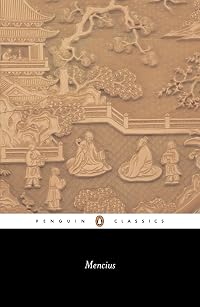
Mencius
by Mencius
On This Page
Description
The Works of Mencius provides an admirable insight into one of the streams of thought of the Chinese. This new translation, especially arranged and annotated aims at rendering an Archaic Chinese original in a modern and unadorned prose. Most educated Westerners are familiar with the thinkers and prophets who inform the Western spirit. But they are less familiar with the thinkers who have shaped the major oriental civilizations. The heirs of these ancient civilizations are now once again in show more the ascendant. We must understand the ways and thoughts that condition their conduct. The Works of Mencius provides an admirable insight into one of the streams of thought of the Chinese. Indeed, the perceptive reader might well find that some ideas he though were new and alien in the new China have familiar echoes in Mencius. This new translation, especially arranged and annotated with the general reader in mind, has been made in the light of recent philological research. It aims at rendering an Archaic Chinese original in a modern and unadorned prose, and is intended for the general reader who is otherwise unfamiliar with Chinese authors and desires to understand what Mencius is about without encumbering the text with footnotes and technical apparatus which the specialist quite properly demands. While the text has been translated in its entirety its parts have been rearranged in a sequence which it is hoped will make them easier for the Western reader. show lessTags
Recommendations










Member Reviews
Mencius, the tag-along philosopher to Confucius, takes center stage in the "Mencius," where he recounts his sassy dialogues with kings, dukes, and anyone else willing to join his ancient philosophical party. From Confucius's theories of jen (goodness) and yi (righteousness) to Mencius's own spin on achieving harmony with mankind and the universe, it's like a self-help book for ancient souls. With views on subjects, rulers, and the evils of war, Mencius creates a Confucian orthodoxy that's been intact since the third century BCE.
Pros:
Pros:
A worthwhile read for those interested in Chinese philosophy, but read Confucius first, preferably in more than one translation. Mencius is easy enough to read in Lau's translation, despite a few ambiguities here and there, and he pretty much reinforces, sometimes with explanation, Confucius's teachings. Lau's introduction, comparing Mencius to other schools of thought, is good. His appendices, however, are too academic to be of much interest to the average reader. Overall, I certainly enjoyed Confucius and Lao Tzu more than Mencius, perhaps because there wasn't a lot new here, although some of the stories are good and there is even the occasional humor.
Meng Ke, whom we know in the West by his Latinized name, Mencius, was a wandering sage who taught widely and advised the rulers of the state of Qi during the Warring States Period (403-221 BC). Mencius himself lived from about 370-290 BC, having been born just a few miles from the only other philosopher know in the West by a latinized name, Confucius, who lived about a century before Mencius. Towards the end of his life Mencius despaired at the possibility of effecting change in government and so retired from public life.
The basis of Mencius’s philosophy is the assertion that all humans are basically good. It is society’s influence that causes good people to do bad things. This immediately raises a question: What is society composed show more of if not people? The answer is nowhere specific, but the cumulative impression is that the reason society can be a bad influence on individuals is habit. The analogy in Western logic might be the concept of “the slippery slope.” One person slips from his moral obligation toward the good and soon everyone around him is, too. Or, to put this idea another way: One dog barks and they all join in.
It’s hard work to be a good person: “Slight is the difference between man and the brutes,” Mencius says. “The common man loses this distinguishing feature, while the gentleman retains it.” To the modern reader the category of “common man” and “gentleman” may be somewhat offensive, but the classist distinction is historically accurate. More importantly, though, the difference might be better described as that between a “bad” man (“the brute”) and a “good” man (“the gentleman”).The book ascribed to Mencius, and which bears his name as its title, makes for wonderful reading as it is composed of philosophical vignettes, each related as a tiny story, usually about an encounter and conversation with a king or other nobleman. Here’s a sample:
After seeing King Xiang of Liang, Mencius said to someone, “When I saw him from a distance he did not look like a ruler, and when I got closer, I saw nothing to command respect. But he asked ‘How can the realm be settled?’ I answered, ‘It can be settled through unity.’ ‘Who can unify it?’ he asked. I answered, ‘Someone not fond of killing people.’ ‘Who could give it to him?’ I answered ‘Everyone in the world will give it to him. Your .Majesty knows what rice plants are? If there is a drought in the seventh and eighth months, the plants wither, but if moisture collects in the sky and forms clouds and rain falls in torrents, plants suddenly revive. This is the way it is; no one can stop the process. In the world today there are no rulers disinclined toward killing. If there were a ruler who did not like to kill people, everyone in the world would crane their necks to catch sight of him. This is really true. The people would flow toward him the way water flows down. No one would be able to repress them.’”
Mencius employs both the parable and the Socratic method (the question-and-answer exploration of an ethical or political problem) to great effect. His bite-sized morsels are easy to read but provide much nourishment for thought. There are many parallels to Western philosophy to be found in Mencius (such as the idea that the people may overthrow a corrupt government, something Americans should more frequently remember is enshrined in their Constitution) as well as striking parallels. Chinese philosophy in general, for instance, was never particularly burdened with the great logical indignity of dualism (the idea that the mind or soul and the body are two separate entities).
Lau’s fluid translation (first published by Penguin in 1970 and presented here in a revised version edited in collaboration with scholars at the Chinese University) is complimented by an appropriately windy and academic introduction in which he thoroughly situates Mencius within the context of Chinese philosophy and draws the big picture that is the Confucian-Mencian system.
[Originally published in Curled Up with a Good Book] show less
The basis of Mencius’s philosophy is the assertion that all humans are basically good. It is society’s influence that causes good people to do bad things. This immediately raises a question: What is society composed show more of if not people? The answer is nowhere specific, but the cumulative impression is that the reason society can be a bad influence on individuals is habit. The analogy in Western logic might be the concept of “the slippery slope.” One person slips from his moral obligation toward the good and soon everyone around him is, too. Or, to put this idea another way: One dog barks and they all join in.
It’s hard work to be a good person: “Slight is the difference between man and the brutes,” Mencius says. “The common man loses this distinguishing feature, while the gentleman retains it.” To the modern reader the category of “common man” and “gentleman” may be somewhat offensive, but the classist distinction is historically accurate. More importantly, though, the difference might be better described as that between a “bad” man (“the brute”) and a “good” man (“the gentleman”).The book ascribed to Mencius, and which bears his name as its title, makes for wonderful reading as it is composed of philosophical vignettes, each related as a tiny story, usually about an encounter and conversation with a king or other nobleman. Here’s a sample:
After seeing King Xiang of Liang, Mencius said to someone, “When I saw him from a distance he did not look like a ruler, and when I got closer, I saw nothing to command respect. But he asked ‘How can the realm be settled?’ I answered, ‘It can be settled through unity.’ ‘Who can unify it?’ he asked. I answered, ‘Someone not fond of killing people.’ ‘Who could give it to him?’ I answered ‘Everyone in the world will give it to him. Your .Majesty knows what rice plants are? If there is a drought in the seventh and eighth months, the plants wither, but if moisture collects in the sky and forms clouds and rain falls in torrents, plants suddenly revive. This is the way it is; no one can stop the process. In the world today there are no rulers disinclined toward killing. If there were a ruler who did not like to kill people, everyone in the world would crane their necks to catch sight of him. This is really true. The people would flow toward him the way water flows down. No one would be able to repress them.’”
Mencius employs both the parable and the Socratic method (the question-and-answer exploration of an ethical or political problem) to great effect. His bite-sized morsels are easy to read but provide much nourishment for thought. There are many parallels to Western philosophy to be found in Mencius (such as the idea that the people may overthrow a corrupt government, something Americans should more frequently remember is enshrined in their Constitution) as well as striking parallels. Chinese philosophy in general, for instance, was never particularly burdened with the great logical indignity of dualism (the idea that the mind or soul and the body are two separate entities).
Lau’s fluid translation (first published by Penguin in 1970 and presented here in a revised version edited in collaboration with scholars at the Chinese University) is complimented by an appropriately windy and academic introduction in which he thoroughly situates Mencius within the context of Chinese philosophy and draws the big picture that is the Confucian-Mencian system.
[Originally published in Curled Up with a Good Book] show less
Mencius, um sábio duas gerações após Confúcio, tem aqui seus pensamentos relatados, mas apesar do interesse em algumas de suas posições, o todo chafurda na grande quantidade de anedotas mencionando personagens da China antiga, sem desenvolvimento, e que resultam muitas vezes em conselhos práticos ou de conduta, sem maiores pensamentos do que uma ética que valoriza muito a família, a reverência aos mortos e os rituais funéreos e a tradição, usando a retórica dos "bons tempos". Pontos de interesse: o ser humano teria em si como característica fundamental o humanismo, um caráter bom e de respeito para com os outros, que só precisa ser cultivado, e especialmente o governo deve governar dando exemplo. Os reis que o fazem, show more governando para o povo, só se beneficiariam com isso, adquirindo prosperidade. De fato, se o rei mostrar seu bom caráter, inspirará o povo a segui-lo nesse bom aspecto (cultivar a música, ser diligente etc), de modo que seguirão bons tempos. A virtude faria, afinal o povo submeter do fundo de seus corações, com alegria, ao governo, e tudo ficaria bem sob os céus. show less
The Mencius is the seminal, canonical Confucian work in which Mencius (Mengzi 孟子) expounds on what Confucius said in the Analects, outlining the principles of the innate goodness of human nature, good Confucian government, and the importance of education and destiny. The Mencius was subsequently canonised by the Neo-Confucian scholar Zhu Xi and formed the basis (along with the three other canonical texts) for the imperial examinations until the fall of the Qing.
Unlike his predecessor, Mencius does not use short, aphoristic sayings which are often open to interpretation but instead expounds at length in long prose arguments, which as D. C. Lau explains are the pinnacle of Classical Chinese rhetoric.
The translation by noted scholar show more D. C. Lau is a noted improvement over previous ones and alongside the detailed introduction that contextualises Mencius in Chinese philosophical thought and contrasts him against Xunzi.
Though perhaps suffering from advances in scholarship since its publication, Lau's translation is still an excellent starting point for the scholar or interested reader, and serves as a starting point for further study in Chinese philosophy. show less
Unlike his predecessor, Mencius does not use short, aphoristic sayings which are often open to interpretation but instead expounds at length in long prose arguments, which as D. C. Lau explains are the pinnacle of Classical Chinese rhetoric.
The translation by noted scholar show more D. C. Lau is a noted improvement over previous ones and alongside the detailed introduction that contextualises Mencius in Chinese philosophical thought and contrasts him against Xunzi.
Though perhaps suffering from advances in scholarship since its publication, Lau's translation is still an excellent starting point for the scholar or interested reader, and serves as a starting point for further study in Chinese philosophy. show less
Regardless of my rating, if you wish to understand Chinese thought in that era you must read this book. Mencius is considered only second to Confucius himself.
In this book, translated by David Hinton, is a compilation of teachings of Chinese sage Mencius, who the book claims trained under the grandson of Confucius in the fourth century B.C.E. Here we have fourteen chapters that highlight Mencius's central belief in inherent goodness of human nature.
Mencius is easier to read then most other Chinese sages because of his use analogies and his optimistic point of view. And the translator's introduction provides us with historical background to place the writings into the correct perspective.
In this book, translated by David Hinton, is a compilation of teachings of Chinese sage Mencius, who the book claims trained under the grandson of Confucius in the fourth century B.C.E. Here we have fourteen chapters that highlight Mencius's central belief in inherent goodness of human nature.
Mencius is easier to read then most other Chinese sages because of his use analogies and his optimistic point of view. And the translator's introduction provides us with historical background to place the writings into the correct perspective.
Available on-line (English only), here. Mencius has a great deal to say about the essentially good nature of man. His doctrine assumes that all individuals long for self-improvement and the peace that comes from an unshakable spirit. All his words are designed to nourish this tendency and to encourage all who he teaches to discern, and act upon, the difference between truth and error. The Legge translation is a decidedly Christian perspective, with all the benefits and perils that that implies. Many phrases throughout the translation are clearly Biblical, and this enables those with a deep Biblical background (as I have) to infer a great deal about the concepts. Of course, this also carries the risk of losing meaning and intention by show more masking difficult passages with a familiar façade.One of my favorite passages is Mencius's discourse on the passion-nature, more commonly referred to today as ch'i. Here, he describes the way to obtain true power is "produced by the accumulation of righteous deeds; it is not to be obtained by incidental acts of righteousness." This emphasizes the importance of consistent goodness (even, or especially, in private) over easy appearances.While I like the Legge translation, some of the tricker parts are rendered more clearly by Charles Muller. show less
Members
- Recently Added By
Lists

Política - Clásicos
164 works; 2 members

Greatest Books, allegedly
484 works; 9 members

Philosophy, Politics and Economics
61 works; 1 member

Philip Ward's Lifetime Reading Plan
592 works; 22 members

New Lifetime Reading Plan by Fadiman and Major
225 works; 5 members
Author Information

34+ Works 2,018 Members
Some Editions
Awards and Honors
Notable Lists
Series
Belongs to Publisher Series
Common Knowledge
- Canonical title
- Mencius
- Original title
- 孟子
- Original publication date
- 350 x 301 BC
- Epigraph
- [None]
- Dedication
- [None]
- First words
- Only two Chinese philosophers have the distinction of being known consistently to the West by a latinized name.
Introduction (D. C. Lau transl., Penguin Classics, 1970).
1. Mencius went to see King Hui of Liang.
Book I. Part A (D. C. Lau transl., Penguin Classics, 1970). - Last words
- (Click to show. Warning: May contain spoilers.)In time we are so near to the age of the sage while in place we are so close to his home, yet if there is no one who has anything of the sage, well then, there is no one who has anything of the sage.'
- Original language
- Chinese
Classifications
- Genres
- Philosophy, Nonfiction, General Nonfiction, Religion & Spirituality
- DDC/MDS
- 181.112 — Philosophy & psychology Ancient, medieval & eastern philosophy Eastern philosophy Far East and South Asia China & Korea Confucianism and Neo-Confucianism
- LCC
- B128 .M33 .E59 — Philosophy, Psychology and Religion Philosophy (General) By period Ancient
- BISAC
Statistics
- Members
- 1,129
- Popularity
- 22,502
- Reviews
- 11
- Rating
- (3.67)
- Languages
- 6 — English, Finnish, French, Italian, Russian, Chinese, traditional
- Media
- Paper, Audiobook, Ebook
- ISBNs
- 43
- UPCs
- 1
- ASINs
- 16