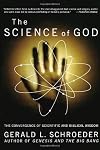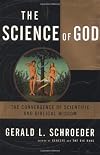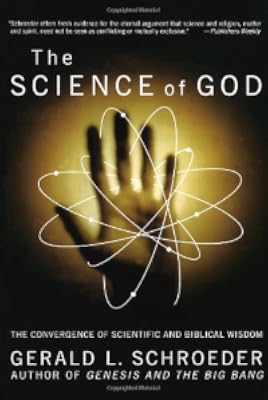
The Science of God: The Convergence of Scientific and Biblical Wisdom
by Gerald L. Schroeder
On This Page
Description
For the readers of The Language of God, another instant classic from "a sophisticated and original scholar" (Kirkus Reviews) that disputes the idea that science is contrary to religion. In The Science of God, distinguished physicist and Biblical scholar Gerald L. Schroeder demonstrates the surprising parallels between a variety of Biblical teachings and the findings of biochemists, paleontologists, astrophysicists, and quantum physicists. In a brilliant and wide-ranging discussion of key show more topics that have divided science and religion--free will, the development of the universe, the origin of life, and the origin of man--Schroeder argues that the latest science and a close reading of the Bible are not just compatible but interdependent. This timely reissue of The Science of God features a brand-new preface by Schroeder and a compelling appendix that addresses the highly publicized experiment in 2008 in which scientists attempted to re-create the chemical composition of the cosmos immediately after the Big Bang. It also details Schroeder's lucid explanations of complex scientific and religious concepts, such as the theory of relativity, the passage of time, and the definitions of crucial Hebrew words in the Bible. Religious skeptics, Biblical literalists, scientists, students, and physicists alike will be riveted by Schroeder's remarkable contribution to the raging debate between science and religion. show lessTags
Recommendations

Member Reviews
This book has sold a lot of copies and generated a lot of discussion since its publication in 1997, but it really just didn’t do it for me. Schroeder’s premise is that Bible thumpers and secular scientists need to put their heads together, compromise a little here and there, and realize that the Bible story goes hand-in-hand with 20th-century scientific discovery.
That means the seven-day creation story is true (Einstein’s theory of relativity helped us out a little on this topic) by measuring time from God’s perspective. The cosmic clock of Genesis is based on the characteristics of cosmic background radiation. The dinosaurs were created on day five, a day that lasted roughly a half billion years. The flood really happened when show more the Bible says it did, but it wasn’t a universal event. Before the flood, people lived extraordinarily long lives, because the climate was less demanding. You get the idea.
I agree with Schroeder that the conditions of our universe and our own little world are incredibly fine-tuned, and thus a bit difficult to explain. Schroeder quotes Weinberg’s famous calculation that if the energy of the big bang fifteen billion years ago were different by one part out of 10 to the 120th power, there would be no life anywhere in the universe. It’s as if the universe is tuned for life from its inception. There have been a number of thought-provoking responses to Weinberg’s conclusion, but it’s still difficult for me to put out of my mind the idea that something really special has happened for our benefit … something quite carefully planned.
It’s a puzzle without easy explanation, alright. I just don’t get why anyone would choose the Bible’s myths as the foundation for their explanation. As carefully as Schroeder has put his theory together, it still just feels contrived and overly complex to me. If Schroeder wants believers and scientists to hold hands and sing Kum Ba Yah, he’s going to need to write down to the non-scientist level. But why bother? Don’t the earliest Bible stories make a whole lot more sense as theological or political or moral treatises than as history books? Why not let religion be religion and science be science? show less
That means the seven-day creation story is true (Einstein’s theory of relativity helped us out a little on this topic) by measuring time from God’s perspective. The cosmic clock of Genesis is based on the characteristics of cosmic background radiation. The dinosaurs were created on day five, a day that lasted roughly a half billion years. The flood really happened when show more the Bible says it did, but it wasn’t a universal event. Before the flood, people lived extraordinarily long lives, because the climate was less demanding. You get the idea.
I agree with Schroeder that the conditions of our universe and our own little world are incredibly fine-tuned, and thus a bit difficult to explain. Schroeder quotes Weinberg’s famous calculation that if the energy of the big bang fifteen billion years ago were different by one part out of 10 to the 120th power, there would be no life anywhere in the universe. It’s as if the universe is tuned for life from its inception. There have been a number of thought-provoking responses to Weinberg’s conclusion, but it’s still difficult for me to put out of my mind the idea that something really special has happened for our benefit … something quite carefully planned.
It’s a puzzle without easy explanation, alright. I just don’t get why anyone would choose the Bible’s myths as the foundation for their explanation. As carefully as Schroeder has put his theory together, it still just feels contrived and overly complex to me. If Schroeder wants believers and scientists to hold hands and sing Kum Ba Yah, he’s going to need to write down to the non-scientist level. But why bother? Don’t the earliest Bible stories make a whole lot more sense as theological or political or moral treatises than as history books? Why not let religion be religion and science be science? show less
The magic is the way Schroeder adds exponentially to the conventional wisdom to weave a great explanation of life and the universe that is consistent with both the Torah and modern science. He also encourages both sides to back down from extreme stances, giving examples for both sides to show the error of the blinded way. At the forefront of the argument is the observation that even Moses himself declared the Pentatuech to have deep and profound levels of meaning. Simultaneously, he shows that the die-hard scientic views of evolution and an eternal universe have both been countermanded in the last 20 years. His most impressive point concerns the big bang and the duration of creation. Using Einstein's relativity to explain the slowdown show more of time relative to the original first 6 days after the "light" was let to be there, the author shows that modern science places each of the events described each day at about that point in time as the Bible's version. Time then is essentially an exponential curve until the creation of man, at which point the Bible's schedule is the same as our modern duration. Onward to the advent of man, the author consistently uses the meaning of the original Hebrew to clarify exactly how man was first made and then created with the breath of a soul. Until that time, Cro-Magnon man could look exactly like us but not have a soul, which the Bible defines as that which separates us from the animals. Further comparison involves the similarity of DNA across all living things and the inclusion of more advanced DNA (such as for building eyes) in organisms that will never implement the information. The discussion of evolution concentrates on the difference between micro evolution (changes within phyla) and macro evolution (all of those dubious missing links). Solid evidence is given that with one exception, no missing links have been found. And of course, the one missing link, known to science as Archeopterix, is described in the Bible, which uses the same word in clarifying what birds and what reptiles cannot be eaten. All of this must strengthen an open mind toward realizing that something more than just random circumstances led to the world we know and the life that we see in it. In fact, the author repeatedly shares the skepticism of other great scientists and mathematicians who had calculated such odds. This book is an instrumental foundation to anyone who wants to have an intelligent conversation about life. show less
This book attempts to reconcile the Biblical history of time (a few thousand years) with the scientific belief that the world is billions of years old. I enjoyed the explanations even if I didn't always follow the mathematical proofs given or some of the physics.
The author is an MIT-trained physicist whose old website is worth visiting too: geraldschroeder.com.
He claims that Quantum Physics explains why the Universe can be billions of years old and yet still consistent with a literal interpretation of Genesis as requiring six days of creation. Time is relative, and depending on your point of view, it can easily take zillions of years,
His explanation of Evolution, and its unlikely (impossible) ability to generate the level of species variation we see, is less convincing to me. He goes into the math of probability to derive a seemingly-airtight case for why chance alone cannot explain phylogenetic variation (i.e. anything at the phylum level). But his math seems to assume that all forces are show more equally random. But natural selection can be very mean, culling everything in its path in just a few generations. In fact, I think Schroeder’s explanation is so good that it denies some obvious facts of natural selection in our lifetimes: the rise of, say, type 1 diabetes or myopia — simply due to the lack of a culling force on people who would previously have died long before they reproduced. show less
He claims that Quantum Physics explains why the Universe can be billions of years old and yet still consistent with a literal interpretation of Genesis as requiring six days of creation. Time is relative, and depending on your point of view, it can easily take zillions of years,
His explanation of Evolution, and its unlikely (impossible) ability to generate the level of species variation we see, is less convincing to me. He goes into the math of probability to derive a seemingly-airtight case for why chance alone cannot explain phylogenetic variation (i.e. anything at the phylum level). But his math seems to assume that all forces are show more equally random. But natural selection can be very mean, culling everything in its path in just a few generations. In fact, I think Schroeder’s explanation is so good that it denies some obvious facts of natural selection in our lifetimes: the rise of, say, type 1 diabetes or myopia — simply due to the lack of a culling force on people who would previously have died long before they reproduced. show less
Library May '19
Ratings
Members
- Recently Added By
Author Information

10 Works 1,622 Members
Gerald L. Schroeder is the author of Genesis and the Big Bang and The Science of God. He earned his Ph.D. at the Massachusetts Institute of Technology before moving to laboratories at the Weizmann Institute, the Hebrew University, and the Volcani Research Institute in Israel. His work has been reported in Time, Newsweek, Scientific American, and show more in leading newspapers around the world. He lives in Jerusalem with his wife and their five children show less
Some Editions
Common Knowledge
- Original title
- The Science of God; The Convergence of Scientific and Biblical Wisdom
- Original publication date
- 1997
- Epigraph
- The heavens speak of the Creator's glory and the sky proclaims God's handiwork.
— Psalms 19:2
The only path to knowing God is through the study of science—and for that reason the Bibl... (show all)e opens with a description of the creation.
— Maimonides, Guide for the Perplexed (1190) - Dedication
- To my wife and children, who asked the many hard questions, and to those rare scientists and theologians who admit that the questions exist.
- First words
- In Moses Maimonides' seminal work, Guide for the Perplexed (1190), the philosopher-theologian summarized what in his opinion was the only path to understanding God's actions in this world. • • Preface
<... (show all)br>The day a friend and colleague turned sixty, I was fortunate to share with him the wait for a bus ride home. • • Prologue
What about dinosaurs? • • Chapter 1 - Last words
- (Click to show. Warning: May contain spoilers.)Three hundred years earlier, the prophet Isaiah had laid the basis for Plato's analogy:
Then eyes of the blind shall be opened and ears of the deaf unstopped . . . The people that walked in darkness have seen a great light, they that dwelled in the land of images, upon them the light has shone. (Isaiah 35:5, 9:1) - Original language
- English
Classifications
- Genres
- Religion & Spirituality, Nonfiction, General Nonfiction, Philosophy
- DDC/MDS
- 261.55 — Religion Christian organization, social work & worship Social theology and interreligious relations and attitudes Christianity and secular disciplines Mathematics And Science
- LCC
- BS650 .S35 — Philosophy, Psychology and Religion The Bible The Bible Works about the Bible Bible and science
- BISAC
Statistics
- Members
- 783
- Popularity
- 35,865
- Reviews
- 6
- Rating
- (3.26)
- Languages
- English
- Media
- Paper, Ebook
- ISBNs
- 4
- ASINs
- 4