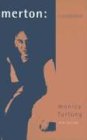
Merton: A Biography
by Monica Furlong
On This Page
Description
An account of the life of Thomas Merton, whose autobiography about life as a monk (The Seven Storey Mountain) became an instant bestseller. Furlong interviewed many of Merton's monastic colleagues and students to write this biography. This edition has been updated to include new information.Tags
Recommendations




















Member Reviews
For many, at least of my reading generation who were just too young to miss the turbulent sixties and publication of the Seven Storey Mountain, Furlong’s biography of Merton was the first oeuvre we grasped into his life and work and meaning. Furlong wrote well, tenderly and with a fine scholarly grasp of her subject, and her book deserves a top shelf place in the Merton catalogue.
Yet something is missing. Not, as some would wish, the salacious details of did he didn’t he with Margie Smith, which really are none of our business, or the similarly breathy suspicions that he committed suicide (likewise not our business), but something deeper, something in the narrative that catapults him from zany, questing, terribly human monk to show more celebrity. In this telling it happens too soon, too inexplicable. One moment he’s a tortured soul, exorcising his demons though institutionally imposed flagellation, the next he an exhausted celebrity (still exorcising his demons though institutionally imposed flagellation).
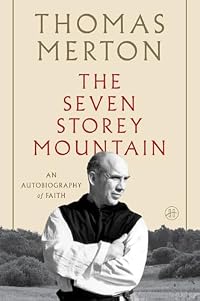
I need to know more of the journey from tonsure to Seven Storey Mountain, know more of the writer in Merton that refused to be suppressed by the Trappist regime he chose. And I need to know more of the spiritual and sociological vacuum in which Seven Storey Mountain arrived and exploded across collective consciousness, catapulting its author to fame. I remember seeing Seven Storey Mountain on my elder confreres’ shelves, nestled alongside Carson's Silent Spring and Pirsig's Zen and the Art and Richard Fariña’s Been Down … what zeitgeist did Merton tap to be there? For an older generation, that of my parents', it even found a place alongside H. V. Morton (and Winston Churchill!). How did it and how did Merton come to register on the searching, collective consciousness of post war generations? What was the connection between the collective zeitgeist and Merton’s personal angst?
Furlong only hints at the end of her study at the commonality of monastic experience, transcending religious and cultural barriers, that Merton was embracing. I felt readers needed to know more of the individual Merton’s journey to that point, and more of the collective malaise that catapulted this angsty monk to stardom. Seven Storey Mountain is after all no easy read, and presumably it had to overcome readers' inertia to have the impact it had, it had to tap into enough spiritual hunger to overcome collective ennui and be read in an era that would soon opt instead for Chicken Soup for the Soul or One Minute Wisdom.
That said, Furlong’s biography was a powerful entry point for many to Merton, and deserves its place in the inner sanctum or Mertonalia. show less
Yet something is missing. Not, as some would wish, the salacious details of did he didn’t he with Margie Smith, which really are none of our business, or the similarly breathy suspicions that he committed suicide (likewise not our business), but something deeper, something in the narrative that catapults him from zany, questing, terribly human monk to show more celebrity. In this telling it happens too soon, too inexplicable. One moment he’s a tortured soul, exorcising his demons though institutionally imposed flagellation, the next he an exhausted celebrity (still exorcising his demons though institutionally imposed flagellation).
I need to know more of the journey from tonsure to Seven Storey Mountain, know more of the writer in Merton that refused to be suppressed by the Trappist regime he chose. And I need to know more of the spiritual and sociological vacuum in which Seven Storey Mountain arrived and exploded across collective consciousness, catapulting its author to fame. I remember seeing Seven Storey Mountain on my elder confreres’ shelves, nestled alongside Carson's Silent Spring and Pirsig's Zen and the Art and Richard Fariña’s Been Down … what zeitgeist did Merton tap to be there? For an older generation, that of my parents', it even found a place alongside H. V. Morton (and Winston Churchill!). How did it and how did Merton come to register on the searching, collective consciousness of post war generations? What was the connection between the collective zeitgeist and Merton’s personal angst?
Furlong only hints at the end of her study at the commonality of monastic experience, transcending religious and cultural barriers, that Merton was embracing. I felt readers needed to know more of the individual Merton’s journey to that point, and more of the collective malaise that catapulted this angsty monk to stardom. Seven Storey Mountain is after all no easy read, and presumably it had to overcome readers' inertia to have the impact it had, it had to tap into enough spiritual hunger to overcome collective ennui and be read in an era that would soon opt instead for Chicken Soup for the Soul or One Minute Wisdom.
That said, Furlong’s biography was a powerful entry point for many to Merton, and deserves its place in the inner sanctum or Mertonalia. show less
With admirable candor and sensitive insight, Monica Furlong traces the stages of growth that made Merton the unique figure that he was. She draws not only on his writings but on his voluminous correspondence and unpublished journals and on interviews with virtually everyone who knew him well, to present a fully sympathetic but nonadulatory portrait of this gifted and complex man.
INDEX; PHOTOGRAPHY
Ratings
Members
- Recently Added By
Author Information

40+ Works 4,148 Members
Monica Furlong has worked as a religious programmes producer for the BBC.
Common Knowledge
- People/Characters
- Thomas Merton
Classifications
- Genres
- Biography & Memoir, Religion & Spirituality, Nonfiction
- DDC/MDS
- 271.125 — Religion History of Christianity Religious congregations and orders in church history Benedictines Cistercians Trappists
- LCC
- BX4705 .M542 .F87 — Philosophy, Psychology and Religion Christian Denominations Christian Denominations Catholic Church Biography and portraits Individual
Statistics
- Members
- 386
- Popularity
- 80,668
- Reviews
- 3
- Rating
- (3.73)
- Languages
- English
- Media
- Paper
- ISBNs
- 9
- ASINs
- 2