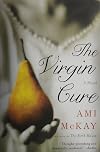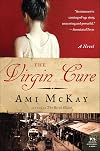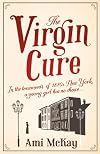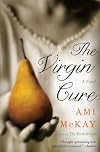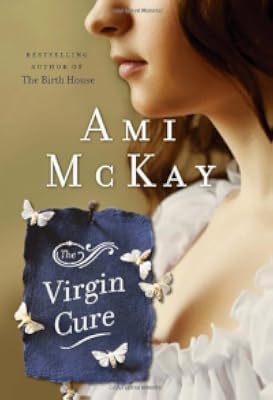
The Virgin Cure
by Ami McKay 
On This Page
Description
From #1 international bestselling author Ami McKay comes The Virgin Cure, the story of a young girl abandoned and forced to fend for herself in the poverty and treachery of post-Civil War New York City.McKay, whose debut novel The Birth House made headlines around the world, returns with a resonant tale inspired by her own great-great-grandmother's experiences as a pioneer of women's medicine in nineteenth-century New York.
In a powerful novel that recalls the evocative fiction Anita show more Shreve, Annie Proulx, and Joanne Harris, Ami McKay brings to light the story of early, forward-thinking social warriors, creating a narrative that readers will find inspiring, poignant, adventure-filled, and utterly unforgettable.
. show less
Tags
Recommendations

























Member Reviews
"I am Moth, a girl from the lowest part of Chrystie Street, born to a slum-house mystic and the man who broke her heart." So begins The Virgin Cure, a novel set in Victorian New York in the year 1871. As a crowded, sweltering summer of riots and poverty comes to a close, twelve-year-old Moth's journey is just beginning.
My Thoughts:
I loved everything about this quirky book. It was different from some books simply because it had footnotes and descriptions within the book and lovely victorian illustrations.
I loved the story and the characters and will look forward to the next book which is coming out to continue the story of Moth. The book held my attention right up to the last page and I was hoping thtat there would be a positive out come show more for Moth. Moth tells her tale in a very chatty way and I enjoyed following her about. I did find that some of the content was quite disturbing in the fact that young girls at sent to brothels and their viginity is sold to the highest bidder.
Overall I loved this book and would highly recommend it. show less
My Thoughts:
I loved everything about this quirky book. It was different from some books simply because it had footnotes and descriptions within the book and lovely victorian illustrations.
I loved the story and the characters and will look forward to the next book which is coming out to continue the story of Moth. The book held my attention right up to the last page and I was hoping thtat there would be a positive out come show more for Moth. Moth tells her tale in a very chatty way and I enjoyed following her about. I did find that some of the content was quite disturbing in the fact that young girls at sent to brothels and their viginity is sold to the highest bidder.
Overall I loved this book and would highly recommend it. show less
I enjoyed this story of 12-year-old Moth, a girl from the slums of 1871 New York City. Moth lives with her mother, until she is sold to a wealthy woman as a maid. From there, it is downhill for her, as she is abused and then recruited to work in a brothel.
For me, this book raised several questions about morality. People prey on poor young girls, often in the guise of helping them. Moth has to make complex moral decisions at a very young age. The story brought these issues to light, in spite of the fact that few of the characters (and certainly none of the males) seemed to question the choices they were making for themselves and others. For the characters, "it is what it is" seemed to be the prevailing philosophy. Yet, Ms. McKay has show more nevertheless created a thought-provoking story -- in part because of the characters' acceptance of the constraints (or privileges) they live under. show less
For me, this book raised several questions about morality. People prey on poor young girls, often in the guise of helping them. Moth has to make complex moral decisions at a very young age. The story brought these issues to light, in spite of the fact that few of the characters (and certainly none of the males) seemed to question the choices they were making for themselves and others. For the characters, "it is what it is" seemed to be the prevailing philosophy. Yet, Ms. McKay has show more nevertheless created a thought-provoking story -- in part because of the characters' acceptance of the constraints (or privileges) they live under. show less
In The Virgin Cure Ami McKay chronicles the adventures of a girl named Moth, who when we first meet her is eking out a hardscrabble existence in 1870s New York. By the time the novel starts Moth's father is long gone and her mother is bringing in a meagre income by telling fortunes and engaging in the occasional act of sex for money or food, or in lieu of rent. The child Moth contributes to the household with petty thievery and scavenging. Eventually though Moth's mother realizes she can save neither herself nor her daughter and sells Moth to a woman of some means, Mrs Wentworth. Moth is taken away in the middle of the night to a plush and apparently comfortable home where she finds herself in a position of abject servitude and show more terrorized by the lady of the house: kept off balance by the woman's capricious moods and subject to random acts of cruelty. Moth escapes, but when she returns home her mother is nowhere to be found. Alone, living on the street, constantly hungry, she is enticed by the beauty and glamour of steetwalkers and willingly allows herself to be recruited into a brothel where, not yet into her teens, she undergoes training as a high-class prostitute with the understanding that eventually her virginity will be sold to the highest bidder. This is not the end of Moth's story. The narrative--first person from Moth's point of view--is framed as autobiography and briefly follows her later life as a carnival act. This is a story of unimaginable hardship leavened by acts of kindness. Moth's survival occurs against the odds because she is resourceful, intelligent and gripped by a tenacious desire to live, and because she meets the right people at the right time. McKay's prose is lush and vivid, filled with convincing detail that brings mid-19th century New York to life. This is a place where filth and squalor exist side by side with luxury and wealth, where men of normal intelligence believe that engaging in sexual intercourse with a virgin will cure them of whatever malady they suffer and where people encourage and profit from this belief. The story that Ami McKay tells is occasionally gut wrenching, but the impression it leaves with the reader is that kindness exists and adversity can be overcome. The Virgin Cure is one of those rare works of fiction that successfully and triumphantly combines popular appeal with literary ambition. show less
Ami McKay writes with storytelling ease of a young girl named “Moth” by a legendary pear tree on the crossroads of Pear Tree corner. As imaginative as this sounds, and though the novel is filled with a sort of Cirque du Soleil creativity in the trappings of the book’s characters from their costumes to their well-manufactured displays of propriety—the book is anything, but happy.
It tells of the polarity between decadence and poverty in the streets of New York in 1871, the age of mysterious outbreaks of disease that would come to be known later as typhoid, diphtheria, smallpox, tuberculosis, gonnorrhea, and syphilis.
It is, in simple terms, a story of survival, of not only the city’s poverty and disease, but the ramifications show more of its poor choices, or lack thereof, which leads or continues the culture’s socially accepted, yet somewhat masked moral decline.
Poor and impoverished families sell their young daughters away into prostitution where they are not only valued for their youth, their potential profitable income, but also for their “certified” virginity and innocence. But the value tied to a girl’s virginity is not entirely driven by a desire toward her innocence and purity, but rather driven by a rumoured myth of a virgin cure – the belief that a man with disease could cure himself by deflowering a virgin, of which the novel is aptly titled.
The tale is of a 12 year old girl named Ada “Moth” Fenwick who is left behind by her “gypsy” mother in poverty by a man whose wandering eye and lustful appetite found a much younger companion by the name of Katie Adams. Though this part in the plot is small, it is the catalyst that propels Moth into an enslaved life of first: servitude, then, and then prostitution. It can also be said that her father’s actions were, but a mere microcosm of the male psyche at large in the tenements of lower Manhattan in 1871; a foreshadowing of men’s dismissive view of marriage and their wives.
What is left is an array of women who react to their station in life, their personal ambitions for survival in prosperity, security, and if fitting, love.
Ada’s mother, a gypsy fortuneteller is frugal with her love toward her daughter, perhaps as a result of the severity of her abandonment by her husband and the severity of being poor with a child to raise on her own, single-handedly. It would be better to think she did this as an effort to strengthen Ada in tactics of survival, but it’s too hopeful and assumption. As a reader, I suspect her coolness toward her daughter is due to the hardship of their impoverished life together and her personal heartache.
As ambition goes, Ada’s mother maximizes her exotic origin by exaggerating her prophetic, supernatural abilities and by doing so, increases whatever profit she is able to make. An interesting trait about Ada’s gypsy mother is her partiality to collecting charred trinkets from the wreckage of house fires. It is as if, perhaps, her willingness to settle for charred, token items, speaks to her submission finally to the horror of her environment, her poverty, and her inability to overcome it.
Miss Emma Everett, the madam in charge of raising young girls in prostitution on “No. 73 East Houston Street,” is surprisingly fair to the girls, understanding always their crucial role in her tenacious ambition toward financial success. She is clear about her expectations, preying in on their youth, their beauty, and their willingness to succeed in raising their status from “almost whore” to “whore” in order to avoid a life on the streets. Miss Emma is able to tantalize the girls with material extravagance and special treatment when she feels a girl is able to seduce clients into securing her and her household a fortune. She is neither cruel to the girls in the house, but strict in their tutelage in beauty and etiquette. They are, to her, neither daughters, nor friends, but commodities to her social status and her business. Miss Emma reflects the materialistic woman who will erase moral boundaries in order to survive and flourish amongst her peers, perpetuating men’s stereotypes of girls and women and satisfying their sexual appetites while filling her purse.
Mrs. Wentworth, though endowed with a high station and riches, is inflicted with sorrow, anguish, and rage, desiring power and vengeance on the youth, beauty, and innocent victims who beguile and surpass her in arousing desire. The plot of Mrs. Wentworth’s cruelty was so difficult to read, I had to, during numerous times in my reading, put the book down. It is enough to say, Mrs. Wentworth’s worst enemy is herself in her own torment that she feels compelled as a coping mechanism or an act of survival to inflict the same kind of torment on others. Though she is cruel, she is, in fact, not the most degenerate of the characters in the book.
Though Dr. Sadie is a woman of heritage and rich origin, her family also ostracizes her because of her choice in pursuing an education and a career that equals that of a man’s (at that time), rather than marriage. She boards and works in the New York Infirmary for Indigent Women and Children, provides medical care for the young girls who live on East Houston Street, and pays regular visits to those who too ill to leave their homes for medical care. Dr. Sadie, the polar opposite of Miss Emma Everett in moral attitude, is similar to her in that she works within the rules of a social system to further her goals, namely, to care for those who are in need. Her financial compensation is most likely small compared to her previous lifestyle, but provides an outlet where she feels she is doing some good especially toward the young victims that fall prey to the “virgin cure” mythology.
Ada “Moth” Fenwick is the child at the centre of the story whose lowly station in life has left her with few choices in acts of survival amongst the streets of Manhattan. She is an embodiment of “child-woman,” young as 12 years old, innocent in the ways of sexuality, yet hardened by the harsh environment she finds herself in: from abandonment of her father; an unrequited love from her mother; cruelty and humiliation in the service of Mrs. Wentworth; manipulation by a butler whom she trusts; dishonesty in the craft of begging and stealing on the streets south of East Houston; the betrayal of friends in the competition for being the most valuable asset and commodity to Miss Emma Everett, to the eventual knowledge and misuse of her own sexuality.
The stories of these girls and women work together to showcase a hungry, desperate, and diseased New York of the 1870’s beneath the decadence of mansion and estate, dress trains, and social elitism.
“Moth” is not a butterfly, but an active mistress of the night, able to hover much like a hummingbird, above her circumstances. show less
It tells of the polarity between decadence and poverty in the streets of New York in 1871, the age of mysterious outbreaks of disease that would come to be known later as typhoid, diphtheria, smallpox, tuberculosis, gonnorrhea, and syphilis.
It is, in simple terms, a story of survival, of not only the city’s poverty and disease, but the ramifications show more of its poor choices, or lack thereof, which leads or continues the culture’s socially accepted, yet somewhat masked moral decline.
Poor and impoverished families sell their young daughters away into prostitution where they are not only valued for their youth, their potential profitable income, but also for their “certified” virginity and innocence. But the value tied to a girl’s virginity is not entirely driven by a desire toward her innocence and purity, but rather driven by a rumoured myth of a virgin cure – the belief that a man with disease could cure himself by deflowering a virgin, of which the novel is aptly titled.
The tale is of a 12 year old girl named Ada “Moth” Fenwick who is left behind by her “gypsy” mother in poverty by a man whose wandering eye and lustful appetite found a much younger companion by the name of Katie Adams. Though this part in the plot is small, it is the catalyst that propels Moth into an enslaved life of first: servitude, then, and then prostitution. It can also be said that her father’s actions were, but a mere microcosm of the male psyche at large in the tenements of lower Manhattan in 1871; a foreshadowing of men’s dismissive view of marriage and their wives.
What is left is an array of women who react to their station in life, their personal ambitions for survival in prosperity, security, and if fitting, love.
Ada’s mother, a gypsy fortuneteller is frugal with her love toward her daughter, perhaps as a result of the severity of her abandonment by her husband and the severity of being poor with a child to raise on her own, single-handedly. It would be better to think she did this as an effort to strengthen Ada in tactics of survival, but it’s too hopeful and assumption. As a reader, I suspect her coolness toward her daughter is due to the hardship of their impoverished life together and her personal heartache.
As ambition goes, Ada’s mother maximizes her exotic origin by exaggerating her prophetic, supernatural abilities and by doing so, increases whatever profit she is able to make. An interesting trait about Ada’s gypsy mother is her partiality to collecting charred trinkets from the wreckage of house fires. It is as if, perhaps, her willingness to settle for charred, token items, speaks to her submission finally to the horror of her environment, her poverty, and her inability to overcome it.
Miss Emma Everett, the madam in charge of raising young girls in prostitution on “No. 73 East Houston Street,” is surprisingly fair to the girls, understanding always their crucial role in her tenacious ambition toward financial success. She is clear about her expectations, preying in on their youth, their beauty, and their willingness to succeed in raising their status from “almost whore” to “whore” in order to avoid a life on the streets. Miss Emma is able to tantalize the girls with material extravagance and special treatment when she feels a girl is able to seduce clients into securing her and her household a fortune. She is neither cruel to the girls in the house, but strict in their tutelage in beauty and etiquette. They are, to her, neither daughters, nor friends, but commodities to her social status and her business. Miss Emma reflects the materialistic woman who will erase moral boundaries in order to survive and flourish amongst her peers, perpetuating men’s stereotypes of girls and women and satisfying their sexual appetites while filling her purse.
Mrs. Wentworth, though endowed with a high station and riches, is inflicted with sorrow, anguish, and rage, desiring power and vengeance on the youth, beauty, and innocent victims who beguile and surpass her in arousing desire. The plot of Mrs. Wentworth’s cruelty was so difficult to read, I had to, during numerous times in my reading, put the book down. It is enough to say, Mrs. Wentworth’s worst enemy is herself in her own torment that she feels compelled as a coping mechanism or an act of survival to inflict the same kind of torment on others. Though she is cruel, she is, in fact, not the most degenerate of the characters in the book.
Though Dr. Sadie is a woman of heritage and rich origin, her family also ostracizes her because of her choice in pursuing an education and a career that equals that of a man’s (at that time), rather than marriage. She boards and works in the New York Infirmary for Indigent Women and Children, provides medical care for the young girls who live on East Houston Street, and pays regular visits to those who too ill to leave their homes for medical care. Dr. Sadie, the polar opposite of Miss Emma Everett in moral attitude, is similar to her in that she works within the rules of a social system to further her goals, namely, to care for those who are in need. Her financial compensation is most likely small compared to her previous lifestyle, but provides an outlet where she feels she is doing some good especially toward the young victims that fall prey to the “virgin cure” mythology.
Ada “Moth” Fenwick is the child at the centre of the story whose lowly station in life has left her with few choices in acts of survival amongst the streets of Manhattan. She is an embodiment of “child-woman,” young as 12 years old, innocent in the ways of sexuality, yet hardened by the harsh environment she finds herself in: from abandonment of her father; an unrequited love from her mother; cruelty and humiliation in the service of Mrs. Wentworth; manipulation by a butler whom she trusts; dishonesty in the craft of begging and stealing on the streets south of East Houston; the betrayal of friends in the competition for being the most valuable asset and commodity to Miss Emma Everett, to the eventual knowledge and misuse of her own sexuality.
The stories of these girls and women work together to showcase a hungry, desperate, and diseased New York of the 1870’s beneath the decadence of mansion and estate, dress trains, and social elitism.
“Moth” is not a butterfly, but an active mistress of the night, able to hover much like a hummingbird, above her circumstances. show less
Moth is a 12 yr old girl, living with her single mother (who happens to be a Gypsy fortune teller) in the mean streets of 1870s Lower Manhattan. One day her mom sells her as a lady's maid to a nasty wealthy woman. Moth goes from there to living on the streets, and eventually ends up being groomed to become a hooker.
Although the situations and topics in the book were all interesting, the book did not hold my attention. I always found it a struggle to make myself read it and was easily distracted from it once I did begin reading. I think the book lacked sparkle, and it was completely without nuance or complexity. As one of the women in my book club said, "it's an edgy, gritty story, but told in a very clean way." Sort of like a Disney show more movie.
Recommended for: I was the only one in my book club who gave it a thumbs down, and the reviews here at LT are strongly positive, so maybe it was just the mood I was in? But I found it to be a piece of very pedestrian historical fiction. Recommended for readers who like a linear storyline and no plot points to ponder. show less
Although the situations and topics in the book were all interesting, the book did not hold my attention. I always found it a struggle to make myself read it and was easily distracted from it once I did begin reading. I think the book lacked sparkle, and it was completely without nuance or complexity. As one of the women in my book club said, "it's an edgy, gritty story, but told in a very clean way." Sort of like a Disney show more movie.
Recommended for: I was the only one in my book club who gave it a thumbs down, and the reviews here at LT are strongly positive, so maybe it was just the mood I was in? But I found it to be a piece of very pedestrian historical fiction. Recommended for readers who like a linear storyline and no plot points to ponder. show less
Moth is a young girl living in the slums of lower Manhattan until her own mother sells her as a servant. When she tries to escape and finds her mother gone, few options are left to her. Moth is forced choose between returning to the abusive woman who bought her; returning to her old life; or living a life of comparative luxury as a prostitute. With the help of a caring, female doctor named Dr. Sadie, Moth must decide what is most important to her and what she’s willing to sacrifice to survive.
Shortly after finishing The Virgin Cure, I read The Civil War in 50 Objects and I was struck immediately by what an amazing job Ami McKay did capturing the feel of the era. Everything from exciting new inventions to diseases people worried about show more to forms of entertainment was captured beautifully. The inserts between chapters in the form of diary entries and newspaper clipping added to the feeling that this story really could have happened. I had more ambivalent feelings about the in-chapter commentary by Dr. Sadie. Many of these comments included irrelevant details about things like lovebird mating habits or boring things like overly detailed descriptions of real dresses like those Moth was wearing.
More important than the content of these asides was what they did to the feel of the story. They made this a story that you weren’t living with the character or as the character, but a story you were watching as an outside observer. For most of the story, I didn’t really feel Moth’s desperate desire to be more than a poor person or to have a safe place to stay. As a result, some of her choices seemed ill-considered and incomprehensible. A story this well written and this well researched should be a shoe-in for a four or five star review, but the lack of connection robbed it of the spark it needed to be truly great.
This review first published on Doing Dewey. show less
Shortly after finishing The Virgin Cure, I read The Civil War in 50 Objects and I was struck immediately by what an amazing job Ami McKay did capturing the feel of the era. Everything from exciting new inventions to diseases people worried about show more to forms of entertainment was captured beautifully. The inserts between chapters in the form of diary entries and newspaper clipping added to the feeling that this story really could have happened. I had more ambivalent feelings about the in-chapter commentary by Dr. Sadie. Many of these comments included irrelevant details about things like lovebird mating habits or boring things like overly detailed descriptions of real dresses like those Moth was wearing.
More important than the content of these asides was what they did to the feel of the story. They made this a story that you weren’t living with the character or as the character, but a story you were watching as an outside observer. For most of the story, I didn’t really feel Moth’s desperate desire to be more than a poor person or to have a safe place to stay. As a result, some of her choices seemed ill-considered and incomprehensible. A story this well written and this well researched should be a shoe-in for a four or five star review, but the lack of connection robbed it of the spark it needed to be truly great.
This review first published on Doing Dewey. show less
McKay is an amazing writer and the story was intense and beautiful and heartbreaking and awful all at the same time--completely riveting. Kind of made me hate men a little bit (thankfully I know full well that not all men are like the ones in the book--and she wrote about good guys, too. And awful women. I guess it's just that stories that reflect humanity as it really was (and is) and the history that shapes gender and cultural mores and attitudes in general always gets to me a bit. Very thought provoking and great read though and through!
p.s. Don't let the "seriousness" of my comments make it seem like the book doesn't hold up on its own purely as a wonderful story. I stayed up all night (or 'til 4:00 a.m. anyway) to read it in one show more stint (just one more chapter, no, just one more . . . ah, rats, hardly any left, I might as well read the whole thing! :D) show less
p.s. Don't let the "seriousness" of my comments make it seem like the book doesn't hold up on its own purely as a wonderful story. I stayed up all night (or 'til 4:00 a.m. anyway) to read it in one show more stint (just one more chapter, no, just one more . . . ah, rats, hardly any left, I might as well read the whole thing! :D) show less
Members
- Recently Added By
Published Reviews
ThingScore 90
As with her first novel, McKay packs The Virgin Cure to the brim with ephemera (silk walking suits, evening toilette, tear catchers, and Circassian hair oils), local legends, and wives’ tales (the title comes from the popular belief at the time that having sex with a virgin cured illness).
added by chazzard
Dickens in the brothel..Ami McKay’s first bestselling novel was a trove of period ephemera, her own narrative playing off juicy snippets from newspapers, magazine ads and herbalist lore. It was a winning formula that she continues to favour in a new novel that also shares thematic territory with The Birth House....Moth’s lot in life is undeserved and her longings universal. You’ll hope show more that she escapes with her dignity and her health, and you’ll want her to feel safe, have comfort and be loved. In spite of the odds stacked against her, she deserves it. show less
added by vancouverdeb
Moth is the central character of Ami McKay’s new novel The Virgin Cure, the long-awaited follow-up to her 2006 debut, The Birth House. It’s a powerful novel, rooted in the same elements that made The Birth House both critically lauded and a bestseller — including a vivid historical realism and compelling, well-drawn characters — but with a significantly darker approach and subject show more matter....One of McKay’s gifts and skills as a writer is her ability to utterly immerse the reader in her fictional world....That resignation, and those fleeting moments of care, in a world of obliviousness and pain, combine to make The Virgin Cure a powerful, affecting novel. show less
added by vancouverdeb
Author Information

8 Works 4,144 Members
Ami McKay was born in Indiana in 1968. She is a playwright, novelist and journalist. She started her writing career as a freelancer for CBC Radio. Her work has aired on 'This Morning' and 'The Sunday Edition'. Her documentary, Daughter of Family G won an Excellence in Journalism Medallion at the 2003 Atlantic Journalism Awards.Her first title, The show more Birth House, made the Number One Spot on Canadian best sellers list. In 2012 she won the Atlantic Independent Booksellers' Association "Bookseller's Choice of the Year" award for her title, The Virgin Cure. (Bowker Author Biography) show less
Ami McKay is a LibraryThing Author, an author who lists their personal library on LibraryThing.
Awards and Honors
Distinctions
Series
Belongs to Publisher Series
Common Knowledge
- Canonical title*
- La casa delle vergini
- Original title
- The Virgin Cure
- Original publication date
- 2011-10-25
- People/Characters
- Moth Fenwick; Dr. Sadie Fonda; Miss Everett; Mrs. Wentworth; Mr. Wentworth
- Important places
- Manhattan, New York, New York, USA; New York, New York, USA
- Epigraph
- Recall ages - One age is but a part-ages are but a part;
Recall the angers, bickerings,delusions,superstitions of the idea of caste
Recall the the bloody cruelties and crimes.
Anticipate the best women;
I say ... (show all)an unnumbered new race of hardy and well defined
women are to spread through all of These States
I say a girl fit for These States must be free, capable, ,
dauntless, just the same as a boy.
- Walt Whitman
Shrewdness, large capital, business enterprise, are all enlisted in the lawless stimulation of this mighty instinct of sex.
- Dr Elizabeth Blackwell - founder of the New York Infirmary for Indigent Women and Children - Dedication
- For Sarah Fonda Mackintosh- doctor, mother, rebel; and for my mother, who never let me forget that I came from such stuff.
- First words
- I am Moth, a girl from the lowest part of Chrystie Street, born to a slum house mystic and the man who broke her heart.
- Last words
- (Click to show. Warning: May contain spoilers.)I must find another girl.
- Publisher's editor
- Ottewell, Miranda
*Some information comes from Common Knowledge in other languages. Click "Edit" for more information.
Classifications
Statistics
- Members
- 747
- Popularity
- 37,831
- Reviews
- 62
- Rating
- (3.83)
- Languages
- English, German, Italian, Spanish
- Media
- Paper, Audiobook, Ebook
- ISBNs
- 20
- ASINs
- 7