Six Impossible Things Before Breakfast: The Evolutionary Origins of Belief
by Lewis Wolpert
On This Page
Description
A groundbreaking book, examining the evolutionary origins of belief.Tags
Recommendations
































Member Reviews
If you want to know why many people ignore rational scientific explanations in favour of mysticism and religion, this is a book definitely worth the read. The hypotheses of this scientific examination of the basis of human belief, is that humans developed their belief systems in concert with their ability to make tools. This requirement to understand cause and effect in order to make tools also makes humans seek a causal reason for existence and so on. He shows the reader that beliefs are part of our biological makeup and genetically printed onto our brains – some of course much more than others.
Although Wolpert presents his scientific hypothesis in a persuasive and logical manner, he manages to keep a tone of respect and restraint show more when discussing the evolution of psychology and belief systems, recognizing and acknowledging contemporaries who hold the current superstitions of our society. It is his displays of tolerance which appeal to the layman, avoiding conflict and absolutism while still holding firmly onto his opinions. He also avoids falling into the trap of treating the subject with lengthy academic mind-bending arguments, leaving the book accessible to a very wide reader-ship.
Wolpert touches on many different facets of belief – including health (naturopathy, psychotherapy and other parasciences), paranormal phenomena, false beliefs such as mental illness and myths, morality, science and religion.
There are lots of anecdotal illustrations to add to his gentle arguments. I found the arguments in the science chapter very well done. He explains why it is so difficult to comprehend science and says:
“Almost without exception, any common-sense view of the world is scientifically false. Obvious examples are the movement of the sun with respect to the earth…………No matter where one looks in science, its ideas confound common sense….”
He goes on to argue that man seeks a causal explanation for events in his life – such as ‘I went out in the cold and this caused my flu….” However, he presents his views in such a tolerant manner, that I almost wished that I could rescind my atheism and take comfort from a belief system such as religion, as his own son does. He says:
“…..people have the right to hold whatever beliefs appeal to them, but with a fundamental provision that those beliefs must be reliable if they lead to actions that affect the lives of other people.”
Wolpert puts forward many interesting arguments for his own scientific belief system. The main criticism of the book must be the editorial laxity – with quite a few clumsy sentences and in fact one or two non-sentences. My favourite chapters were the ones dealing with science and health, which for me came across with absolute clarity of reasoning. It was very reassuring. The religious and mythical arguments were gentle and logical, in keeping with the more didactic approach of Dawkins and others.
In the end his message is clear. He says:
"The freedom to have beliefs is very important, but it carries with it the obligation to carefully examine the evidence for them."
Highly recommended. show less
Although Wolpert presents his scientific hypothesis in a persuasive and logical manner, he manages to keep a tone of respect and restraint show more when discussing the evolution of psychology and belief systems, recognizing and acknowledging contemporaries who hold the current superstitions of our society. It is his displays of tolerance which appeal to the layman, avoiding conflict and absolutism while still holding firmly onto his opinions. He also avoids falling into the trap of treating the subject with lengthy academic mind-bending arguments, leaving the book accessible to a very wide reader-ship.
Wolpert touches on many different facets of belief – including health (naturopathy, psychotherapy and other parasciences), paranormal phenomena, false beliefs such as mental illness and myths, morality, science and religion.
There are lots of anecdotal illustrations to add to his gentle arguments. I found the arguments in the science chapter very well done. He explains why it is so difficult to comprehend science and says:
“Almost without exception, any common-sense view of the world is scientifically false. Obvious examples are the movement of the sun with respect to the earth…………No matter where one looks in science, its ideas confound common sense….”
He goes on to argue that man seeks a causal explanation for events in his life – such as ‘I went out in the cold and this caused my flu….” However, he presents his views in such a tolerant manner, that I almost wished that I could rescind my atheism and take comfort from a belief system such as religion, as his own son does. He says:
“…..people have the right to hold whatever beliefs appeal to them, but with a fundamental provision that those beliefs must be reliable if they lead to actions that affect the lives of other people.”
Wolpert puts forward many interesting arguments for his own scientific belief system. The main criticism of the book must be the editorial laxity – with quite a few clumsy sentences and in fact one or two non-sentences. My favourite chapters were the ones dealing with science and health, which for me came across with absolute clarity of reasoning. It was very reassuring. The religious and mythical arguments were gentle and logical, in keeping with the more didactic approach of Dawkins and others.
In the end his message is clear. He says:
"The freedom to have beliefs is very important, but it carries with it the obligation to carefully examine the evidence for them."
Highly recommended. show less
A crackingly good thought provoker, after all we each have the subject of this book in between our ears and so we can each judge the various observations and suggestions in the light of our own experiences.
I found Wolpert very honest and open both in terms of self disclosure and with regard to the fact that most of the book is speculation. Well informed, intelligent, evidence based and persuasive speculation but speculation none the less.
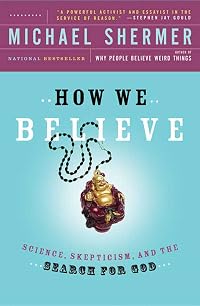
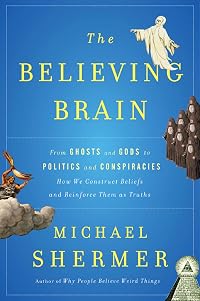
This book whetted my appetite far more than Michael Shermer's "Why People Believe Weird Things" because it concentrated much more on general findings and ideas which can explain a multitude of things rather than Shermer's cataloguing of strangeness followed by some generalisations.
Quite a bit of show more interesting detail regarding the results of observations and experiments, quite a surprising amount of which I managed to confirm during a weeks holiday's worth of conversation with friends and family.
So yes OK this book is not packed with detailed empirical evidence and careful measurement. But it is a very interesting discussion by an intelligent author with an interest in a wide range of subjects which he has managed to bring together into a fairly cohesive story .
A good introduction to an argument which is sure to develop as science examines this issue in more detail in the years to come. show less
I found Wolpert very honest and open both in terms of self disclosure and with regard to the fact that most of the book is speculation. Well informed, intelligent, evidence based and persuasive speculation but speculation none the less.
This book whetted my appetite far more than Michael Shermer's "Why People Believe Weird Things" because it concentrated much more on general findings and ideas which can explain a multitude of things rather than Shermer's cataloguing of strangeness followed by some generalisations.
Quite a bit of show more interesting detail regarding the results of observations and experiments, quite a surprising amount of which I managed to confirm during a weeks holiday's worth of conversation with friends and family.
So yes OK this book is not packed with detailed empirical evidence and careful measurement. But it is a very interesting discussion by an intelligent author with an interest in a wide range of subjects which he has managed to bring together into a fairly cohesive story .
A good introduction to an argument which is sure to develop as science examines this issue in more detail in the years to come. show less
In this book Lewis Wolpert tackles the nature of belief. An English biology professor explores belief's psychological basis and its possible evolutionary origins in physical cause and effect.
Motivated by his youngest son’s conversion to a fundamentalist Christian Church began an exploration of the scientific basis for people’s belief about causal beliefs.
Wolpert argues all human belief stems an understanding of cause and effect. Deftly argued cogently written, he argues that although religious and mystical beliefs give comfort and meaning to life, science is the best way of understanding how the world works. Yet, he stops short of providing an explanation for the questions science cannot answer. To me, those answers are only found show more in religion.
He states we have to both respect the beliefs of others and accept the responsibility to change to try to change them if they are improbable. I agree. In my mind, science reveals the beauty and complexity with which the world was created. Yet, its Big Bang theory - in which Wolpert professes belief – provides a fragmentary, incomplete answer.
The freedom to reach and hold beliefs is vital to me and society. Yet it carries with it the responsibility to examine their origins and foundations. I disagree with Wolpert’s conclusions, but I was challenged, informed and entertained by reading his book.
Penned by the Pointed Pundit
February 12, 2007
09:53:05 show less
Motivated by his youngest son’s conversion to a fundamentalist Christian Church began an exploration of the scientific basis for people’s belief about causal beliefs.
Wolpert argues all human belief stems an understanding of cause and effect. Deftly argued cogently written, he argues that although religious and mystical beliefs give comfort and meaning to life, science is the best way of understanding how the world works. Yet, he stops short of providing an explanation for the questions science cannot answer. To me, those answers are only found show more in religion.
He states we have to both respect the beliefs of others and accept the responsibility to change to try to change them if they are improbable. I agree. In my mind, science reveals the beauty and complexity with which the world was created. Yet, its Big Bang theory - in which Wolpert professes belief – provides a fragmentary, incomplete answer.
The freedom to reach and hold beliefs is vital to me and society. Yet it carries with it the responsibility to examine their origins and foundations. I disagree with Wolpert’s conclusions, but I was challenged, informed and entertained by reading his book.
Penned by the Pointed Pundit
February 12, 2007
09:53:05 show less
Lewis Wolpert can be interesting, but I can't recommend this book.
I think the fundamental problem is that it's before its time. There simply is not enough actual material known to justify a book like this, so what we get is speculation piled on speculation.
Wolpert does provide one significant insight I've not seen mentioned elsewhere, which is to point out that, as best we can tell, humans possess a theory of causality unlike anything else in the animal kingdom (unlike, say, a theory of mind). It is this theory of causality (things happen for a reason) that he sees as leading to the human willingness to leap onto various forms of superstition, religion and suchlike. (And, conceivably, that affords us a theory of mind that is actually show more significantly different from that of animals.)
I suspect that, with this insight, there is a good book waiting to be written that ties together a discussion of unsupported belief in social interactions, in religions, in politics, heck even in the way we want certain pet scientific theories to be true, but such a book would have to be written by someone from, and exceedingly steeped in, the social sciences.
If you do pick up this book, my recommendation is to read the first third or so, which gets across this fundamental point, then ignore the rest which is mostly elaboration, covering material you probably already know. show less
I think the fundamental problem is that it's before its time. There simply is not enough actual material known to justify a book like this, so what we get is speculation piled on speculation.
Wolpert does provide one significant insight I've not seen mentioned elsewhere, which is to point out that, as best we can tell, humans possess a theory of causality unlike anything else in the animal kingdom (unlike, say, a theory of mind). It is this theory of causality (things happen for a reason) that he sees as leading to the human willingness to leap onto various forms of superstition, religion and suchlike. (And, conceivably, that affords us a theory of mind that is actually show more significantly different from that of animals.)
I suspect that, with this insight, there is a good book waiting to be written that ties together a discussion of unsupported belief in social interactions, in religions, in politics, heck even in the way we want certain pet scientific theories to be true, but such a book would have to be written by someone from, and exceedingly steeped in, the social sciences.
If you do pick up this book, my recommendation is to read the first third or so, which gets across this fundamental point, then ignore the rest which is mostly elaboration, covering material you probably already know. show less
Having believed more than my share of impossible things, I’ve become very interested in the thinking processes behind matters of belief. Evolutionary biologist Wolpert tackles this subject from a different angle than many in his field. Wolpert proposes that our development of tool use created a heavy mental emphasis on the relationship between cause and effect. While searching for cause and effect in the natural world has served us well in such fields as science and technology, not being able to find a cause for an effect is apparently so vexing to the brain that it has proven more than willing to simply make one up when necessary.
There’s a litany of interesting studies cited in this book in support of these arguments, but Wolpert show more rarely goes into detail as he discusses everything from complex tool use in ravens to retention rates in Moon’s Unification Church. This left me wanting a lot more information at times and also makes the reading a bit dense. Still, I learned a great deal about how the brain functions in relationship to various topics. The book is well organized, with each chapter addressing issues on a theme ranging from belief development in children to the persistence of beliefs in the paranormal despite the lack of evidence to how scientific beliefs differ from other kinds of beliefs. Very useful for anyone interested in how we think and why we believe what we do. show less
There’s a litany of interesting studies cited in this book in support of these arguments, but Wolpert show more rarely goes into detail as he discusses everything from complex tool use in ravens to retention rates in Moon’s Unification Church. This left me wanting a lot more information at times and also makes the reading a bit dense. Still, I learned a great deal about how the brain functions in relationship to various topics. The book is well organized, with each chapter addressing issues on a theme ranging from belief development in children to the persistence of beliefs in the paranormal despite the lack of evidence to how scientific beliefs differ from other kinds of beliefs. Very useful for anyone interested in how we think and why we believe what we do. show less
This is an interesting book. The author freely admits that the 'evidence' he presents is lacking. Often times I got to thinking about the examples cited and completely lost track of the central theme of the book. It is thought provoking, but it is a quick overview and not an in depth analysis.
Six Impossible Things Before Breakfast by Lewis Wolpert is an attempt to explain where and why belief – and particularly religious belief – arose from in humans. Wolpert, a developmental biologist and Professor of Biological Medicine , has a long-standing interest in raising the public understanding of science. As such, there are similarities between him and Richard Dawkins ... also from a biology background with an interest in explaining science to the public. Also like Dawkins, Wolpert has an interest in why the concept of religious belief persists in human society.
To look at the reasons he believes that to be so, he first reviews what we already understand of the origins of belief, and then attempts to link that show more development specifically to the rise of tool use in early human societies. He covers development of theory of mind, looks at the evidence for belief systems in animals, then goes on to examine how he thinks that links to tool use, and from there onward into belief, faith and religious conviction. Along the way he links the ideas of false beliefs to mental illnesses and neurological diseases. His primary thesis relates to how tool use primed those mental circuits, something he freely admits is speculative and for which he has no hard evidence; his secondary conclusion is less original, and relates to why those beliefs, once established will persist.
Wolpert’s approach is more conciliatory than Dawkins, or Sam Harris, but his conclusions are no less strong ... religion is something for which we are genetically and evolutionarily primed, but one we have no strict need for on those levels any more. What we have is an overpowering internal need to create explanations; and it is unmistakably human that those explanations satisfy us on a narrative, common-sense level. That to many people science offers conclusions which are to them counter-intuitive is Wolpert’s explanation – again not original – for why people often seem to prefer explanations for which not only is there a lack of evidence, but a heavy weight of evidence against the belief.
...more importantly, our belief engine, programmed in our brains by our genes operates on different principles. It prefers quick decisions, it is bad with numbers, loves represntativeness, and sees patterns where there is only randomness. It is too often influenced by authority, and it has a liking for mysticism.
Scientific thought is the best way we have to think rationally about the world around us, the whys and hows o it all. What is easy to forget is that though it is rational, it is not always natural – and that dissonance is often difficult to overcome.
In his conclusion, Wolpert draws the line at railing against religion as being a purely malignant force. For him religion is simply the prevalent expression of the human need to create beliefs, and extinguishing that entirely is not necessarily necessary nor beneficial. As long as religion does not act in a negative manner on others or on society as a whole, then there is room in Wolpert’s world view for it to co-exist.
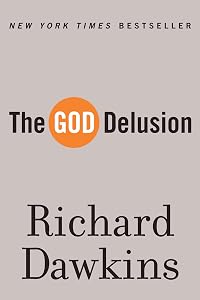
Wolpert’s view is closer to mine than Dawkins’ and Harris’ views, both expressed in books within the last year (The God Delusion and Letter to a Christian Nation respectively). His book is a relatively short review of the various areas of evidence that contribute to his conclusion (the chapter on development of Theory of Mind, a particular interest of mine, for example puts forward some of the standard schools of thought without really going into the counter-evidence, or the more advanced current synthesis), but he presents the basic points well. Where he presents the standard argument, he does so fairly, and without malice, and where he advances his own speculation, he does so with candour and frankness.
An enjoyable introduction if you do not know the topic that well, a good recap if you do; a book worth reading by those interested in ideas of belief. show less
To look at the reasons he believes that to be so, he first reviews what we already understand of the origins of belief, and then attempts to link that show more development specifically to the rise of tool use in early human societies. He covers development of theory of mind, looks at the evidence for belief systems in animals, then goes on to examine how he thinks that links to tool use, and from there onward into belief, faith and religious conviction. Along the way he links the ideas of false beliefs to mental illnesses and neurological diseases. His primary thesis relates to how tool use primed those mental circuits, something he freely admits is speculative and for which he has no hard evidence; his secondary conclusion is less original, and relates to why those beliefs, once established will persist.
Wolpert’s approach is more conciliatory than Dawkins, or Sam Harris, but his conclusions are no less strong ... religion is something for which we are genetically and evolutionarily primed, but one we have no strict need for on those levels any more. What we have is an overpowering internal need to create explanations; and it is unmistakably human that those explanations satisfy us on a narrative, common-sense level. That to many people science offers conclusions which are to them counter-intuitive is Wolpert’s explanation – again not original – for why people often seem to prefer explanations for which not only is there a lack of evidence, but a heavy weight of evidence against the belief.
...more importantly, our belief engine, programmed in our brains by our genes operates on different principles. It prefers quick decisions, it is bad with numbers, loves represntativeness, and sees patterns where there is only randomness. It is too often influenced by authority, and it has a liking for mysticism.
Scientific thought is the best way we have to think rationally about the world around us, the whys and hows o it all. What is easy to forget is that though it is rational, it is not always natural – and that dissonance is often difficult to overcome.
In his conclusion, Wolpert draws the line at railing against religion as being a purely malignant force. For him religion is simply the prevalent expression of the human need to create beliefs, and extinguishing that entirely is not necessarily necessary nor beneficial. As long as religion does not act in a negative manner on others or on society as a whole, then there is room in Wolpert’s world view for it to co-exist.
Wolpert’s view is closer to mine than Dawkins’ and Harris’ views, both expressed in books within the last year (The God Delusion and Letter to a Christian Nation respectively). His book is a relatively short review of the various areas of evidence that contribute to his conclusion (the chapter on development of Theory of Mind, a particular interest of mine, for example puts forward some of the standard schools of thought without really going into the counter-evidence, or the more advanced current synthesis), but he presents the basic points well. Where he presents the standard argument, he does so fairly, and without malice, and where he advances his own speculation, he does so with candour and frankness.
An enjoyable introduction if you do not know the topic that well, a good recap if you do; a book worth reading by those interested in ideas of belief. show less
Members
- Recently Added By
Lists

Attaining Belief
14 works; 2 members
Author Information

23+ Works 1,345 Members
A biologist specializing in embryology, Lewis Wolpert is Professor Emeritus of Biology as Applied to Medicine at University College London. His books include Six Impossible Things Before Breakfast and Malignant Sadness, the basis for a BBC television series.
Common Knowledge
- Canonical title
- Six Impossible Things Before Breakfast: The Evolutionary Origins of Belief
- Alternate titles
- Six Impossible Things Before Breakfast
- Original publication date
- 2006
- People/Characters
- Charles Darwin [Charles Robert: 1809-1882]; David Hume; William James; Jean Piaget
- First words
- Introduction
I became interested in belief for several reasons.
Classifications
Statistics
- Members
- 388
- Popularity
- 80,734
- Reviews
- 8
- Rating
- (3.42)
- Languages
- English, Italian
- Media
- Paper, Ebook
- ISBNs
- 7
- ASINs
- 2