On This Page
Description
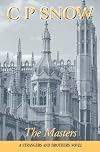
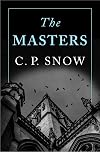
The fourth in the Strangers and Brothersseries begins with the dying Master of a Cambridge college. His imminent demise causes intense rivalry and jealousy amongst the other fellows. Former friends become enemies as the election looms.Tags
Recommendations
















Member Reviews
This is the 5th book in Snow's "Strangers and Brothers" series. The series follows the life and career of Lewis Eliot from his early struggles in the 1920s to become a lawyer and to deal with marriage to a mentally troubled woman through his time as a Cambridge don, and then through the years of World War Two and into the 1960s. Through Eliot's eyes we see the changes in British society (mostly upper class and academic circles). In The Masters, we are in the late 1930s, and Eliot is a don in an unnamed college within Cambridge University. The Master of the college has terminal cancer, and the deliberations concerning who his successor will be have begun, with two main camps quickly forming. The plot of the book concerns these show more deliberations and negotiations, and the personalities and relationships of the men struggling through the process.
I am slowly reading through this series, which has, in all, 11 books, usually one or two books per year. I enjoyed reading the first four, and very much enjoyed this book, as well. Given the subject matter, I really wasn't expecting to find The Masters compelling, but I did. It's about a bunch of relatively privileged men in the 1930s deeply involved in the politics of a decision that could be of importance only within their fishbowl world. Why would I care? The answer lies in Snow's deft touch with character, and his obvious somewhat wry affection towards his subjects. The dons cover a spectrum of ages, and Snow ably shows us how each man's experiences and expectations regarding the college and its traditions is rooted in whatever era he came of age. The oldest of the dons has been in his position since the 1880s. The youngest of the dons, a scientist, is working on problems of physics that, we are told, will eventually help in the creation of radar. Through their varied eyes, we are shown the evolution of English university life and academia as a whole.
Snow used an interesting method in his storytelling, here, in that the action of The Masters, actually steps back in time a few years from the series' previous book, [The Light and the Dark], which takes the narrative into the middle of World War Two. So we know what the future will hold for some of the characters we're reading about, and we also understand how this world that the Cambridge dons are so concerned with preserving is soon to undergo drastic changes that all of their deep deliberations and politics will be entirely unable to prevent or even influence.
All in all, this is a very fine novel of ideas and personalities. Understanding the characters' backgrounds through a reading of the previous books in the series would be helpful, but I don't think in this case wholly necessary. show less
I am slowly reading through this series, which has, in all, 11 books, usually one or two books per year. I enjoyed reading the first four, and very much enjoyed this book, as well. Given the subject matter, I really wasn't expecting to find The Masters compelling, but I did. It's about a bunch of relatively privileged men in the 1930s deeply involved in the politics of a decision that could be of importance only within their fishbowl world. Why would I care? The answer lies in Snow's deft touch with character, and his obvious somewhat wry affection towards his subjects. The dons cover a spectrum of ages, and Snow ably shows us how each man's experiences and expectations regarding the college and its traditions is rooted in whatever era he came of age. The oldest of the dons has been in his position since the 1880s. The youngest of the dons, a scientist, is working on problems of physics that, we are told, will eventually help in the creation of radar. Through their varied eyes, we are shown the evolution of English university life and academia as a whole.
Snow used an interesting method in his storytelling, here, in that the action of The Masters, actually steps back in time a few years from the series' previous book, [The Light and the Dark], which takes the narrative into the middle of World War Two. So we know what the future will hold for some of the characters we're reading about, and we also understand how this world that the Cambridge dons are so concerned with preserving is soon to undergo drastic changes that all of their deep deliberations and politics will be entirely unable to prevent or even influence.
All in all, this is a very fine novel of ideas and personalities. Understanding the characters' backgrounds through a reading of the previous books in the series would be helpful, but I don't think in this case wholly necessary. show less
I began The Masters with the expectation that I would find it filled with telling insights into British culture in the period between the World Wars, and the fear it would be dull, dull, dull. To my delight (and relief) I found myself engrossed in a fascinating narrative. The novel opens as the fellows of a fictional college at Cambridge learn that the current Master of the college has a terminal illness. When he dies, the fellows know they must elect a new Master. A prolonged, and oh so gentile, power struggle ensues as two candidates for the post come forth and each of the 13 fellows take sides.
The novel recounts the subtle machinations of human affairs and gives a wonderfully nuanced picture of the personalities, lives, and visions show more for the future (or of the past) of the 13 men. We the readers, and the author of course, know World War II is coming. While the gathering storm of that conflict doesn’t play a major role in the story, our knowledge that it is imminent gives a deeper dimension to what seem (to most of the characters within the story) tangential differences in global/political view .
C.P. Snow draws beautifully rendered portraits of the men involved in the election. You come to know the key players, and many secondary characters, in all the quiet complexity of their lives. There is no “action” to be speak of, save the cataclysmic turning points of ordinary lives. And of course there is the pure intrigue of waiting to see who will win the election. To my surprise, I highly recommend this for anyone who enjoys a good (if somewhat cerebral) story. show less
The novel recounts the subtle machinations of human affairs and gives a wonderfully nuanced picture of the personalities, lives, and visions show more for the future (or of the past) of the 13 men. We the readers, and the author of course, know World War II is coming. While the gathering storm of that conflict doesn’t play a major role in the story, our knowledge that it is imminent gives a deeper dimension to what seem (to most of the characters within the story) tangential differences in global/political view .
C.P. Snow draws beautifully rendered portraits of the men involved in the election. You come to know the key players, and many secondary characters, in all the quiet complexity of their lives. There is no “action” to be speak of, save the cataclysmic turning points of ordinary lives. And of course there is the pure intrigue of waiting to see who will win the election. To my surprise, I highly recommend this for anyone who enjoys a good (if somewhat cerebral) story. show less
Another novel published in 1951, but set in the year 1937. The year hardly matters because outside events have little effect on the election of a new Master for a college at Cambridge. Changes in college customs among academics occur at a snails pace and this protracted election which takes in the better part of a year has a peculiarly insular feel to it. The old Master is terminally ill and has been given two months to live, however he has not been told the diagnosis by his doctor and his wife has decided to put off telling him the bad news as long as she can, which soon gets round to the fellow academics in the college. The Master's position in the college is one of power and influence and also comes with a residence which is much show more sought after. There are 13 fellows in the college who qualify for election and they themselves elect the new master from one of their number. The difficulty for those involved in this election is that much of their campaigning must be done in relative secrecy as they try to shield the current master from the news of his impending death. The fellows are of course all men, mostly steeped in the tradition of academic life and so this novel focuses on the political manoeuvrings of individuals in this group to secure the coveted position. The insularity of the individuals in the group most of whom do not stray far from their place of work concentrates the political subject matter to such an extent that it becomes all encompassing. The skill of the author is to hold the interest of the reader and to examine themes that must occur in any political climate. Themes of power, of organisation, of pride, of affability and of suitability.
Lewis Elliot one of the younger fellows tells the story in the first person, it is the fifth book of an eleven book series, but by its very nature it stands alone. Soon two candidates for the Mastership emerge and are supported by three or four of their colleagues. Lewis Elliott stands firmly behind Jago who he considers is the better man in the classical traditions of the college The other candidate Crawford is a scientist who has gained more of a reputation outside the college. There are fellows in the group embittered by not being considered themselves and others who see themselves as the power behind the throne. It eventually becomes clear that Jago's group have an advantage in numbers of two, but because of the protracted nature of the election and the possibility of three or four floating voters campaigning has to be sustained over a long period of time. The fellows formally dine with each other most evenings and many have rooms inside the college. The wear and tear of holding and keeping their positions behind each candidate takes its toll, although it has to be said not in any drastic way. It is a book where nothing much happens as we follow this group in the minutia of their daily lives.
Of course the book gives the reader an insight into the workings and traditions of a university college and one cannot escape the thought that these fellows lead a life where it becomes commonplace to bury their heads in the sand. A book that looks backwards rather than forwards, the two or three fellows whose work takes them outside the college are liable to feel the tensions of a Europe struggling against fascism, but it has little or no affect on the actions of their colleagues. Women only feature as a stick with which to beat their partners, they are a hindrance to the world inside the college. I did not think that I would synchronise in any way with the thoughts and themes of novels such as this, but I am always willing to be surprised and I was on occasions in this novel. Reading this made me think about growing old.
"A few years before he would not have said of Jago, as though human feelings were tiresome, ‘he’ll recover in time’. But in fact he had come to the point where human feelings were tiresome–no, not tiresome so much as remote, trivial, a little comic. That was the sign of age. Pilbrow had been a man of strong affections. But those affections died off, except the strongest of all; as he became old, he could only feel moved by the great themes of his life; all else cooled down, although he struck no one as old, certainly not himself. And where he did not feel himself, he lost his sympathy for others’ feelings. They did not seem important. Very little seemed important. Just as a mature man dismisses calf love with a smile, because he can no longer feel it (though it may once have caused him the sharpest pain), so Pilbrow, that vigorous old man, smiled indifferently at the triumphs and sufferings of the middle-aged. Suddenly one encountered blankness at a point where one expected sympathy and response. He looked just as he had looked ten years before; he could still feel passionately about his deepest concerns; but those concerns were narrowing, and one knew at last that he was growing old."
Not the most dynamic of novels and limited in scope, but in the end I bought into it and so 4 stars, show less
Lewis Elliot one of the younger fellows tells the story in the first person, it is the fifth book of an eleven book series, but by its very nature it stands alone. Soon two candidates for the Mastership emerge and are supported by three or four of their colleagues. Lewis Elliott stands firmly behind Jago who he considers is the better man in the classical traditions of the college The other candidate Crawford is a scientist who has gained more of a reputation outside the college. There are fellows in the group embittered by not being considered themselves and others who see themselves as the power behind the throne. It eventually becomes clear that Jago's group have an advantage in numbers of two, but because of the protracted nature of the election and the possibility of three or four floating voters campaigning has to be sustained over a long period of time. The fellows formally dine with each other most evenings and many have rooms inside the college. The wear and tear of holding and keeping their positions behind each candidate takes its toll, although it has to be said not in any drastic way. It is a book where nothing much happens as we follow this group in the minutia of their daily lives.
Of course the book gives the reader an insight into the workings and traditions of a university college and one cannot escape the thought that these fellows lead a life where it becomes commonplace to bury their heads in the sand. A book that looks backwards rather than forwards, the two or three fellows whose work takes them outside the college are liable to feel the tensions of a Europe struggling against fascism, but it has little or no affect on the actions of their colleagues. Women only feature as a stick with which to beat their partners, they are a hindrance to the world inside the college. I did not think that I would synchronise in any way with the thoughts and themes of novels such as this, but I am always willing to be surprised and I was on occasions in this novel. Reading this made me think about growing old.
"A few years before he would not have said of Jago, as though human feelings were tiresome, ‘he’ll recover in time’. But in fact he had come to the point where human feelings were tiresome–no, not tiresome so much as remote, trivial, a little comic. That was the sign of age. Pilbrow had been a man of strong affections. But those affections died off, except the strongest of all; as he became old, he could only feel moved by the great themes of his life; all else cooled down, although he struck no one as old, certainly not himself. And where he did not feel himself, he lost his sympathy for others’ feelings. They did not seem important. Very little seemed important. Just as a mature man dismisses calf love with a smile, because he can no longer feel it (though it may once have caused him the sharpest pain), so Pilbrow, that vigorous old man, smiled indifferently at the triumphs and sufferings of the middle-aged. Suddenly one encountered blankness at a point where one expected sympathy and response. He looked just as he had looked ten years before; he could still feel passionately about his deepest concerns; but those concerns were narrowing, and one knew at last that he was growing old."
Not the most dynamic of novels and limited in scope, but in the end I bought into it and so 4 stars, show less
A beautiful psychological study of Cambridge academics and the mental anxieties and acrobatics hidden behind polite exteriors as they jockey for institutional position. The Cambridge culture is now superseded and particular, but the experience is universal in higher education.
1892 The Masters, by C. P. Snow (read 17 Dec 1984) This is the fifth of the series, and is easily the best novel therein so far. I could understand exactly what was being driven at, and I found it breathtakingly well-done. Vernon Royce, Master at a (mythical) Cambridge college dies and this book tells of the election--made by the thirteen fellows of the college--to take his place. "I"--Lewis Eliot--is for Paul Jago, as are three others. Crawford is supported by six Fellows. The story is wonderfully told, with high suspense. And while I was for Jago all the way through at the end I thought Crawford the better candidate! In an Appendix Snow tells the history of the college, and it is probably the history of most Cambridge colleges. Snow show more is a master of English prose--clean, expressive, a joy to read--when he is telling something worth knowing, as he was in this volume--such a contrast to the fourth volume--The Light and the Dark. show less
Brilliantly atmospheric portrayal of men and their behaviour, set around an election for the Master of a Cambridge College in the mid-1930s. Very acute descriptions of people and places, with an energised suspense maintained throughout. I was very pleasantly surprised by this book.
One of my top ten books ever. Hardly a racy plot, but I love the insightful descriptions of the main characters. I also like the snapshot of the cloistered life of the university. The opening scene where the author is reading a book in a large drafty room, snuggly ensconsed by the fire is so evocative
Members
- Recently Added By
Lists

Best Campus Novels
99 works; 18 members

Edward Gorey Covers
150 works; 8 members

Books Featured on Readers' Review of the Diane Rehm Show
161 works; 8 members
Author Information

52+ Works 6,086 Members
C. P. Snow was born on October 15, 1905 in Leicester, England. He graduated from Leicester University and received a doctorate in physics at the University of Cambridge. After working at Cambridge in molecular physics for about 20 years, he became a university administrator. During World War II, he was a scientific adviser to the British show more government. He was knighted in 1957 and created a Baron in the life peerage in 1964. He wrote an 11-volume novel sequence collectively called Strangers and Brothers, which was published between 1940 and 1970. His other works of fiction include Death Under Sail, In Their Wisdom, and A Coat of Varnish. He also wrote several non-fiction works including The Two Cultures and the Scientific Revolution, Public Affairs, Trollope: His Life and Art, and The Realists: Eight Portraits. He died on July 1, 1980 at the age of 74. (Bowker Author Biography) show less
Some Editions
Awards and Honors
Awards
Notable Lists
Torchlight List (#108)
Series

Belongs to Publisher Series
Work Relationships
Is contained in
Is abridged in
Common Knowledge
- Canonical title*
- De masters
- Original title
- The Masters
- Alternate titles*
- De masters : roman
- Original publication date
- 1951
- People/Characters
- Lewis Eliot
- Important places
- Cambridge, Cambridgeshire, England, UK; University of Cambridge, Cambridge, Cambridgeshire, England, UK
- Related movies
- Strangers and Brothers (1984 | TV series | IMDb)
- Dedication
- In memory of
G. H. HARDY - First words
- The snow had only just stopped, and in the court below my rooms all sounds were dulled.
- Last words
- (Click to show. Warning: May contain spoilers.)Of all those I had the chance to see, the college was the place where men lived the least anxious, the most comforting, the freest lives.
- Original language*
- Engels
*Some information comes from Common Knowledge in other languages. Click "Edit" for more information.
Classifications
Statistics
- Members
- 599
- Popularity
- 48,799
- Reviews
- 10
- Rating
- (3.98)
- Languages
- Czech, Dutch, English
- Media
- Paper, Ebook
- ISBNs
- 15
- UPCs
- 1
- ASINs
- 27