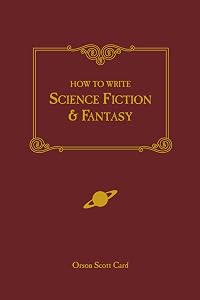
On This Page
Description
You've always dreamed of writing science fiction and fantasy -- tales that pull readers into extraordinary new worlds and fantastic conflicts. Best-selling author Orson Scott Card shows you how it's done, distilling years of writing experience and publishing success into concise, no-nonsense advice. You'll learn how to: wield story elements that "define" the science fiction and fantasy genres; build, populate and dramatize a credible, inviting world your readers will want to explore; develop show more the "rules" of time, space and magic that affect your world and its inhabitants; construct a compelling story by developing ideas, characters and events that keep readers turning pages; find the markets for speculative fiction, reach them and get published; submit queries, write cover letters, find an agent and live the life of a writer. The boundaries of your imagination are infinite. Explore them with Orson Scott Card and create fiction that casts a spell over agents, publishers and readers from every world. show lessTags
Recommendations
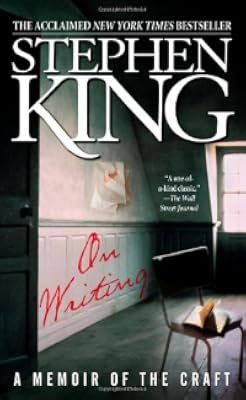
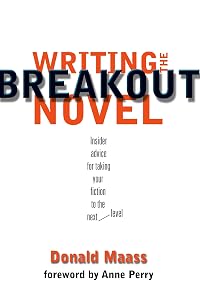
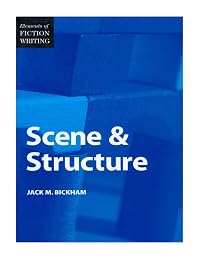
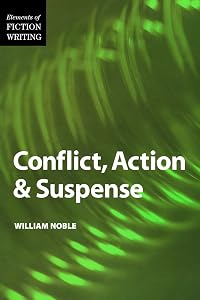
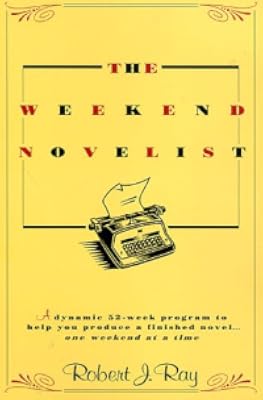
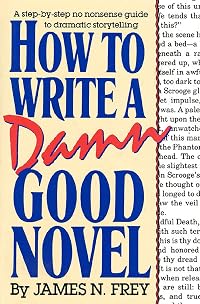
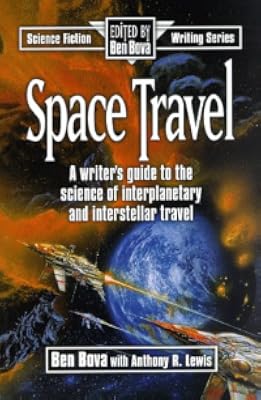
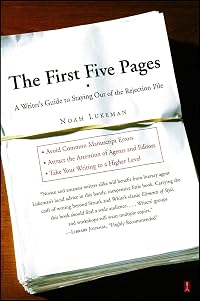
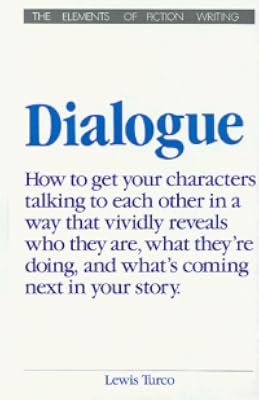
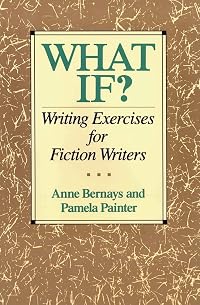
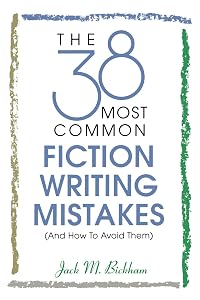
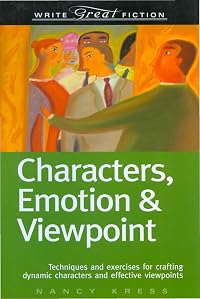
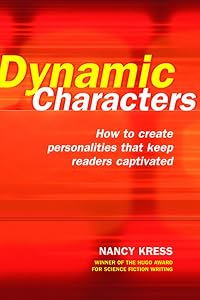
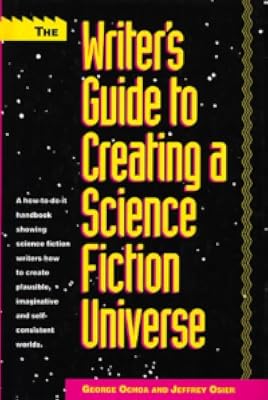
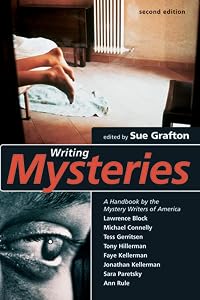
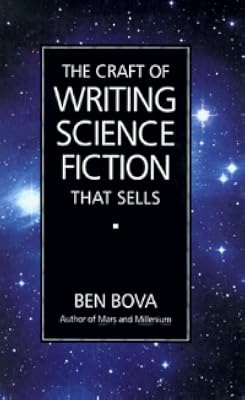
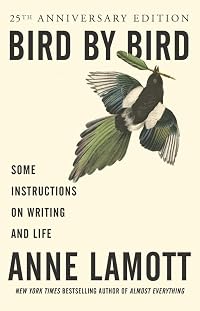
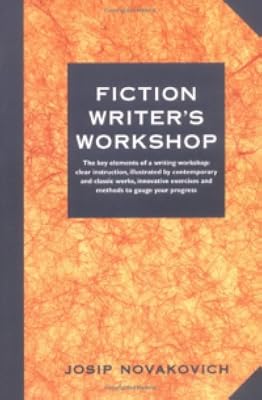
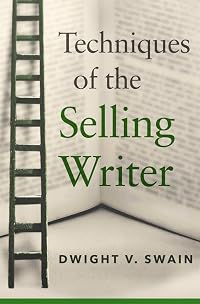
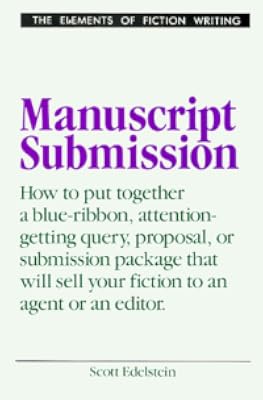
Member Recommendations

Spottyblanket A good insight into the structure of fantasy and the process of imagination. Highly recommended.
Member Reviews
I've had this on my to-read list since high school. Clearly my dedication to the craft is as hard as plasteel.
It's a quick read, not only because it's short but also because of Card's breezy and (somewhat) informal style. As promised in the introduction, he sticks mostly to genre-specific elements of writing, such as world building, creating rules for science/magic (or both...), and so forth. He skips or glosses over aspects that apply to all writing, and even fiction writing specifically.
As you might imagine, Card refers to a lot of works, both by himself and others, to illustrate the points he is making. The examples were generally well chosen, but it had the dubious effect of making me aware of more things I want to read.
For me, the show more best part of the book was the last chapter, which discusses the life and business of writing. Card slips a little in his intent here by giving more general advice, but that's not necessarily a bad thing, since it's good advice. In particular, he gives voice to the conflicting viewpoints that an author must take of his or her own work:
He goes on to explain how to handle these antipodal viewpoints without going mad ("but that, too," he says, "can be an asset to the writer").
It's not a life-changing book, but there's some good tips along with a fair amount of humor and "huh" moments. If you want to feel like you got to pick the brain of a premier science fiction author about his craft, then sit down and read this.
(For the record, I mean "pick the brain" in a metaphorical sense, not a literal, scientific one.) show less
It's a quick read, not only because it's short but also because of Card's breezy and (somewhat) informal style. As promised in the introduction, he sticks mostly to genre-specific elements of writing, such as world building, creating rules for science/magic (or both...), and so forth. He skips or glosses over aspects that apply to all writing, and even fiction writing specifically.
As you might imagine, Card refers to a lot of works, both by himself and others, to illustrate the points he is making. The examples were generally well chosen, but it had the dubious effect of making me aware of more things I want to read.
For me, the show more best part of the book was the last chapter, which discusses the life and business of writing. Card slips a little in his intent here by giving more general advice, but that's not necessarily a bad thing, since it's good advice. In particular, he gives voice to the conflicting viewpoints that an author must take of his or her own work:
Writers have to simultaneously believe the following two things:
- The story I am now working on is the greatest work of genius ever written in English.
- The story I am working on is worthless drivel.
He goes on to explain how to handle these antipodal viewpoints without going mad ("but that, too," he says, "can be an asset to the writer").
It's not a life-changing book, but there's some good tips along with a fair amount of humor and "huh" moments. If you want to feel like you got to pick the brain of a premier science fiction author about his craft, then sit down and read this.
(For the record, I mean "pick the brain" in a metaphorical sense, not a literal, scientific one.) show less
If you're looking for an actual 'how-to' book on writing science fiction and fantasy, don't look here. Mr. Card seems to spend much of the book attempting to classify what makes a story science fiction or fantasy--only to reach the conclusion (which I already knew) that there is no simple classification.
And yet, for all that, I still give the book a 3-star rating; written in his trademark style, it has enough little gems of wisdom scattered through it to make it worth mining.
If Mr. Card had, perhaps, titled it "On Writing Science Fiction and Fantasy" rather than "How to Write Science Fiction and Fantasy" it would easily have gotten a higher rating from me. As a how-to book, however, it was rather disappointing.
And yet, for all that, I still give the book a 3-star rating; written in his trademark style, it has enough little gems of wisdom scattered through it to make it worth mining.
If Mr. Card had, perhaps, titled it "On Writing Science Fiction and Fantasy" rather than "How to Write Science Fiction and Fantasy" it would easily have gotten a higher rating from me. As a how-to book, however, it was rather disappointing.
I read this with little or no context/investment and loved it all the more for my ignorance. If we left Earth, where would we go? How fast would we get there? What happens to human beings in outer space? Is there such a thing as "too" magical? Hard questions to ask. A lot of good information. "When a wizard casts a spell, body parts wither and fall off the person he loves most." "If you go back in time, you are only able to make changes that have no long-term effects, since any universe in which you change your own future could not exist." Is this my personal "Dark Side of Oz"? Yes, it is.
The nice thing about Orson Scott Card, the same thing I liked about "Characters & Viewpoint", is that he uses good examples. Real life examples. Examples you can utilize in your own pre-writing. It might not work for you, might not fit your style, but it worked for someone and it might work for you. That's why I hate writers who say "Well, everyone's different, I can't give you any advice, it might not fit you, everyone has their own way". Yeah, I know that. Tell me your way, I'll see if it works for me.
The problem is the book is outdated. It talks about magazines and sources that are either dead or no longer relevant. It has no Internet resources. The ways to submit works has changed, culturally. He advises mass submissions and show more unagented queries. If I was writing a writing help book, I wouldn't include anything that might become obsolete in the future - it just would make me look stupid.
I'm not 100% sure this book helped me a great deal, but I think it was more important I was able to look into a professional writer's head, and see how it works. Then I can at least try and incorporate it subconsciously. Creativity doesn't just happen, it must be made to happen. show less
The problem is the book is outdated. It talks about magazines and sources that are either dead or no longer relevant. It has no Internet resources. The ways to submit works has changed, culturally. He advises mass submissions and show more unagented queries. If I was writing a writing help book, I wouldn't include anything that might become obsolete in the future - it just would make me look stupid.
I'm not 100% sure this book helped me a great deal, but I think it was more important I was able to look into a professional writer's head, and see how it works. Then I can at least try and incorporate it subconsciously. Creativity doesn't just happen, it must be made to happen. show less
Read this book from 1990 with interest. The chapters on the ways of writing, explorations of the genre and the like are excellent. However, some of the business advice is significantly out of date (i.e. no reference to digital publishing, the many successful self published authors who have come along in the past decade). Despite that significant limitation, the book is useful and would be even better if there was an updated edition to cover changes in the publishing industry.
This is the third "writers on writing" book I've read, and Card's How to Write Science Fiction & Fantasy is more grounded and specific than Lamott's Bird by Bird and Bradbury's Zen in the Art of Writing.
Card discusses basic science fiction concepts like world building, creating believable characters -- and the literary dangers surrounding time travel, aliens and related concepts.
As a writing teacher and Hugo & Nebula award winning sci-fi novelist, Card clearly has some insight into writing quality science fiction and fantasy, and more importantly, he uses real-world examples to highlight his points.
The overall impression is one of a teacher offering hard-earned insight -- a book that's grounded and helpful to beginning writers.
It's show more not an examination of the author's own process (though that certainly makes an appearance), and it's not a particularly inspiring book (outside of making it all look fairly easy), but it is a good book for novice to intermediate writers.
The book is copyrighted in 1991, so the chapter on the business side of writing is significantly out of date, and in fact, one of my big reservations about the book is that it's showing its age a little.
Much has happened in the science fiction world over the last 25 years, and while Card's advice about writing science fiction remains sound, it's not exactly current.
That's why four stars instead of five; it's an excellent reference work, but it's not exactly a contemporary one. show less
Card discusses basic science fiction concepts like world building, creating believable characters -- and the literary dangers surrounding time travel, aliens and related concepts.
As a writing teacher and Hugo & Nebula award winning sci-fi novelist, Card clearly has some insight into writing quality science fiction and fantasy, and more importantly, he uses real-world examples to highlight his points.
The overall impression is one of a teacher offering hard-earned insight -- a book that's grounded and helpful to beginning writers.
It's show more not an examination of the author's own process (though that certainly makes an appearance), and it's not a particularly inspiring book (outside of making it all look fairly easy), but it is a good book for novice to intermediate writers.
The book is copyrighted in 1991, so the chapter on the business side of writing is significantly out of date, and in fact, one of my big reservations about the book is that it's showing its age a little.
Much has happened in the science fiction world over the last 25 years, and while Card's advice about writing science fiction remains sound, it's not exactly current.
That's why four stars instead of five; it's an excellent reference work, but it's not exactly a contemporary one. show less
I read this book many years ago, and I just read it again now. It was well worth it both times. When you listen to authors who have so many years of experience in the field, it doesn't really matter what the subject is. If you listen carefully, their wisdom and experience will be there for you. Soak it up. Learn and enjoy some advice from those who have achieved so much.
Anyone starting out as an author of science fiction or fantasy should read this book.
Anyone starting out as an author of science fiction or fantasy should read this book.
Members
- Recently Added By
Author Information

575+ Works 213,896 Members
Orson Scott Byron Walley Card, was born in 1951 and studied theater at Brigham Young University. He received his B.A. in 1975 and his M.A. in English in 1981. He wrote plays during that time, including Stone Tables (1973) and the musical, Father, Mother, Mother and Mom (1974). A Mormon, Scott served a two-year mission in Brazil before starting show more work as a journalist in Utah. He also designed games at Lucas Film Games, 1989-92. He is best known for his science fiction novels, including the popular Ender series. Well known titles include A Planet Called Treason (1979), Treasure Box (1996), and Heartfire (1998). He has also written the guide called How to Write Science Fiction and Fantasy (1990). His novel Ender's Game and its sequel Speaker for the Dead, both won Hugo and Nebula awards, making Card the only author to win both prizes in consecutive years. His titles Shadows in Flight, Ruins and Ender's Game made The New York Times Best Seller List. He is also the author of The First Formic War Series, which includes the titles Earth Unaware, Earth Afire, and Earth Awakens. (Bowker Author Biography) show less
All Editions
Some Editions
Awards and Honors
Awards
Series

Work Relationships
Common Knowledge
- Canonical title
- How to Write Science Fiction & Fantasy
- Original publication date
- 1990
- Dedication
- To my sister Janice,
Who taught me how to read,
Which was the beginning of wisdom,
And how to be charitable,
Which is wisdom's end. - First words
- A writer never knows who's going to be reading his book, but I've made a few assumptions about you, anyway.
- Last words
- (Click to show. Warning: May contain spoilers.)So close this book and get back to work.
- Canonical DDC/MDS
- 808.3'876; 808.3876; 808.3; 808
- Canonical LCC
- PN3377.5.S3C37
Classifications
- Genre
- General Nonfiction
- DDC/MDS
- 808.3 — Literature & rhetoric Literature, rhetoric & criticism Rhetoric and collections of literary texts from more than two literatures Rhetoric of fiction
- LCC
- PN3377.5 .S3 .C37 — Language and Literature Literature (General) Literature (General) Prose. Prose fiction Technique. Authorship
- BISAC
Statistics
- Members
- 1,879
- Popularity
- 11,426
- Reviews
- 31
- Rating
- (3.73)
- Languages
- English, French, Spanish
- Media
- Paper
- ISBNs
- 6
- UPCs
- 1
- ASINs
- 4
