Max and Moritz
by Wilhelm Busch
On This Page
Description
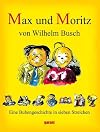
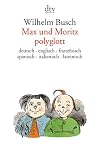
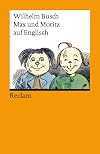
Rhymed text and illustrations present the pranks and misadventures of two very naughty boys.Tags
Recommendations








Member Reviews
¿Un protocómic? ¿Un cómic primitivo? A veces resulta difícil encasillar estas obras pioneras, pero lo que sí está claro es su enorme influencia en autores posteriores. Se nota su huella en The Katzenjammer Kids, de Rudolph Dirks, y, de manera indirecta, incluso en Zipi y Zape, de Josep Escobar.
En sí mismo, es un breve relato dividido en siete fragmentos, con un dibujo excelente y un humor negro —muy negro—. Se trata de un clásico muy entretenido, aunque su crudeza podría chocar con la sensibilidad de los padres actuales. Sin embargo, creo que los niños pueden disfrutarlo sin problemas, demostrando que el humor transgresor sigue teniendo su público, independientemente de la época.
Lo más importante en mi opinión es show more como, en tan solo unas páginas, logra sentar las bases de un lenguaje visual que luego desarrollaría el cómic moderno. Su legado no está en la perfección técnica —aunque no carece de ella—, sino en su capacidad para romper moldes y abrir caminos a generaciones posteriores. show less
En sí mismo, es un breve relato dividido en siete fragmentos, con un dibujo excelente y un humor negro —muy negro—. Se trata de un clásico muy entretenido, aunque su crudeza podría chocar con la sensibilidad de los padres actuales. Sin embargo, creo que los niños pueden disfrutarlo sin problemas, demostrando que el humor transgresor sigue teniendo su público, independientemente de la época.
Lo más importante en mi opinión es show more como, en tan solo unas páginas, logra sentar las bases de un lenguaje visual que luego desarrollaría el cómic moderno. Su legado no está en la perfección técnica —aunque no carece de ella—, sino en su capacidad para romper moldes y abrir caminos a generaciones posteriores. show less
Several years ago when visiting Vienna, we attended (at my insistence) a ballet based on Wilhelm Busch’s children’s classic Max and Moritz. It’s a book I grew up with and one that was read to me from an early age. We in the audience laughed heartily at Max and Moritz’s antics and even the ballet music – Rossini - was cheerful and bubbly. I turned and saw my husband and daughter seated next to me in slack-jawed shock and horror!
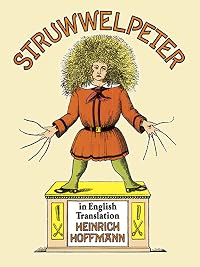
Max and Moritz: A Children’s Story in Seven Parts, was written during the mid-19th Century and is a story, told in rhyming couplets, of two boys who play tricks on various people in the community. Eventually, they get their comeuppance, much to the satisfaction of the targets of their misdeeds. show more Intended to be a cautionary tale about naughty or bad behavior (in the manner of another German classic: Der Struwwelpeter), both the tricks and the punishment are over-the-top. The tricks, which include an attempted drowning and explosions, are all at the expense of very proper, upstanding members of the community who are (naturally) outraged. The eventual punishment they exact is also extreme!
What is noteworthy about this book (apart from the extreme violence) is the format of the book. Max and Moritz is the pre-cursor of the comic book complete with onomatopoeia, invented language and other language devices typically used to describe the action in comics. The language is playful and intended to be an accompaniment to the illustrations. Each character is illustrated as a caricature and in fact, I’ve always thought that the boys themselves bear a striking resemblance to Laurel and Hardy.
There is no question that the humor in this book is cruel so after the performance and after re-reading the book now, I wondered why we often are inclined to laugh at cruelty. I am thinking particularly of some types of slapstick humor - the premise of which is often to laugh at the misfortunes or even (often inflicted) pain, of others. So too, some of the cartoons we grew up watching were extremely violent and in ways, similar to Max and Moritz (didn’t Wily Coyote always get his?). Maybe this kind of hyperbole serves to underscore the purpose of the violence - retribution, ignorance, disobedience, etc. Because we understand that it's not real, we can take in the lesson without being appalled. Whatever the intentions, Max and Moritz is fascinating both for its social commentary as well as its importance in the history of the development of children’s literature and the graphic novel/cartoon. show less
Max and Moritz: A Children’s Story in Seven Parts, was written during the mid-19th Century and is a story, told in rhyming couplets, of two boys who play tricks on various people in the community. Eventually, they get their comeuppance, much to the satisfaction of the targets of their misdeeds. show more Intended to be a cautionary tale about naughty or bad behavior (in the manner of another German classic: Der Struwwelpeter), both the tricks and the punishment are over-the-top. The tricks, which include an attempted drowning and explosions, are all at the expense of very proper, upstanding members of the community who are (naturally) outraged. The eventual punishment they exact is also extreme!
What is noteworthy about this book (apart from the extreme violence) is the format of the book. Max and Moritz is the pre-cursor of the comic book complete with onomatopoeia, invented language and other language devices typically used to describe the action in comics. The language is playful and intended to be an accompaniment to the illustrations. Each character is illustrated as a caricature and in fact, I’ve always thought that the boys themselves bear a striking resemblance to Laurel and Hardy.
There is no question that the humor in this book is cruel so after the performance and after re-reading the book now, I wondered why we often are inclined to laugh at cruelty. I am thinking particularly of some types of slapstick humor - the premise of which is often to laugh at the misfortunes or even (often inflicted) pain, of others. So too, some of the cartoons we grew up watching were extremely violent and in ways, similar to Max and Moritz (didn’t Wily Coyote always get his?). Maybe this kind of hyperbole serves to underscore the purpose of the violence - retribution, ignorance, disobedience, etc. Because we understand that it's not real, we can take in the lesson without being appalled. Whatever the intentions, Max and Moritz is fascinating both for its social commentary as well as its importance in the history of the development of children’s literature and the graphic novel/cartoon. show less
Please note this is a review of an uncorrected proof. I'm a big fan of fairy tales, lullabies, myths, legends.. ok you get the point. I am even more drawn to the creepy and obscure ones like the true Grimm Tales. Seeing the synopsis for this one immediately intrigued me. I visited Germany and adored their culture and history (especially the food) and just couldn't resist reviewing this original German literature in English translation.
This is exactly what dark children's humor is about. Mischievous children doing dastardly deeds and in the end paying in some horrendous way for what they have done. Of course many parents these days would abhor something like this for their precious little ones but as adults we can see the humor, hear the show more lesson and appreciate the history behind something of this nature.
I also appreciated the inclusion of the original German text and doubly enjoyed the explanation of the translation in the end. It was nice to see what went behind turning this piece into something I was able to appreciate.
Special thank you to the author, NetGalley and the Publisher for allowing me to review this for an honest review. show less
This is exactly what dark children's humor is about. Mischievous children doing dastardly deeds and in the end paying in some horrendous way for what they have done. Of course many parents these days would abhor something like this for their precious little ones but as adults we can see the humor, hear the show more lesson and appreciate the history behind something of this nature.
I also appreciated the inclusion of the original German text and doubly enjoyed the explanation of the translation in the end. It was nice to see what went behind turning this piece into something I was able to appreciate.
Special thank you to the author, NetGalley and the Publisher for allowing me to review this for an honest review. show less
this was a childhood favourite and it is still grotesquely funny.
One of my favorite books as a child. What does that say about me?
two evil boys come to a bad end
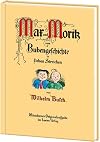
[Max and Moritz : a knaves story in seven pranks.] Bookplate of Stanley Marcus on the verso of the cover. Text in German. This is a humorous children's classic in verse. The pictures in this edition are faithful reproductions of the hand-colored prints in an early edition from around 1870. Both the text and the illustrations were adapted from an original 1864 hand- written manuscript at the Wilhelm Busch Museum in Hanover. A new forward by Dr. Friedrich Bohne has been added.
Members
- Recently Added By
Lists

German Literature
518 works; 56 members
Author Information

Wilhelm Busch is, after Jakob and Wilhelm Grimm, by far the most popular author of books for children in the German language. His Max and Moritz (1865), a story of two naughty boys whose pranks finally bring a well-deserved retribution, is reputed to be the best-selling illustrated book in all of literature. Unlike many authors of books for show more children, Busch is almost completely without sentimentality or facile optimism. His cartoons and verses, on the contrary, contain social satire far more harsh than that usually found in books for either children or adults. He often sought out the society of animals and children, simply because he found so much corruption among his fellow men and women. But what might have been a bitter perspective is relieved considerably by the humor with which it is depicted. Busch modernized the fable, a genre that, since Gotthold Lessing, had been seldom employed in German literature. (Bowker Author Biography) show less
Some Editions
Awards and Honors
Series
Belongs to Publisher Series
Bastei Lübbe - Heiteres (Band 18 008)
Work Relationships
Common Knowledge
- Canonical title
- Max and Moritz
- Original title
- Max und Moritz - Eine Bubengeschichte in sieben Streichen
- Alternate titles*
- Max en Maurits : Wilhelm Busch zien verhoal over twei deugenaiten
- Original publication date
- 1865
- People/Characters
- Max [Max and Moritz]; Moritz [Max and Moritz]
- First words
- [auf Englisch] Oh, how full the Sunday papers,
Are of naughty children's capers,
Like the tricks the ill-reputed,
Max and Moritz executed.
Ah, the wickedness one sees
Or is told of such as these,
Namely Max and Moritz; there!
Look at the disgraceful pair! - Last words
- (Click to show. Warning: May contain spoilers.)[auf Englisch] "Thank the Lord that we are free - Saved from all their villainy!!"
- Original language*
- Deutsch
- Disambiguation notice
- Please leave this entry for books containing the Max & Moritz story ONLY! Thanks!
*Some information comes from Common Knowledge in other languages. Click "Edit" for more information.
Classifications
Statistics
- Members
- 917
- Popularity
- 29,276
- Reviews
- 12
- Rating
- (3.86)
- Languages
- 20 — Chinese, English-based Creoles and Pidgins, Dutch, English, Esperanto, Finnish, French, German, Greek (Ancient), Hebrew, Hungarian, Italian, Latin, Latvian, Miscellaneous languages, Polish, Russian, Spanish, Swedish, Yiddish
- Media
- Paper, Audiobook, Ebook
- ISBNs
- 164
- UPCs
- 1
- ASINs
- 45