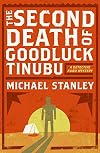
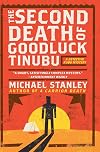
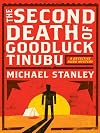
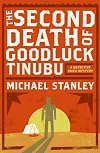
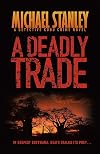
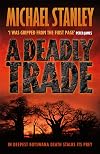
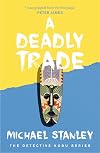
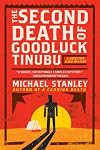
The Second Death of Goodluck Tinubu
by Michael Stanley
Assistant Superintendent David 'Kubu' Bengu (2)
On This Page
Description
In this second Detective Kubu mystery, Michael Stanley’s memorable detective faces another challenging case that mixes murder and smuggling in politically charged northern Botswana.Two vicious murders, only hours apart.
Normally a peaceful wilderness retreat, the Jackalberry bush camp has suddenly become a ghastly crime scene---and the details are still emerging when Detective David "Kubu" Bengu is assigned to the case. Zimbabwean teacher Goodluck Tinubu and another tourist have been show more found bludgeoned to death, while another guest at the camp---rumored to be a dissident wanted in Zimbabwe---has disappeared without a trace.
With the local police unable---or unwilling---to provide much assistance, Detective Kubu relies on his own instincts to track down those responsible for the crimes. But a startling piece of forensic evidence from Goodluck Tinubu's murder adds a complicated twist to the investigation, and Kubu must work fast to solve a seemingly impossible riddle before any more Jackalberry guests meet their death. Suspecting that everyone at the camp has something to hide, the wily detective from Gaborone sets a clever trap to find the truth.
The memorable Kubu of A Carrion Death returns in this gripping story of murder, greed, and hidden motives. Set in northern Botswana, amid lush vegetation and teeming wildlife, The Second Death of Goodluck Tinubu captures the intense loyalties and struggles taking place at the country's borders---and the shattered dreams of those living just outside this modern democracy.
. show less
Tags
Recommendations


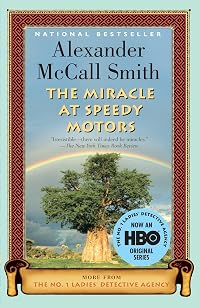

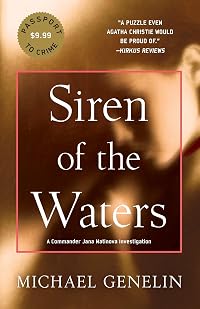
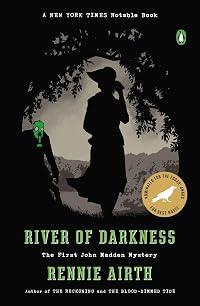
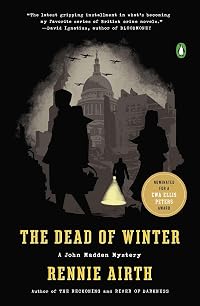

Member Reviews
There's something in the water (or maybe it's in the dust) in Africa at the moment. Whilst there has been a slowly increasing number of crime or mystery books set in Africa, there's now an increasing number written by African authors appearing for our enjoyment. Michael Stanley (the South African duo of long-time friends Michael Sears and Stanley Trollip), have now released their second book - A DEADLY TRADE (aka The Second Death of Goodluck Tinubu), follow up to the very well received debut book - A CARRION DEATH.
Wrapped up in the well devised plot of a solid police procedural, A DEADLY TRADE is very much a novel of Africa. The setting for the crime obviously helps - a tourist bush camp, made up of tents, set on the banks of crocodile show more and hippo infested waters. The characters fit so well into that setting - Detective 'Kubu' Bengu the central investigator (Kubu means hippopotamus in Setswana) and Detective Sergeant Joseph 'Tatwa' Mooka (Tatwa - Giraffe in the same language) are the main investigation team, working to solve the disappearance of one man and the killing of two others at the camp. The brutal death of Tinubu is the most baffling of the killings - despite having been declared dead many years ago during the Rhodesian war, he seems to have subsequently lead a blameless and quiet life as a much respected teacher in Botswana. The other two elements that firmly set this book in Africa are the terminology, and a quintessential use of pacing. Whilst the general pace of the book is rapidfire, and the investigation moves constantly forward, there is a wonderful feeling of slowing, of consideration, of reflection whenever Kubu appears in the narrative. There's something about the writing of this character that imparts a feeling of consideration, intelligence and thoughtfulness, a large man physically, Kubu doesn't rush around no matter how hectic an investigation gets. He thinks, he ponders, he eats (very well). Connections have to be drawn between Kubu and Hercule Poroit in the way that they both approach an investigation, Montalbano in the way that they both approach the next meal. Kubu has a family though, and when his beloved wife Joy and sister-in-law Patience are threatened as a result of this investigation, the reader sees a little more than his size as a link to his nickname. Kubu enraged must be a sobering sight!
There is another level to A DEADLY TRADE and that is the glimpses into the ongoing effects of the Rhodesian War, the current day problems in Zimbabwe and the complicated relationship between that country, and the surrounding nations. There are also touches of the problems that beset all nations - drugs, violence and organised crime. The fallout from the Rhodesian War is something that greatly impacts on A DEADLY TRADE, and in the way of all very good story tellers, the implications of that are spelt out in the book without it being a lesson, rather it's a revelation.
A DEADLY TRADE (as with the first book A CARRION DEATH) is just simply good crime fiction. The crime occurs within a social situation and in a social reality that impacts on the actions of everyone. Small events in the past don't necessarily go unforgotten, and brutality often engenders brutality. Adding an African situation to that scenario adds a new twist to the events, at the same time that it shows that human reactions are human reactions, the world over.
Incidentally - there is a cast of characters at the front of the book to help if the unfamiliar names are phasing the reader, and a Glossary at the back which can help with understanding of some of the terminology. As part two in a series of books, it's often best if you've read the earlier book - so that you have a background to all the characters. Having said that, it would be possible to pick up A DEADLY TRADE and start - but that's no reason why you shouldn't also seek out A CARRION DEATH. show less
Wrapped up in the well devised plot of a solid police procedural, A DEADLY TRADE is very much a novel of Africa. The setting for the crime obviously helps - a tourist bush camp, made up of tents, set on the banks of crocodile show more and hippo infested waters. The characters fit so well into that setting - Detective 'Kubu' Bengu the central investigator (Kubu means hippopotamus in Setswana) and Detective Sergeant Joseph 'Tatwa' Mooka (Tatwa - Giraffe in the same language) are the main investigation team, working to solve the disappearance of one man and the killing of two others at the camp. The brutal death of Tinubu is the most baffling of the killings - despite having been declared dead many years ago during the Rhodesian war, he seems to have subsequently lead a blameless and quiet life as a much respected teacher in Botswana. The other two elements that firmly set this book in Africa are the terminology, and a quintessential use of pacing. Whilst the general pace of the book is rapidfire, and the investigation moves constantly forward, there is a wonderful feeling of slowing, of consideration, of reflection whenever Kubu appears in the narrative. There's something about the writing of this character that imparts a feeling of consideration, intelligence and thoughtfulness, a large man physically, Kubu doesn't rush around no matter how hectic an investigation gets. He thinks, he ponders, he eats (very well). Connections have to be drawn between Kubu and Hercule Poroit in the way that they both approach an investigation, Montalbano in the way that they both approach the next meal. Kubu has a family though, and when his beloved wife Joy and sister-in-law Patience are threatened as a result of this investigation, the reader sees a little more than his size as a link to his nickname. Kubu enraged must be a sobering sight!
There is another level to A DEADLY TRADE and that is the glimpses into the ongoing effects of the Rhodesian War, the current day problems in Zimbabwe and the complicated relationship between that country, and the surrounding nations. There are also touches of the problems that beset all nations - drugs, violence and organised crime. The fallout from the Rhodesian War is something that greatly impacts on A DEADLY TRADE, and in the way of all very good story tellers, the implications of that are spelt out in the book without it being a lesson, rather it's a revelation.
A DEADLY TRADE (as with the first book A CARRION DEATH) is just simply good crime fiction. The crime occurs within a social situation and in a social reality that impacts on the actions of everyone. Small events in the past don't necessarily go unforgotten, and brutality often engenders brutality. Adding an African situation to that scenario adds a new twist to the events, at the same time that it shows that human reactions are human reactions, the world over.
Incidentally - there is a cast of characters at the front of the book to help if the unfamiliar names are phasing the reader, and a Glossary at the back which can help with understanding of some of the terminology. As part two in a series of books, it's often best if you've read the earlier book - so that you have a background to all the characters. Having said that, it would be possible to pick up A DEADLY TRADE and start - but that's no reason why you shouldn't also seek out A CARRION DEATH. show less
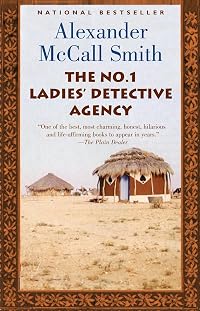
At one level this book reminds one a bit of the The No. 1 Ladies' Detective Agency series. It is set in Botswana and it presents a very sympathetic view of the country, savouring the delights of Africa and Africans rather than perpetuating the negative stereotypes which are found all too often. It's also a detective story with African protagonists, but here it parts company from its more demure ladies' counterpart. Violent death and political intrigue are at the heart of the story, but even so they are investigated with a simple goodness which one does not find in most detective thrillers. A thoroughly good read.
Move over Mma Ramotswe – there’s a new player in town, none other than Gaborone’s Assistant Superintendent David ‘Kubu’ Bengu, of the Botswana CID, and he is without doubt the most engaging literary detective in Africa!
In fact Kubu – the Setswana word for hippopotamus, a creature the superintendent resembles both in bulk and temperament – could do for Botswana what Henning Menkell did for Sweden, placing it firmly on the crime fiction map.
A Deadly Trade is the second in what I hope will be a long series featuring the somewhat quirky members of the Gaborone criminal Investigation Department who, despite limited resources, form an efficient and meritorious police force.
The book opens with a couple of murders at Jackalberry show more camp, a small game lodge on a virtual island in the Linyanti river on the Namibian border, north of the Okavanga delta and the Chobe National Park.
A trio of nicely detailed maps shows those unfamiliar with Botswana the exact location of the camp and how far away it is from the major centres of Francistown and Gabarone. Ore to the point, they illustrate how close Jackalberry Camp is to the Namibian, Zambian and Zimbabwean borders.
Jackalberry is owned, run and managed by former Rhodesian: two Selous Scouts and a woman who was gang-raped after witnessing the sadistic slaughter of her family by freedom fighters and survived only because her attackers were warned the Selous Scouts were approaching and fled.
It soon becomes obvious however that the solution to the murders is linked to the Rhodesian bush war 30 years previously as well as to the present Zimbabwean regime.
When Rhodesia became Zimbabwe back in 1980, many of her citizens – not only the whites – emigrated rather than live under a ‘terrorist’ government.
And many Zimbabweans fled later, when the regime they had fought for turned septic: by the 21st century even those who survived the Ndebele genocide and the slaughter of the ZAPU faithful were forced to escape for their own safety. South Africa and Botswana were the destinations of choice – indeed, Zimbabweans became so popular in the later country they were hardly regarded as foreign.
With the exception of Botswana, the SADEC countries followed South Africa’s lead and supported Robert Mugabe in his every excess – the Gaborone government was alone in its refusal to recognize Mugabe after he lost the election.
This is the background to the case Kubu and his giraffe-like protégé Joseph ‘Tatwa’ Mooka are called to investigate in a case ranging from north to south and involving patriots and idealists, thugs and mercenaries.
The story lies more in the characters and the narrative than the plot which – and it is only fair at this point to give warning of a spoiler – hinges on an upcoming African Union meeting which is to be held in Botswana: since Mugabe is due to attend, money is changing hands to finance his assassination.
Red Herrings abound – including Kubu’s wife Joy being attacked at home, and the kidnapping of his sister-in-law, plus the murder of a travelling salesman from South Africa and the fatal torture of curio seller.
Of the eight guests originally staying at Jackalberry camp, five are murdered, and Kubu does not believe it is mere co-incidence: he is certain the answer lies 30 years ago, sometime during the horror of the Rhodesian war.
To make use of a horribly abused and over-used cliché, the story is as fresh as tomorrow’s headlines and as refreshing as a cold beer, at sunset, in the hot African bush. show less
In fact Kubu – the Setswana word for hippopotamus, a creature the superintendent resembles both in bulk and temperament – could do for Botswana what Henning Menkell did for Sweden, placing it firmly on the crime fiction map.
A Deadly Trade is the second in what I hope will be a long series featuring the somewhat quirky members of the Gaborone criminal Investigation Department who, despite limited resources, form an efficient and meritorious police force.
The book opens with a couple of murders at Jackalberry show more camp, a small game lodge on a virtual island in the Linyanti river on the Namibian border, north of the Okavanga delta and the Chobe National Park.
A trio of nicely detailed maps shows those unfamiliar with Botswana the exact location of the camp and how far away it is from the major centres of Francistown and Gabarone. Ore to the point, they illustrate how close Jackalberry Camp is to the Namibian, Zambian and Zimbabwean borders.
Jackalberry is owned, run and managed by former Rhodesian: two Selous Scouts and a woman who was gang-raped after witnessing the sadistic slaughter of her family by freedom fighters and survived only because her attackers were warned the Selous Scouts were approaching and fled.
It soon becomes obvious however that the solution to the murders is linked to the Rhodesian bush war 30 years previously as well as to the present Zimbabwean regime.
When Rhodesia became Zimbabwe back in 1980, many of her citizens – not only the whites – emigrated rather than live under a ‘terrorist’ government.
And many Zimbabweans fled later, when the regime they had fought for turned septic: by the 21st century even those who survived the Ndebele genocide and the slaughter of the ZAPU faithful were forced to escape for their own safety. South Africa and Botswana were the destinations of choice – indeed, Zimbabweans became so popular in the later country they were hardly regarded as foreign.
With the exception of Botswana, the SADEC countries followed South Africa’s lead and supported Robert Mugabe in his every excess – the Gaborone government was alone in its refusal to recognize Mugabe after he lost the election.
This is the background to the case Kubu and his giraffe-like protégé Joseph ‘Tatwa’ Mooka are called to investigate in a case ranging from north to south and involving patriots and idealists, thugs and mercenaries.
The story lies more in the characters and the narrative than the plot which – and it is only fair at this point to give warning of a spoiler – hinges on an upcoming African Union meeting which is to be held in Botswana: since Mugabe is due to attend, money is changing hands to finance his assassination.
Red Herrings abound – including Kubu’s wife Joy being attacked at home, and the kidnapping of his sister-in-law, plus the murder of a travelling salesman from South Africa and the fatal torture of curio seller.
Of the eight guests originally staying at Jackalberry camp, five are murdered, and Kubu does not believe it is mere co-incidence: he is certain the answer lies 30 years ago, sometime during the horror of the Rhodesian war.
To make use of a horribly abused and over-used cliché, the story is as fresh as tomorrow’s headlines and as refreshing as a cold beer, at sunset, in the hot African bush. show less
Book on CD narrated by Simon Prebble
Book two in the mystery series featuring Detective David “Kubu” Bengu of Botswana, in a story of murder, greed and hidden motives. It begins when a Zimbabwean teacher, Goodluck Tinubu, is found murdered at the wilderness resort camp where he was vacationing. Soon after the discovery of his body, a second body is discovered at the camp. The prime suspect, another guest at the resort, has disappeared. Things quickly get very complicated.
I really like this series. It’s a hard-hitting police procedural, but there is some room for enjoying life. Kubu definitely enjoys food and there are some delicious scenes involving this pleasure. I also really like the relationship Kubu has with his wife, Joy. show more She’s a strong woman, intelligent, courageous and resilient. They make a great couple.
I appreciated learning a little bit about the civil war in Rhodesia (now Zimbabwe) in this episode. The authors (Michael Stanley is a team of two) also address some of the political back-and-forth between Botswana and neighboring countries.
Simon Prebble does a marvelous job narrating the audiobook. He really brings Kubu and the rest of the cast alive. show less
Book two in the mystery series featuring Detective David “Kubu” Bengu of Botswana, in a story of murder, greed and hidden motives. It begins when a Zimbabwean teacher, Goodluck Tinubu, is found murdered at the wilderness resort camp where he was vacationing. Soon after the discovery of his body, a second body is discovered at the camp. The prime suspect, another guest at the resort, has disappeared. Things quickly get very complicated.
I really like this series. It’s a hard-hitting police procedural, but there is some room for enjoying life. Kubu definitely enjoys food and there are some delicious scenes involving this pleasure. I also really like the relationship Kubu has with his wife, Joy. show more She’s a strong woman, intelligent, courageous and resilient. They make a great couple.
I appreciated learning a little bit about the civil war in Rhodesia (now Zimbabwe) in this episode. The authors (Michael Stanley is a team of two) also address some of the political back-and-forth between Botswana and neighboring countries.
Simon Prebble does a marvelous job narrating the audiobook. He really brings Kubu and the rest of the cast alive. show less
Set in Botswana, a setting many of us are now familiar with thanks to Alexander McCall Smith's No.1 Ladies' Detective Agency series, author(s) Michael Sears and Stanley Trollip co-authored this under the Michael Stanley name. This is the second book in the series, and I'm off to find the first quickly.
Inspector David "Kubu" Benbu is sent to investigate the murders of two people at a bush camp. There are a variety of campers (suspects) and staff (more suspects), including a cook with a live bird attached to his shoulder. There are survivors of rebellions years past, British bird watchers, a pair of sister claiming to be British journalists, cops who are scared to death of crocodiles, bad guys galore, lots of hippos (in fact "kubu" means show more hippopatamous--the nickname was given to the detective due to his size). Family members help to humanize Kubu and give us an eye into his motivations. I don't like to do spoilers in reviewing mysteries, so no plot review here, but the characters are delightful, the setting is beautifully portrayed, and the plot is definitely one with twists, turns, and clues. When Goodluck is murdered and his fingerprints indicate he has been officially dead for over 30 years........well as you can see, the plot thickens quickly.
The book also contains a glossary of African terms, a map and a drawing of the layout of the camp. I found myself referring to them occasionally, and while I found them helpful, this isn't a book where you're going to have to constantly keep referring to them.
In addition to the mystery, we are treated to a mini-history/politics lesson about Botswana, South Africa, and Zimbabwe. The culture, customs, and geography of the area are lovingly painted. It's a marvelous read...grab it and sink in. show less
Inspector David "Kubu" Benbu is sent to investigate the murders of two people at a bush camp. There are a variety of campers (suspects) and staff (more suspects), including a cook with a live bird attached to his shoulder. There are survivors of rebellions years past, British bird watchers, a pair of sister claiming to be British journalists, cops who are scared to death of crocodiles, bad guys galore, lots of hippos (in fact "kubu" means show more hippopatamous--the nickname was given to the detective due to his size). Family members help to humanize Kubu and give us an eye into his motivations. I don't like to do spoilers in reviewing mysteries, so no plot review here, but the characters are delightful, the setting is beautifully portrayed, and the plot is definitely one with twists, turns, and clues. When Goodluck is murdered and his fingerprints indicate he has been officially dead for over 30 years........well as you can see, the plot thickens quickly.
The book also contains a glossary of African terms, a map and a drawing of the layout of the camp. I found myself referring to them occasionally, and while I found them helpful, this isn't a book where you're going to have to constantly keep referring to them.
In addition to the mystery, we are treated to a mini-history/politics lesson about Botswana, South Africa, and Zimbabwe. The culture, customs, and geography of the area are lovingly painted. It's a marvelous read...grab it and sink in. show less
This is #2 in the Kubu series and I read it to fill in a gap in my reading.
What I have enjoyed about these books is not only the very clever and tight plotting, but the lovely character development of Detective “Kubu” Bengu, his immediate family, and those he works with. It seems to me also that the setting provides another strong character. The initial action is set in tourist camp, but the roots of the plot go back decades into the history of Zimbabwe.
The character of Bengu gives the authors plenty of scope to show policing in Botswana in a good light. It comes across as a rather different Botswana to that of Precious Ramotswe but the values are the same.
A good read.
What I have enjoyed about these books is not only the very clever and tight plotting, but the lovely character development of Detective “Kubu” Bengu, his immediate family, and those he works with. It seems to me also that the setting provides another strong character. The initial action is set in tourist camp, but the roots of the plot go back decades into the history of Zimbabwe.
The character of Bengu gives the authors plenty of scope to show policing in Botswana in a good light. It comes across as a rather different Botswana to that of Precious Ramotswe but the values are the same.
A good read.
Kubu is not the typical detective. He is a large man who stays calm and does not use violence to find the perpetrator. It is a nice change from other novels in this genre.
It also exposes a different world in which several countries, who are very different, work together to locate the bad guy. The countries are small making it easy to cross into another. The police follow procedure by asking permission and for help from other countries. A refreshing change.
Family dynamics, history and politics are all part of the story giving it depth.
A good solid read.
It also exposes a different world in which several countries, who are very different, work together to locate the bad guy. The countries are small making it easy to cross into another. The police follow procedure by asking permission and for help from other countries. A refreshing change.
Family dynamics, history and politics are all part of the story giving it depth.
A good solid read.
Members
- Recently Added By
Lists

Africa
109 works; 8 members
Author Information

14+ Works 1,199 Members
Some Editions
Series

Work Relationships
Is contained in
Common Knowledge
- Canonical title
- The Second Death of Goodluck Tinubu
- Original title
- A Deadly Trade
- People/Characters
- David Bengu (Assistant Superintendent 'Kubu'); Joy Bengu
- Important places
- Gaborone, Botswana; Jackalberry Island, Botswana
- Important events
- Rhodesian Civil War
- Dedication
- For Bill and Jean Trollip and Teda, Douglas, and Brunhilde Sears
- First words
- The farewells had been said many years ago, so Goodluck hugged his old comrade and left without a word. He zipped the tent door closed and started along the path to his own bush tent.
- Last words
- (Click to show. Warning: May contain spoilers.)Perhaps Moremi had made coffee.
- Blurbers
- Krueger, William Kent
Classifications
Statistics
- Members
- 240
- Popularity
- 135,235
- Reviews
- 18
- Rating
- (3.72)
- Languages
- English, French, German, Italian
- Media
- Paper, Audiobook, Ebook
- ISBNs
- 16
- ASINs
- 4