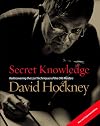
Secret Knowledge: Rediscovering the Lost Techniques of the Old Masters
by David Hockney
On This Page
Description
Join one of the most influential artists of our time as he investigates the painting techniques of the Old Masters. Hockney's extensive research led him to conclude that artists such as Caravaggio, Velazquez, da Vinci, and other hyperrealists actually used optics and lenses to create their masterpieces. In this passionate yet pithy book, Hockney takes readers on a journey of discovery as he builds a case that mirrors and lenses were used by the great masters to create their highly detailed show more and realistic paintings and drawings. Hundreds of the best-known and best-loved paintings are reproduced alongside his straightforward analysis. Hockney also includes his own photographs and drawings to illustrate techniques used to capture such accurate likenesses. Extracts from historical and modern documents and correspondence with experts from around the world further illuminate this thought-provoking book that will forever change how the world looks at art. show lessTags
Recommendations
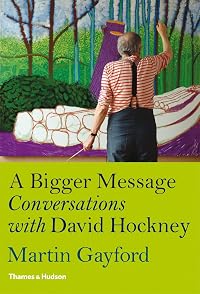
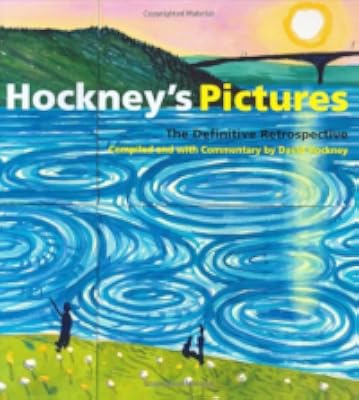









Member Recommendations
jcbrunner Before photography, the camera obscura was the painter's little helper.
Member Reviews
Hockney reverse engineers the story of why the style of European painting diverged so fast and to such an extent starting from about 1420 onward. What he comes up with is a credible explanation: painters made use of optical tools (concave mirrors and lenses) to make projections to help them see and get their job done. He rebuilds this story by finding visual evidence in the “document” of the painting itself.
Hockney’s account is wonderful because it takes you from the inception of his idea through the many stages of work he did to gather evidence for his hypothesis. Very quickly, it becomes clear that optics did influence art earlier than once thought and one starts to get a sense of what an “optical” image really looks like in show more comparison to the “non-optical”. This visual training in the book allows one to really understand what Cezanne and Picasso were responding to when they did their work. They, too, knew that most imagery was informed by optics and, by counterexample, helped remind us that there are many more ways to represent what we see.
Hockney does not make a judgment about the artists who used optics or even optics in itself. His slogan is, “optics do not make marks”, meaning that artists still had a trained hand. Obviously there are good uses for optics and Hockney himself appears to have been dazzled by the optics he experimented with on his journey. However, Hockney is criticizing those that would rather hold up artists as savants than to interpret them as practical inventors. In fact, the prior view does double damage: it both locks us out of art (and the world, according to Hockney) and allows the art establishment to be “nobility”.
Hockney feels that the optical image keeps us in a fixed position with no movement. If this is all we know, how do we see ourselves in the world -- also fixed in position? What’s worse is that most of us think that the optical style is “real”. So if we think being fixed is real, then how can we see ourselves as part of that world where movement is necessary? I see some of the spirit of James Clerk Maxwell in that argument insofar as Maxwell wanted science to be about the process more than he wanted it to be about the products. Although we all enjoy the products of science and art, it is the process that is most important and should be available to us all instead of only the fixed products.
Of course, as the title suggests, the crux of this explanation is that these artists kept their usage of optics secret. There is no explicit written record of artists using these techniques, however the painting is the historical document and all but proves the techniques were used. It is also not unreasonable to think that images were highly sensitive materials in those days (since they are still powerful today). The use of optics and the independent creation of images would have been punishable and would require secrecy. Aside from external motivation for secrecy, there's the selfish motivation to maintain an artist's competitive advantage (in other words, money and prestige were at stake).
Hockney is highly visually literate, and, by reading this book, we all have a chance to see what he saw and pick up on his nuanced visual sense. Hockney’s most artful accomplishment in this book is that he successfully makes something so prevalent and ingrained as the optical image (TV, computer screens, print) seem so foreign to life. Hockney is a true artist for helping us realize this. show less
Hockney’s account is wonderful because it takes you from the inception of his idea through the many stages of work he did to gather evidence for his hypothesis. Very quickly, it becomes clear that optics did influence art earlier than once thought and one starts to get a sense of what an “optical” image really looks like in show more comparison to the “non-optical”. This visual training in the book allows one to really understand what Cezanne and Picasso were responding to when they did their work. They, too, knew that most imagery was informed by optics and, by counterexample, helped remind us that there are many more ways to represent what we see.
Hockney does not make a judgment about the artists who used optics or even optics in itself. His slogan is, “optics do not make marks”, meaning that artists still had a trained hand. Obviously there are good uses for optics and Hockney himself appears to have been dazzled by the optics he experimented with on his journey. However, Hockney is criticizing those that would rather hold up artists as savants than to interpret them as practical inventors. In fact, the prior view does double damage: it both locks us out of art (and the world, according to Hockney) and allows the art establishment to be “nobility”.
Hockney feels that the optical image keeps us in a fixed position with no movement. If this is all we know, how do we see ourselves in the world -- also fixed in position? What’s worse is that most of us think that the optical style is “real”. So if we think being fixed is real, then how can we see ourselves as part of that world where movement is necessary? I see some of the spirit of James Clerk Maxwell in that argument insofar as Maxwell wanted science to be about the process more than he wanted it to be about the products. Although we all enjoy the products of science and art, it is the process that is most important and should be available to us all instead of only the fixed products.
Of course, as the title suggests, the crux of this explanation is that these artists kept their usage of optics secret. There is no explicit written record of artists using these techniques, however the painting is the historical document and all but proves the techniques were used. It is also not unreasonable to think that images were highly sensitive materials in those days (since they are still powerful today). The use of optics and the independent creation of images would have been punishable and would require secrecy. Aside from external motivation for secrecy, there's the selfish motivation to maintain an artist's competitive advantage (in other words, money and prestige were at stake).
Hockney is highly visually literate, and, by reading this book, we all have a chance to see what he saw and pick up on his nuanced visual sense. Hockney’s most artful accomplishment in this book is that he successfully makes something so prevalent and ingrained as the optical image (TV, computer screens, print) seem so foreign to life. Hockney is a true artist for helping us realize this. show less
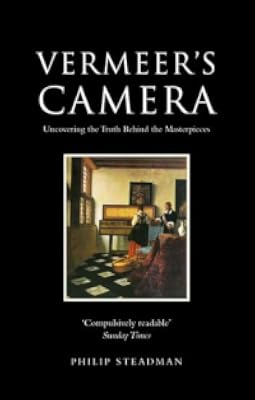
I first wrote about the controversial thesis of this book back in January of 2000, when my "Pick" was an article about David Hockney by Lawrence Wechler in the New Yorker. With the publication of this very attractive, large-format book, you can look for yourself at the evidence that he argues shows that many of the great master painters secretly used optical devices to help produce their work. The thing that I most like about "Secret Knowledge" is that the first half presents visual examples with minimal text. You can follow the thesis and consider the strengths and weaknesses of the argument, examining each of the magnificent plates for yourself. In the second half, Hockney provides historical background for the camera obscura and the show more camera lucida, and his correspondence with art historians, museum curators, and scientists around the world. This is a relatively expensive book that is worth the price, on both aesthetic and intellectual grounds. A less expensive book that examines the use of optical technology by Vermeer is "Vermeer's Camera : Uncovering the Truth Behind the Masterpieces" by Phillip Steadman, published by Oxford University Press. show less
David Hockney's book is a visual treat. The sumptuous illustrations from the 14th to the 19th century merit the price of the book. It also claims to be a work on art history, to present Hockney's finding about technological breakthroughs in painting techniques.
Hockney shows that beginning in 1430 artists used lenses to project images upon canvas and then trace these to achieve a hitherto unseen perfection in representation. At first small lenses were used which captured only smaller objects, so that artists using this technique were forced to assemble larger paintings like a puzzle. Around 1600, mirrors and larger lenses allowed artists to project complete humuans onto their canvasses adding much realism to the paintings. With the show more advent of the new technology of photography in the 1830s, realistic representation reached a new height until most painters abandoned the field to photography.
Hockney uses a visual, inductive method to present his findings which, unfortunately, is not a scientific proof. Some of his examples are very convincing, others look a bit strained. In my opinion, he is on safe ground regarding the shift in painter's mistakes. We have enough evidence that lenses were used. Often, however, he lacks evidence to prove that certain artists used lenses. Artistic perfection is no proof for the use of lenses in itself. It is also a puzzle why many of the greatest artists did not use this technique. Why, given the superiority of this method, would Rubens and Rembrandt not use it? They were quite business-oriented and would have cherished this time-saving device. The absence of sketches is only an indicator not a proof.
Overall, one has to appreciate David Hockney's wonderful book and his efforts to combine art and research. I learned a lot about painting techniques. THe book has changed how I look at pictures. The highly recommended BBC documentary about the same topic by David Hockney presents his arguments in an even more dramatic way. show less
Hockney shows that beginning in 1430 artists used lenses to project images upon canvas and then trace these to achieve a hitherto unseen perfection in representation. At first small lenses were used which captured only smaller objects, so that artists using this technique were forced to assemble larger paintings like a puzzle. Around 1600, mirrors and larger lenses allowed artists to project complete humuans onto their canvasses adding much realism to the paintings. With the show more advent of the new technology of photography in the 1830s, realistic representation reached a new height until most painters abandoned the field to photography.
Hockney uses a visual, inductive method to present his findings which, unfortunately, is not a scientific proof. Some of his examples are very convincing, others look a bit strained. In my opinion, he is on safe ground regarding the shift in painter's mistakes. We have enough evidence that lenses were used. Often, however, he lacks evidence to prove that certain artists used lenses. Artistic perfection is no proof for the use of lenses in itself. It is also a puzzle why many of the greatest artists did not use this technique. Why, given the superiority of this method, would Rubens and Rembrandt not use it? They were quite business-oriented and would have cherished this time-saving device. The absence of sketches is only an indicator not a proof.
Overall, one has to appreciate David Hockney's wonderful book and his efforts to combine art and research. I learned a lot about painting techniques. THe book has changed how I look at pictures. The highly recommended BBC documentary about the same topic by David Hockney presents his arguments in an even more dramatic way. show less
Fascinating read. I happened to see this book in the library, and borrowed it because I had watched a documentary on the same topic.
The premise is that the old masters, such as Vermeer and others, used photographic/optical techniques and tools - such as the camera obscura or camera lucida.
Recommended for anyone interested in art history.
Unfortunately, I don't think it'll turn me magically into an artist ... ah well.
The premise is that the old masters, such as Vermeer and others, used photographic/optical techniques and tools - such as the camera obscura or camera lucida.
Recommended for anyone interested in art history.
Unfortunately, I don't think it'll turn me magically into an artist ... ah well.
Great book/ideas. Uses visual evidence. Tells you what to look for and then shows you. Supporting documents and correspondence is dry and flat, however.
Convincing and beautiful, but redundant.
This is what you'll learn when you study the Old Bastards !
Members
- Recently Added By
Lists

The Great Courses: The Complete Painter Reading List
32 works; 1 member
Author Information

161+ Works 3,485 Members
David Hockney was born in England in 1937 and studied at the Royal College of Art. He achieved international acclaim by his mid-twenties as part of the pop art movement and has gone on to become one of the best known artists of his generation. He lives in Los Angeles, California.
Awards and Honors
Distinctions
Common Knowledge
- Canonical title
- Secret Knowledge: Rediscovering the Lost Techniques of the Old Masters
- People/Characters
- John Walsh; Charles Falco; Martin Kemp; Jean-Auguste-Dominique Ingres; Hans Holbein, the Younger (1497-1543); Caravaggio (show all 15); Diego Velázquez; Andy Warhol; Georges de la Tour; Alhazen; Joseph Wright; Albrecht Dürer (1471-1528); Luca Pacioli; Frans Hals; Arnold of Villanova
Classifications
Statistics
- Members
- 693
- Popularity
- 41,162
- Reviews
- 11
- Rating
- (4.13)
- Languages
- 9 — Dutch, English, French, German, Italian, Norwegian (Bokmål), Polish, Portuguese, Spanish
- Media
- Paper
- ISBNs
- 17
- ASINs
- 3