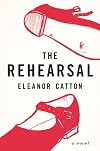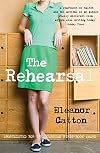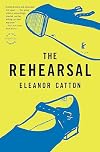
The Rehearsal
by Eleanor Catton
On This Page
Description
Fiction. Literature. HTML:A teacher's affair with his underage student jolts a group of teenage girls into a new awareness of their own power. Their nascent desires surprise even themselves as they find the practice room where they rehearse with their saxophone teacher is the safe place where they can test out their abilities to attract and manipulate. It seems their every act is a performance, every platform a stage.But when the local drama school turns the story into their year-end show, show more the real world and the world of the theater are forced to meet. With the dates of the performances — the musicians' and the acting students' — approaching, the dramas, real and staged, begin to resemble each other, until they merge in a climax worthy of both life and art. show less
Tags
Recommendations
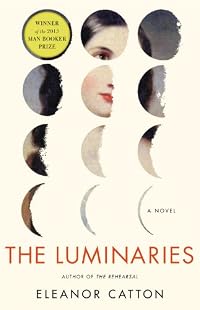








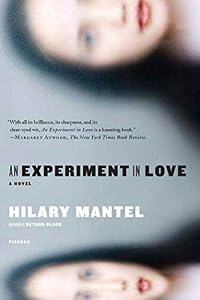
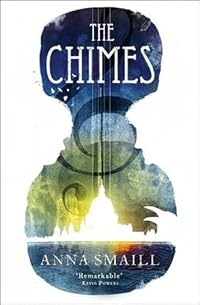
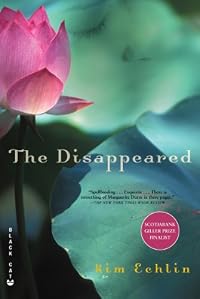
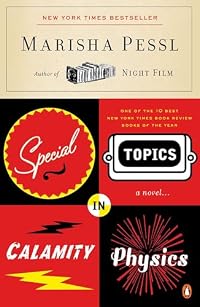









Member Recommendations

beyondthefourthwall Note: I acknowledge that a LibraryThing reviewer who read Choi's book before I did has also pointed out the similarity here.
Member Reviews
Immediately tense and sort of sinister, in an immersive and surface calm sort of way. Fantastic writing and a very compelling story that could so easily be trite or melodramatic based on themes; or overwritten in an unusual structure that instead drives the story-telling. I enjoyed this more than the Luminaries in that I thought it was more, mmm, comfortable with its own structure.
Eleanor Catton is a witch. I say this out of great respect, as I was taught to do by my Fake Auntie Barbara, who is also a witch. I know that Catton is a witch because:
i) I do not care about sexuality in fiction. It's been done to death (primarily, I suspect, because it lets writers, who like to think they're pure as the driven snow, feel like victims. Most writers, of course, are wealthy beyond the wildest dreams of the rest of the human population and got that way because of a wide range of historical injustices). It lets writers think they have something interesting to say about The Human Condition when they have nothing to say about actual human lives.
ii) I don't much care about coming of age novels, because most teenagers are show more dull, repetitive, irritating and more or less subhuman. The ones that aren't don't act like teenagers, and coming of age novels involving them are thus weird and not really coming of age novels.
iii) I do not believe the whole world's a stage.
iv) With few exceptions, I don't like jazz.
So Catton has written a coming of age novel, which is primarily about sexuality and The Theater, and focuses on the symbolism of jazz saxophones. You'll note that, despite all this, I really liked this book.
But there is more evidence still. There are books, good books, which are unreadable for the first x chapters. Consider Catch 22, which I at least found boring and baffling for the first 100 pages... and then fell for, hard, as hard as a teenage saxophonist. Or Death in Venice, which did nothing for me for about the first third, but so much for me in the last two thirds that I've gone on to read Dr Faustus *twice*. And I'm not at all masochistic. Mann just does it.
The Rehearsal is an outlier even on this scale, though. For the first 200--200!--pages, I was mostly put off. I had no desire to keep reading. The two narratives seemed to have nothing to do with each other; the stylistic fireworks grew tired quickly (about half of the book takes place somewhere between reality and a saxophone teacher's perception of that reality, which is symbolized by characters being lit as if on stage); points i) through iv) had been firmly established. I figured I'd finish it, because it was shortish and the Luminaries is apparently the greatest shit ever. But I was just as likely to play video games as pick the book up.
And then the two narratives came together and I became a lunatic obsessive about finishing the book. My wife typically asks how a book was once I'm done, and I say things like "It was good, except for x, y and z, and I don't think the author put enough thought into a, and I don't know. I liked it okay." That's the books I really like. And she says, "Are you going to read [author's other book]?" "Maybe. Not right now."
But with The Rehearsal, the conversation went like this:
"How was it?"
"Great."
"Huh. Are you going to read the Luminaries?"
"Yes. You should read this. It's really great."
Enough beating my chest. Why is it so good? Well, Catton takes those tired topics and, implausibly, makes something new from them by looking at how adults perceive teenage coming of age sexuality, how they/we exploit it, distort it, and impose our own codes and experiences on the young.
She writes about being a teenage boy more touchingly than any ex-teenage boy (for them, apparently, life was mostly about The Penis. For me, as for Catton's young man, life was about substantially more important things, as well as learning to cope with aforementioned Penis).
She writes with awareness of the constructedness of her own fiction (i.e., the book is a stage), but without any suggestion that the constructedness of it makes it less valid. It's almost as if the constructedness is something to enjoy, because it makes it possible to tell truths about the non-fictional world (in the case of this book: that growing up is akin to rehearsing for the outside world, i.e., it is not the case that all the world's a stage at all, it's far more terrible than that, and you should revel in the moments when you can act out fictions).
And she writes about homosexuality, without Writing About Homosexuality. It's just that between one and three of her characters would rather make out with someone of their own gender. If that's an issue for you, that's on you. The book does not care about your stupid issues, though it does care very much about the way the world treats those one to three characters (i.e., shabbily). I grant you, that sounds weird. Almost as if it's hard to explain using reason.
Almost as if the author is a witch. show less
i) I do not care about sexuality in fiction. It's been done to death (primarily, I suspect, because it lets writers, who like to think they're pure as the driven snow, feel like victims. Most writers, of course, are wealthy beyond the wildest dreams of the rest of the human population and got that way because of a wide range of historical injustices). It lets writers think they have something interesting to say about The Human Condition when they have nothing to say about actual human lives.
ii) I don't much care about coming of age novels, because most teenagers are show more dull, repetitive, irritating and more or less subhuman. The ones that aren't don't act like teenagers, and coming of age novels involving them are thus weird and not really coming of age novels.
iii) I do not believe the whole world's a stage.
iv) With few exceptions, I don't like jazz.
So Catton has written a coming of age novel, which is primarily about sexuality and The Theater, and focuses on the symbolism of jazz saxophones. You'll note that, despite all this, I really liked this book.
But there is more evidence still. There are books, good books, which are unreadable for the first x chapters. Consider Catch 22, which I at least found boring and baffling for the first 100 pages... and then fell for, hard, as hard as a teenage saxophonist. Or Death in Venice, which did nothing for me for about the first third, but so much for me in the last two thirds that I've gone on to read Dr Faustus *twice*. And I'm not at all masochistic. Mann just does it.
The Rehearsal is an outlier even on this scale, though. For the first 200--200!--pages, I was mostly put off. I had no desire to keep reading. The two narratives seemed to have nothing to do with each other; the stylistic fireworks grew tired quickly (about half of the book takes place somewhere between reality and a saxophone teacher's perception of that reality, which is symbolized by characters being lit as if on stage); points i) through iv) had been firmly established. I figured I'd finish it, because it was shortish and the Luminaries is apparently the greatest shit ever. But I was just as likely to play video games as pick the book up.
And then the two narratives came together and I became a lunatic obsessive about finishing the book. My wife typically asks how a book was once I'm done, and I say things like "It was good, except for x, y and z, and I don't think the author put enough thought into a, and I don't know. I liked it okay." That's the books I really like. And she says, "Are you going to read [author's other book]?" "Maybe. Not right now."
But with The Rehearsal, the conversation went like this:
"How was it?"
"Great."
"Huh. Are you going to read the Luminaries?"
"Yes. You should read this. It's really great."
Enough beating my chest. Why is it so good? Well, Catton takes those tired topics and, implausibly, makes something new from them by looking at how adults perceive teenage coming of age sexuality, how they/we exploit it, distort it, and impose our own codes and experiences on the young.
She writes about being a teenage boy more touchingly than any ex-teenage boy (for them, apparently, life was mostly about The Penis. For me, as for Catton's young man, life was about substantially more important things, as well as learning to cope with aforementioned Penis).
She writes with awareness of the constructedness of her own fiction (i.e., the book is a stage), but without any suggestion that the constructedness of it makes it less valid. It's almost as if the constructedness is something to enjoy, because it makes it possible to tell truths about the non-fictional world (in the case of this book: that growing up is akin to rehearsing for the outside world, i.e., it is not the case that all the world's a stage at all, it's far more terrible than that, and you should revel in the moments when you can act out fictions).
And she writes about homosexuality, without Writing About Homosexuality. It's just that between one and three of her characters would rather make out with someone of their own gender. If that's an issue for you, that's on you. The book does not care about your stupid issues, though it does care very much about the way the world treats those one to three characters (i.e., shabbily). I grant you, that sounds weird. Almost as if it's hard to explain using reason.
Almost as if the author is a witch. show less
Eleanor Catton's debut novel is a brilliant exploration of the arts, sexuality, and, most significantly, the line that separates truth from fiction. Written as her Master's thesis, The Rehearsal shows the natural talent of Catton, who writes as intelligently and maturely here as she did in her prize-winning follow-up, The Luminaries. While Catton's work is far from the most readable of young authors today, it's undoubtedly some of the most intelligent and finely woven fiction I have ever seen. Each word is chosen with such foresight and precision that it's a wonder to me how she produces novels as fast as she does (were I capable of producing a work such as The Luminaries, I imagine it would take a lifetime.)
Set in an arts school show more following a scandal—a teacher's affair with an underage student—The Rehearsal may sound like your average morality play or Lifetime movie. It's far from it. At times, with its ambiguously drawn scenes and dramatic play of various relationships, I was reminded of a tamer David Lynch. And at times, especially as I was pulled into the story of the drama school, I was reminded of the darkness and mindfuckery of 2010's Black Swan. Make no mistake, however, Catton's creation is all her own.
As The Rehearsal opens, it may be hard to follow as the dialogue is horribly pretentious, but once the reader realizes that some of the story (and in ways, all of it?) is acting, one may assume that this staged speech was the author's intent. Thus a big foray into false memory, lies, and truth unveils itself. It's all so expertly crafted with little clues here and there, sparks of witty dialogue that highlight the play within a play (and “all the world's a stage”). It's never clear—at least it wasn't to me—when you're reading the “truth” and when you're reading the “reenactment” of the “truth.” One can make assumptions such as that the truth opens the novel and everything that follows is a reinterpretation; or that all is fabrication that leads to the truth in the end; or that those scenes with the most pretentious dialogue are clearly staged and everything else is reality. But in the end, they're all assumptions. Only the author possibly knows the truth. For me, that's okay. From my many years of reviewing books, however, I've noticed that there are many readers who H A T E such ambiguity. I recall now another similar novel I loved that also blurred the lines without ever directly revealing the real truth: Heidi Julavits's The Uses of Enchantment. And guess how many one and two star ratings that novel has.
The Rehearsal is so multi-layered that it is on one hand confusing, on the other, brilliant. It's not the sort of novel that a reader should expect answers from; it's a novel that intends to confuse you and blow your mind. Despite its seemingly “light” plot synopsis, The Rehearsal is the foundation on which Catton is building her genius. show less
Set in an arts school show more following a scandal—a teacher's affair with an underage student—The Rehearsal may sound like your average morality play or Lifetime movie. It's far from it. At times, with its ambiguously drawn scenes and dramatic play of various relationships, I was reminded of a tamer David Lynch. And at times, especially as I was pulled into the story of the drama school, I was reminded of the darkness and mindfuckery of 2010's Black Swan. Make no mistake, however, Catton's creation is all her own.
As The Rehearsal opens, it may be hard to follow as the dialogue is horribly pretentious, but once the reader realizes that some of the story (and in ways, all of it?) is acting, one may assume that this staged speech was the author's intent. Thus a big foray into false memory, lies, and truth unveils itself. It's all so expertly crafted with little clues here and there, sparks of witty dialogue that highlight the play within a play (and “all the world's a stage”). It's never clear—at least it wasn't to me—when you're reading the “truth” and when you're reading the “reenactment” of the “truth.” One can make assumptions such as that the truth opens the novel and everything that follows is a reinterpretation; or that all is fabrication that leads to the truth in the end; or that those scenes with the most pretentious dialogue are clearly staged and everything else is reality. But in the end, they're all assumptions. Only the author possibly knows the truth. For me, that's okay. From my many years of reviewing books, however, I've noticed that there are many readers who H A T E such ambiguity. I recall now another similar novel I loved that also blurred the lines without ever directly revealing the real truth: Heidi Julavits's The Uses of Enchantment. And guess how many one and two star ratings that novel has.
The Rehearsal is so multi-layered that it is on one hand confusing, on the other, brilliant. It's not the sort of novel that a reader should expect answers from; it's a novel that intends to confuse you and blow your mind. Despite its seemingly “light” plot synopsis, The Rehearsal is the foundation on which Catton is building her genius. show less
I had a very hard time getting through this book, and would have quit after about 20 pages if I had not wanted to review it for the Early Reviewers programme for Librarything. The writing was excellent and very clever, but The Rehearsal was way too pretentious for my tastes, and the characters did not engage me. The book is centred around the aftermath of an incident at a high school where a music teacher is accused of being involved with one of his students. The author does not write much about the actual incident, but rather how it affects the people on the periphery of the event, and in particular the younger sister of the "victim". The story is not straightforward and the viewpoint jumps around wildly, making the book very show more disjointed and unsatisfying, though perhaps memorable. The adults in the book, parents and teachers and school counsellors, all seemed creepy and unrealistic to me, particularly the unnamed female saxophone tutor who gives private lessons to some of the students at the school. She belittles caring mothers and students she finds boring, and tries to push the victim's sister into a lesbian relationship with another of her students, for vicarious reasons, while remembering her own failed relationship.
On top of all this, there is a parallel story about an exclusive acting school with very dubious teaching methods, and unnamed instructors who have Important Titles. The book felt like a disjointed exercise in saying clever things about life and acting, and life as acting, and adolescent sexuality and the politics of high school friendships and cliques. The writing is good and the incidents are memorable but I did not enjoy the experience on the whole, and would not recommend the book to anyone I know. show less
On top of all this, there is a parallel story about an exclusive acting school with very dubious teaching methods, and unnamed instructors who have Important Titles. The book felt like a disjointed exercise in saying clever things about life and acting, and life as acting, and adolescent sexuality and the politics of high school friendships and cliques. The writing is good and the incidents are memorable but I did not enjoy the experience on the whole, and would not recommend the book to anyone I know. show less
 This review was written for LibraryThing Early Reviewers.
This book continually amazes and surprises! I can't believe this is a first novel. There are 3 story areas: the effects of a sex scandal on a girl's school (the reader is never sure about who seduced whom . . . the music student or her teacher); the effects of a scary, Miss Brodie-like music teacher on the female students to whom she gives private saxaphone lessons; and the experiences of an 18-year-old boy named Stanley as he first auditions for and then is accepted into a prestigious drama school; and then his experiences at the school, moving ultimately into the preparations for the first-year students' end-of-year project: a dramatized version of the effects of the local school's teacher-pupil sex scandal.
The Rehearsal is a show more challenging but rewarding read. There are continual time shifts, and point of view shifts but, more incredibly, many occasions when you will ask your self: "Is this actually happening, is a character imagining this, or is this a performance on a stage?" The book makes you think about the nature of: identity, memory, imagination, the teacher-pupil relationship; theatre, and reality. It also looks at adolescence in refreshingly non-sentimental manner.
The language is also incredible: vivid, daring, fresh and up-to-date. At the same time, the language is challenging: as what characters say in any given 'speech' will leave you wondering: Is she actually saying this, is she imagining what she would like to say but can't, or is she performing on a stage? Sometimes all three answers are possible over the course of a 'speech.'
As the book proceeds the different strains of the plot hurtle together in an exciting if sometimes confusing way. This is the type of book you like to re-read to make sure you 'get it,' but even then you're not totally sure. If I had any criticism, it is that the ending felt abrupt and unsatisfying. Then again, maybe I just didn't get it. Despite this, so many parts of the book are so fresh and honest, they can be read aloud, enjoyed, and admired as stand-alone pieces. Highly recommended! show less
The Rehearsal is a show more challenging but rewarding read. There are continual time shifts, and point of view shifts but, more incredibly, many occasions when you will ask your self: "Is this actually happening, is a character imagining this, or is this a performance on a stage?" The book makes you think about the nature of: identity, memory, imagination, the teacher-pupil relationship; theatre, and reality. It also looks at adolescence in refreshingly non-sentimental manner.
The language is also incredible: vivid, daring, fresh and up-to-date. At the same time, the language is challenging: as what characters say in any given 'speech' will leave you wondering: Is she actually saying this, is she imagining what she would like to say but can't, or is she performing on a stage? Sometimes all three answers are possible over the course of a 'speech.'
As the book proceeds the different strains of the plot hurtle together in an exciting if sometimes confusing way. This is the type of book you like to re-read to make sure you 'get it,' but even then you're not totally sure. If I had any criticism, it is that the ending felt abrupt and unsatisfying. Then again, maybe I just didn't get it. Despite this, so many parts of the book are so fresh and honest, they can be read aloud, enjoyed, and admired as stand-alone pieces. Highly recommended! show less
This review was written for LibraryThing Early Reviewers.This was one of the most fascinating books I’ve read in a very long time. It is certainly not for everyone – the subject matter will put off some, while the innovative narrative structure may frustrate others expecting a traditionally linear story arc.
However, if you are sometimes more intrigued by the way a tale is told than the events described; if you oft find yourself lingering over a sentence of remarkable clarity and precision, wondering at the delicate interplay of consonance and connotation; if you are sufficiently self-aware of the classical boundaries between writer and reader, actor and audience, and take delight in the subtle ways in which such “fourth walls” may be breached, built upon, or incorporated into the show more interactive weaving between text and performance; then I cannot sufficiently endorse this exquisitely crafted experiment in wordplay, percipience and multidimensional storytelling.
For the record, I am not normally drawn to books featuring teenage girls, sexual awakening, or the halting and fumbling GLBT experimentation which serve as the plot drivers in this post-modern John Hughes saga of teen-teacher angst. Prosaic plot precedents aside, this thin, intricately woven volume has as much in common with Harlequin romance as Brittany Spears with Die Walküre.
Without wishing to spoil any of the many playful surprises which make The Rehearsal such a pleasure to unfold, one may liken the experience to an exercise with Plato’s Cave: as pages turn, one is gradually led to wonder which elements are representative of the watchers, the shadows, the wall on which the shadows are cast, the fire, the Things themselves, or those watching the watchers. You could consider The Rehearsal a recursive ladder proof using mise en abyme and existential exit conditions – you could, if you were a literary geek with a taste for the avant-garde, but then I don’t know who else would still be reading this far ☺
Scathingly witty social satire, nonlinear self-referential exposition, and hot lesbian sex – do you really need more? Five stars from this jaundiced reader. show less
However, if you are sometimes more intrigued by the way a tale is told than the events described; if you oft find yourself lingering over a sentence of remarkable clarity and precision, wondering at the delicate interplay of consonance and connotation; if you are sufficiently self-aware of the classical boundaries between writer and reader, actor and audience, and take delight in the subtle ways in which such “fourth walls” may be breached, built upon, or incorporated into the show more interactive weaving between text and performance; then I cannot sufficiently endorse this exquisitely crafted experiment in wordplay, percipience and multidimensional storytelling.
For the record, I am not normally drawn to books featuring teenage girls, sexual awakening, or the halting and fumbling GLBT experimentation which serve as the plot drivers in this post-modern John Hughes saga of teen-teacher angst. Prosaic plot precedents aside, this thin, intricately woven volume has as much in common with Harlequin romance as Brittany Spears with Die Walküre.
Without wishing to spoil any of the many playful surprises which make The Rehearsal such a pleasure to unfold, one may liken the experience to an exercise with Plato’s Cave: as pages turn, one is gradually led to wonder which elements are representative of the watchers, the shadows, the wall on which the shadows are cast, the fire, the Things themselves, or those watching the watchers. You could consider The Rehearsal a recursive ladder proof using mise en abyme and existential exit conditions – you could, if you were a literary geek with a taste for the avant-garde, but then I don’t know who else would still be reading this far ☺
Scathingly witty social satire, nonlinear self-referential exposition, and hot lesbian sex – do you really need more? Five stars from this jaundiced reader. show less
Eleanor Catton's debut novel is proving difficult to review. I have literally started, and erased, ten different opening paragraphs, as if what I want to say about this book is locked in my mind, there only for me. Really, this makes perfect sense, as The Rehearsal is a very introspective novel - it delves deep into the psyches of its characters, and surfaces with very few answers. Catton's style, like the tumbled thoughts running through my head, is non-linear, disjointed, and (here the comparison to my thoughts ends), genius. I finished The Rehearsal with that rare feeling of wanting to begin it again immediately.
The Rehearsal has two main plotlines. First, we have the aftermath of a sex scandal at an all-girls high school, where a show more teacher was caught having a relationship with a student. While the actual details of this affair are never revealed to the reader, we instead are privy to the minds of several other students at the school - including the younger sister of the abused girl - and the link that brings them together, a nameless saxophone teacher. The other story is of a group of first-year students at a dramatic arts academy near the high school, who are trying to discover what role they occupy in the great production that is life.
These plots merge when the drama students decide to use the sex scandal as inspiration for their year-end performance.
Catton moves between her two plotlines with great skill, using days of the week as titles for the scandal story, and months as titles for the drama story. The trick is in discovering when these plots will meet - for of course, we know they must. At times, the girls at the high school may actually be actors in the academy's play, so that one plotline is really only dramatized by the other. The reader is never sure of what is real and what is an act.
This structure is what makes The Rehearsal so exciting. Catton takes huge stylistic risks, and requires her readers to forge ahead through their confusion, to suspend the desire to know everything that happens, and to accept the uncertainties of her world. We will never know what parts of The Rehearsal are scripted scenes in a play, and what parts are true to life - and I'm sure some readers will hate this, find it pretentious. I, however, was awed by Catton's restraint. Her ability to leave questions unanswered is refreshing, as is her insistance in an active reader - you cannot read this book without giving it your full attention. Hands down, this is the most challenging, thought-provoking novel I have read all year. show less
The Rehearsal has two main plotlines. First, we have the aftermath of a sex scandal at an all-girls high school, where a show more teacher was caught having a relationship with a student. While the actual details of this affair are never revealed to the reader, we instead are privy to the minds of several other students at the school - including the younger sister of the abused girl - and the link that brings them together, a nameless saxophone teacher. The other story is of a group of first-year students at a dramatic arts academy near the high school, who are trying to discover what role they occupy in the great production that is life.
These plots merge when the drama students decide to use the sex scandal as inspiration for their year-end performance.
Catton moves between her two plotlines with great skill, using days of the week as titles for the scandal story, and months as titles for the drama story. The trick is in discovering when these plots will meet - for of course, we know they must. At times, the girls at the high school may actually be actors in the academy's play, so that one plotline is really only dramatized by the other. The reader is never sure of what is real and what is an act.
This structure is what makes The Rehearsal so exciting. Catton takes huge stylistic risks, and requires her readers to forge ahead through their confusion, to suspend the desire to know everything that happens, and to accept the uncertainties of her world. We will never know what parts of The Rehearsal are scripted scenes in a play, and what parts are true to life - and I'm sure some readers will hate this, find it pretentious. I, however, was awed by Catton's restraint. Her ability to leave questions unanswered is refreshing, as is her insistance in an active reader - you cannot read this book without giving it your full attention. Hands down, this is the most challenging, thought-provoking novel I have read all year. show less
Members
- Recently Added By
Published Reviews
ThingScore 92
Eleanor Catton's masterstroke in this remarkable first novel is to immerse herself in the psychological hall of mirrors that is the teenage mind, but to apply an anthropological precision to what she finds there.
added by lkernagh
Eleanor Catton’s confident debut, an ambitious riff around 'what is real’, shows we are all performing, all our lives, to some degree.
added by lkernagh
The Rehearsal is a significant debut novel from an exciting young writer. Eleanor Catton is a new talent who has arrived fully formed, with an accomplished, confident and mature voice. This is a startling novel, striking and strange and brave....
added by avatiakh
Lists

Books Read in 2014
2,341 works; 89 members

Academia in Fiction
158 works; 23 members

the play's the thing... (novels themed around the theatre + acting)
34 works; 5 members
Author Information

9+ Works 8,528 Members
Eleanor Catton was born in Canada on September 24, 1985. She moved to New Zealand with her family when she was six years old. She studied English at the University of Canterbury and received a master's in creative writing at The Institute of Modern Letters, Victoria University of Wellington. Her debut novel, The Rehearsal, was published in 2008. show more Her second novel, The Luminaries, won the 2013 Man Booker Prize. In 2015 she ws made an Honorary Literary Fellows in the New Zealand Society of Authors' annual Waitangi Day Honours. In 2016, she was named as one of six, Arts New Zealand's Laureate Award winners. (Bowker Author Biography) show less
Some Editions
Awards and Honors
Awards
Notable Lists
Series
Belongs to Publisher Series
Gallimard, Folio (5534)
Common Knowledge
- Canonical title
- The Rehearsal
- Original title
- The Rehearsal
- Original publication date
- 2008
- People/Characters
- Victoria; Isolde; Stanley; Julia; Bridget
- Important places
- New Zealand
- Dedication
- for Johnny
- First words
- "I can't do it," is what she says. "I simply can't admit students without prior musicl training. My teaching methods, Mrs. Henderson, are rather more specific than I think you understand." -Chapter One, Thursday
- Last words
- (Click to show. Warning: May contain spoilers.)So I could imagine that I was really there.
- Blurbers
- Perkins, Emily; Atkinson, Kate; Ferris, Joshua
- Canonical DDC/MDS
- 823.92
- Canonical LCC
- PR9639.C39
Classifications
Statistics
- Members
- 806
- Popularity
- 34,143
- Reviews
- 51
- Rating
- (3.53)
- Languages
- 11 — Chinese, Dutch, English, Finnish, French, German, Italian, Norwegian, Portuguese, Spanish, Swedish
- Media
- Paper, Audiobook, Ebook
- ISBNs
- 42
- ASINs
- 9