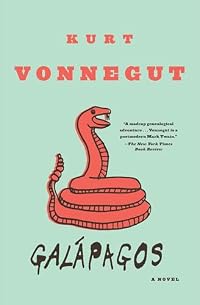
Galápagos
by Kurt Vonnegut
On This Page
Description
A small group of apocalypse survivors stranded on the Galapagos Islands are about to become the progenitors of a brave new human race. Vonnegut is a post-modern Mark Train. ... Galapagos is a madcap genealogical adventure.Tags
Recommendations
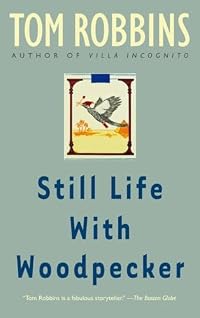
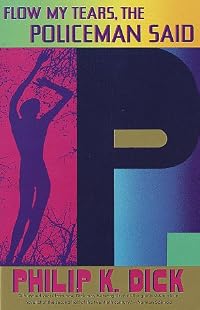
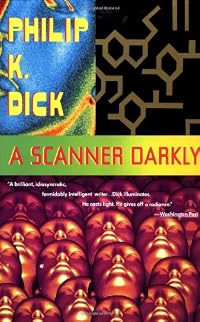







Member Recommendations
DeusXMachina Human evolution

DeusXMachina Human Evolution
Member Reviews
Kurt Vonnegut's great recurring subjects were depression and the fallibility of mankind as he saw it. But unlike many before and after him, he had a touch that was both caustic but endearing. Much like Hunter S. Thompson and Jonathan Swift his mordant incisions into the weaknesses of humanity were galvanized not just by disappointment but by a bruised idealism, an idealism that believed, at times beyond all logic and evidence, in the essential good and worthwhile nature of the marginally evolved human being.
Galapagos is a fantastic read. At first I thought Vonnegut's narrative voice a bit too acerbic, a bit too dismissive. But with the skill of a master Vonnegut weaves a story that ends (much like his earlier Breakfast of Champions) show more with an adroitly placed balancing between the real and the phantasmagoric, between the dead and the living, between father and son. It's something beautiful, and something heartbreaking.
I've said before that Vonnegut is the mordant uncle of American letters. The guy who'd cheer you on but call you a twerp if he knew you could do better. He was one of the few writers I'd also call a personal hero. Read this and you'll see the beauty in the grotesque that he made his, but only because it's all of ours, one of our few commonalities as a species. show less
Galapagos is a fantastic read. At first I thought Vonnegut's narrative voice a bit too acerbic, a bit too dismissive. But with the skill of a master Vonnegut weaves a story that ends (much like his earlier Breakfast of Champions) show more with an adroitly placed balancing between the real and the phantasmagoric, between the dead and the living, between father and son. It's something beautiful, and something heartbreaking.
I've said before that Vonnegut is the mordant uncle of American letters. The guy who'd cheer you on but call you a twerp if he knew you could do better. He was one of the few writers I'd also call a personal hero. Read this and you'll see the beauty in the grotesque that he made his, but only because it's all of ours, one of our few commonalities as a species. show less
Rewritten after rereading in July 2012.
This darkly humorous satire starts with a world financial crisis in 1986 (hopefully that’s where the similarity with current times ends), leading to WW3 – though it’s not really about either: it’s fundamentally about adaptation.
A million years in the future, the only “humans” left on Earth are the descendants of a small but diverse group of survivors of a Galapagos islands cruise, and they are more like seals than 20th century humans. Most of the story is set between the run up to the cruise and the passengers’ first few years on the island, but it is certainly not a Robinson Crusoe type story; it is far more provocative than that, raising issues of fate/independence, the meaning and show more importance of intelligence and ultimately, what makes us human.
Like all good dystopias (if that's not an oxymoron), the individual steps to it don't really stretch credulity (few of them are very original), but the final destination is more startling - and even somewhat positive.
NARRATIVE STYLE
The story arc is fundamentally chronological, but with an enormous number of tiny jumps ahead: right from the start, Vonnegut sprinkles the story with so many snippets about what will happen to everyone, why and how, that you don’t know if there will be anything left by the time the main narrative catches up. He even prefixes the names of those about to die with an asterisk, at which point I went with the flow and stopped worrying about "spoilers" (on rereading, this aspect became pure comedy). The final chapter, which I would have deleted, fills in a few random gaps that didn’t really need filling.
The narrator is Leon Trout, a long-dead man who helped build the cruise ship. He reminded me a little of Snowman in "Oryx and Crake" (http://www.goodreads.com/review/show/...), so if you liked that, consider this. (Kilgore Trout, the father of Leon, is a recurring character in Vonnegut: a prolific but not very successful writer of sci fi. This book mentions his “The Era of Hopeful Monsters”, with a plot that echoes this.)
The book also has random quotes from Mandarax, a hand-held computer and translator that is a little like the Hitchhiker’s Guide to the Galaxy. They are either bizarrely obscure, like the Oracle at Delphi, or comically inappropriate.
THEMES
The main premise is that humans have evolved badly, though the reasons for this are never explained, which is odd, given how much weight is given to subsequent natural selection in the story.
Most significantly, our “big brains” are the cause of all our troubles: they lie (so we don’t trust them or other people), we can’t switch them off, they confuse us with too much information, distract us from the important matters of life and death (though often causing death, e.g. by fighting or suicide), and ultimately cause global financial collapse because the value of so many assets is only maintained by belief in virtual money whizzing around. Accepting the idea that our big brains are a handicap is a bit of a challenge, which Vonnegut backs up with typical bathos by suggesting alcohol is just a way to relax with a (temporarily) smaller brain.
Our long, protected childhoods accustom us to the idea of an omniscient carer and hence account for belief in god, whilst wealth makes us blasé about our doom.
Full stomachs are part of the problem, too: a full belly puts people off-guard and all the powerful people are well-fed, so don’t worry about impending disaster.
Outsourcing our skills and knowledge by developing machines to take over many brain tasks reduces the need for big brains, and indeed, for people.
No wonder humans, in their twenty-first century form, are doomed – even at a comical level: a million years hence, “evolution hasn’t made teeth more durable. It has simply cut the average human lifespan down to about thirty years”!
By contrast, animals are happy to survive, feed and reproduce, and once stranded on an island, natural selection leads to humanity being reduced and enhanced to such basics, “everybody is exactly what he or she seems to be” and “everyone is so innocent and relaxed now". No more lies or deceit, and no hands to use for evil – it sounds positively Utopian.
In addition to the above, it also touches on the nature of intelligence, eugenics (voluntary and not), consent, disability, incest, contraception, mate selection, truth, marriage and alternatives to it, and all sorts of other things. You could make a whole PSHE curriculum from this!
HUMAN-NESS
Amongst all the big issues and ideas the book explicitly raises, there is one that is always assumed, but never questioned or defended: in what sense are the "humans" on Santa Rosalia in a million years’ time actually human (and by extension, what does it mean to BE human)? And if they are human, then surely we should call ourselves apes, or even fish.
And fish and fishing, literal and metaphorical, are recurring themes: many of the characters are "fishers of men", albeit not in a good way, and we’re reminded that “so much depends on fish”; even the narrator’s surname is Trout.
I would hesitate to impose a New Testament analogy on a secular novel by a secular writer, but there are many Biblical allusions: creation, flood, an ark, Adam and Eve, the danger of knowledge, the power of belief, the existence of God, David and Goliath, souls, redemption, and… fish.
Vonnegut toys with why we are as we are and clearly doesn't think it's brain size or capacity that makes us human (which is surely good, as otherwise, what would be the implication for those with learning difficulties and brain damage etc?), but he leaves the reader to decide what “human” means.
FATE AND PURPOSE
Throughout the book, Vonnegut keeps reminding us of the significance of random and apparently trivial events, whilst at the same time implying the apparent opposite: the inevitability of the outcome for humanity (the butterfly effect versus fate). There is a clear message that most people are irrelevant; we can't know who the few important ones are, but they're probably the ones we least expect. Trout admits his prolonged observation was pointless: he was addicted to the soap opera qualities of the story, but accumulated knowledge rather than understanding.
MAIN MESSAGE?
The world ends up a happier place, because of the power of natural selection, echoing the very upbeat quote from Anne Frank on the title page, “In spite of everything, I still believe people are really good at heart.”
Yet, given his ideas about fate, is Vonnegut suggesting the book is pointless too (not that I would agree with that), is he actually trying to make a point (if so, what?) or just entertaining us? Mostly the latter, I think
If Leon Trout is reading this, or any other discussion of the book, he is doubtless chuckling at how seriously people are taking it. Mind you, as a pretentious late teen/early twentysomething, I would have had a field day of profundity!
Overall, not a long book, but one to savour, ponder, chuckle over and reread.
OTHER QUOTATIONS
• “Mere opinions… were as likely to govern people’s actions as hard evidence, and were subject to sudden reversals as hard evidence could never be.”
• “It was all in people’s heads. People had simply changed their opinion of paper wealth.”
• Big brains make marriage hard because “That cumbersome computer could hold so many contradictory opinions” and switch between them so quickly “that a discussion between a husband and wife under stress could end up light a fight between blindfolded people wearing roller skates”.
• “Typical of the management of so many organisations one million years ago, with the nominal leader specialising in social balderdash, and with the supposed second in command burdened with the responsibility of understanding how things really worked.” show less
This darkly humorous satire starts with a world financial crisis in 1986 (hopefully that’s where the similarity with current times ends), leading to WW3 – though it’s not really about either: it’s fundamentally about adaptation.
A million years in the future, the only “humans” left on Earth are the descendants of a small but diverse group of survivors of a Galapagos islands cruise, and they are more like seals than 20th century humans. Most of the story is set between the run up to the cruise and the passengers’ first few years on the island, but it is certainly not a Robinson Crusoe type story; it is far more provocative than that, raising issues of fate/independence, the meaning and show more importance of intelligence and ultimately, what makes us human.
Like all good dystopias (if that's not an oxymoron), the individual steps to it don't really stretch credulity (few of them are very original), but the final destination is more startling - and even somewhat positive.
NARRATIVE STYLE
The story arc is fundamentally chronological, but with an enormous number of tiny jumps ahead: right from the start, Vonnegut sprinkles the story with so many snippets about what will happen to everyone, why and how, that you don’t know if there will be anything left by the time the main narrative catches up. He even prefixes the names of those about to die with an asterisk, at which point I went with the flow and stopped worrying about "spoilers" (on rereading, this aspect became pure comedy). The final chapter, which I would have deleted, fills in a few random gaps that didn’t really need filling.
The narrator is Leon Trout, a long-dead man who helped build the cruise ship. He reminded me a little of Snowman in "Oryx and Crake" (http://www.goodreads.com/review/show/...), so if you liked that, consider this. (Kilgore Trout, the father of Leon, is a recurring character in Vonnegut: a prolific but not very successful writer of sci fi. This book mentions his “The Era of Hopeful Monsters”, with a plot that echoes this.)
The book also has random quotes from Mandarax, a hand-held computer and translator that is a little like the Hitchhiker’s Guide to the Galaxy. They are either bizarrely obscure, like the Oracle at Delphi, or comically inappropriate.
THEMES
The main premise is that humans have evolved badly, though the reasons for this are never explained, which is odd, given how much weight is given to subsequent natural selection in the story.
Most significantly, our “big brains” are the cause of all our troubles: they lie (so we don’t trust them or other people), we can’t switch them off, they confuse us with too much information, distract us from the important matters of life and death (though often causing death, e.g. by fighting or suicide), and ultimately cause global financial collapse because the value of so many assets is only maintained by belief in virtual money whizzing around. Accepting the idea that our big brains are a handicap is a bit of a challenge, which Vonnegut backs up with typical bathos by suggesting alcohol is just a way to relax with a (temporarily) smaller brain.
Our long, protected childhoods accustom us to the idea of an omniscient carer and hence account for belief in god, whilst wealth makes us blasé about our doom.
Full stomachs are part of the problem, too: a full belly puts people off-guard and all the powerful people are well-fed, so don’t worry about impending disaster.
Outsourcing our skills and knowledge by developing machines to take over many brain tasks reduces the need for big brains, and indeed, for people.
No wonder humans, in their twenty-first century form, are doomed – even at a comical level: a million years hence, “evolution hasn’t made teeth more durable. It has simply cut the average human lifespan down to about thirty years”!
By contrast, animals are happy to survive, feed and reproduce, and once stranded on an island, natural selection leads to humanity being reduced and enhanced to such basics, “everybody is exactly what he or she seems to be” and “everyone is so innocent and relaxed now". No more lies or deceit, and no hands to use for evil – it sounds positively Utopian.
In addition to the above, it also touches on the nature of intelligence, eugenics (voluntary and not), consent, disability, incest, contraception, mate selection, truth, marriage and alternatives to it, and all sorts of other things. You could make a whole PSHE curriculum from this!
HUMAN-NESS
Amongst all the big issues and ideas the book explicitly raises, there is one that is always assumed, but never questioned or defended: in what sense are the "humans" on Santa Rosalia in a million years’ time actually human (and by extension, what does it mean to BE human)? And if they are human, then surely we should call ourselves apes, or even fish.
And fish and fishing, literal and metaphorical, are recurring themes: many of the characters are "fishers of men", albeit not in a good way, and we’re reminded that “so much depends on fish”; even the narrator’s surname is Trout.
I would hesitate to impose a New Testament analogy on a secular novel by a secular writer, but there are many Biblical allusions: creation, flood, an ark, Adam and Eve, the danger of knowledge, the power of belief, the existence of God, David and Goliath, souls, redemption, and… fish.
Vonnegut toys with why we are as we are and clearly doesn't think it's brain size or capacity that makes us human (which is surely good, as otherwise, what would be the implication for those with learning difficulties and brain damage etc?), but he leaves the reader to decide what “human” means.
FATE AND PURPOSE
Throughout the book, Vonnegut keeps reminding us of the significance of random and apparently trivial events, whilst at the same time implying the apparent opposite: the inevitability of the outcome for humanity (the butterfly effect versus fate). There is a clear message that most people are irrelevant; we can't know who the few important ones are, but they're probably the ones we least expect. Trout admits his prolonged observation was pointless: he was addicted to the soap opera qualities of the story, but accumulated knowledge rather than understanding.
MAIN MESSAGE?
The world ends up a happier place, because of the power of natural selection, echoing the very upbeat quote from Anne Frank on the title page, “In spite of everything, I still believe people are really good at heart.”
Yet, given his ideas about fate, is Vonnegut suggesting the book is pointless too (not that I would agree with that), is he actually trying to make a point (if so, what?) or just entertaining us? Mostly the latter, I think
If Leon Trout is reading this, or any other discussion of the book, he is doubtless chuckling at how seriously people are taking it. Mind you, as a pretentious late teen/early twentysomething, I would have had a field day of profundity!
Overall, not a long book, but one to savour, ponder, chuckle over and reread.
OTHER QUOTATIONS
• “Mere opinions… were as likely to govern people’s actions as hard evidence, and were subject to sudden reversals as hard evidence could never be.”
• “It was all in people’s heads. People had simply changed their opinion of paper wealth.”
• Big brains make marriage hard because “That cumbersome computer could hold so many contradictory opinions” and switch between them so quickly “that a discussion between a husband and wife under stress could end up light a fight between blindfolded people wearing roller skates”.
• “Typical of the management of so many organisations one million years ago, with the nominal leader specialising in social balderdash, and with the supposed second in command burdened with the responsibility of understanding how things really worked.” show less
I suppose that I should start by saying that this is among the saddest reviews that I have ever written. Throughout my high school and college years, Kurt Vonnegut was one of my literary heroes. I voraciously consumed everything he wrote and spent countless hours discussing his clever wordplay and the intricacies of his ideas (or at least my perceptions of those ideas) with all of my friends who were similarly smitten. However, like most love affairs from that time in one’s life, the ardor soon cooled and I had stopped reading the author’s work altogether before he published Galapagos. Indeed, it was only when I was on the verge of my own trip to the Galapagos Islands some 25 years later that I decided to read the novel. Whether show more driven by nostalgia for the past or a simple attempt to pair my passions for travel and literature, it was a decision that did not end as well as I had hoped.
I suspect that Vonnegut intended this to be work of meta-fiction: a straightforward science fiction story wrapped inside of an Important Message about the foibles of human nature. However, Galapagos fails badly in both respects. The plot involves a ghost from a million years in the future—the son of Kilgore Trout, for fans of the author—who observes the ill-fated outcome of a much-ballyhooed “Nature Cruise of the Century” from the Ecuadorian port city of Guayaquil to the Galapagos Islands where Charles Darwin first began his ruminations on what would become the theory of Natural Selection. This is truly thin stuff that is simply uninteresting and, worse, poorly conceived. In fact, the only purpose the narrative seems to serve is to promote the author’s main argument that the “big brains” humans possessed in the late-20th century were the source of all of the world’s problems and that mankind could not survive until it evolved into a simpler life form. However, such a tired argument holds little substance, which does not stop the author from repeating it scores of times throughout the book.
I wish that I had read this novel when it was first published in 1985 for two reasons. First, reading it more than a quarter-century later, the book felt hopelessly dated with its integral references to celebrities such as Jackie Kennedy Onassis and Johnny Carson whose stars have long since faded. Of course, as Jane Austen and Gustave Flaubert have proven, it is possible to write stories that still seem fresh today despite the words on the page being centuries old; unfortunately, Vonnegut’s work does not stand the test of time in that way. Second, I really wonder if I would have found Galapagos to be compelling—or even liked it at all—if I had read it back when it may have seemed new and insightful. Sadly, given its simplistic, heavy-handed message and repetitive use of foreshadowing, I suspect that the answer to that question is 'no'. Reading this novel, then, was ultimately just a reminder that the ship of fiction that Vonnegut guided sailed away for me a long time ago. show less
I suspect that Vonnegut intended this to be work of meta-fiction: a straightforward science fiction story wrapped inside of an Important Message about the foibles of human nature. However, Galapagos fails badly in both respects. The plot involves a ghost from a million years in the future—the son of Kilgore Trout, for fans of the author—who observes the ill-fated outcome of a much-ballyhooed “Nature Cruise of the Century” from the Ecuadorian port city of Guayaquil to the Galapagos Islands where Charles Darwin first began his ruminations on what would become the theory of Natural Selection. This is truly thin stuff that is simply uninteresting and, worse, poorly conceived. In fact, the only purpose the narrative seems to serve is to promote the author’s main argument that the “big brains” humans possessed in the late-20th century were the source of all of the world’s problems and that mankind could not survive until it evolved into a simpler life form. However, such a tired argument holds little substance, which does not stop the author from repeating it scores of times throughout the book.
I wish that I had read this novel when it was first published in 1985 for two reasons. First, reading it more than a quarter-century later, the book felt hopelessly dated with its integral references to celebrities such as Jackie Kennedy Onassis and Johnny Carson whose stars have long since faded. Of course, as Jane Austen and Gustave Flaubert have proven, it is possible to write stories that still seem fresh today despite the words on the page being centuries old; unfortunately, Vonnegut’s work does not stand the test of time in that way. Second, I really wonder if I would have found Galapagos to be compelling—or even liked it at all—if I had read it back when it may have seemed new and insightful. Sadly, given its simplistic, heavy-handed message and repetitive use of foreshadowing, I suspect that the answer to that question is 'no'. Reading this novel, then, was ultimately just a reminder that the ship of fiction that Vonnegut guided sailed away for me a long time ago. show less
"İnsanlar er geç bir gün öleceklerini hâlâ biliyorlar mı? Hayır, bilmiyorlar. Naçizane fikrimi soracak olursanız, bunu unutmuş oldukları için çok şanslılar.”
Galápagos Adaları’na hoş geldiniz. Her şey bir milyon yıl önce, MS 1986’da koca beyinli atalarımızın burada mahsur kalmasıyla başladı. Dünya bir felaketin pençesinde cebelleşirken Galápagos ahalisi sadece insan soyunu sürdürmekle kalmayacak, yepyeni bir ırkın, küçük beyinlilerin ortaya çıkmasına da öncülük edecekti. Peki bu “geri evrim”e bir milyon yıl boyunca tanıklık eden anlatıcımız kim dersiniz? Elbette Kurt Vonnegut evreninin vazgeçilmezi, ünlü bilimkurgu yazarı Kilgore Trout’un oğlunun hayaleti!
Vonnegut, show more Galápagos’ta o eşsiz mizah anlayışıyla yörüngesini şaşmış dünyayı masaya yatırıyor... ve bizlere felaket ânında ilk kurtarılacakların neler olduğunu hatırlatıyor.
Kara mizahı, hicivli dili ve eşsiz hayal gücüyle
20. yüzyılın en önemli yazarları arasında yer alan Vonnegut, Time’ın deyimiyle, “George Orwell, Dr. Caligari ve Flash Gordon’ı tek vücutta birleştiren bir yazar... ahlaklı bir soytarı, deli bir biliminsanı.” show less
Galápagos Adaları’na hoş geldiniz. Her şey bir milyon yıl önce, MS 1986’da koca beyinli atalarımızın burada mahsur kalmasıyla başladı. Dünya bir felaketin pençesinde cebelleşirken Galápagos ahalisi sadece insan soyunu sürdürmekle kalmayacak, yepyeni bir ırkın, küçük beyinlilerin ortaya çıkmasına da öncülük edecekti. Peki bu “geri evrim”e bir milyon yıl boyunca tanıklık eden anlatıcımız kim dersiniz? Elbette Kurt Vonnegut evreninin vazgeçilmezi, ünlü bilimkurgu yazarı Kilgore Trout’un oğlunun hayaleti!
Vonnegut, show more Galápagos’ta o eşsiz mizah anlayışıyla yörüngesini şaşmış dünyayı masaya yatırıyor... ve bizlere felaket ânında ilk kurtarılacakların neler olduğunu hatırlatıyor.
Kara mizahı, hicivli dili ve eşsiz hayal gücüyle
20. yüzyılın en önemli yazarları arasında yer alan Vonnegut, Time’ın deyimiyle, “George Orwell, Dr. Caligari ve Flash Gordon’ı tek vücutta birleştiren bir yazar... ahlaklı bir soytarı, deli bir biliminsanı.” show less
According to Kurt Vonnegut, the two things that have ruined mankind are big brains and hands. Our big brains give us dangerous ideas and our hands enable us to carry them out. His solution to make mankind less dangerous is that humans must evolve (devolve?) into a simpler animal that will no longer have access to these troublemaking tools. This novel deals with this hypothetical situation by showing it in action- a virus prevents people from reproducing all over the world except for a clan of stranded tourists on the Galapagos islands. Though they are unaware of it, they alone must repopulate the planet to ensure the continuation of the human race. We learn they were successful because the narrator tells us the story from a million show more years in the future, where the human race are happy fisherfolk based in the Galapagos. This narrator, a ghost who died in a Swedish shipyard accident building the boat that would bring the future of the human race to the Galapagos, is named Leon Trout and is the son of the infamous Kilgore Trout. Kilgore makes an appearance, yelling at his son from the blue tunnel of death to join him in the afterlife. He pessimistically warns his son to stop wasting his time caring about stupid humans, but Leon chooses to stay. Unlike his father, he thinks there is something worthwhile about people. This novel certainly portrays people as fucking idiots (ie. feeding a steak to a dog during a famine), but it's also very telling that the epigraph is the lovely/sad Anne Frank quotation: "In spite of everything, I still believe people are really good at heart." JEEZ, if she can think that, anyone can! We're not perfect, but there is something worth saving. Ah, the glimpse of Vonnegut humanism buried underneath the cynicism.
There is a lot of jumping around in the plot as we learn about the past of the survivors, the present story of how they get from Ecuador to the Galapagos, and the future of human life on the island. It's an interesting assortment of people who end up there- a hot-mess German captain, a pregnant Japanese woman, a blind American girl, some Ecuadorian tribe girls, and a high school science teacher also known as Mother Nature personified. I would've liked more of conman and false Canadian James Wait AKA Willard Flemming (fun fact- Bunny Hoover's real father), but I thought it was hilarious that Mary revered him the rest of her life not knowing how sketchy he was!
There were some quirky stylistic features, such as putting a star before a character's name in anticipation of their near death and including lots of famous quotations provided by the fictional Mandarax, a hell of a lot like a smartphone of today! This isn't one of Vonnegut's standout novels in my opinion, but it's still an enjoyable read. Like most of his works, it's funny, sad, and makes you think. show less
There is a lot of jumping around in the plot as we learn about the past of the survivors, the present story of how they get from Ecuador to the Galapagos, and the future of human life on the island. It's an interesting assortment of people who end up there- a hot-mess German captain, a pregnant Japanese woman, a blind American girl, some Ecuadorian tribe girls, and a high school science teacher also known as Mother Nature personified. I would've liked more of conman and false Canadian James Wait AKA Willard Flemming (fun fact- Bunny Hoover's real father), but I thought it was hilarious that Mary revered him the rest of her life not knowing how sketchy he was!
There were some quirky stylistic features, such as putting a star before a character's name in anticipation of their near death and including lots of famous quotations provided by the fictional Mandarax, a hell of a lot like a smartphone of today! This isn't one of Vonnegut's standout novels in my opinion, but it's still an enjoyable read. Like most of his works, it's funny, sad, and makes you think. show less
People still get the hiccups, incidentally. They still have no control over whether they do it or not. I often hear them hiccupping, involuntarily closing their glottises and inhaling spasmodically, as they lie on the broad white beaches or paddle around the blue lagoons. If anything, people hiccup more now than they did a million years ago. This has less to do with evolution, I think, than with the fact that so many of them gulp down raw fish without chewing them up sufficiently.
(PEOPLE)
And people still laugh about as much as they ever did, despite their shrunken brains. If a bunch of them are lying around on a beach, and one of them farts, everybody else laughs and laughs, just as people would have done a million years ago.
The Nature show more Cruise of the Century is the over-hyped maiden voyage of a new cruse ship to the Galapagos Islands, which has attracted celebrities from Jackie Onassis to Mick Jagger, but a world economic and political crisis means that only six passengers have made it to the port of Guayaquil in Ecuador and they expect the cruise to be cancelled at any moment.
There was still plenty of food and fuel and so on for all the human beings on the planet, as numerous as they had become, but millions upon millions of them were starting to starve to death now. The healthiest of them could go without food for only about forty days, and then death would come.
And this famine was as purely a product of oversize brains as Beethoven's Ninth Symphony.
It was all in people's heads. People had simply changed their opinions of paper wealth, but, for all practical purposes, the planet might as well have been knocked out of orbit by a meteor the size of Luxembourg.
When a small group of people end up marooned on an uninhabited island in the north of the Galapagos, they expect to be rescued, but humanity is in melt-down, and the islanders end up as the sole fertile representatives of the human race.
Over the next million years, they evolve into creatures rather like seals and their brains shrink to allow their heads to be more stream-lined. According to Leon Trout, the ghost of a ship worker killed during the construction of the cruise ship, all mankind's problems were caused by our big brains. Apparently our descendants are much happier, lying round on the beach, with plenty of fish to eat and sharks to keep their numbers down so the population doesn't outgrow the Galapagos Islands (since the bacteria that causes human infertility is still extant everywhere else). show less
(PEOPLE)
And people still laugh about as much as they ever did, despite their shrunken brains. If a bunch of them are lying around on a beach, and one of them farts, everybody else laughs and laughs, just as people would have done a million years ago.
The Nature show more Cruise of the Century is the over-hyped maiden voyage of a new cruse ship to the Galapagos Islands, which has attracted celebrities from Jackie Onassis to Mick Jagger, but a world economic and political crisis means that only six passengers have made it to the port of Guayaquil in Ecuador and they expect the cruise to be cancelled at any moment.
There was still plenty of food and fuel and so on for all the human beings on the planet, as numerous as they had become, but millions upon millions of them were starting to starve to death now. The healthiest of them could go without food for only about forty days, and then death would come.
And this famine was as purely a product of oversize brains as Beethoven's Ninth Symphony.
It was all in people's heads. People had simply changed their opinions of paper wealth, but, for all practical purposes, the planet might as well have been knocked out of orbit by a meteor the size of Luxembourg.
When a small group of people end up marooned on an uninhabited island in the north of the Galapagos, they expect to be rescued, but humanity is in melt-down, and the islanders end up as the sole fertile representatives of the human race.
Over the next million years, they evolve into creatures rather like seals and their brains shrink to allow their heads to be more stream-lined. According to Leon Trout, the ghost of a ship worker killed during the construction of the cruise ship, all mankind's problems were caused by our big brains. Apparently our descendants are much happier, lying round on the beach, with plenty of fish to eat and sharks to keep their numbers down so the population doesn't outgrow the Galapagos Islands (since the bacteria that causes human infertility is still extant everywhere else). show less
My big brain has been given a great deal to ponder in Kurt Vonnegut's Galápagos, which has as its thesis the idea that humans' big brains are really not all they are cracked up to be and indeed are actually detrimental to us as a species. The story is told from a million years in the future and relates the events of 1986, when catastrophic world events start humanity down a new evolutionary path on the Galápagos Islands.
I read this book over a few days on the bus and it was both a fast and a slow read, if that makes any sense. I kept wanting to cram even more of Vonnegut's sharp observations and well-crafted writing into my head, but at the same time I also wanted to step back and think carefully about everything. He tells the story show more in such a way that you know bits and pieces here and there, and the mysterious narrator gradually fills in the blanks. It's like doing a jigsaw puzzle and starting with the border pieces, then working your way toward the middle, building up huge sections along the sides, and suddenly finding a home for that one weird piece that you thought might not even be part of the puzzle. Okay, that was rather a laboured analogy, but the idea of puzzle pieces falling into place is particularly apt, especially in the last third of the book.
Despite the not-quite-linear narrative structure (it's essentially chronological, but it does skip around a bit in time), I found myself being able to picture this as a movie. I would particularly like to have seen the big blue tunnel into the Afterlife rendered as some cheesy 1980s movie special effect, like in Brazil or something along those lines. And speaking of cheesy 1980s movies, one part where the narrator talks about how humans in the "old days" never shut up reminded me of Ford Prefect's observations from The Hitchhiker's Guide to the Galaxy on why humans "continually state and repeat the very very obvious". This similarity leads me to suggest Galápagos as a possibility for a Douglas Adams fan who is looking to try out some Vonnegut. I would also recommend it to Vonnegut fans and those who sometimes have the sneaking suspicion that humans are too smart for our own good. show less
I read this book over a few days on the bus and it was both a fast and a slow read, if that makes any sense. I kept wanting to cram even more of Vonnegut's sharp observations and well-crafted writing into my head, but at the same time I also wanted to step back and think carefully about everything. He tells the story show more in such a way that you know bits and pieces here and there, and the mysterious narrator gradually fills in the blanks. It's like doing a jigsaw puzzle and starting with the border pieces, then working your way toward the middle, building up huge sections along the sides, and suddenly finding a home for that one weird piece that you thought might not even be part of the puzzle. Okay, that was rather a laboured analogy, but the idea of puzzle pieces falling into place is particularly apt, especially in the last third of the book.
Despite the not-quite-linear narrative structure (it's essentially chronological, but it does skip around a bit in time), I found myself being able to picture this as a movie. I would particularly like to have seen the big blue tunnel into the Afterlife rendered as some cheesy 1980s movie special effect, like in Brazil or something along those lines. And speaking of cheesy 1980s movies, one part where the narrator talks about how humans in the "old days" never shut up reminded me of Ford Prefect's observations from The Hitchhiker's Guide to the Galaxy on why humans "continually state and repeat the very very obvious". This similarity leads me to suggest Galápagos as a possibility for a Douglas Adams fan who is looking to try out some Vonnegut. I would also recommend it to Vonnegut fans and those who sometimes have the sneaking suspicion that humans are too smart for our own good. show less
Members
- Recently Added By
Lists

Best Science Fiction Novels
816 works; 430 members

Top Five Books of 2020
982 works; 350 members

1980s
356 works; 23 members

Unread books
1,063 works; 86 members

Dystopian and Apocalyptic Literature
350 works; 74 members

Books Read in 2014
2,341 works; 89 members

Books Set on Islands
190 works; 24 members

Books Read in 2020
4,379 works; 124 members

Books Read in 2025
4,090 works; 97 members

The Complete Rory Gilmore Reading List
506 works; 5 members

Books That Changed Our Perspective
423 works; 166 members

Broderick and Di Filippo's Science Fiction: The 101 Best Novels 1985-2010
103 works; 7 members

Dead narrators
50 works; 4 members
Penguin Random House
458 works; 4 members

Read in 2014
334 works; 11 members

Read
293 works; 4 members
Favorite Science Fiction
452 works; 215 members
Author Information

The appeal of Kurt Vonnegut, especially to bright younger readers of the past few decades, may be attributed partly to the fact that he is one of the few writers who have successfully straddled the imaginary line between science-fiction/fantasy and "real literature." He was born in Indianapolis and attended Cornell University, but his college show more education was interrupted by World War II. Captured during the Battle of the Bulge and imprisoned in Dresden, he received a Purple Heart for what he calls a "ludicrously negligible wound." After the war he returned to Cornell and then earned his M.A. at the University of Chicago.He worked as a police reporter and in public relations before placing several short stories in the popular magazines and beginning his career as a novelist. His first novel, Player Piano (1952), is a highly credible account of a future mechanistic society in which people count for little and machines for much. The Sirens of Titan (1959), is the story of a playboy whisked off to Mars and outer space in order to learn some humbling lessons about Earth's modest function in the total scheme of things. Mother Night (1962) satirizes the Nazi mentality in its narrative about an American writer who broadcasts propaganda in Germany during the war as an Allied agent. Cat's Cradle (1963) makes use of some of Vonnegut's experiences in General Electric laboratories in its story about the discovery of a special kind of ice that destroys the world. God Bless You, Mr. Rosewater (1965) satirizes a benevolent foundation set up to foster the salvation of the world through love, an endeavor with, of course, disastrous results. Slaughterhouse-Five; or The Children's Crusade (1969) is the book that marked a turning point in Vonnegut's career. Based on his experiences in Dresden, it is the story of another Vonnegut surrogate named Billy Pilgrim who travels back and forth in time and becomes a kind of modern-day Everyman. The novel was something of a cult book during the Vietnam era for its antiwar sentiments. Breakfast of Champions (1973), the story of a Pontiac dealer who goes crazy after reading a science fiction novel by "Kilgore Trout," received generally unfavorable reviews but was a commercial success. Slapstick (1976), dedicated to the memory of Laurel and Hardy, is the somewhat wacky memoir of a 100-year-old ex-president who thinks he can solve society's problems by giving everyone a new middle name. In addition to his fiction, Vonnegut has published nonfiction on social problems and other topics, some of which is collected in Wampeters, Foma and Granfalloons (1974). He died from head injuries sustained in a fall on April 11, 2007. (Bowker Author Biography) show less
Awards and Honors
Series
Belongs to Publisher Series
Caminho de Bolso (91)
Work Relationships
Common Knowledge
- Canonical title
- Galápagos
- Original title
- Galápagos
- Original publication date
- 1985
- People/Characters
- Kilgore Trout; Jesús Ortiz; James Wait; Mary Hepburn; Roy Hepburn; Zenji Hiroguchi (show all 40); Hisako Hiroguchi; Selena MacIntosh; Andrew MacIntosh; Kazakh (dog); Siegfried von Kleist; Adolf von Kleist; Akiko Hiroguchi; Kamikaze; Bobby King; Jacqueline Kennedy Onassis; Rudolf Nureyev; Noble Claggett; Theodore Donoso (Dr.); Johnny Carson; Hernando Cruz; Geraldo Delgado (Private); Kanka-bonos (tribe); Eduardo Ximénez; Bernard Fitzgerald (Father); Domingo Quezeda; Guillermo Reyes; Leon Trout; Dwayne Hoover; Mrs. Hoover; Robert Wojciehowitz; Donald (dog); Hjalmar Arvid Boström; Naomi Tharp; Sinka; Lor; Lira; Dirno; Nanno; Keel
- Important places
- Galápagos Islands; Guayaquil, Ecuador; Malmö, Sweden; Ilium, New York, USA; Tokyo, Japan; Manhattan, New York, New York, USA (show all 8); Vietnam; Midland City, Ohio, USA
- Epigraph
- In spite of everything, I still believe people are really good at heart.
Anne Frank (1929-1945) - Dedication
- In memory of Hillis L. Howie (1903-1982),
amateur naturalist -
A good man who
took me and my best friend Ben Hitz
and some other boys
out to the American Wild West
from Indianapolis, Indiana,
in the summe... (show all)r of 1938
Mr Howie introduced us to real Indians
and had us sleep out-of-doors every night
and bury our dung,
and taught us how to ride horses,
and told us the names of many plants and animals,
and what they needed to do
in order to stay alive
and reproduce themselves.
One night Mr Howie scared us half to death
on purpose,
screaming like a wildcat near our camp.
A real wildcat screamed back. - First words
- The thing was:
One million years ago, back in A.D. 1986, Guayaquil was the chief seaport of the little South American democracy of Ecuador, whose capital was Quito, high in the Andes Mountains. - Quotations
- Mary had also taught that the human brain was the most admirable survival device yet produced by evolution. But now her own big brain was urging her to take the polyethylene garment bag from around a red evening dress in her ... (show all)closet in Guayaquil, and to wrap it around her head, thus depriving her cells of oxygen.
"I'll tell you what the human soul is, Mary," he whispered, his eyes closed. "Animals don't have one. It's the part of you that knows when your brain isn't working right. I always knew, Mary. There wasn't anything I could do ... (show all)about it, but I always knew."
As for the meaning of the courtship dance of the blue-footed boobies: The birds are huge molecules with bright blue feet and have no choice in the matter. By their very nature, they have to dance exactly like that.
Human b... (show all)eings used to be molecules which could do many, many different sorts of dances, or decline to dance at all - as they pleased. My mother could do the waltz, the tango, the rumba, the Charleston, the Lindy Hop, the jitterbug, the Watusi, and the twist. Father refused to do any dances, as was his privilege.
If I may insert a personal note at this point: When I was alive, I often received advice from my own big brain which, in terms of my own survival, or the survival of the human race, for that matter, can be charitably describe... (show all)d as questionable. Example: It had me join the United States Marines and go fight in Vietnam.
Thanks a lot, big brain.
From the violence people were doing to themselves and each other, and to all other living things, for that matter, a visitor from another planet might have assumed that the environment had gone haywire, and that the people we... (show all)re in such a frenzy because Nature was about to kill them all.
But the planet a million years ago was as moist and nourishing as it is today—and unique, in that respect, in the entire Milky Way. All that had changed was people’s opinion of the place.
To the credit of humanity as it used to be: More and more people were saying that their brains were irresponsible, unreliable, hideously dangerous, wholly unrealistic—were simply no damn good.
There is another human defect which the Law of Natural Selection has yet to remedy: When people of today have full bellies, they are exactly like their ancestors of a million years ago: very slow to acknowledge any awful trou... (show all)bles they may be in. Then is when they forget to keep a sharp lookout for sharks and whales.
This was a particularly tragic flaw a million years ago, since the people who were best informed about the state of the planet, like *Andrew MacIntosh, for example, and rich and powerful enough to slow down all the waste and destruction going on, were by definition well fed.
So everything was always just fine as far as they were concerned. - Last words
- (Click to show. Warning: May contain spoilers.)'You'll learn,' he said. 'You'll learn, you'll learn.'
- Blurbers
- Irving, John; Lessing, Doris
- Original language
- English
- Disambiguation notice
- ISBN 0385333870 is for Galápagos by Kurt Vonnegut
Classifications
Statistics
- Members
- 8,427
- Popularity
- 1,303
- Reviews
- 96
- Rating
- (3.80)
- Languages
- 23 — Bulgarian, Catalan, Czech, Danish, Dutch, English, Estonian, Finnish, French, German, Hungarian, Italian, Japanese, Lithuanian, Norwegian (Bokmål), Polish, Portuguese, Russian, Serbian, Slovak, Spanish, Swedish, Turkish
- Media
- Paper, Audiobook, Ebook
- ISBNs
- 72
- ASINs
- 46