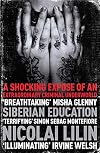
Siberian Education: Growing Up in a Criminal Underworld
by Nicolai Lilin
On This Page
Description
Describes the author's extreme boyhood growing up in Transnistria, a contested, lawless region between Moldova and Ukraine, where authority is distrusted and tattoos tell the story of a man's life.Tags
Recommendations









Member Reviews
Cos'è un'educazione criminale onesta? Sembra un ossimoro. D'altra parte la definizione di criminale qui ha più a che fare con usi e costumi tipici di una popolazione, quella nativa siberiana, che si è trovata assimilata a una civiltà diversa, con effetti paragonabili alla colonizzazione delle Americhe.
Lilin racconta la sua storia, la sua formazione, la sia Educazione Siberiana, con il linguaggio semplice di chi scrive in una lingua non sua, e con la fresca vivacità di chi ha i ricordi ancora sulla pelle, cosa letteralmente vera, dato che può leggerla nei tatuaggi che si porta addosso.
Particolare, a tratti divertente, comunque un documento di un altro mondo.
Lilin racconta la sua storia, la sua formazione, la sia Educazione Siberiana, con il linguaggio semplice di chi scrive in una lingua non sua, e con la fresca vivacità di chi ha i ricordi ancora sulla pelle, cosa letteralmente vera, dato che può leggerla nei tatuaggi che si porta addosso.
Particolare, a tratti divertente, comunque un documento di un altro mondo.
During the collectivization era of the Soviet Union, Stalin forced the transportation of Siberian criminals, the urkas, away from their homes to Transnistria (a region of Moldova) in an attempt to separate them from their roots. Though Stalin's actions were intended to destroy the culture, in actuality, as one character puts it, "by an irony of fate, they probably saved it," at least, for several decades.
The culture of these Siberian communities emphasized what they saw as norms of "honorable" behavior: protection of the weak and disabled, aversion to acquisitiveness and material display, resistance to arbitrary authority. As they made a place in their new home, they formed into very tightly-knit communities, effectively organized show more crime families, whose twin goals were strict adherence to their particular moral code and violent aggression against outside interference. Nicolai Lilin grew up in this society and this book is part memoir, part recounting of stories he heard. It is told with apparent nostalgia for this society (eventually overcome by the materialism of the modern Russian criminal) and a distinct perspective on the moral high ground it embodied.
However, reading from a perspective that is more conventional in the West, it doesn't take long to decide that Lilin's apologia is a bit hollow and that what he wants to do is romanticize the urkas. Like modern day Robin Hoods, they take from the rich, give to the poor, protect the weak, revere Mother Mary, and live by a strict code of honor. However, like so many cultural traditions wherein the word honor appears (think: honor killings), the reality is that "honor" is a façade for violence.
By the time Lilin was a tween, he was arrested for attempted murder (by the time he was actually a teen, he was an admitted multiple murderer) and talked casually of how many people he had crippled by hamstringing for not being polite. A young friend beat another boy to death with a hammer for embarrassing him in front of a girl…a "justifiable" action in their eyes. Another friend stabbed a Georgian to death for the unforgiveable sin of speaking his native language. Bigotry abounds and, for every positive aspect of the society, multiple negative ones exist:
Protecting the mentally handicapped is a moral imperative? Yes.
Forcing homosexuals to kill themselves? Also, yes.
Give charity to your neighbors who do not have enough? Yes.
Quote: "The only way of putting everything right is to kill [anyone] with money, and thereby to destroy the power that [is] built on money"? Also yes.
It's a fascinating book from an anthropological perspective and I'm glad I read it. However, I find myself in strong disagreement with those reviews that exist out there (The Guardian, for goodness sake!) that suggest it might be a better world if urkan culture had endured and spread. Readers with weak stomachs are advised to think twice before embarking. show less
The culture of these Siberian communities emphasized what they saw as norms of "honorable" behavior: protection of the weak and disabled, aversion to acquisitiveness and material display, resistance to arbitrary authority. As they made a place in their new home, they formed into very tightly-knit communities, effectively organized show more crime families, whose twin goals were strict adherence to their particular moral code and violent aggression against outside interference. Nicolai Lilin grew up in this society and this book is part memoir, part recounting of stories he heard. It is told with apparent nostalgia for this society (eventually overcome by the materialism of the modern Russian criminal) and a distinct perspective on the moral high ground it embodied.
However, reading from a perspective that is more conventional in the West, it doesn't take long to decide that Lilin's apologia is a bit hollow and that what he wants to do is romanticize the urkas. Like modern day Robin Hoods, they take from the rich, give to the poor, protect the weak, revere Mother Mary, and live by a strict code of honor. However, like so many cultural traditions wherein the word honor appears (think: honor killings), the reality is that "honor" is a façade for violence.
By the time Lilin was a tween, he was arrested for attempted murder (by the time he was actually a teen, he was an admitted multiple murderer) and talked casually of how many people he had crippled by hamstringing for not being polite. A young friend beat another boy to death with a hammer for embarrassing him in front of a girl…a "justifiable" action in their eyes. Another friend stabbed a Georgian to death for the unforgiveable sin of speaking his native language. Bigotry abounds and, for every positive aspect of the society, multiple negative ones exist:
Protecting the mentally handicapped is a moral imperative? Yes.
Forcing homosexuals to kill themselves? Also, yes.
Give charity to your neighbors who do not have enough? Yes.
Quote: "The only way of putting everything right is to kill [anyone] with money, and thereby to destroy the power that [is] built on money"? Also yes.
It's a fascinating book from an anthropological perspective and I'm glad I read it. However, I find myself in strong disagreement with those reviews that exist out there (The Guardian, for goodness sake!) that suggest it might be a better world if urkan culture had endured and spread. Readers with weak stomachs are advised to think twice before embarking. show less
 This review was written for LibraryThing Early Reviewers.
Siberian Fabrication
Review of the Emblem Edition english translation paperback (2011) of the Italian language original "Educazione siberiana" (2009)
Such are the ways of the pandemic that in your search for variety you start pulling books from the shelves that you have never actually read before. I originally sought out Siberian Education (2011) when I heard that it was being made into a film with John Malkovich, one of my favourite actors. Unfortunately the film wasn’t that great, and then various articles also appeared which debunked the source autobiography as being an invention by author Nikolai Lilin. I put it aside then but picked it up again show more recently.
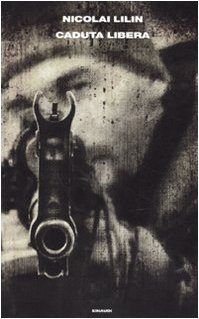
Despite the debunking, Lilin still has an entertaining way of telling his story, which is an extended fantasy which builds on various preconceived notions of mafia behaviour and urban myths about honour among thieves. The story goes from childhood through to young adulthood at a time when the Nicolai aka Kolima is drafted into the Russian Army, a story that is continued in Lilin's followup "Free Fall: A Sniper's Story from Chechnya."
Lilin's "Siberians" are a closely knit band of thieves called Urkas (presumably the word is derived from the Russian word урки (urki) for thief. They were supposedly deported from 1930's Siberia to the Transnistria region of Moldavia at a time when Stalin's deportations were actually proceeding in the opposite direction. In Transnistria they kept their former customs and criminal behaviours in apparent complete defiance of the pervasive communist totalitarian state. Various words, customs and philosophies are referred to as "Siberian" although they are obviously Russian in origin. So, for instance, it is called the "Siberian" Orthodox Church rather than the commonly understood Russian Orthodox Church.
Lilin certainly understood his audience and plays up all sorts of urban myths about robbing from the rich on behalf of the poor. There is also a distinct religious element to the band with almost all speeches delivered as prayers and requests for God's blessing on their activities. It was all convincing enough that authors such as Irvine Welsh (Trainspotting etc.) and Roberto Saviano (Gomorrah etc.) blurbed the book at the time of its original release.
Trivia and LInks
The main debunking article is the Russian language Tattooed Cranberries (2011) by Elena Chernenko. I see some references to English language debunking articles in other reviews.
I'm usually quick to note references to Uralic/Finno-Ugric peoples due to my Estonian heritage, so I couldn't help but notice this passage in Siberian Education:
The "Nencys" are the Nenets people of the Samoyedic branch of Uralic languages. "Nency" is a transliteration of the Russian word ненцы, which is usually transliterated as "Nentsy."
Pretending "close ties" to an shamanistic tribe seems like another way to add an aura of mysticism to Lilin's story of criminals. show less
Review of the Emblem Edition english translation paperback (2011) of the Italian language original "Educazione siberiana" (2009)
Some enjoy life, some suffer it, we fight it. - Old saying of the Siberian Urkas.
Such are the ways of the pandemic that in your search for variety you start pulling books from the shelves that you have never actually read before. I originally sought out Siberian Education (2011) when I heard that it was being made into a film with John Malkovich, one of my favourite actors. Unfortunately the film wasn’t that great, and then various articles also appeared which debunked the source autobiography as being an invention by author Nikolai Lilin. I put it aside then but picked it up again show more recently.
Despite the debunking, Lilin still has an entertaining way of telling his story, which is an extended fantasy which builds on various preconceived notions of mafia behaviour and urban myths about honour among thieves. The story goes from childhood through to young adulthood at a time when the Nicolai aka Kolima is drafted into the Russian Army, a story that is continued in Lilin's followup "Free Fall: A Sniper's Story from Chechnya."
Lilin's "Siberians" are a closely knit band of thieves called Urkas (presumably the word is derived from the Russian word урки (urki) for thief. They were supposedly deported from 1930's Siberia to the Transnistria region of Moldavia at a time when Stalin's deportations were actually proceeding in the opposite direction. In Transnistria they kept their former customs and criminal behaviours in apparent complete defiance of the pervasive communist totalitarian state. Various words, customs and philosophies are referred to as "Siberian" although they are obviously Russian in origin. So, for instance, it is called the "Siberian" Orthodox Church rather than the commonly understood Russian Orthodox Church.
Lilin certainly understood his audience and plays up all sorts of urban myths about robbing from the rich on behalf of the poor. There is also a distinct religious element to the band with almost all speeches delivered as prayers and requests for God's blessing on their activities. It was all convincing enough that authors such as Irvine Welsh (Trainspotting etc.) and Roberto Saviano (Gomorrah etc.) blurbed the book at the time of its original release.
Trivia and LInks
The main debunking article is the Russian language Tattooed Cranberries (2011) by Elena Chernenko. I see some references to English language debunking articles in other reviews.
I'm usually quick to note references to Uralic/Finno-Ugric peoples due to my Estonian heritage, so I couldn't help but notice this passage in Siberian Education:
Soon afterwards Zilya fell ill. Her condition deteriorated, and no medicine could cure her. So Svyatoslav took her to Siberia, to see an old shaman of the tribe of the Nency, a people of Siberian aborigines who had always had very close ties with the Siberian criminals, the Urkas.
The "Nencys" are the Nenets people of the Samoyedic branch of Uralic languages. "Nency" is a transliteration of the Russian word ненцы, which is usually transliterated as "Nentsy."
Pretending "close ties" to an shamanistic tribe seems like another way to add an aura of mysticism to Lilin's story of criminals. show less
I wanted to like this book, and as a result I tried multiple times to read it, to give it another chance, the benefit of the doubt. After failing repeatedly I had to admit to myself that no, it is not the result of a bad translation. No, it is not because this book reflects such a different culture. Rather yes, it is because this book is just absolutely atrociously written.
The entire narrative of this "autobiography" is driven by what was clearly designated as its selling point pre-writing: the notion of "moral education." I would expect an autobiography that is about someone's moral education to tell a narrative in which the shape and progress of that education comes out naturally over the course of events. Here, however, the narrator show more a priori frames every event, every story, in light of the "education" he receives. There is a similar hitting-the-reader-over-the-head going on with the other part of the title: the "criminal" underworld. The notion of a "criminal" is so important in this narrative, that the author never once refers to those around him as "men," "boys," "a gang," etc. Rather, any time he wants to refer to his community or to members within it, he refers to "criminals." As if the reader needs to be reminded twice every paragraph that she's reading about a criminal underworld! (Gasp!) Opening the book to a random series of pages, I find:
"Partly because of this miraculous event, Kuzya was considered an "Authority" among the criminals."
"Grandfather Kuzya was an elderly criminal who lived in our district in a small house by the river."
"Since I used to spend a lot of time with the old criminals, listening to them sing or recite poems, I knew many of them by heart."
I have to ask: do you think this author grew up around... criminals?
Seriously? I've read worse books, but not many. I had high hopes for this one; I thought that it would provide an interesting view into a culture and part of the world that I know little about. Instead, it read more like a book based on a marketing ploy as concept: "Hey! I know! Let's write a book about what kind of education a boy growing up among Siberian criminals would get!" There is no substance here, no sophistication, and no literary value. Just a tag line, a selling point... drawn out over several hundred pages. Your time is better spent elsewhere. show less
The entire narrative of this "autobiography" is driven by what was clearly designated as its selling point pre-writing: the notion of "moral education." I would expect an autobiography that is about someone's moral education to tell a narrative in which the shape and progress of that education comes out naturally over the course of events. Here, however, the narrator show more a priori frames every event, every story, in light of the "education" he receives. There is a similar hitting-the-reader-over-the-head going on with the other part of the title: the "criminal" underworld. The notion of a "criminal" is so important in this narrative, that the author never once refers to those around him as "men," "boys," "a gang," etc. Rather, any time he wants to refer to his community or to members within it, he refers to "criminals." As if the reader needs to be reminded twice every paragraph that she's reading about a criminal underworld! (Gasp!) Opening the book to a random series of pages, I find:
"Partly because of this miraculous event, Kuzya was considered an "Authority" among the criminals."
"Grandfather Kuzya was an elderly criminal who lived in our district in a small house by the river."
"Since I used to spend a lot of time with the old criminals, listening to them sing or recite poems, I knew many of them by heart."
I have to ask: do you think this author grew up around... criminals?
Seriously? I've read worse books, but not many. I had high hopes for this one; I thought that it would provide an interesting view into a culture and part of the world that I know little about. Instead, it read more like a book based on a marketing ploy as concept: "Hey! I know! Let's write a book about what kind of education a boy growing up among Siberian criminals would get!" There is no substance here, no sophistication, and no literary value. Just a tag line, a selling point... drawn out over several hundred pages. Your time is better spent elsewhere. show less
This review was written for LibraryThing Early Reviewers.This is such a strange book from a very strange country. This country seems to be in a 50 year time warp, with Lenin statues still standing. The Transnistria postage,passports and money are not accepted in any other country. This country is not even recognized by the UN or other countries.I wasn't familiar with Transnistria, had never even heard of it. So,I researched it on the Internet
It is a country that broke off the Moldavia to the west and has on its east is the Ukraine. Here this country is known, it is supposed to be the human trafficking it in the world, drug trafficking and is thought to be manufacturing dirty bombs. That is my short introduction to the country. What the author, Nicolai Lilin covers are what it was like show more growing up there and his events in his life.
The author talks of a culture built around weapons. There are rituals built around the weapons. The author states that when he was a child, he did not want toys, he wanted weapons!
There are 'sinful weapons' for criminal purposes and 'honest weapons' for hunting. He goes into great detail about the culture of the tattoos. I have to stop reading at times because of the tremendous amount of violence in this man's life. This book is so disturbing and life in Transnitisa is so brutal. I am not relating the worst of what is written in this book.
There is a deep hatred of the police. In fact, this even enters the way that people relate to them. The differences between our society and their is overwhelming but I will leave that to you to find out the details.
The writing is straight forward and I would even say blunt. The author explains the language, many words are code for other meanings. You cannot learn the languages spoken by the people in the country and have a real idea of the meaning. This book is very difficult to read because of its content. It is very gritty and so awful that you may not want to read much of it at a time. I have a weak stomach and this book really gets to it.
I reccommend this book to anyone who wants to learn about the Transnistria culture and had a stronger stomach than I.
This book was received from Library Thing and in no way influenced by review. My thoughts are my own. show less
It is a country that broke off the Moldavia to the west and has on its east is the Ukraine. Here this country is known, it is supposed to be the human trafficking it in the world, drug trafficking and is thought to be manufacturing dirty bombs. That is my short introduction to the country. What the author, Nicolai Lilin covers are what it was like show more growing up there and his events in his life.
The author talks of a culture built around weapons. There are rituals built around the weapons. The author states that when he was a child, he did not want toys, he wanted weapons!
There are 'sinful weapons' for criminal purposes and 'honest weapons' for hunting. He goes into great detail about the culture of the tattoos. I have to stop reading at times because of the tremendous amount of violence in this man's life. This book is so disturbing and life in Transnitisa is so brutal. I am not relating the worst of what is written in this book.
There is a deep hatred of the police. In fact, this even enters the way that people relate to them. The differences between our society and their is overwhelming but I will leave that to you to find out the details.
The writing is straight forward and I would even say blunt. The author explains the language, many words are code for other meanings. You cannot learn the languages spoken by the people in the country and have a real idea of the meaning. This book is very difficult to read because of its content. It is very gritty and so awful that you may not want to read much of it at a time. I have a weak stomach and this book really gets to it.
I reccommend this book to anyone who wants to learn about the Transnistria culture and had a stronger stomach than I.
This book was received from Library Thing and in no way influenced by review. My thoughts are my own. show less
This review was written for LibraryThing Early Reviewers.Interesante, impactante, contradictorio (no por que se contradiga, sino porque son los sentimientos que me genera), cruel, duro, realista, ilustrativo.
Puedo dar al menos otros 10 adjetivos para describir este libro, y todavía no he mencionado nada sobre su estilo narrativo y personajes.
Nikolái, pertenece a la casta de los urcas siberianos, quienes fueron deportados de Siberia hacia Transnistria, nace, vive, crece y se desarrolla dentro de esta comunidad y en el libro nos detalla su filosofía de vida, su modus vivendi, su razón de ser y existir como un urca siberiano.
Contradicción, porque es casi imposible ver esa línea que divide el bien y el mal, la justificación sobre los actos cometidos o los no cometidos, la educación show more recibida como forma de vida, que en ocasiones es admirable y en otras es desgarradora.
Un libro que vale la pena leer, me ha dejado impresionada de una manera muy positiva, a pesar del tema, tengo que decir que disfrute mucho leyéndolo, aprendiendo y sobre todo ver la vida desde un punto de vista opuesto al mio, no solo por la parte cultural, sino también por la parte del bien y del mal. show less
Puedo dar al menos otros 10 adjetivos para describir este libro, y todavía no he mencionado nada sobre su estilo narrativo y personajes.
Nikolái, pertenece a la casta de los urcas siberianos, quienes fueron deportados de Siberia hacia Transnistria, nace, vive, crece y se desarrolla dentro de esta comunidad y en el libro nos detalla su filosofía de vida, su modus vivendi, su razón de ser y existir como un urca siberiano.
Contradicción, porque es casi imposible ver esa línea que divide el bien y el mal, la justificación sobre los actos cometidos o los no cometidos, la educación show more recibida como forma de vida, que en ocasiones es admirable y en otras es desgarradora.
Un libro que vale la pena leer, me ha dejado impresionada de una manera muy positiva, a pesar del tema, tengo que decir que disfrute mucho leyéndolo, aprendiendo y sobre todo ver la vida desde un punto de vista opuesto al mio, no solo por la parte cultural, sino también por la parte del bien y del mal. show less
The author describes his youth in the criminal community of Transdnistria. The amount of gruesome violence contrasts with the boy's conviction that these criminals are the good guys and that their rules are the only valid ones. It is fascinating to read how these people deal with that cognitive dissonance: by reducing the world they inhabit, ie geographically to their town quarter (of which they know everything), or sociologically to their own ilk (the descriptions of how gays are disposed of is stomach-churning), by clinging on to a strange sort of Orthodox paganism and to minute rules of behaviour that would put the Spanish Court Protocol to shame. Combined with post-Soviet nihilism, the general atmosphere of this book isn't very show more uplifting.
It is well-written, and although Italian can never emulate the colourful Russian expressions for insults and threats, the author uses a very convincing colloquial 'street' Italian. Some scenes may have been embellished for dramatic effect, but - having known quite a few ex-Soviet youths who fled crime and violence in their home region - I was startled to recognise their mentalities and behaviours (indeed, much of that suddenly made sense to me), and I fear that most of it this book is based on true situations. show less
It is well-written, and although Italian can never emulate the colourful Russian expressions for insults and threats, the author uses a very convincing colloquial 'street' Italian. Some scenes may have been embellished for dramatic effect, but - having known quite a few ex-Soviet youths who fled crime and violence in their home region - I was startled to recognise their mentalities and behaviours (indeed, much of that suddenly made sense to me), and I fear that most of it this book is based on true situations. show less
Members
- Recently Added By
Lists

Italian Literature
556 works; 41 members
Author Information

22+ Works 619 Members
Series
Belongs to Publisher Series
A tot vent (537)
Gallimard, Folio (5391)
Work Relationships
Is retold in
Common Knowledge
- Canonical title
- Siberian Education: Growing Up in a Criminal Underworld
- Original title
- Educazione siberiana
- Original publication date
- 2009
- People/Characters
- Nicolai Lilin; Grandfather Kuzga; Grandfather Lyosha; Andrey, "Mel"; Borishka; Ksenya, "Kyusha"
- Important places
- Transnistria, Siberia, Russia; Siberia, Russia
- Related movies*
- Educazione siberiana (2013 | IMDb | Gabriele Salvatores)
- Epigraph
- 'Some enjoy life, some suffer it; we fight it.' Old saying of the Siberian Urkas
- First words
- I know it shouldn't be done, but I'm tempted to start from the end.
- Last words*
- (Click to show. Warning: May contain spoilers.)'Ik heb een Siberische opvoeding gehad,' antwoordde ik, terwijl hij de deur sloot.
- Blurbers
- Welsh, Irvine; Sebag-Montefiore, Simon; Saviano, Roberto
- Original language
- Italian
*Some information comes from Common Knowledge in other languages. Click "Edit" for more information.
Classifications
- Genres
- Fiction and Literature, Biography & Memoir
- DDC/MDS
- 853.92 — Literature & rhetoric Italian, Romanian & related literatures Italian fiction 1900- 21st Century
- LCC
- PQ4912 .I55 .E3813 — Language and Literature French, Italian, Spanish and Portuguese literatures Italian literature Individual authors, 2001-
- BISAC
Statistics
- Members
- 415
- Popularity
- 74,296
- Reviews
- 29
- Rating
- (3.49)
- Languages
- 11 — Catalan, Czech, Dutch, English, Finnish, French, German, Italian, Portuguese, Spanish, Swedish
- Media
- Paper, Audiobook, Ebook
- ISBNs
- 34
- ASINs
- 6