On This Page
Description
England? September, 1934. Two young lovers? Catherine and Daniel? have trespassed into the rose garden of Burnt Norton? an abandoned house in the English countryside. Hearing the sound of footsteps? they hide? and then witness the poet T.S. ('Tom') Eliot and his close friend Emily enter the garden and bury a mysterious tin in the earth. Tom and Emily knew each other in America in their youth; now in their forties? they have come together again. But Tom is married? and his wife has no show more intention of letting him go. What is it that binds Tom and Emily together? What happens when the muse steps out of the shadows? In the enclosed world of an English village one autumn? their story becomes entwined with that of Catherine and Daniel? who are certain in their newfound love and full of possibility. From one of Australia's finest writers? this is a moving? lyrical novel about poetry and inspiration? the incandescence of first love and the yearning for a life that may never be lived. show lessTags
Recommendations





















Member Reviews
Is it possible to fall in love with a book? I think I have, with The Lost Life…
This is how it happened. The publisher has sent me a copy of A New England Affair which is book #3 of Steven Carroll’s The Eliot Quartet (and just happens to have one of the most unappealing covers I’ve seen in a very long time). And I realised that #SmacksForehead I still hadn’t read not only its predecessor Book #2 A World of Other People, (with a not quite so ghastly but likewise unenticing cover) but also Book #1 The Lost Life, both of which I had bought as soon as they were released because I love Steven Carroll’s novels. I love his contemplative style, the way he notices the very small things about life, and his extraordinary perceptions about show more the inner workings of the human mind.
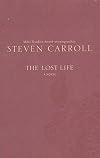
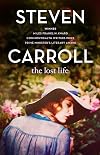
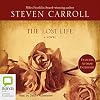
I found the books on the C shelf, tucked away behind a pushy double row of shiny new Ds and Es. I couldn’t believe it when I opened up The Lost Life and realised it had been sitting there since 2009! It is such a beautiful little book, the size of the original Penguins, and designed not by the Harper Collins Design Studio but by Sandy Cull of gogoGinko. The sepia toned image of the paper roses is on a separate half-sized dustjacket on gorgeous textured paper (which I carefully removed to read the book because I didn’t want to damage it). Underneath, the book boards are imprinted with the faint image of a single large rose. I was falling in love before I’d even turned a single page.
And then, the book. Steven Carroll is sheer genius. With the most intricate of allusions, in a captivating story about different kinds of love, he stirs memories of so many other pleasurable hours of reading other books. It’s like those Winter days at the beach with a loved one when you walk hand in hand remembering all the other seasons when you were falling in love and looking forward to a future together. The present is all muddled up with the past and the future, enhancing all three. Which is a very ordinary way of saying what T S Eliot says so elegantly in his poems about Time…
Alas, my copy doesn’t have the dustjacket…
It was late, and I was reading in bed, but next thing, I was up on the library steps peering at the top shelves hunting out my Faber & Faber first edition of Eliot’s Collected Poems 1909-1962. Carroll’s novel begins at Burnt Norton, a mansion in the Cotswolds, and I remembered the poem of that name. (You can see a picture of the mansion here, and also an analysis of the poem if you are keen). ‘Burnt Norton’ is the first of The Four Quartets, and it begins like this:
(I am ashamed to say that this beautiful book of poetry is marred by inane marginalia, noting such intellectual gems as ‘twist’, and ‘circular not sequential’ and ‘irregular lines’. These marks (fortunately only in pencil) date from my days at university, and they didn’t stop me re-reading the whole collection before pressing on with Carroll’s novel. But, trust me, you do not need to know a thing about TS Eliot and his poetry to love The Lost Life… show less
This is how it happened. The publisher has sent me a copy of A New England Affair which is book #3 of Steven Carroll’s The Eliot Quartet (and just happens to have one of the most unappealing covers I’ve seen in a very long time). And I realised that #SmacksForehead I still hadn’t read not only its predecessor Book #2 A World of Other People, (with a not quite so ghastly but likewise unenticing cover) but also Book #1 The Lost Life, both of which I had bought as soon as they were released because I love Steven Carroll’s novels. I love his contemplative style, the way he notices the very small things about life, and his extraordinary perceptions about show more the inner workings of the human mind.
I found the books on the C shelf, tucked away behind a pushy double row of shiny new Ds and Es. I couldn’t believe it when I opened up The Lost Life and realised it had been sitting there since 2009! It is such a beautiful little book, the size of the original Penguins, and designed not by the Harper Collins Design Studio but by Sandy Cull of gogoGinko. The sepia toned image of the paper roses is on a separate half-sized dustjacket on gorgeous textured paper (which I carefully removed to read the book because I didn’t want to damage it). Underneath, the book boards are imprinted with the faint image of a single large rose. I was falling in love before I’d even turned a single page.
And then, the book. Steven Carroll is sheer genius. With the most intricate of allusions, in a captivating story about different kinds of love, he stirs memories of so many other pleasurable hours of reading other books. It’s like those Winter days at the beach with a loved one when you walk hand in hand remembering all the other seasons when you were falling in love and looking forward to a future together. The present is all muddled up with the past and the future, enhancing all three. Which is a very ordinary way of saying what T S Eliot says so elegantly in his poems about Time…
Alas, my copy doesn’t have the dustjacket…
It was late, and I was reading in bed, but next thing, I was up on the library steps peering at the top shelves hunting out my Faber & Faber first edition of Eliot’s Collected Poems 1909-1962. Carroll’s novel begins at Burnt Norton, a mansion in the Cotswolds, and I remembered the poem of that name. (You can see a picture of the mansion here, and also an analysis of the poem if you are keen). ‘Burnt Norton’ is the first of The Four Quartets, and it begins like this:
Time present and time past
Are both perhaps present in time future
And time future contained in time past.
If all time is eternally present
All time is irredeemable.
(I am ashamed to say that this beautiful book of poetry is marred by inane marginalia, noting such intellectual gems as ‘twist’, and ‘circular not sequential’ and ‘irregular lines’. These marks (fortunately only in pencil) date from my days at university, and they didn’t stop me re-reading the whole collection before pressing on with Carroll’s novel. But, trust me, you do not need to know a thing about TS Eliot and his poetry to love The Lost Life… show less
Following the success of his Miles Franklin awardwinning novel, The Time We Have Taken, Steven Carroll moves us away from Melbourne suburbia, and presents us with an absorbing tale set in an English country town in 1934.
Young couple Catherine and Jonathan retreat to a secluded rose garden one afternoon, and find themselves in view of a private ceremony taking place between poet T S Eliot and his secret lover, Emily Hale. For the next month, the lives of these four characters come into alignment and the awkward relationship between 18-year-old Catherine and her teacher (who is also an actress) ‘Miss Hale’ becomes the main focus of the book. Carroll’s ability to turn an ordinary moment into something sacred makes this novel a show more profound exploration of human desire, endurance, maturity and regret. It encourages the idea of maximising each moment and living in the present despite the melancholy undertone that this is often easier said than done.
His early novels have settings that are equally exotic in character, and equally removed from us in time and space. On this trip, however, the author brings to the drawing-room reticence of Britain between the wars the same kindliness and air of benediction that hangs over his Glenroy trilogy. The Lost Life concludes in the grounds of Burnt Norton about six decades later, with another private ceremony, this time undertaken by the elderly Catherine.
It is a novel that ends as it began, with Eliot's great poem, gracefully acknowledging that "only through time time is conquered".
The Lost Life is another excellnet offering from one of Australia's leading authors. It will not disappoint fans . show less
Young couple Catherine and Jonathan retreat to a secluded rose garden one afternoon, and find themselves in view of a private ceremony taking place between poet T S Eliot and his secret lover, Emily Hale. For the next month, the lives of these four characters come into alignment and the awkward relationship between 18-year-old Catherine and her teacher (who is also an actress) ‘Miss Hale’ becomes the main focus of the book. Carroll’s ability to turn an ordinary moment into something sacred makes this novel a show more profound exploration of human desire, endurance, maturity and regret. It encourages the idea of maximising each moment and living in the present despite the melancholy undertone that this is often easier said than done.
His early novels have settings that are equally exotic in character, and equally removed from us in time and space. On this trip, however, the author brings to the drawing-room reticence of Britain between the wars the same kindliness and air of benediction that hangs over his Glenroy trilogy. The Lost Life concludes in the grounds of Burnt Norton about six decades later, with another private ceremony, this time undertaken by the elderly Catherine.
It is a novel that ends as it began, with Eliot's great poem, gracefully acknowledging that "only through time time is conquered".
The Lost Life is another excellnet offering from one of Australia's leading authors. It will not disappoint fans . show less
The story's focus is on the relationship between poet TS Eliot and American Emily Hale. Friends in youth they have a platonic affair which spans many years because Eliot is married. His wife suffers mental illness and he is unable to divorce her because she wont give him up.
Carroll's take on this includes two other characters a young woman and her male companion who when strolling through a garden are interrupted by Eliot and Hale who are burying a tin . The young woman recognises Hale , she has been employed to clean this American woman's rented cottage. The tin is then dug up by the young woman's companion which then puts her in a moral quandary. A nice story about first love and although the writing is quite beautiful he does tend show more to take an entire page to make a small point which I personally find annoying about his style. show less
Carroll's take on this includes two other characters a young woman and her male companion who when strolling through a garden are interrupted by Eliot and Hale who are burying a tin . The young woman recognises Hale , she has been employed to clean this American woman's rented cottage. The tin is then dug up by the young woman's companion which then puts her in a moral quandary. A nice story about first love and although the writing is quite beautiful he does tend show more to take an entire page to make a small point which I personally find annoying about his style. show less
Loved this book, the structure, the language, the characters
Ratings
Members
- Recently Added By
Lists

Books Read in 2015
3,299 works; 126 members
Author Information
16 Works 673 Members
Steven Carroll was born in 1949 in Melbourne, Victoria. He studied at La Trobe University. He has taught English at secondary school level, and drama at RMIT. He has been Drama Critic for The Sunday Age newspaper in Melbourne. Steven Carroll is now a full-time writer living in Melbourne. He will be speaking at the inaugural History Writers' show more Festival April 2015 in Melbourne. His title's include Remember Me, Jimmy james, The Lovers' Room, The Love Song Song of Lucy McBride and A World of Other People. He will be featured at the Mudgee Readers' Festival 2015. He made the finalist for the Melbourne Prize for Literature 2015. He also made the Victorian Premier¿s Literary Awards 2016 shortlist in the Fiction category. (Bowker Author Biography) show less
Awards and Honors
Awards
Series

Common Knowledge
- Canonical title
- The Lost Life
- Original publication date
- 2009
- People/Characters
- T. S. Eliot; Emily Hale; Catherine; Daniel
- First words
- On a bright autumn day, in the early afternoon, two young people set out to cross the mile or so of open sheep country that lies between their town and an estate nearby that is rumoured to have pools.
Classifications
Statistics
- Members
- 60
- Popularity
- 514,413
- Reviews
- 4
- Rating
- (3.73)
- Languages
- English, French
- Media
- Paper, Audiobook, Ebook
- ISBNs
- 9
- ASINs
- 2