On This Page
Description
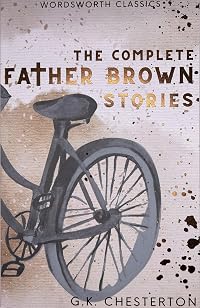
With an Introduction by David Stuart Davies. Father Brown, one of the most quirkily genial and lovable characters to emerge from English detective fiction, first made his appearance in The Innocence of Father Brown in 1911. That first collection of stories established G. K. Chesterton's kindly cleric in the front rank of eccentric sleuths. This complete collection contains all the favourite Father Brown stories, showing a quiet wit and compassion that has endeared him to many, whilst solving show more his mysteries by a mixture of imagination and a sympathetic worldliness in a totally believable manner. show lessTags
Recommendations




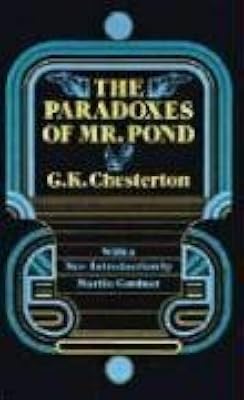
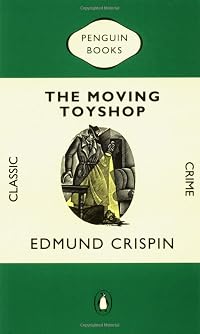

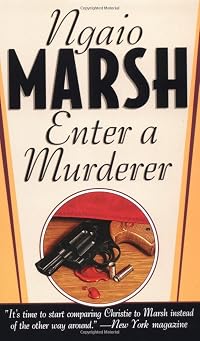

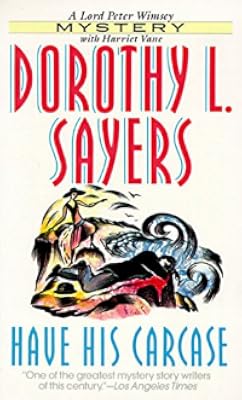



Member Recommendations

Member Reviews
The actual title of the Wordsworth Classics edition I have is simply Father Brown and it is 'all the favourite' Father Brown stories rather than a complete collection. For some reason the Librarything link is a misnomer. Even if this isn't an exhaustive collection, there are still plenty of stories, and very delightful they are too.
Reading Father Brown is a little bit like turning up a missing volume of Sherlock Holmes - the good Father makes similar brilliant deductions (or would those be inductions?) with his keen powers of observation and logic. Analytical powers aside, though, the two detectives could hardly be more different in character. Father Brown is unprepossessing and usually underestimated by those who do not know him well: show more 'he had a face as round and dull as a Norfolk dumpling; he had eyes as empty as the North Sea; he had several brown-paper parcels which he was quite incapable of collecting' (page 5). Of course his dumpy appearance is deceiving and criminals who think to take advantage of the priest soon find themselves outwitted....
The most appealing characteristic of Father Brown is not his intelligence, however, but his wisdom and compassion for other people in spite of his keen awareness of the flaws in human nature. Without making excuses for criminals he nevertheless extends forgiveness to them. A good part of his powers of 'detection' comes simply from his willingness to see clearly those people whom the rest of society looks through or down on. Catholic or no, one can't help feeling that Father Brown would be a wonderful person with whom to have a long chat.
What might be irritating to some (although I found it very interesting) is the way that Chesterton uses Father Brown as a mouthpiece to express his views on tradition, materialism, superstition, and so on - all in quite an orthodox Catholic fashion, of course! It blends so flawlessly with the character, though, that it hardly seems out of place. One of my favourite examples of this is in 'The Oracle of the Dog,' where Father Brown complains: 'It's part of something I've noticed more and more in the modern world... People readily swallow the untested claims of this, that, or the other. It's drowning all your old rationalism and scepticism, it's coming in like a sea; and the name of it is superstition... It's the first effect of not believing in God that you lose your common sense and can't see things as they are.' (page 266) Intriguing stuff! I wish Father Brown had taken some time off saying Mass and solving mysteries to write out a reasoned defense of his theology. That would have been well worth reading too. show less
Reading Father Brown is a little bit like turning up a missing volume of Sherlock Holmes - the good Father makes similar brilliant deductions (or would those be inductions?) with his keen powers of observation and logic. Analytical powers aside, though, the two detectives could hardly be more different in character. Father Brown is unprepossessing and usually underestimated by those who do not know him well: show more 'he had a face as round and dull as a Norfolk dumpling; he had eyes as empty as the North Sea; he had several brown-paper parcels which he was quite incapable of collecting' (page 5). Of course his dumpy appearance is deceiving and criminals who think to take advantage of the priest soon find themselves outwitted....
The most appealing characteristic of Father Brown is not his intelligence, however, but his wisdom and compassion for other people in spite of his keen awareness of the flaws in human nature. Without making excuses for criminals he nevertheless extends forgiveness to them. A good part of his powers of 'detection' comes simply from his willingness to see clearly those people whom the rest of society looks through or down on. Catholic or no, one can't help feeling that Father Brown would be a wonderful person with whom to have a long chat.
What might be irritating to some (although I found it very interesting) is the way that Chesterton uses Father Brown as a mouthpiece to express his views on tradition, materialism, superstition, and so on - all in quite an orthodox Catholic fashion, of course! It blends so flawlessly with the character, though, that it hardly seems out of place. One of my favourite examples of this is in 'The Oracle of the Dog,' where Father Brown complains: 'It's part of something I've noticed more and more in the modern world... People readily swallow the untested claims of this, that, or the other. It's drowning all your old rationalism and scepticism, it's coming in like a sea; and the name of it is superstition... It's the first effect of not believing in God that you lose your common sense and can't see things as they are.' (page 266) Intriguing stuff! I wish Father Brown had taken some time off saying Mass and solving mysteries to write out a reasoned defense of his theology. That would have been well worth reading too. show less
I've something of a weakness for British mystery/spy fiction, especially the late 19th/early 20th centuries. Can't really say where it originated, but it has been a regular part of my fiction diet for the past several years (I seem to toggle between mysteries/spy thrillers and science fiction as my go-to choices for "relaxation reading.") I've been alternating reading Chesterton's Father Brown stories, which I've never read before, with Conan Doyle's Sherlock Holmes' stories, which I've never read in toto before.
I suppose that Sherlock Holmes is probably the more famous of the pair, but, as far as the quality of the stories themselves, the edge clearly goes to Father Brown. Chesterton is simply a witty writer, with an inerrant eye for show more the comical. In some ways, I suppose the character of Father Brown, with his rather stupid demeanor, was meant as a foil for the energetic Holmes, but Chesterton knows how to draw out the hilarity of the character.
Clearly, the stories are meant simply as "entertainments," as novelist Graham Greene described some of his lighter works. However, I was struck throughout how seriously the idea of sin was handled (something of a shock for stories that could be so funny). The stories are light-hearted and playful but never flip when it comes to the realities of human life.
Chesterton was a great Christian apologist like C.S. Lewis, writing classics such as "Orthodoxy" and "Heresy." But I dare say his Father Brown stories may do as much or even more to defend the great Christian revelations about the nature of human life and the human world. And they do it with so light a touch that you barely recognize the echoes of the catechism in each and every of Father Brown's "solutions."
Which leads me to my only suggestion for those who wish to read Father Brown: those who really wish to enjoy the Father Brown stories should commit to reading them all (and preferably in published order). It has puzzled me a good bit that I can't honestly say that I have a "favorite" Father Brown story or provide a list of the "top five/ten" of the stories, something that is quite typical of other mystery authors. There are two reasons for this. First, they are all of so equal a quality, it would feel foolish to choose one above the others; each story is so carefully wrought, it is impossible to imagine any Father Brown story being written in any other way than Chesterton chose to write it.
The second and more important reason, though, relates to the subtle "catechetical" nature of the stories. There's not progress here in the sense of linear plot development (Father Brown is appreciably no different in the last story than he is in the first, something that is NOT true of Sherlock Holmes) but there is a kind of satisfying completeness to the series. Fortunately, though, given the literary form chosen (the short story), reading the entirety of Father Brown is not as intimidating as it sounds. I've been at this for roughly two years with significant gaps of time (months) where I read no Father Brown story. But at no point did I ever feel like I had to "reacquaint" myself with Father Brown. It's not just that he's drawn in such unforgettable ways ("face as plain as a dumpling"), but that he, like the principles of Truth he follows, remains unchanging, certain, good, kind, and even innocent. Father Brown is the incorruptible face of Truth in a world of Lies. show less
I suppose that Sherlock Holmes is probably the more famous of the pair, but, as far as the quality of the stories themselves, the edge clearly goes to Father Brown. Chesterton is simply a witty writer, with an inerrant eye for show more the comical. In some ways, I suppose the character of Father Brown, with his rather stupid demeanor, was meant as a foil for the energetic Holmes, but Chesterton knows how to draw out the hilarity of the character.
Clearly, the stories are meant simply as "entertainments," as novelist Graham Greene described some of his lighter works. However, I was struck throughout how seriously the idea of sin was handled (something of a shock for stories that could be so funny). The stories are light-hearted and playful but never flip when it comes to the realities of human life.
Chesterton was a great Christian apologist like C.S. Lewis, writing classics such as "Orthodoxy" and "Heresy." But I dare say his Father Brown stories may do as much or even more to defend the great Christian revelations about the nature of human life and the human world. And they do it with so light a touch that you barely recognize the echoes of the catechism in each and every of Father Brown's "solutions."
Which leads me to my only suggestion for those who wish to read Father Brown: those who really wish to enjoy the Father Brown stories should commit to reading them all (and preferably in published order). It has puzzled me a good bit that I can't honestly say that I have a "favorite" Father Brown story or provide a list of the "top five/ten" of the stories, something that is quite typical of other mystery authors. There are two reasons for this. First, they are all of so equal a quality, it would feel foolish to choose one above the others; each story is so carefully wrought, it is impossible to imagine any Father Brown story being written in any other way than Chesterton chose to write it.
The second and more important reason, though, relates to the subtle "catechetical" nature of the stories. There's not progress here in the sense of linear plot development (Father Brown is appreciably no different in the last story than he is in the first, something that is NOT true of Sherlock Holmes) but there is a kind of satisfying completeness to the series. Fortunately, though, given the literary form chosen (the short story), reading the entirety of Father Brown is not as intimidating as it sounds. I've been at this for roughly two years with significant gaps of time (months) where I read no Father Brown story. But at no point did I ever feel like I had to "reacquaint" myself with Father Brown. It's not just that he's drawn in such unforgettable ways ("face as plain as a dumpling"), but that he, like the principles of Truth he follows, remains unchanging, certain, good, kind, and even innocent. Father Brown is the incorruptible face of Truth in a world of Lies. show less
Entertaining, at times a bit formulaic. Like all crime and mysteries series', at the heart is an interesting, unforgettable protagonist. Father Brown is an anti-Sherlock, unprepossessing, a small man with a moon-like face and a big black knobby umbrella. At almost all times polite, at all times humane. Reading all the stories back to back, one senses some development from one collection to the next. The earliest stories are marred by a reflexive anti-protestantism, against both Church of England and Dissenting groups. Those in succeeding collections are more tolerant. Recurring throughout however is a trace of xenophobia; Chesterton's references to blacks, while not as virulent of those of his contemporary Thomas Wolfe, are unacceptable show more today, his references to Jews are nearly as bad. Balanced against this are the pleasures of Chesterton's habitual turn to paradox and view of life both comic and moral (without being priggish). The perfect companion for my weekly commutes to this city this semester. show less
When Chesterton is on, he's on. There are two stories here that are, in my opinion, incredible literary works of their own - "The Sign of the Broken Sword", which is maybe the only mystery I've ever read that does the "detective cracks a cold case from folklore and legends" plot well, and "The Head of Caesar", which could easily be stripped of the detective story trappings and presented as an out-and-out short horror story.
However, reading dozens of these back-to-back-to-back lays a lot of things very bare. Father Brown's lack of a life outside "priest who appears in the nick of time to solve a mystery", and his lack of eccentricities, make him come across as a flat character to me. Sherlock Holmes isn't someone who has much of an inner show more life, but his various eccentricities make him fun to read. Likewise, a lot of modern detective novels (thinking of Tana French, Adrian McKinty, etc here) lack what Chesterton (in what I freely acknowledge is a good joke) calls "opium smoking and acrostics". I developed a theory reading this that you need to have one or the other to keep things going - either you need to be able to see inside the detective's head, or they need to be such an enjoyable character that that lack of introspection doesn't matter. Chesterton kind of gesticulates towards this at the beginning with an interconnected narrative about Brown and Flambeau, but once that gets settled the roteness of the stories becomes really apparent.
In the end, I think that the highest highs of this make up for the lowest lows, but I don't know if I'd want to push myself through something like this again. I *am* interested to watch the TV show (part of the reason I read this), however, as I think that there's potential to do something interesting with the material in a different format. show less
However, reading dozens of these back-to-back-to-back lays a lot of things very bare. Father Brown's lack of a life outside "priest who appears in the nick of time to solve a mystery", and his lack of eccentricities, make him come across as a flat character to me. Sherlock Holmes isn't someone who has much of an inner show more life, but his various eccentricities make him fun to read. Likewise, a lot of modern detective novels (thinking of Tana French, Adrian McKinty, etc here) lack what Chesterton (in what I freely acknowledge is a good joke) calls "opium smoking and acrostics". I developed a theory reading this that you need to have one or the other to keep things going - either you need to be able to see inside the detective's head, or they need to be such an enjoyable character that that lack of introspection doesn't matter. Chesterton kind of gesticulates towards this at the beginning with an interconnected narrative about Brown and Flambeau, but once that gets settled the roteness of the stories becomes really apparent.
In the end, I think that the highest highs of this make up for the lowest lows, but I don't know if I'd want to push myself through something like this again. I *am* interested to watch the TV show (part of the reason I read this), however, as I think that there's potential to do something interesting with the material in a different format. show less
Father Brown, if you haven't heard of him, is a portly priest who always finds himself in the middle of a mystery—usually a murder.
As Chesterton's alterego, he solves crimes by understanding the fundamental makeup of the human personality. Never distracted by mystical hocus pocus, Father Brown unassumingly uncovers the details and motives deemed insignificant by others.
The Complete Father Brown contains all 51 Father Brown stories written, including five different collections (The Innocence, Wisdom, Incredulity, Secret, and Scandal of Father Brown) as well as a bonus story, "The Vampire of the Village".
Reading these stories is like sinking into a comfortable chair. If you try to sneak in a quick story while on break at work, you'll show more miss the charm of Chesterton's style. Instead, you need to take time to deliberately take in each word in his florid sentences. If you don't rush, his style is quite compelling. Take the first sentence in "The Absence of Mr. Glass" for example.
"The consulting-rooms of Dr. Orion Hood, the eminent criminologist and specialist in certain moral disorders, lay along the seafront at Scarborough, in a series of very large and well-lighted French windows, which showed the North Sea like one endless outer wall of blue-green marble." (in The Wisdom of Father Brown)
For the Christian reader, there are occasional flashes of anthropological brilliance. I stopped to reread a particularly acute observation on more than a few occasions. Take this jewel in "The Sign of the Broken Sword" for example. Here Father Brown explains to his partner Flambeaux why Sir Arthur St. Clare's Bible reading habit doesn't make him innocent.
"Sir Arthur St. Clare, as I have already said, was a man who read his Bible. That was what was the matter with him. When will people understand that it is useless for a man to read his Bible unless he also reads everybody else’s Bible? A printer reads a Bible for misprints. A Mormon reads his Bible, and finds polygamy; a Christian Scientist reads his, and finds we have no arms and legs." (in The Innocence of Father Brown)
I wish I knew a Christian sleuth today with the depth of Father Brown. show less
As Chesterton's alterego, he solves crimes by understanding the fundamental makeup of the human personality. Never distracted by mystical hocus pocus, Father Brown unassumingly uncovers the details and motives deemed insignificant by others.
The Complete Father Brown contains all 51 Father Brown stories written, including five different collections (The Innocence, Wisdom, Incredulity, Secret, and Scandal of Father Brown) as well as a bonus story, "The Vampire of the Village".
Reading these stories is like sinking into a comfortable chair. If you try to sneak in a quick story while on break at work, you'll show more miss the charm of Chesterton's style. Instead, you need to take time to deliberately take in each word in his florid sentences. If you don't rush, his style is quite compelling. Take the first sentence in "The Absence of Mr. Glass" for example.
"The consulting-rooms of Dr. Orion Hood, the eminent criminologist and specialist in certain moral disorders, lay along the seafront at Scarborough, in a series of very large and well-lighted French windows, which showed the North Sea like one endless outer wall of blue-green marble." (in The Wisdom of Father Brown)
For the Christian reader, there are occasional flashes of anthropological brilliance. I stopped to reread a particularly acute observation on more than a few occasions. Take this jewel in "The Sign of the Broken Sword" for example. Here Father Brown explains to his partner Flambeaux why Sir Arthur St. Clare's Bible reading habit doesn't make him innocent.
"Sir Arthur St. Clare, as I have already said, was a man who read his Bible. That was what was the matter with him. When will people understand that it is useless for a man to read his Bible unless he also reads everybody else’s Bible? A printer reads a Bible for misprints. A Mormon reads his Bible, and finds polygamy; a Christian Scientist reads his, and finds we have no arms and legs." (in The Innocence of Father Brown)
I wish I knew a Christian sleuth today with the depth of Father Brown. show less
I first read Father Brown in middle school: after having read works by Agatha Christie and Arthur Conan Doyle, I wanted to read other early detectives in the genre. Father Brown’s quiet intelligence and masterful exploitation of the stereotypes people form about him make him an interesting sleuth to follow. The stories are not really ones where you can guess every last element of the crime, but if you’re careful you might land on the same person that Brown has identified as the culprit.
The earlier volumes are better than the later ones, in my mind, but once you get into a groove with the collection it’s easy to read a few stories at a stretch and want to read more. My favourite story is still “The Blue Cross”, which is the show more very first one.
I had previously rated this five stars, but I’m dropping it to four stars because more stories than I remembered were steeped in casual racism (particularly against people from “the Orient”). It wasn’t just characters displaying these attitudes; the narration used some cringe-worthy language as well. So if you’re planning to read these stories, keep that in mind. show less
The earlier volumes are better than the later ones, in my mind, but once you get into a groove with the collection it’s easy to read a few stories at a stretch and want to read more. My favourite story is still “The Blue Cross”, which is the show more very first one.
I had previously rated this five stars, but I’m dropping it to four stars because more stories than I remembered were steeped in casual racism (particularly against people from “the Orient”). It wasn’t just characters displaying these attitudes; the narration used some cringe-worthy language as well. So if you’re planning to read these stories, keep that in mind. show less
Publicada entre 1910 y 1935, la saga del padre Brown es probablemente la obra más querida y personal de Chesterton. Si el relato policiaco es la expresión más temprana de la poética de la vida y la ciudad modernas, ¿quién mejor? Propone Chesterton, en una de sus brillantes paradojas? Que un sacerdote de la humilde vieja guardia para descifrarla? Surge así uno de los más entrañables personajes literarios. Armado con poco más que una sombrilla y el profundo conocimiento de lo humano adquirido en el confesionario, el regordete y despistado cura de Essex para quien desacreditar la razón es mala teología? Desentraña crímenes y misterios en los que la verdad elude tanto la fría deducción como la crédula explicación show more paranormal. Esta edición reúne los cinco libros publicados por Chesterton, e incluye algunos relatos del padre Brown rescatados en fecha reciente y nunca antes publicados en español. show less
Members
- Recently Added By
Lists

1001 Books You Must Read Before You Die
1,448 works; 1,134 members

Crime and Mysteries to Read
746 works; 31 members

British Mystery
469 works; 14 members

Survey of Mysteries and Crime Fiction
96 works; 17 members

Crime-Solving Clerics
57 works; 3 members
Detective Stories
343 works; 5 members

Folio Society
831 works; 53 members

Books We Loved As Children
603 works; 253 members
Must Read Detective Stories (Nick Fuller)
278 works; 2 members

AlphaKIT: Brown
21 works; 4 members

Books on my Kindle
162 works; 3 members

A Rainbow of Books: Colors in the Title
570 works; 24 members

Philip Ward's Lifetime Reading Plan
592 works; 22 members
Good, Smart, Clean Fiction
46 works; 4 members

Religious Fiction
58 works; 13 members

Honey For a Child's Heart
1,152 works; 25 members
Ambleside Books
459 works; 18 members

One Book, Many Authors
441 works; 40 members

Read For Your Life
157 works; 1 member
Talk Discussions
Past Discussions
Folio Archives 184: The Father Brown Stories by G. K. Chesterton 1996 in Folio Society Devotees (September 2023)
Author Information

797+ Works 59,819 Members
Gilbert Keith Chesterton was born in London, England, in 1874. He began his education at St Paul's School, and later went on to study art at the Slade School, and literature at University College in London. Chesterton wrote a great deal of poetry, as well as works of social and literary criticism. Among his most notable books are The Man Who Was show more Thursday, a metaphysical thriller, and The Everlasting Man, a history of humankind's spiritual progress. After Chesterton converted to Catholicism in 1922, he wrote mainly on religious topics. Chesterton is most known for creating the famous priest-detective character Father Brown, who first appeared in "The Innocence of Father Brown." Chesterton died in 1936 at the age of 62. (Bowker Author Biography) show less
Some Editions
Awards and Honors
Notable Lists
Series

Belongs to Publisher Series
Work Relationships
Contains
Common Knowledge
- Canonical title*
- I racconti di padre Brown [completa]
- Original publication date
- 1981 (Omnibus) (Omnibus); 1911 (The Innocence of Father Brown) (The Innocence of Father Brown); 1914 (The Wisdom of Father Brown) (The Wisdom of Father Brown); 1926 (The Incredulity of Father Brown) (The Incredulity of Father Brown); 1927 (The Secret of Father Brown) (The Secret of Father Brown); 1935 (The Scandal of Father Brown) (The Scandal of Father Brown)
- People/Characters
- Father Brown; Flambeau; Aristide Valentin
- Important places
- England, UK
- Dedication
- To Waldo and Mildred D'Avigdor (from The Innocence of Father Brown) | To Lucian Oldershaw (from The Wisdom of Father Brown) | To Patricia Burke (from The Incredulity of Father Brown) | To Father John O'Connor of St. Cuthbert'... (show all)s Bradford whose truth is stranger than fiction with a gratitude greater than the world (from The Secret of Father Brown)
- First words
- Between the silver ribbon of morning and the green glittering ribbon of sea, the boat touched Harwich and let loose a swarm of folk like flies, among whom the man we must follow was by no means conspicuous - nor wished to be.
- Last words
- (Click to show. Warning: May contain spoilers.)"Yes," said the doctor, settling himself back comfortably in the cushions. "If it comes to a little cosy company on a railway journey, I should prefer the corpse."
- Original language*
- angličtina
- Disambiguation notice
- This omnibus "work" contains ALL of the 51 short stories originally published as The Innocence of FB (12 stories), The Wisdom of FB (12 stories), The Incredulity of FB (8 stories), The Secret of FB... (show all) (10 stories) and The Scandal of FB (originally 8, later 9 stories). Please note that this "complete" omnibus is NOT the same as the "complete" omnibus edition containing 2 additional FB stories (for a total of 53 stories) so please DO NOT combine it with that one or any other common omnibus editions of FB short stories that contain less than 51.
* This omnibus "work" contains ALL of the 53 short stories in the Father Brown canon; including all 51 the stories from: 'The Innocence of Father Brown', 'The Wisdom of Father Brown', 'The Incredulity of Father Brown', 'The S... (show all)ecret of Father Brown', 'The Scandal of Father Brown', plus the two additional stories 'Father Brown and The Donnington Affair' and 'The Mask of Midas' - Please DO NOT combine it with that one or any other common omnibus editions of FB short stories that contain less than the full complement of 53 stories.
This omnibus "work" contains ALL of the 50 short stories originally published in the first five individual collections of Father Brown stories issued between 1911 and 1935. Note that the fifth "Scandal of" collection was orig... (show all)inally published in 1935 with only 8 stories; The Vampire of the Village short story wasn't initially published until 1936 so it was only added as a ninth story to later editions of the "Scandal of" collection. However, "complete" omnibus editions of the FB canon did not include that story until many years after it had been added to "Scandal of". Hence this "complete" omnibus is a DIFFERENT work to later "complete" omnibus editions containing 51 or 53 short stories. Additionally, the UK "complete" omnibus edition did NOT count the "framing" text at the beginning and end of the "Secret of" collection as actual stories while the comparable US edition did, so 48 complete stories in UK eds. = 50 complete stories in US eds.
This omnibus "work" contains ALL of the 53 short stories in the Father Brown canon; the 51 stories originally published as The Innocence of FB (12 stories), The Wisdom of FB (12 stories), The Incredulity of F... (show all)B (8 stories), The Secret of FB (10 stories) and The Scandal of FB (originally 8, later 9 stories) plus The Donnington Affair (1914) and The Mask of Midas (1936) that normally are not included in other "complete" omnibus editions. Please DO NOT combine it with that one or any other common omnibus editions of FB short stories that contain less than the full complement of 53 stories.
*Some information comes from Common Knowledge in other languages. Click "Edit" for more information.
Classifications
Statistics
- Members
- 4,089
- Popularity
- 3,795
- Reviews
- 38
- Rating
- (3.93)
- Languages
- 12 — Catalan, Czech, Dutch, English, French, German, Italian, Japanese, Latin, Portuguese, Spanish, Swedish
- Media
- Paper, Audiobook, Ebook
- ISBNs
- 93
- ASINs
- 115