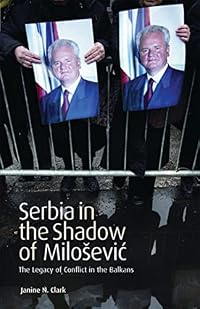
Serbia in the Shadow of Milosevic: The Legacy of Conflict in the Balkans (International Library of Twentieth Century History)
by Janine N. Clark
9 Members (3.00)
On This Page
Description
Since the regime of Slobodan Milosevic was spectacularly overthrown on 5 October 2000, little has been written about subsequent political developments in Serbia. The perception of Milosevic as a criminal leader who plunged the former Yugoslavia into bloodshed and used violence to achieve his aims is not widely disputed among Western observers. However, to what extent is this view of Milosevic shared by people in Serbia? Here Janine Clark offers insights into and an understanding of this show more troubled country. She argues that many Serbs do not regard Milosevic as a criminal leader but rather as a 'bad' leader whose greatest crimes were against his own people. This has important implications for how Serbia deals with its past and for reconciliation and peace-building in the former Yugoslavia. show lessTags
Member Reviews
Members
- Recently Added By
Author Information
1 Work 11 Members
Classifications
- Genres
- History, Nonfiction, Politics and Government
- DDC/MDS
- 949.7103 — History & geography History of Europe Other parts of Europe Former Yugoslavia (Bosnia and Herzegovina ∙ Croatia ∙ Kosovo ∙ Montenegro ∙ Macedonia ∙ Serbia ∙ Slovenia) [formerly also Bulgaria] Serbia; Kosovo
- LCC
- DR2051 .C56 — History of Europe, Asia, Africa and Oceania Balkan Peninsula History of Balkan Peninsula Yugoslavia Local history and description Serbia
- BISAC
Statistics
- Members
- 9
- Popularity
- 2,293,313
- Rating
- (3.00)
- Languages
- English
- Media
- Paper, Ebook
- ISBNs
- 5