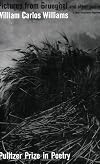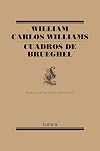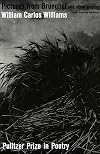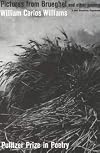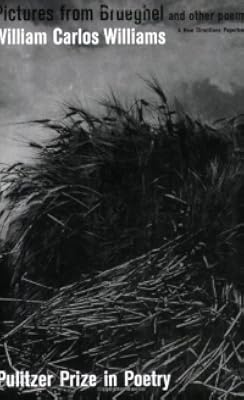
Pictures from Brueghel and Other Poems
by William Carlos Williams
On This Page
Description
This collection makes available work of one of our greatest American poets in the last decade of his life. The first section,nbsp;Pictures from Brueghel, contains previously uncollected short poems, while the second and third parts are the complete texts ofnbsp;The Desert Musicnbsp;(1954) andnbsp;Journey to Lovenbsp;(1955), originally published by Random House. In these books, Dr. Williams perfected his "variable foot" metric and achieved full mastery of the "American idiom" which was his show more lifelong first concern. Among the poems of this period is the long "Asphodel, That Greeny Flower" which W. H. Auden has called "one of the most beautiful love poems in the language."nbsp;Pictures from Brueghelnbsp;was awarded the Pulitzer Prize for Poetry only two months after William Carlos Williams' death on March 4, 1963. show lessTags
Recommendations









Member Reviews
The poem
if it reflects the sea
reflects only
its dance
upon that profound depth
where
it seems to triumph.
Reading these poems this frozen afternoon, I sensed almost a dislocation and then swift reconstruction of my faculties. WCW was offering me thinking lessons. My congery of indifference may be sliding towards despair but I harbor a measured hope. The early miniatures required a few readings. I discovered some kinship reading about the farmers with their scythes and reflecting that the wheat-shearing scene in Anna Karenina was Proust's favorite. The later poems depict an aging poet finding joy at the limits of his craft. There’s perhaps a shared warmth in muted loneliness.
if it reflects the sea
reflects only
its dance
upon that profound depth
where
it seems to triumph.
Reading these poems this frozen afternoon, I sensed almost a dislocation and then swift reconstruction of my faculties. WCW was offering me thinking lessons. My congery of indifference may be sliding towards despair but I harbor a measured hope. The early miniatures required a few readings. I discovered some kinship reading about the farmers with their scythes and reflecting that the wheat-shearing scene in Anna Karenina was Proust's favorite. The later poems depict an aging poet finding joy at the limits of his craft. There’s perhaps a shared warmth in muted loneliness.
Ratings
Members
- Recently Added By
Lists

Recommended Reading : 600 Classics Reviewed, Editors of Salem Press, 2015
634 works; 6 members

Poetry volumes by single author
122 works; 8 members
Author Information

187+ Works 9,329 Members
Poet, artist, and practicing physician of Rutherford, New Jersey, William Carlos Williams wrote poetry that was experimental in form, ranging from imagism to objectivism, with great originality of idiom and human vitality. Credited with changing and directing American poetry toward a new metric and language, he also wrote a large number of short show more stories and novels. Paterson (1946--58), about the New Jersey city of that name, was his epic and places him with Ezra Pound of the Cantos as one of the great shapers of the long poem in this century. National recognition did not come early, but eventually Williams received many honors, including a vice-presidency of the National Institute of Arts and Letters (1952); the Bollingen Prize (1953); the $5,000 fellowship of the Academy of American Poets; the Loines Award for poetry of the National Institute of Arts and Letters (1948); and the Brandeis Award (1957). Book II of Paterson received the first National Book Award for poetry in 1949. Williams was named consultant in poetry in English to the Library of Congress for 1952--53. Williams's continuously inventive style anchored not only objectivism, the school to which he most properly belongs, but also a long line of subsequent poets as various as Robert Lowell, Frank O'Hara, and Allen Ginsberg. With Stevens, he forms one of the most important sources of a specifically American tradition of modernism. In addition to his earlier honors, Williams received two important awards posthumously, the Pulitzer Prize for Poetry (1963) and the Gold Medal for Poetry from the National Institute of Arts and Letters (1963). (Bowker Author Biography) show less
Some Editions
Awards and Honors
Awards
Common Knowledge
- Original publication date
- 1962
Classifications
Statistics
- Members
- 432
- Popularity
- 71,632
- Reviews
- 1
- Rating
- (4.04)
- Languages
- English, Spanish
- Media
- Paper, Ebook
- ISBNs
- 5
- ASINs
- 4