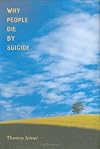
Why People Die by Suicide
by Thomas Joiner
On This Page
Description
"In the wake of a suicide, the most troubling questions are invariably the most difficult to answer: How could we have known? What could we have done? And always, unremittingly: Why? Written by a clinical psychologist whose own life has been touched by suicide, this book offers the clearest account ever given of why some people choose to die." "Drawing on extensive clinical and epidemiological evidence, as well as personal experience, Thomas Joiner brings a comprehensive understanding to show more seemingly incomprehensible behavior. Among the many people who have considered, attempted, or died by suicide, he finds three factors that mark those most at risk of death: the feeling of being a burden on loved ones; the sense of isolation; and, chillingly, the learned ability to hurt oneself. Joiner tests his theory against diverse facts taken from clinical anecdotes, history, literature, popular culture, anthropology, epidemiology, genetics, and neurobiology - facts about suicide rates among men and women; white and African-American men; anorexics, athletes, prostitutes, and physicians; members of cults, sports fans, and citizens of nations in crisis." "The result is the most coherent and persuasive explanation ever given of why and how people overcome life's strongest instinct, self-preservation. Joiner's is a work that makes sense of the bewildering array of statistics and stories surrounding suicidal behavior; at the same time, it offers insight, guidance, and essential information to clinicians, scientists, and health practitioners, and to anyone whose life has been affected by suicide."--Jacket. show lessTags
Recommendations

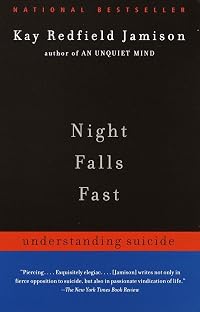
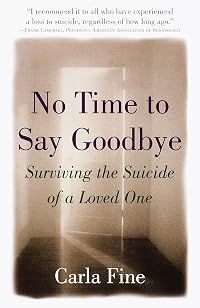




















Member Recommendations
Member Reviews
20 years old at this point and out of date with current research, though I doubt that it was on the pulse of the research at the time, as the author's biases steer him towards conclusions that have some support but are vastly overstated. Central to his theory is that pain is a stepping stone toward the ability to commit suicide, but this isn't always in terms of explicit self-harm but also just having experienced pain (for example a very tortured case is made for that of Reimer's botched gender reassignment and attempt at realignment leading to suicide based on painful surgeries, it should be obvious there's a sea of confounding issues there), and even tattoos - in being painful - is some type of self harm (more than 20 year old social show more stereotypes about who gets tattoos and why might be the cause of that whopper). Having gotten absolutely stuck on this idea he reformulates even risk seeking behavior like skydiving to a progressive desensitization to death, because of "habituation to injury".
The central idea that (many) suicides are a progressive escalation, and that means, motive and opportunity conspire to make certain cases more or less lethal and likely has wide support. The overlap between risk seeking, drug use and suicides also seems present in the wide data but in formulating a definite causality this book really falls on its face.
Joiner's own work on "thwarted belongingness and perceived burdensomeness" (The Interpersonal Theory of Suicide link to paper) seems much more fruitful in searching for suicide prevention methodology. show less
The central idea that (many) suicides are a progressive escalation, and that means, motive and opportunity conspire to make certain cases more or less lethal and likely has wide support. The overlap between risk seeking, drug use and suicides also seems present in the wide data but in formulating a definite causality this book really falls on its face.
Joiner's own work on "thwarted belongingness and perceived burdensomeness" (The Interpersonal Theory of Suicide link to paper) seems much more fruitful in searching for suicide prevention methodology. show less
An interesting look at what, exactly, are the distinguishing characteristics of those who die by suicide, according to the author's theory. (If you wanted to make this book into a drinking game, you could take a shot every time he writes "my theory", but then you'd be so drunk after the first chapter you'd never finish the book.)
This book sort of crosses, and recrosses again, the fine line between overly scientific and oriented towards the layperson. At times I found the book very accessible, and at times there were sentences riddled with words I've never seen before in my life.
At any rate, you won't find much about mental illness in here, which sort of makes sense, considering that the author is trying to tease out why people kill show more themselves, and not everybody with a mental illness actually carries out a suicide attempt or dies by one. But still, I found it maybe a bit shortsighted that therapy methods were mentioned briefly, and antidepressants were almost lost in three paragraphs. So, I'm not sure what the author really recommends that one does if one has all of the warning signs for suicide. Go to therapy? I guess? It was hard to tell, ultimately, what his recommendations are. And that's where I think this book really falls short. show less
This book sort of crosses, and recrosses again, the fine line between overly scientific and oriented towards the layperson. At times I found the book very accessible, and at times there were sentences riddled with words I've never seen before in my life.
At any rate, you won't find much about mental illness in here, which sort of makes sense, considering that the author is trying to tease out why people kill show more themselves, and not everybody with a mental illness actually carries out a suicide attempt or dies by one. But still, I found it maybe a bit shortsighted that therapy methods were mentioned briefly, and antidepressants were almost lost in three paragraphs. So, I'm not sure what the author really recommends that one does if one has all of the warning signs for suicide. Go to therapy? I guess? It was hard to tell, ultimately, what his recommendations are. And that's where I think this book really falls short. show less
Not a great book. More like "I have a theory. I am going to repeat it until you believe it." But I didn't believe it.
Ratings
Members
- Recently Added By
Lists

University Presses
155 works; 1 member
Author Information

11+ Works 295 Members
Thomas Joiner is Distinguished Research of Psychology of Florida State University and author of Why People Die by Suicide (Harvard).
Classifications
- Genres
- Nonfiction, General Nonfiction
- DDC/MDS
- 616.85 — Applied science & technology Medicine & health Diseases, Allergies, Skin Conditions Nervous Disorders: Autism, Anorexia, OCD Miscellaneous
- LCC
- HV6545 .J65 — Social sciences Social pathology. Social and public welfare. Criminology Social pathology. Social and public welfare. Criminology Crimes and offenses
- BISAC
Statistics
- Members
- 146
- Popularity
- 221,343
- Reviews
- 3
- Rating
- (3.74)
- Languages
- Chinese, English
- Media
- Paper, Ebook
- ISBNs
- 6
- ASINs
- 1