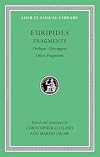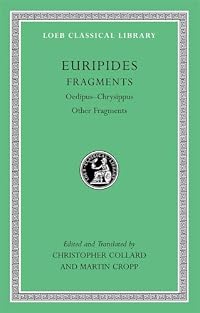
Euripides, Vol. VIII: Oedipus-Chrysippus & Other Fragments (Loeb Classical Library, No. 506)
by Euripides
34 Members (4.00)
On This Page
Description
Euripides (c. 485-406 BCE) has been prized in every age for his emotional and intellectual drama. Eighteen of his ninety or so plays survive complete, including Medea, Hippolytus, and Bacchae, one of the great masterpieces of the tragic genre. Fragments of his lost plays also survive. Eighteen of the ninety or so plays composed by Euripides between 455 and 406 bce survive in a complete form and are included in the preceding six volumes of the Loeb Euripides. A further fifty-two tragedies and show more eleven satyr plays, including a few of disputed authorship, are known from ancient quotations and references and from numerous papyri discovered since 1880. No more than one-fifth of any play is represented, but many can be reconstructed with some accuracy in outline, and many of the fragments are striking in themselves. The extant plays and the fragments together make Euripides by far the best known of the classic Greek tragedians. This edition, in a projected two volumes, offers the first complete English translation of the fragments together with a selection of testimonia bearing on the content of the plays. The texts are based on the recent comprehensive edition of R. Kannicht. A general Introduction discusses the evidence for the lost plays. Each play is prefaced by a select bibliography and an introductory discussion of its mythical background, plot, and location of the fragments, general character, chronology, and impact on subsequent literary and artistic traditions. show lessTags
Recommendations













Member Reviews
Members
- Recently Added By
Author Information

1,337+ Works 33,998 Members
Euripides was born in Attica, Greece probably in 480 B.C. He was the youngest of the three principal fifth-century tragic poets. In his youth he cultivated gymnastic pursuits and studied philosophy and rhetoric. Soon after he received recognition for a play that he had written, Euripides left Athens for the court of Archelaus, king of Macedonia. show more Fragments of about fifty-five plays survive. Among his best-known plays are Alcestis, Medea and Philoctetes, Electra, Iphigenia in Tauris, The Trojan Women, and Iphigenia in Aulis Iphigenia. He died in Athens in 406 B.C. (Bowker Author Biography) show less
Series
Belongs to Publisher Series
Loeb Classical Library (506)
Classifications
- Genre
- Fiction and Literature
- DDC/MDS
- 882.01 — Literature & rhetoric Classical & modern Greek literatures Classical Greek dramatic poetry and drama standard subdivisions; collections; history, description, critical appraisal; Specific periods Ancient period to ca. 499
- LCC
- PA3973 .Z5 — Language and Literature Greek language and literature. Latin language and literature Greek literature Individual authors Euripedes
- BISAC
Statistics
- Members
- 34
- Popularity
- 834,200
- Rating
- (4.00)
- Languages
- English, French
- Media
- Paper
- ISBNs
- 2