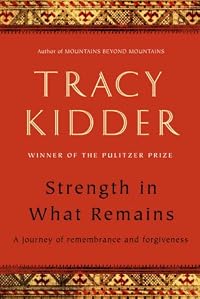
Strength in What Remains
by Tracy Kidder
On This Page
Description
The Pulitzer Prize-winning author Tracy Kidder returns with the extraordinary true story of Deo, a young man who arrives in America from Burundi in search of a new life. After surviving a civil war and genocide, he ekes out a precarious existence delivering groceries, living in Central Park, and learning English by reading dictionaries in bookstores until he begins to meet the strangers who will change his life, pointing him eventually in the direction of Columbia University, medical school, show more and a life devoted to healing. show lessTags
Recommendations





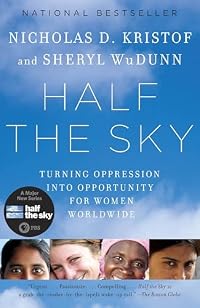
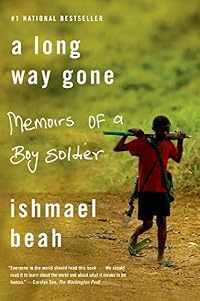
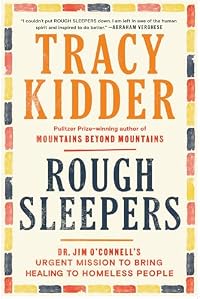
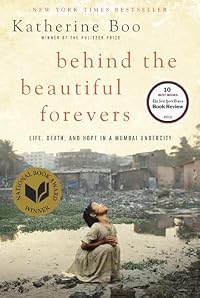

















Member Recommendations
Member Reviews
Deogratias is a man on the run. His homeland is in bloody tatters. He is in his early twenties and has been a medical student for three years. He flees East Central Africa and somehow manages to catch a flight to New York City. Deo arrives with two hundred dollars, knows no one, cannot speak English and is haunted by deep-set horrors. He finds a job delivering groceries, for lousy wages and ends up living in Central Park. Within two years, he is attending Columbia Medical School and in less than a decade he is returning to his motherland and building a much needed health clinic.
“Sometimes it is better not to know what is impossible”. This thought crosses Deo’s mind, as a friend suggests he leave Africa and go to America and this show more becomes his beacon of hope.
The author has crafted this fascinating young man’s journey with beauty and care. He also does not shy away from the atrocities that Deo has witnessed. Kidder met Deo in Boston in 2003. This is his description of him: “Deo’s face jumped out at me. It was a night sky full of lights, a picture of eager, trusting friendliness. He seemed younger than he turned out to be. This impression of innocence lingered, even after I knew that it was mostly inaccurate.”
Highly recommended and one of my top reads of the year! show less
“Sometimes it is better not to know what is impossible”. This thought crosses Deo’s mind, as a friend suggests he leave Africa and go to America and this show more becomes his beacon of hope.
The author has crafted this fascinating young man’s journey with beauty and care. He also does not shy away from the atrocities that Deo has witnessed. Kidder met Deo in Boston in 2003. This is his description of him: “Deo’s face jumped out at me. It was a night sky full of lights, a picture of eager, trusting friendliness. He seemed younger than he turned out to be. This impression of innocence lingered, even after I knew that it was mostly inaccurate.”
Highly recommended and one of my top reads of the year! show less
Strength in What Remains was at the same time both difficult to read and hard to put down. The graphic violence that Deo, the main character, lived through and witnessed in Burundi and Rwanda was what I found the hardest to read but I didn't feel it was gratuitous. In fact, as horrific as it was, this is actually a portrait of the goodness and strength in the human spirit (both his and others) and I felt it was ultimately a hopeful book. A reminder of what humans can be capable of, needed more than ever these days...
I'm sure some people will bypass this book because the subject is about the genocide in Burundi and Rwanda, which is not exactly relaxing reading material. (Actually I would have bypassed it too if I hadn't read a good review somewhere or other.) But it's also a true and wonderfully hopeful story of kindness and survival. Deogratias, who escaped from the genocide via an Aeroflot flight, spoke no English, had never been out of Burundi, and arrived in NYC alone with only his nightmarish memories and $200 in his pocket. The book slips back and forth between his life in the US and his life growing up in Burundi until the horrific civil war forced him to run. I'm still digesting this story ... it raises all kinds of questions and thoughts show more about cultures, good and evil, poverty, wealth, kindness to strangers, education ... it's a great book and well worth reading (so good in fact that I read it in one day.) show less
Difficulties for immigrants are abundant, but for Deogratias Niyizonkiza, a medical student who arrived in New York from the horrors of Burundi and Rwanda in the 1990s, they are magnified to what seems insurmountable heights. The situation was further complicated by language. Deo spoke French, his English learned from a phrase book. In his first job delivering groceries, he politely said "Hi" to customers and wondered why the response was strange. It wasn't until much later he discovered his French pronunciation expressed the greeting as "Hee". Kidder opened the story in New York where the reader is shocked, but has some understanding of the situation Deo faced. Then, going back to earlier events of civil war and genocide in Burundi and show more Rwanda, we can see why this young man struggled so hard to get his life back on track. In places Deo's story was heart-breaking beyond words, both in America and in Africa. His perseverance and diligence is inspiring. Still, Kidder omits his reason for writing Deo's story. Is this an immigrant success story or an account of the harrowing events in Burundi and Rwanda? It appears to be neither one nor the other. By combining both, the impact is significantly diminished.
This was an audiobook narrated by the author, the narration being the weakest part of the book. Unless an author has a good reading voice, it's advisable to hire a professional for the job. show less
This was an audiobook narrated by the author, the narration being the weakest part of the book. Unless an author has a good reading voice, it's advisable to hire a professional for the job. show less
The story of a young man from Burundi, who narrowly escaped death during a civil war and genocide there, who landed in New York and managed to make something of himself. But not easily. Not quickly. Deogratias (known simply as Deo) spent a long time on the streets, taking showers in apartments that were not his. He survived by working long hours at difficult, underpaid jobs, putting up with prejudice and worse.
Yet the angels smiled on him. That would be one way to look at it. A woman in a church was drawn to his story, to his personality. She was determined to find help for him, and in time she actually did. She found a safe place for him to live, with an educated couple who also saw promise in the young man. Through their help he found show more his way to college, to earning a medical degree, and finally to returning to his country to try to fulfill a lifelong dream there.
The story is of a remarkable man and of the remarkable persons who helped along the way. It is thus a story of hope in spite of the horrors, both in Burundi and New York.
The one other book I have read by Kidder is Mountains Beyond Mountains, the story of Paul Farmer, founder of Partners in Health, now an international organization dedicated to bringing good medical care to all parts of the world. What distinguishes both books from most biographies is the fact that Kidder becomes a friend, a close friend, to his subjects. In fact, it is probably his friendship with Farmer and his organization that led to his hearing the story of Deogratias and then befriending him. Kidder's approach is warm and sympathetic. He doesn't just tell the story from an arm's length. Rather, he's very much inside it.
Absorbing, at times horrifying, ultimately hopeful. I expect we will hear more of Deogratias. show less
Yet the angels smiled on him. That would be one way to look at it. A woman in a church was drawn to his story, to his personality. She was determined to find help for him, and in time she actually did. She found a safe place for him to live, with an educated couple who also saw promise in the young man. Through their help he found show more his way to college, to earning a medical degree, and finally to returning to his country to try to fulfill a lifelong dream there.
The story is of a remarkable man and of the remarkable persons who helped along the way. It is thus a story of hope in spite of the horrors, both in Burundi and New York.
The one other book I have read by Kidder is Mountains Beyond Mountains, the story of Paul Farmer, founder of Partners in Health, now an international organization dedicated to bringing good medical care to all parts of the world. What distinguishes both books from most biographies is the fact that Kidder becomes a friend, a close friend, to his subjects. In fact, it is probably his friendship with Farmer and his organization that led to his hearing the story of Deogratias and then befriending him. Kidder's approach is warm and sympathetic. He doesn't just tell the story from an arm's length. Rather, he's very much inside it.
Absorbing, at times horrifying, ultimately hopeful. I expect we will hear more of Deogratias. show less
This is the remarkable story of Deo, a man who survived the horrific violence of 1993 in not only Burundi but Rwanda as well. Trying to escape the political upheaval between Tutsi and Hutu, Deo fled into Rwanda only to find infighting and ethnic cleansing there as well. Finally, with $200 to his name he was able to escape to New York City where he found work as a grocery delivery boy. Earning only $15 a day he lived in Central Park to make ends meet. It was after he delivered groceries to a nun when Deo's life drastically changed. Through her generosity Deo was able to meet a middle aged couple who essentially took him in as their own; a quasi-adoption, if you will (his parents had survived the genocide so he was not a legal orphan). show more They gave him a place to live but more importantly, once they found out he had been a medical student in Burundi they helped put him through school at Columbia, majoring in biochemistry and philosophy. Remarkable, considering he didn't have a green card or visa of any kind. What's even more remarkable is that Deo not only went on to become a doctor, but he found forgiveness and went back to his homeland to start a clinic.
I liked Kidder's direct, never-wavering sense of storytelling. Compared to Robert Caro's biography of Lyndon Johnson, Kidder maintains a linear language and nothing is off-topic. It's as if he knows he is limited to only so many words to tell the story and he doesn't want to waste a single one on superfluous detail. show less
I liked Kidder's direct, never-wavering sense of storytelling. Compared to Robert Caro's biography of Lyndon Johnson, Kidder maintains a linear language and nothing is off-topic. It's as if he knows he is limited to only so many words to tell the story and he doesn't want to waste a single one on superfluous detail. show less
Deogratias is a man without a country. Escaping from the genocides in Burundi and Rwanda, Deo is put on a plane to NYC with $200, no English skills, and knowing no one in America. Sleeping first in an abandoned building in Harlem, then in Central Park, Deo works 12 hour days delivering groceries for $15 a day. A long way to fall for a talented medical student. But Deo has luck, the uncanny ability to be in the right place at the right time, and a penchant for making friends with those who can help him. After years of hard work, Deo has learned to control his debilitating fears, has become part of a new family, and is ready to return to his country and help others.
The first part of the book, Flights, is Deo's memoir. I found it to be an show more amazing story, by turns depressing and uplifting. The second part of the book, Gusimbura, is the author's interpretation of Deo's life and ambitions. Although the story continues (Kidder accompanies Deo on a trip to Burundi and Rwanda), the story is now superimposed by a conscious narration. I was immediately distracted and less engaged with the story.
My first introduction to Tracy Kidder was his blockbuster Mountains Beyond Mountains. I was impressed then, and now, with Kidder's ability to "live" an interview--to follow someone for days, months, even years to get a sense of who they are and what they believe. I think he conveys as real a sense of the person as is possible without it being an autobiography. That said, I do find a bit too much Kidder present, almost as though he can't completely give up the stage to his subject. Personally, I would recommend reading the first part of the book and simply skimming the second. show less
The first part of the book, Flights, is Deo's memoir. I found it to be an show more amazing story, by turns depressing and uplifting. The second part of the book, Gusimbura, is the author's interpretation of Deo's life and ambitions. Although the story continues (Kidder accompanies Deo on a trip to Burundi and Rwanda), the story is now superimposed by a conscious narration. I was immediately distracted and less engaged with the story.
My first introduction to Tracy Kidder was his blockbuster Mountains Beyond Mountains. I was impressed then, and now, with Kidder's ability to "live" an interview--to follow someone for days, months, even years to get a sense of who they are and what they believe. I think he conveys as real a sense of the person as is possible without it being an autobiography. That said, I do find a bit too much Kidder present, almost as though he can't completely give up the stage to his subject. Personally, I would recommend reading the first part of the book and simply skimming the second. show less
Members
- Recently Added By
Published Reviews
ThingScore 86
Mr. Kidder’s prose handles beautifully, but there are places it can’t take you, moral and intellectual territory that remain out of reach... I am being hard, I fear, on a book that I read with great interest.
added by Shortride
63-year-old Tracy Kidder may have just written his finest work — indeed, one of the truly stunning books I’ve read this year.
added by Shortride
It's hard for the reader to escape the conclusion that Deogratias can live with what happened and build his hospital and do good only by lying to himself about the nature of the recent past.
This raises the chewy problem of why Kidder is telling this story. Is it primarily an inspirational tale of an immigrant-made-good, a repudiation of Lou Dobbs-style bigotry? If so, his book succeeds 10 show more times over in an uncomplicated way. Or does Kidder believe primarily in the need to record accurately what happened during the darkest moments in human history?
If this is his goal, then he is—subtly, sympathetically—chiding his subject. show less
This raises the chewy problem of why Kidder is telling this story. Is it primarily an inspirational tale of an immigrant-made-good, a repudiation of Lou Dobbs-style bigotry? If so, his book succeeds 10 show more times over in an uncomplicated way. Or does Kidder believe primarily in the need to record accurately what happened during the darkest moments in human history?
If this is his goal, then he is—subtly, sympathetically—chiding his subject. show less
added by Shortride
Lists

All Iowa Reads
13 works; 2 members

Tour of Africa
54 works; 2 members
Author Information

14+ Works 14,845 Members
Tracy Kidder was educated at the University of Iowa and Harvard University. He served in the US Army in Vietnam. Kidder has garnered numerous literary awards including the Pulitzer Prize in General Non-Fiction and the National Book Award for General Nonfiction both in 1982. He has also been honored with the Robert F. Kennedy Book Award, 1990 and show more the Christopher Award, 1990. His publications include numerous nonfiction articles and short fiction for The Atlantic and other periodicals. Non-Fiction books include The Road to Yuba City, Doubleday, 1974; The Soul of a New Machine, Atlantic Monthly-Little Brown, 1981 for which he won a Pulitzer and a National Book Award; House, Houghton Mifflin, 1985; Old Friends, Houghton Mifflin, 1993; Home Town, Random House, 1999; Mountains Beyond Mountains, Random House, 2003; My Detachment, Random House, 2005; Strength in What Remains, Random House, 2009. (Bowker Author Biography) show less
Awards and Honors
Awards
Distinctions
Series
Belongs to Publisher Series
Common Knowledge
- Original publication date
- 2009
- People/Characters
- Deogratias; Charles P. Wolf; Nancy Wolf; Sharon McKenna; Deo Niyizonkiza
- Important places
- Burundi; New York, New York, USA
- Dedication
- to Christopher Henry Kidder
- First words
- As we drove through southwestern Burundi, I felt as if we were being followed by the mountain called Ganza, the way a child feels followed by the moon.
- Quotations
- When he realized he wasn't seeing smoke anymore, he took his face away from the window and felt himself begin to relax, a long-forgotten feeling.
Deo had a lot of experience with bargaining, but the whole idea of soliciting tips was new, and, once he understood it, repugnant. His French-speaking African friend at the store explained. No one could survive in New York on... (show all) fifteen dollars a day. You had to get tips. You lingered in doorways, you cleared your throat, sometimes you asked for a tip outright. But this was the same as begging, Deo thought.
"Deogratias, thanks be to God" was Latin his mother had learned in church. She had nearly died during his gestation and birth; his name was her thanksgiving. - Last words
- (Click to show. Warning: May contain spoilers.)"What happened happened," Deo said to the woman. "Let's work on the clinic. Let's put this tragedy behind us, because remembering is not going to benefit anyone."
- Blurbers
- LeBlanc, Adrian Nicole; Harr, Jonathan; Finnegan, William; Kotlowitz, Alex; Hochschild, Adam
Classifications
- Genres
- Biography & Memoir, General Nonfiction, Nonfiction, History
- DDC/MDS
- 305.8967572073 — Social sciences Social sciences, sociology & anthropology Groups of people Ethnic and national groups Other ethnic and national groups Africans and people of African descent; Blacks of African origin Central Africa and offshore islands
- LCC
- E184 .B89 .K53 — History of the United States United States Elements in the population Afro-Americans
- BISAC
Statistics
- Members
- 1,569
- Popularity
- 14,449
- Reviews
- 91
- Rating
- (3.99)
- Languages
- English, French, German, Italian
- Media
- Paper, Audiobook, Ebook
- ISBNs
- 15
- ASINs
- 7
