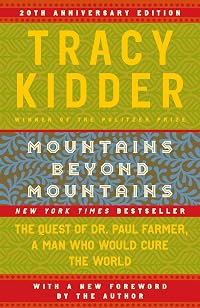
Mountains Beyond Mountains: The Quest of Dr. Paul Farmer, a Man Who Would Cure the World
by Tracy Kidder
On This Page
Description
NEW YORK TIMES BESTSELLER • “[A] masterpiece . . . an astonishing book that will leave you questioning your own life and political views.”— USA Today “If any one person can be given credit for transforming the medical establishment’s thinking about health care for the destitute, it is Paul Farmer. . . . [ Mountains Beyond Mountains ] inspires, discomforts, and provokes.”— The New York Times (Best Books of the Year) In medical school, Paul Farmer found his show more life’s calling: to cure infectious diseases and to bring the lifesaving tools of modern medicine to those who need them most. Tracy Kidder’s magnificent account shows how one person can make a difference in solving global health problems through a clear-eyed understanding of the interaction of politics, wealth, social systems, and disease. Profound and powerful, Mountains Beyond Mountains takes us from Harvard to Haiti, Peru, Cuba, and Russia as Farmer changes people’s minds through his dedication to the philosophy that “the only real nation is humanity.” WINNER OF THE LETTRE ULYSSES AWARD FOR THE ART OF REPORTAGE show lessTags
Recommendations









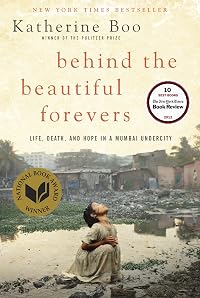


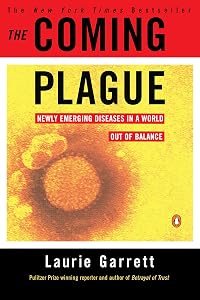
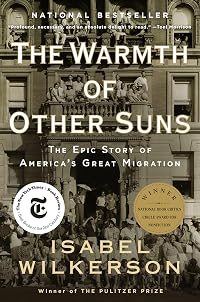
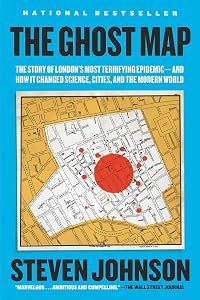








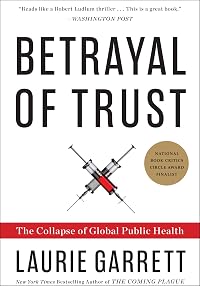
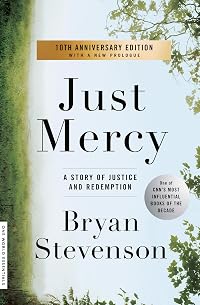
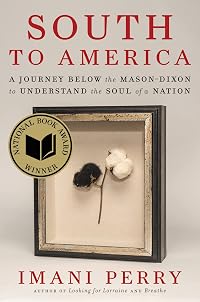
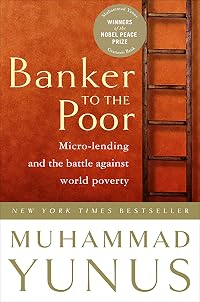


Member Recommendations
Member Reviews
Farmer truly is a remarkable man: from his selfless devotion to his Haitian hospital to his inspiring commitment to changing international health policy, his life's work is monumental.
I really enjoyed traveling from Haiti, to Peru and Russia. Kidder has a descriptive and engaging writing style, and although some of the chapters had lengthy passages, overall I got a very good sense of everything while getting a general idea of who Farmer was as a person.
My biggest criticism is that we only see Farmer through his profession. He led a tremendously busy life and I wondered about his wife, children and friends. I wondered how he sustained his energy on a daily basis and if his schedule ever had negative impacts. While I could appreciate his show more sense of humour, high intelligence and unfaltering compassion, I felt there were elements untold.
Overall I'm glad I read this book and learned about a man I knew nothing about. show less
I really enjoyed traveling from Haiti, to Peru and Russia. Kidder has a descriptive and engaging writing style, and although some of the chapters had lengthy passages, overall I got a very good sense of everything while getting a general idea of who Farmer was as a person.
My biggest criticism is that we only see Farmer through his profession. He led a tremendously busy life and I wondered about his wife, children and friends. I wondered how he sustained his energy on a daily basis and if his schedule ever had negative impacts. While I could appreciate his show more sense of humour, high intelligence and unfaltering compassion, I felt there were elements untold.
Overall I'm glad I read this book and learned about a man I knew nothing about. show less
I have just finished Mountains Beyond Mountains. What a book! What a man! What a story! This is the story of Dr. Paul Farmer, a *Man who would cure the world*, as Tracy Kidder's subtitle says.
Paul Farmer first went to Haiti as a young man, before he even became a doctor but in this land of abject poverty, he found his calling. Together with 3 friends, he founded Partners In Health, found a man in Boston, where he went to medical school, Tom White, who was excessively wealthy and wanted to give away his money before he died. A match made in heaven. Farmer went on to become a medical doctor (and got a degree in medical anthropology, redefining that discipline along the way) via a rather unorthodox route, studying part-time, and flying to show more Haiti, throughout his studies, to actually practise medicine. He went on to teach, to consult, to write and to travel to other impoverished regions of the world to help set up similar health care systems to deal with TB and AIDS and try to stop these pandemics from spreading. Farmer sees his patients as not just *cases*, not just as lists of symptoms, but the anthropologist part of him impels him to see health care as a larger picture; impels him to want to address and fix the things that are the root causes of what's wrong with a system and what causes the breakdowns in the first place. He believes with every cell of his being that all human beings deserve adequate health care, that no life is less valuable than any other. He is only one man, but he has a brilliant mind, boundless energy and his influence, passion and vision have brought many people on board with him. He has almost single-handedly made more of a difference in quality of life, in more places on this planet, than anyone else. But throughout this book I found myself worrying about him; he doesn't get enough sleep (a doctor should know how important sleep is!), he travels so much that I wonder if his family suffers (he is married and has 3 children. Does he ever get to sit down at a table and have dinner together with them? Does he get a chance to read bedtime stories to his kids?). He has written hundreds of articles and many books. He teaches, he lectures, he still doctors, too. There are only 24 hours in a day, no matter where he is. Something has to give. He is pushing 60 now and his schedule is probably more physically taxing than it ever was. How long can he keep it up before it begins to take a toll on him?
On one very long trek, author Tracy Kidder illustrated this with some humour:
- "He and Ti Jean confer. They decide we can't walk back the way we came, not across rivers and over steep paths in the dark, without a flashlight. What they mean is they don't think I'd make it. I'm not pleased that they think this but am relieved that they do."
Like the recent documentary film on Farmer that I saw (Bending the Arc), this book is never far from my mind. It's the kind of thing that you (I) keep thinking about, and marvelling about.
Some quotes by Tracy Kidder, author, near the end of the book, summing it all up:
- (in relation to Paul Farmer hiking 7 hours to make a house call): "I think of the wealthy friend of ...who balked at contributing to PIH because, while he knew about Farmer's work in Haiti and considered it impressive, he doubted anyone could reproduce it. I've heard variations on that theme. Farmer and Kim do things that no one else can do. Zanmi Lasante won't survive Farmer. Partners in Health is an organization that relies too much on a genius....All the serious, sympathetic critiques come down to these two arguments: Hiking into the hills to see just one patient or two is a dumb way for Farmer to spend his time, and even if it weren't, not many other people will follow his example, not enough to make much difference in the world."
- "That approach has worked for PIH. And I can imagine Farmer saying he doesn't care if no one else is willing to follow their example. He's still going to make these hikes, he'd insist, because if you say that seven hours is too long to walk for two families of patients, you're saying that their lives matter less than some others', and the idea that some lives matter less is the root of all that's wrong with the world..."That's when I feel most alive, when I am helping people," he told me...He makes these house calls regularly and usually without witnesses... This matters to him, I think - to feel, at least occasionally, that he doctors in obscurity, so that he knows he doctors first of all because he believes it's the right thing to do. " show less
Paul Farmer first went to Haiti as a young man, before he even became a doctor but in this land of abject poverty, he found his calling. Together with 3 friends, he founded Partners In Health, found a man in Boston, where he went to medical school, Tom White, who was excessively wealthy and wanted to give away his money before he died. A match made in heaven. Farmer went on to become a medical doctor (and got a degree in medical anthropology, redefining that discipline along the way) via a rather unorthodox route, studying part-time, and flying to show more Haiti, throughout his studies, to actually practise medicine. He went on to teach, to consult, to write and to travel to other impoverished regions of the world to help set up similar health care systems to deal with TB and AIDS and try to stop these pandemics from spreading. Farmer sees his patients as not just *cases*, not just as lists of symptoms, but the anthropologist part of him impels him to see health care as a larger picture; impels him to want to address and fix the things that are the root causes of what's wrong with a system and what causes the breakdowns in the first place. He believes with every cell of his being that all human beings deserve adequate health care, that no life is less valuable than any other. He is only one man, but he has a brilliant mind, boundless energy and his influence, passion and vision have brought many people on board with him. He has almost single-handedly made more of a difference in quality of life, in more places on this planet, than anyone else. But throughout this book I found myself worrying about him; he doesn't get enough sleep (a doctor should know how important sleep is!), he travels so much that I wonder if his family suffers (he is married and has 3 children. Does he ever get to sit down at a table and have dinner together with them? Does he get a chance to read bedtime stories to his kids?). He has written hundreds of articles and many books. He teaches, he lectures, he still doctors, too. There are only 24 hours in a day, no matter where he is. Something has to give. He is pushing 60 now and his schedule is probably more physically taxing than it ever was. How long can he keep it up before it begins to take a toll on him?
On one very long trek, author Tracy Kidder illustrated this with some humour:
- "He and Ti Jean confer. They decide we can't walk back the way we came, not across rivers and over steep paths in the dark, without a flashlight. What they mean is they don't think I'd make it. I'm not pleased that they think this but am relieved that they do."
Like the recent documentary film on Farmer that I saw (Bending the Arc), this book is never far from my mind. It's the kind of thing that you (I) keep thinking about, and marvelling about.
Some quotes by Tracy Kidder, author, near the end of the book, summing it all up:
- (in relation to Paul Farmer hiking 7 hours to make a house call): "I think of the wealthy friend of ...who balked at contributing to PIH because, while he knew about Farmer's work in Haiti and considered it impressive, he doubted anyone could reproduce it. I've heard variations on that theme. Farmer and Kim do things that no one else can do. Zanmi Lasante won't survive Farmer. Partners in Health is an organization that relies too much on a genius....All the serious, sympathetic critiques come down to these two arguments: Hiking into the hills to see just one patient or two is a dumb way for Farmer to spend his time, and even if it weren't, not many other people will follow his example, not enough to make much difference in the world."
- "That approach has worked for PIH. And I can imagine Farmer saying he doesn't care if no one else is willing to follow their example. He's still going to make these hikes, he'd insist, because if you say that seven hours is too long to walk for two families of patients, you're saying that their lives matter less than some others', and the idea that some lives matter less is the root of all that's wrong with the world..."That's when I feel most alive, when I am helping people," he told me...He makes these house calls regularly and usually without witnesses... This matters to him, I think - to feel, at least occasionally, that he doctors in obscurity, so that he knows he doctors first of all because he believes it's the right thing to do. " show less
This is an astounding book about a modern-day hero, few or none, of us know anything about ~ the kind of person that just seems not to exist anymore. But as we traverse the globe with infectious disease physician, Paul Farmer (who also has a PhD in anthropology), I felt myself being inspired by what one person can truly accomplish if he sets his mind to it. I will say, I've never met anyone with Farmer's pure and myopic drive towards helping first, his patients (and that means any patient, poor, destitute, wealthy or moderate), but secondly, the effort to bring medicine and aid to the people of the world who need it the most. It's wild, I had the racing feeling that one lifetime just wasn't enough for someone trying to accomplish so show more much. Farmer takes on the international bureaucratic nightmare that is global health care (which of course, weaves in political unrest in many areas as well as the greed of pharmaceutical companies) and amazingly, comes out on top most of the time. I think he just never imagines NOT succeeding. But also, the guy got results ~ he cured patients, saved lives, hundreds of them. He improved areas deemed inhabitable and made a difference in so many people's lives.
But behind Farmer is a very small army of dedicated people, from gracious donors like Tom White, to his core team, Ophelia and Dr. Jim Kim. They are also fascinating to read about.
Kidder is a wonderful journalistic author who brings the seemingly insurmountable data together and he does so beautifully. At times, the medicine gets slightly dry (I think a reader has to have some seed of interest in the topic), but I learned more about MDR TB (multi drug resistent tuberculosis) than I ever thought I could/would. Also, the AIDS epidemic, and how TB and HIV are inter-linked. Of course, explosion of either of those two diseases occurs in areas of severe poverty ... and Kidder takes us to many of those areas (mostly Haiti, but also Peru, Mexico and Russia), which are hard to read about, but I think, necessary, to understand the gravity of the problem.
I highly recommend this book to anyone who cares about social change and helping this fractured world. show less
But behind Farmer is a very small army of dedicated people, from gracious donors like Tom White, to his core team, Ophelia and Dr. Jim Kim. They are also fascinating to read about.
Kidder is a wonderful journalistic author who brings the seemingly insurmountable data together and he does so beautifully. At times, the medicine gets slightly dry (I think a reader has to have some seed of interest in the topic), but I learned more about MDR TB (multi drug resistent tuberculosis) than I ever thought I could/would. Also, the AIDS epidemic, and how TB and HIV are inter-linked. Of course, explosion of either of those two diseases occurs in areas of severe poverty ... and Kidder takes us to many of those areas (mostly Haiti, but also Peru, Mexico and Russia), which are hard to read about, but I think, necessary, to understand the gravity of the problem.
I highly recommend this book to anyone who cares about social change and helping this fractured world. show less
Books seem to come to me sometimes when I need a better understanding of the world and current events. That was certainly true with [Mountains Beyond Mountains], [[Tracy Kidder]]'s portrait of Dr. Paul Farmer, anthropologist and doctor, whose work has taken him to some of the poorest, disease ravaged parts of the world, with Haiti being a focal point of his life and work.
Kidder gives the larger context of Haiti and its extreme poverty, laying much of the blame at the door of first world countries, most notably the United States. I might have been able to come up with some of the leaders' names, like the Duvaliers and Aristide, but I really didn't know much else about Haiti, its history and its disastrous relationship with our country. show more It is a violent, sad history in which, no matter who is in charge, the people of Haiti always come out on the losing end.
Farmer fell in love with these people early in his career and has worked tirelessly to control AIDS, HIV and TB, especially the multi drug resistant variety that was actually being encouraged by a standard method of treatment. Partners in Health works around the world with the support of major donors including The Bill & Melinda Gates Foundation.
Kidder was clearly in awe of Farmer but also provided glimpses of the struggles he endured to make his "O of the P" (Farmer's shorthand for Operational Priority for the Poor) a reality, traveling with broken bones at one point and finding only short periods of time to be with his wife and daughter. There was an edge to Farmer that can only come out of frustration with a world who seems to believe that those born in poverty are some how responsible for their lot. He could be rude and short with people, and yet maintains long term relationships, even with his first love, Ophelia Dahl, who couldn't marry him but is now chair of the Board of PIH. The New Yorker profiled her in December 2017. And, yes, if you think the name is familiar, she is the daughter of Roald Dahl and Patricia O'Neal.
Highly recommended.... show less
Kidder gives the larger context of Haiti and its extreme poverty, laying much of the blame at the door of first world countries, most notably the United States. I might have been able to come up with some of the leaders' names, like the Duvaliers and Aristide, but I really didn't know much else about Haiti, its history and its disastrous relationship with our country. show more It is a violent, sad history in which, no matter who is in charge, the people of Haiti always come out on the losing end.
Farmer fell in love with these people early in his career and has worked tirelessly to control AIDS, HIV and TB, especially the multi drug resistant variety that was actually being encouraged by a standard method of treatment. Partners in Health works around the world with the support of major donors including The Bill & Melinda Gates Foundation.
Kidder was clearly in awe of Farmer but also provided glimpses of the struggles he endured to make his "O of the P" (Farmer's shorthand for Operational Priority for the Poor) a reality, traveling with broken bones at one point and finding only short periods of time to be with his wife and daughter. There was an edge to Farmer that can only come out of frustration with a world who seems to believe that those born in poverty are some how responsible for their lot. He could be rude and short with people, and yet maintains long term relationships, even with his first love, Ophelia Dahl, who couldn't marry him but is now chair of the Board of PIH. The New Yorker profiled her in December 2017. And, yes, if you think the name is familiar, she is the daughter of Roald Dahl and Patricia O'Neal.
Highly recommended.... show less
Paul Farmer has a martyr complex that is not especially endearing, and his ego can be grating. But he also is directed by a profound sense of justice and a hatred of those things that stand in the way of justice. This means hatred not only of the institutions which create injustice, but also the institutions which improperly serve justice, or stop short of justice for all (such as White Liberals, NGOs, etc.). This is something I deeply respect.
It is interesting the parallels between the activist anarchist milieu and the team that operates around Paul Farmer. Both grapple with international institutions and against them. Both rail against the White Liberals that too often fund them. Both wish to bring justice to a community, and then to show more train the community to leave it self sufficient (a la Common Ground). Both come up with alienating internal jargon. Both forego personal pleasure and luxury in favor of time spent organizing. Some of the best and the worst aspects of each community (Paul Farmer's and anarchists') are found in one another.
The challenge of Paul Farmer is: Is there a more compelling way to live your life than with the devotion that he has? show less
It is interesting the parallels between the activist anarchist milieu and the team that operates around Paul Farmer. Both grapple with international institutions and against them. Both rail against the White Liberals that too often fund them. Both wish to bring justice to a community, and then to show more train the community to leave it self sufficient (a la Common Ground). Both come up with alienating internal jargon. Both forego personal pleasure and luxury in favor of time spent organizing. Some of the best and the worst aspects of each community (Paul Farmer's and anarchists') are found in one another.
The challenge of Paul Farmer is: Is there a more compelling way to live your life than with the devotion that he has? show less
Dr. Paul Farmer is a man who has spent his adult life trying to bring better health care to poverty-stricken parts of the world, with most of his time spent in Haiti. Farmer's insistence on bringing quality care (not just "appropriate technology," which is shorthand for "inferior" or "whatever we can get away with") to places like Haiti, Peru, and the prisons of Russia is admirable. His relentless travel between countries as well as walking long distances to remote houses to see patients is hard to believe. How any human being could work so much, so consistently, under such difficult conditions, is nearly incomprehensible. His life consists of grant proposals, emails, seeing patients in developing countries, doing rotations in a US show more hospital, and lecturing at world health conferences. Hobbies? Not noticeably. Sleep? Not much. Personal life? During the time covered in the book, he does have a wife and child - who live in Paris.
Farmer's story is one of those that kind of run the risk of paralyzing would-be do-gooders instead of inspiring them. You hear his story and wonder how on earth you could possibly measure up, or wonder how altruistic you really are if you're not willing to sacrifice absolutely everything to make a difference. It seems from the book that Farmer realizes he is one in a million; he doesn't wonder why more people don't do as much as he does - he wonders why more people don't do *anything.* The author does a good job not being awestruck by Farmer; he doesn't canonize him. But Kidder does make it seem ridiculous that world health programs are so slow-moving, and don't work Farmer's way. I'm no expert on the issues, but I'm guessing that like with most things, the true best path lies somewhere in the middle. Or at least it does until each and every person in the world can be convinced to make their own small contribution. show less
Farmer's story is one of those that kind of run the risk of paralyzing would-be do-gooders instead of inspiring them. You hear his story and wonder how on earth you could possibly measure up, or wonder how altruistic you really are if you're not willing to sacrifice absolutely everything to make a difference. It seems from the book that Farmer realizes he is one in a million; he doesn't wonder why more people don't do as much as he does - he wonders why more people don't do *anything.* The author does a good job not being awestruck by Farmer; he doesn't canonize him. But Kidder does make it seem ridiculous that world health programs are so slow-moving, and don't work Farmer's way. I'm no expert on the issues, but I'm guessing that like with most things, the true best path lies somewhere in the middle. Or at least it does until each and every person in the world can be convinced to make their own small contribution. show less
My opinion of Kidder's book was undoubtedly influenced by my bitterness at being assigned to read it for my college orientation (I thought I'd left behind the days of summer reading). I was too cynical to appreciate Farmer's quest: his saint-like devotion to bringing health care to the needy seemed too good to be true. When asked to come up questions we'd ask Farmer, I admitted to my professor that my first inquiry would be, "Are you for real?!" From the discussions we had on campus, though, I'm definitely in the minority!
Members
- Recently Added By
Published Reviews
ThingScore 100
''Mountains Beyond Mountains'' is inspiring, disturbing, daring and completely absorbing. It will rattle our complacency; it will prick our conscience.
added by jlelliott
Lists

Non-Fiction Worth Reading
1,015 works; 257 members

TED 2013 Summer Reading List
190 works; 13 members

Wisdom
31 works; 5 members

Top Five Books of 2015
811 works; 241 members

Books for HS summer reading
21 works; 2 members

Books Read in 2009
464 works; 11 members

Literary Works Read in College
316 works; 15 members

The r/AskScience Reading List
159 works; 3 members

Really awesome
10 works; 1 member

Books You Read For University
184 works; 3 members

Books We Love to Reread
688 works; 296 members

2024-2025 Ezra Klein Guest Recommendations
213 works; 6 members

Vlogbrothers Book Recommendations
307 works; 4 members

Books Read in 2025
4,091 works; 97 members

School Made Us Read It
380 works; 196 members

The Book You Would Give To Everyone You Meet If You Could
7 works; 1 member
Author Information

14+ Works 14,879 Members
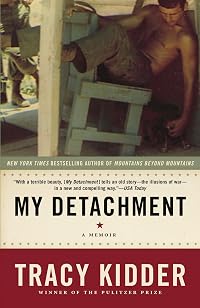
Tracy Kidder was educated at the University of Iowa and Harvard University. He served in the US Army in Vietnam. Kidder has garnered numerous literary awards including the Pulitzer Prize in General Non-Fiction and the National Book Award for General Nonfiction both in 1982. He has also been honored with the Robert F. Kennedy Book Award, 1990 and show more the Christopher Award, 1990. His publications include numerous nonfiction articles and short fiction for The Atlantic and other periodicals. Non-Fiction books include The Road to Yuba City, Doubleday, 1974; The Soul of a New Machine, Atlantic Monthly-Little Brown, 1981 for which he won a Pulitzer and a National Book Award; House, Houghton Mifflin, 1985; Old Friends, Houghton Mifflin, 1993; Home Town, Random House, 1999; Mountains Beyond Mountains, Random House, 2003; My Detachment, Random House, 2005; Strength in What Remains, Random House, 2009. (Bowker Author Biography) show less
Awards and Honors
Awards
Distinctions
Common Knowledge
- Canonical title
- Mountains Beyond Mountains: The Quest of Dr. Paul Farmer, a Man Who Would Cure the World
- Original publication date
- 2003
- People/Characters
- Paul Farmer; Ophelia Dahl; Jim Yong Kim; Tom White; Jaime Bayona; Howard Hiatt (show all 8); Alex Goldfarb; Serena Koenig
- Important places
- Haiti
- Epigraph
- Beyond mountains there are mountains.
--Haitian proverb
. . . And right action is freedom
From past and future also.
For most of us, this is the aim
Never here to be realized;
Who are only undefeated
... (show all)Because we have gone on trying . . .
--T. S. Eliot
"The Dry Salvages" - Dedication
- For Henry and Tim Kidder
- First words
- Six years after the fact, Dr. Paul Edward Farmer reminded me, "We met because of a beheading, of all things."
[Afterword] In June 2002, seven years after the death of Father Jack Roussin, WHO adopted new prescriptions for dealing with MDR-TB, virtually the same as PIH had used in Carabayllo - Quotations
- And here, in one of the most impoverished, diseased, eroded, and famished regions of Haiti, there was this lovely walled citadel, Zanmi Lasante. I wouldn't have thought it much less improbable if I'd been told it had been bro... (show all)ught by spaceship.
- Last words
- (Click to show. Warning: May contain spoilers.)For myself, right now, I like the sound, like so many hearts beating through a single telescope.
(Click to show. Warning: May contain spoilers.)[Afterword] I felt tempted to ask Farmer if this was appropriate technology--not to hear the answer, just to hear him say it. - Blurbers
- Canin, Ethan ; Harr, Jonathan ; Dillard, Annie ; Fadiman, Anne; Shacochis, Bob
- Canonical DDC/MDS
- 610.92
- Canonical LCC
- R154.F36
Classifications
Statistics
- Members
- 5,414
- Popularity
- 2,478
- Reviews
- 151
- Rating
- (4.12)
- Languages
- 5 — English, French, Portuguese, Russian, Spanish
- Media
- Paper, Audiobook, Ebook
- ISBNs
- 35
- ASINs
- 16