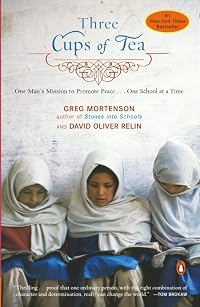
Three Cups of Tea: One Man's Mission to Promote Peace . . . One School at a Time
by Greg Mortenson, David Oliver Relin
On This Page
Description
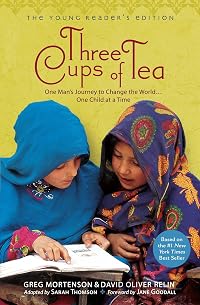
One man's campaign to build schools in the most dangerous, remote, and anti-American reaches of Asia: in 1993 Greg Mortenson was an American mountain-climbing bum wandering emaciated and lost through Pakistan's Karakoram. After he was taken in and nursed back to health by the people of a Pakistani village, he promised to return one day and build them a school. From that rash, earnest promise grew one of the most incredible humanitarian campaigns of our time--Mortenson's one-man mission to show more counteract extremism by building schools, especially for girls, throughout the breeding ground of the Taliban. In a region where Americans are often feared and hated, he has survived kidnapping, fatwas issued by enraged mullahs, death threats, and wrenching separations from his wife and children. But his success speaks for itself--at last count, his Central Asia Institute had built fifty-five schools.--From publisher description. show lessTags
Recommendations
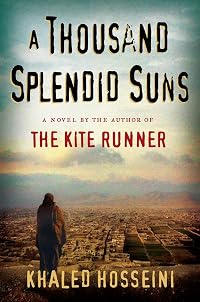
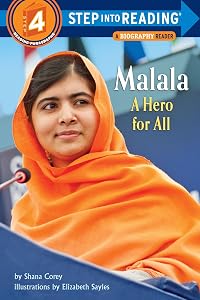

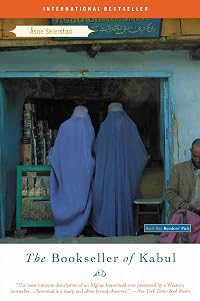

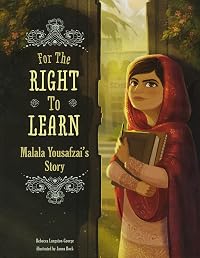
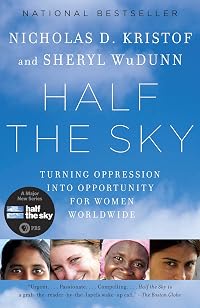
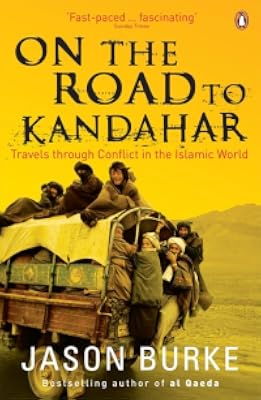
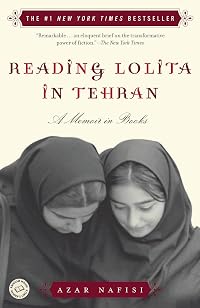

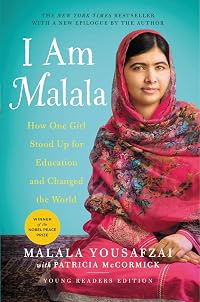






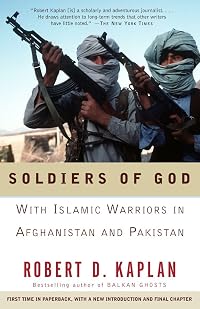
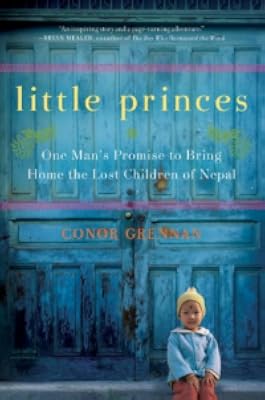



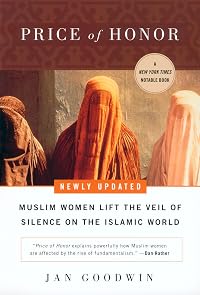

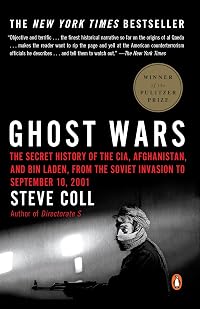


Member Recommendations
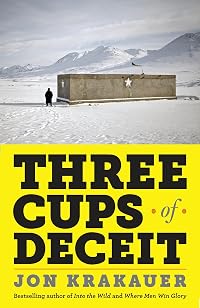
BookWallah Are you willing to hear the other side of this story... warning this is not pretty.
TooBusyReading I think it is important to read both sides of the story.
82
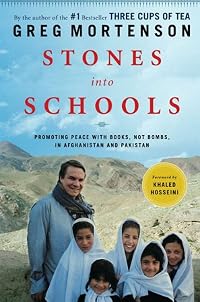
Stones into Schools: Promoting Peace with Books, Not Bombs, in Afghanistan and Pakistan by Greg Mortenson
BookWallah If you are one of the few people in the USA that missed Greg's first (Three Cups of Tea) book you should make amends and rush to read this one.
63
SqueakyChu Both books contain personal accounts of experiences in the highest moutains of the world.
31
cmbohn Both talk about how education changes lives for the better and how any sacrifice is worth it to receive an education.
20


cougar_c From one middle east country to the another - what "Three Cups of Tea" and "Mornings in Jenin" have in common is they show the human side of people trapped in a conflict.
11


JGoto Inspirational account of a young woman reaching refugee boys through soccer.
bookwoman247 Both books are humanitarian in nature, and both offer glimpses of Non-Western cultures.
Member Reviews
" Last month, an investigation from 60 Minutes and writer Jon Krakauer found that Three Cups of Teaauthor Greg Mortenson, the raffish philanthropist and founder of 170 schools in Pakistan and Afghanistan, had fabricated parts of his amazing backstory. Worse, 60 Minutes visited 30 of the schools supposedly built by his Central Asia Institute and found half empty or unsupported by the nonprofit. More stories of “ ghost schools” emerged after the program aired.
The Three Cups of Tea scandal has led to soul-searching and anger among charitable givers and recipients. Nonprofits are scrambling to better account for their dollars. Aid workers in the region are grumbling about the crass imperialist narrative that helped popularize CAI, with show more a heroic First World dude swooping in to rescue Third World kids.
But the most important lesson of the scandal, and one that hasn’t gotten any attention, is something entirely different. It is a lesson that applies not just to Mortenson’s organization but also to charities that are much-better run: Stop building schools. Or rather, it is a mistake to devote much money or attention to constructing physical school buildings. Throwing up structures is simple. Educating children is a much more complex, expensive, and necessary goal." Anne Lowrey show less
The Three Cups of Tea scandal has led to soul-searching and anger among charitable givers and recipients. Nonprofits are scrambling to better account for their dollars. Aid workers in the region are grumbling about the crass imperialist narrative that helped popularize CAI, with show more a heroic First World dude swooping in to rescue Third World kids.
But the most important lesson of the scandal, and one that hasn’t gotten any attention, is something entirely different. It is a lesson that applies not just to Mortenson’s organization but also to charities that are much-better run: Stop building schools. Or rather, it is a mistake to devote much money or attention to constructing physical school buildings. Throwing up structures is simple. Educating children is a much more complex, expensive, and necessary goal." Anne Lowrey show less
When I first read this book in 2007, I gave it 4 stars because it was a very inspiring story. With everything that was going on in the world at that time, Mortensen seemed like he was he was one of the people in this world who were working toward peace and change. It even inspired me to become an English teacher for people from Central Asia and other areas afflicted by conflict. I rooted for him to win the Nobel Peace Prize when he was nominated in 2009 and was surprised when he didn't win. I did some research and found out he did not win because the Nobel Commitee could not substantiate many of the claims he made. I dismissed this because travel to the region was difficult. Then I looked into volunteering with his institution. The show more website said that they did not want workers, only financial donations. Strange, but considering the location I did not find the request unusual.
A few years later I was shocked to learn that details of the story were exaggerated, truncated, and outright fabricated. He misappropriated millions of dollars, and his co-author died tragically by his own hand after learning the truth. It is not unusual for people running a charity to end up in a situation where things spiral out of control, but there comes a time when they have to swallow their pride and ask for help. Someone died. How many of those children were actually helped?
This book started as inspirational and ended as tragedy. I now rate this book with 2 stars because it inspired me in my own life to become an ESL teacher. Hopefully others running charitable organizations can learn from the tragic mistakes. show less
A few years later I was shocked to learn that details of the story were exaggerated, truncated, and outright fabricated. He misappropriated millions of dollars, and his co-author died tragically by his own hand after learning the truth. It is not unusual for people running a charity to end up in a situation where things spiral out of control, but there comes a time when they have to swallow their pride and ask for help. Someone died. How many of those children were actually helped?
This book started as inspirational and ended as tragedy. I now rate this book with 2 stars because it inspired me in my own life to become an ESL teacher. Hopefully others running charitable organizations can learn from the tragic mistakes. show less
Greg Mortensen's mind was clouded with his failure as he retreated from an unsuccessful attempt to climb K2 in Pakistan in 1993. His spectacular tribute to his sister who had recently passed away had gone uncompleted. It's no surprise then, that he took a wrong turn and ended up in the wrong secluded village. In Korphe, Mortensen found people who were barely ekeing out a living in one of the most secluded of villages in northern Pakistan, yet people who were eager to give him the best of everything they had when he arrived in his weakened state from his failed climb. When he recovered sufficiently, he asked to see the village's school and on finding out that they had no such building, he determined to return home to the U.S., raise the show more money, and bring them back a school.
Only when he returns to Pakistan and assembles the necessary materials for the Korphe school does he realize the vast need for education across northern Pakistan, and beyond, as several villagers shamelessly attempt to woo him to build his school in their village instead of the one he has already chosen. This sets the ball rolling for the many schools Mortensen eventually builds with the help of funding from Jean Hoerni, a wealthy inventor of technology for silicon chips. Mortensen travels throughout Pakistan bringing education to both boys and girls in the most remote villages where, typically, the best chance of an education would come only in the form of Islamic fundamentalist madrassas which refuse girls and turn out angry young men whose only chance at a good life seems to lie in hate and intolerance.
If you're anything like me, this is a book you will find yourself eager to talk about. Mortensen's (unfortunately) new and unusual approach to building schools and educating the children of Pakistan is a study in how peace can be won among people who could easily and understandably loathe Americans. Rather than forcing a foreign curriculum on students, he determines to cover a well-rounded set of courses in basic education - education for education's sake instead of education with shady alterior motives that many who might be helped have learned to expect in "help" from the United States. Instead of launching himself at a village and dictating how things should be done, he works with villagers and other locals eager to have their children educated, using the village's own labor, including locally hired teachers, and donation of land to give the people pride in their village's school and vested interest in making and keeping it a success.
His obvious love and respect for the people and their beliefs and customs as well as his efforts to build lasting relationships with the people of the villages in which he works make Mortensen an anomaly among American foreign aid workers and perhaps among Americans, in general. His efforts to tread lightly and with a genuine respect for the villagers and their devout belief in the tenets of Islam often saw him coming out above reproach even when money-hungry village mullahs seeking to stop his education of girls or at least earn a hefty bribe level fatwas against him that could easily have ended his work and sent him packing back to America. Mortensen's worthy mission and the way that he pursues it has the power not only to educate but to unite people across religious, cultural, and geographic divides behind one common goal. Now, as he moves his operation into Afghanistan, Greg Mortensen continues to fight the war on terror in perhaps the only way it can truly be won, with respect, understanding, and education. show less
Only when he returns to Pakistan and assembles the necessary materials for the Korphe school does he realize the vast need for education across northern Pakistan, and beyond, as several villagers shamelessly attempt to woo him to build his school in their village instead of the one he has already chosen. This sets the ball rolling for the many schools Mortensen eventually builds with the help of funding from Jean Hoerni, a wealthy inventor of technology for silicon chips. Mortensen travels throughout Pakistan bringing education to both boys and girls in the most remote villages where, typically, the best chance of an education would come only in the form of Islamic fundamentalist madrassas which refuse girls and turn out angry young men whose only chance at a good life seems to lie in hate and intolerance.
If you're anything like me, this is a book you will find yourself eager to talk about. Mortensen's (unfortunately) new and unusual approach to building schools and educating the children of Pakistan is a study in how peace can be won among people who could easily and understandably loathe Americans. Rather than forcing a foreign curriculum on students, he determines to cover a well-rounded set of courses in basic education - education for education's sake instead of education with shady alterior motives that many who might be helped have learned to expect in "help" from the United States. Instead of launching himself at a village and dictating how things should be done, he works with villagers and other locals eager to have their children educated, using the village's own labor, including locally hired teachers, and donation of land to give the people pride in their village's school and vested interest in making and keeping it a success.
His obvious love and respect for the people and their beliefs and customs as well as his efforts to build lasting relationships with the people of the villages in which he works make Mortensen an anomaly among American foreign aid workers and perhaps among Americans, in general. His efforts to tread lightly and with a genuine respect for the villagers and their devout belief in the tenets of Islam often saw him coming out above reproach even when money-hungry village mullahs seeking to stop his education of girls or at least earn a hefty bribe level fatwas against him that could easily have ended his work and sent him packing back to America. Mortensen's worthy mission and the way that he pursues it has the power not only to educate but to unite people across religious, cultural, and geographic divides behind one common goal. Now, as he moves his operation into Afghanistan, Greg Mortensen continues to fight the war on terror in perhaps the only way it can truly be won, with respect, understanding, and education. show less
Greg Mortenson grew up the child of missionaries in Africa, has trouble adjusting to American life, and only finds his true goal and purpose upon getting lost after an abandoned attempt to climb one of the deadliest mountains in the world. A year later, determined to keep his promise to those who nursed him back to health, he returns to begin a years-long mission to create moderate secular schools for some of the poorest and most likely to be neglected communities on the planet.
Reading Three Cups of Tea was an interesting experience for me. It wasn't as gripping as Kabul Beauty School in that I was able to put it down from time to time, but I still finished it in 2-3 days. Unlike Kabul Beauty School, it was told far less from the point show more of view of the person that the story is about, being occasionally from Greg's point of view, but including opinions, positive and critical, held by those that work with him closely. The parts that are told from Greg's point of view can get a sensitive reader quite emotional because everything is told with sincerity and depth. You can picture the scenes that he vividly describes, almost feel the emotions of the people around him.
One of the things that impresses me most about Greg Mortenson, even more than his persistence, determination, and noble spirit that drives him in his work is his ethics. Given other training, Mr. Mortenson might make a fine anthropologist. Whether consciously or unconsciously, he picks up a lot of the traits and mannerisms of the people that he works with. He has a keen sensitivity to taboos and traditions and follows them, not to be a mimic, but to show people that he sincerely understands and honors their culture, regardless of their religious or political differences. He does not pass judgment on everything around him, but observes with an open mind. I also admire his courage and truthfulness to stand up for a group of people that America was trying to go on a witch hunt for. You cannot blame the actions of a few brainwashed individuals on an entire religion that spans large portions of the world, and runs the entire political spectrum. Greg gets to the source of the problem: a lack of education and resulting lack of economic opportunities. When people have the ability to travel, have clean drinking water, and access to education, there are more economic chances for success and survival.
One of the things that interested me most about the book while I was reading it, is the political story of the late 90's through mid 2000's that is woven in the background. I do not think that this book set out to be a political history, but you can see the transition in the US from Clinton to Bush, the effects of the wars at home and overseas, and even have some political cameos throughout the book.
The only reason this has 4.5 rather than 5 stars from me is that at some points when David Oliver Relin is relating the stories of various encounters and episodes in this decades long effort to educate those most in need, where the narrative becomes a bit garbled, and you aren't sure what is happening to whom, or even if the people that they are discussing have been talked about before. However by rereading a passage or two I can usually figure it out. I can say one thing, I am curious about doing a penny drive at my school.
Please read this book. If your local library does not carry it, ask them to order it. show less
Reading Three Cups of Tea was an interesting experience for me. It wasn't as gripping as Kabul Beauty School in that I was able to put it down from time to time, but I still finished it in 2-3 days. Unlike Kabul Beauty School, it was told far less from the point show more of view of the person that the story is about, being occasionally from Greg's point of view, but including opinions, positive and critical, held by those that work with him closely. The parts that are told from Greg's point of view can get a sensitive reader quite emotional because everything is told with sincerity and depth. You can picture the scenes that he vividly describes, almost feel the emotions of the people around him.
One of the things that impresses me most about Greg Mortenson, even more than his persistence, determination, and noble spirit that drives him in his work is his ethics. Given other training, Mr. Mortenson might make a fine anthropologist. Whether consciously or unconsciously, he picks up a lot of the traits and mannerisms of the people that he works with. He has a keen sensitivity to taboos and traditions and follows them, not to be a mimic, but to show people that he sincerely understands and honors their culture, regardless of their religious or political differences. He does not pass judgment on everything around him, but observes with an open mind. I also admire his courage and truthfulness to stand up for a group of people that America was trying to go on a witch hunt for. You cannot blame the actions of a few brainwashed individuals on an entire religion that spans large portions of the world, and runs the entire political spectrum. Greg gets to the source of the problem: a lack of education and resulting lack of economic opportunities. When people have the ability to travel, have clean drinking water, and access to education, there are more economic chances for success and survival.
One of the things that interested me most about the book while I was reading it, is the political story of the late 90's through mid 2000's that is woven in the background. I do not think that this book set out to be a political history, but you can see the transition in the US from Clinton to Bush, the effects of the wars at home and overseas, and even have some political cameos throughout the book.
The only reason this has 4.5 rather than 5 stars from me is that at some points when David Oliver Relin is relating the stories of various encounters and episodes in this decades long effort to educate those most in need, where the narrative becomes a bit garbled, and you aren't sure what is happening to whom, or even if the people that they are discussing have been talked about before. However by rereading a passage or two I can usually figure it out. I can say one thing, I am curious about doing a penny drive at my school.
Please read this book. If your local library does not carry it, ask them to order it. show less
A somewhat bloated yet fascinating account of Greg Mortenson's drive to build schools (especially for girls) in the remote northern regions of Pakistan at the base of the Himalayas. Mourning the death of his sister, after a failed summit attempt at K2 and being lost in the mountains, Mortenson wanders into a distant village and is enfolded by the hospitality of the people. His failure to summit and the extreme and harsh beauty of the surroundings give him a new passion: to build a school for this village. He returns to America to raise money for his new passion, and does eventually find a benefactor, while living himself on the fringe, in his car, saving every cent of part-time work as a nurse toward his promise to return. Along the way show more to ultimately building several schools, being imprisoned by radical jihadists, and forging new directions toward the same in Afghanistan, Mortenson grows to love the people steeped in Islamic tradition and the simple desire for a better life. His humanitarian position in wartime is admirable and duly lauded, despite the protestations of his modest personality. This profile of an unusually driven man and the support network he forged both in the U.S. and Pakistan is a tribute piece that teaches about the need and his successful method, based on the years of efforts, building contacts (and schools). If it is meant to help raise funds for his organization, it is successful. As a story, it is rich in information about the hardworking people of northern Pakistan, tribal life and the complex political alliances of clan and culture. show less
The last thing this book needs is another positive comment, so suffice to say that it is a great story about a singular man who in turn works with and for a great many excellent people in doing some extraordinary good. I started it as an audio book, narrated by the author David Oliver Relin, so I had the feel throughout my subsequent reading of it that I was hearing the story rather than reading it. This added a particular intimacy to the experience. I did find two weird things about the book. One was that I felt sometimes caught between reading a standalone literary work and a fund raising promo piece for a worthy cause - the two in this case being inextricable. Also it was odd to hear Greg Mortenson almost beatified in some passages show more in the book, then to put it down and see his name as first author. This oddness simply made me want to know more about the mechanics of how the book was actually written. I suppose though, that however that writing process unfolded, the Mortenson brand had to be up front to serve the good end - more donations for more schools. show less
Reading this book felt like a journey through time, back to the 1990s and 2000s. In many ways, this book is a unique view of the forces behind extremism from the perspective of the remote people of mountainous Pakistan. Greg Mortenson, mountaineer turned charity foundation director, poured his energy into building schools - for both boys and girls - in the remote regions of Pakistan after he failed in an attempt to climb K2. Reading this book, I wanted to both cheer on Mortenson's work and encourage the man to take a day off for vacation. I also did have a few nagging suspicions about him - you know how you sometimes know you're reading about someone you'd never get along with even if they're portrayed as a saint? (A quick Google search show more proved me right.) Still, I couldn't help but concur with the general thrust of the book - which was to argue that education has the potential to bring more prosperity and goodwill to this part of the world than military action. show less
Members
- Recently Added By
Published Reviews
ThingScore 100
This is a wonderful book that gives the reader an unprecedented and very personal insight into a people that I had no knowledge of before reading it.
added by mikeg2
Captivating and suspenseful, with engrossing accounts of both hostilities and unlikely friendships, this book will win many readers' hearts.
added by Shortride
"The story of how this happened is a cliffhanger as well as an first-hand introduction to the people and places of a region little understood by most Americans. The subtitle, "One Man's Mission to Fight Terrorism and Build Nations . . . One School at a Time," underscores the motivation behind his work."
added by cvosshans
Lists

Unread books
1,063 works; 87 members

Top Five Books of 2014
1,064 works; 398 members

Pierce County READS
17 works; 1 member

Biggest Disappointments
606 works; 168 members

Books Featured on Readers' Review of the Diane Rehm Show
161 works; 8 members

Best 21st Century Books (So Far)
670 works; 86 members

Asia
178 works; 7 members

Books Read in 2008
335 works; 8 members

Books Mentioned in The Wedding Planner's Daughter series
107 works; 2 members

Bookshelf from Interstellar
62 works; 1 member
Author Information

7 Works 18,603 Members
Greg Mortenson was born in 1957 in St. Cloud, Minnesota. From 1958 - 1973, he lived on the slopes of Mt. Kilimanjaro, Tanzania where his father, Dempsey, co-founded the teaching hospital, Kilimanjaro Christian medical Center (KCMC), and where his mother, Jerene, founded the International School Moshi. After serving in the U.S. Army in Germany from show more 1977 - 1979, Mortenson graduated from the University of South Dakota in 1983 with an Associate Degree in Nursing and a Bachelor's Degree in Chemistry. He is the co-founder of the nonprofit Central Asia Institute and founder of Pennies for Peace, and is the co-author of the #1 New York Times best-seller, Three Cups of Tea, which has won several awards including Time Magazine's Asia Book of the Year. Mortenson is a humanitarian and has dedicated his life to promote education, especially for girls, in remote regions of Pakistan and Afghanistan, where he has established over 78 schools. In 2009, Pakistan's government awarded Mortenson Pakistan's highest civil award, the Sitara-e-Pakistan ("Star of Pakistan"). Mortenson has received many other awards including National Award for Citizen Diplomacy in 2008, Rotary International Paul Harris Award in 2007, and Red Cross (Montana) "Humanitarian of the Year" in 2005. As of 2009, Mortenson has also received 10 honorary doctorates. Mortenson is married to Dr. Tara Bishop, a clinical psychologist. They have two children. show less

4 Works 15,515 Members
David Oliver Relin was born in Rochester, New York on December 12, 1962. He graduated from Vassar College in 1985, and was later awarded a fellowship at the Iowa Writers' Workshop. In the 1990s, he established himself as a journalist with an interest in telling stories about people in need including articles about child soldiers and about his show more travels in Vietnam. He was the co-author of Three Cups of Tea with Greg Mortenson, which was published in 2006. In 2011, basic facts in the book were questioned by author Jon Krakauer and the CBS News program 60 Minutes. 60 Minutes also discovered that Mortenson's charity was spending large amounts of money on Mortenson's personal expenses and to promote the book. This caused Relin to suffer both emotionally and financially. He did not speak publicly about the charges, but he hired a lawyer to defend himself in a federal lawsuit that accused the authors and the publisher of defrauding readers. The suit was dismissed in 2012. He suffered from depression and committed suicide on November 15, 2012 at the age of 49. His book Second Suns: Two Doctors and Their Amazing Quest to Restore Sight and Save Lives was published in 2013 after his death. (Bowker Author Biography) show less
Some Editions
Awards and Honors
Awards
Distinctions
Work Relationships
Has the adaptation
Is abridged in
Is replied to in
Has as a student's study guide
Common Knowledge
- Canonical title*
- Trois tasses de thé. La mission de paix d'un Américain au Pakistan et en Afghanistan
- Original publication date
- 2006
- People/Characters
- Greg Mortenson; Haji Ali; Jean Hoerni; Tara Bishop; Faisal Baig; Ghulam Parvi (show all 12); Apo Mohammed; Mouzafer Ali; Syed Abbas; Jahan; Relin; Sadhar Kan
- Important places
- Tanzania; Pakistan; Afghanistan; Kandahar, Afghanistan; Korphe, Pakistan; Rawalpindi, Pakistan (show all 9); Skardu, Pakistan; Badakshan, Afghanistan; Karakoram Range
- Dedication
- to Irvin "Dempsey" Mortenson, Barry "Barrel" Bishop and Lloyd Henry Relin for showing us the way, while you were here
- First words
- The little red light had been flashing for five minutes before Bhangoo paid it any attention. "The fuel gages on these old aircraft are notoriously unreliable," Brigadier General Bhangoo, one of Pakistan's most experienced hi... (show all)gh-altitude pilots, said, tapping. I wasn't sure if that was meant to make me feel better.
- Quotations
- The only way we can defeat terrorism is if people in this country where terrorists exist learn to respect and love Americans...and if we can respect and love these people here. What's the difference between them becoming a pr... (show all)oductive local citizen or a terrorist? I think the key is education.
Your President Bush has done a wonderful job of uniting one billion Muslims against America for the next two hundred years. (Pakastani Brigadier General Bashir Baz)
Osama, baah!...The enemy is ignorance. The only way to defeat it is to build relationships with these people, to draw them into the modern world with education and business. Otherwise the fight will go on forever. (Pakastani ... (show all)Brigadier General Bashir Baz) - Last words
- (Click to show. Warning: May contain spoilers.)Mortenson put his hands on the shoulders of Sadhar Khan's brown robe, as he's done a decade earlier, among other mountains, with another leader, named Hajji Ali, conscious, not of the gunmen still observing him through their sniperscopes, nor of the shahid stones, warmed to amber by the sun's late rays, but of the inner mountain he'd committed, in that instant, to climb.
- Blurbers
- Brokaw, Tom ; Bono, Mary ; Rashid, Ahmed ; Anker, Conrad
*Some information comes from Common Knowledge in other languages. Click "Edit" for more information.
Classifications
- Genres
- General Nonfiction, Biography & Memoir, Nonfiction
- DDC/MDS
- 371.82209549 — Society, government, & culture Education Schools and their activities; special education Culture Studies Fagging and hazing; Bullying; German student duels
- LCC
- LC2330 .M67 — Education Special aspects of education Special aspects of education Education of special classes of persons Women
- BISAC
Statistics
- Members
- 13,814
- Popularity
- 549
- Reviews
- 518
- Rating
- (3.74)
- Languages
- 16 — Catalan, Chinese, Czech, Danish, Dutch, English, French, German, Indonesian, Italian, Japanese, Norwegian (Bokmål), Polish, Portuguese, Russian, Spanish
- Media
- Paper, Audiobook, Ebook
- ISBNs
- 56
- ASINs
- 37