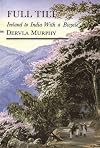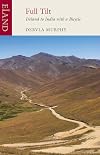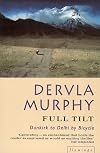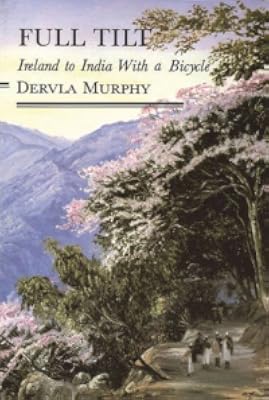
Full Tilt: Ireland to India with a Bicycle
by Dervla Murphy
On This Page
Description
Full Tilt is the inspiring true story of Dervla Murphy's 1963 journey from Ireland to India on an Armstrong Cadet bicycle and the trials, landscapes and cultures she encountered along the way. The route takes her through the valleys and snowy mountain passes of Europe and India to the scorching deserts of Afghanistan and Pakistan, where the metal of her bicycle, Rozinante (named after Don Quixote's steed), becomes too hot to touch. She travels alone, without luxuries, sleeping on the floors show more of teahouses or on blankets outdoors, vulnerable to wild animals, insects and thieves. However, she is often met with generosity and kindness, and shares many meaningful encounters with the locals. Her portrayal here gives a fascinating insight into the unique communities of the Middle East in the early 1960s. show lessTags
Recommendations
















Member Reviews
It's always fun following Dervla the dervish on her madcap adventures and being vicariously devoured by lice, vicariously put up by peasants and potentates, breaking vicarious bones and eating nothing but vicarious eggs and mulberries for days on end. But what struck me reading this, her debut adventure, after three of her later ones, is that she seems to have been fully-formed Dervla from day one. There's no evolution in her style or, seemingly, in her person between this 1963 trip around Afghanistan and northern Pakistan and her 1977 exploration (now with her young daughter) of Baltistan in the same neck of the woods, and the rigours of age and accumulated hardships are only barely discernible in her trips to Cameroon and Transylvania show more in the early 90's. Her interests and preoccupations (anti-globalist, skeptical of Western do-gooding, etc.); her style of travel (pragmatism, unquenchable optimism, and masochism bordering on martyrdom); her writing style (luminous descriptions of people and places with scrupulous eschewal of cliché and pretension): all this is incredibly consistent over time. I'm not complaining, it just seems odd. But she was a wonderfully odd person. show less
Full tilt was Dervla Murphy's first book to be published. It describes her journey to India in January to July 1963, equipped with little more than the most uncomplicated bicycle she could find, a change of underwear, a toothbrush and a revolver. The title is slightly misleading, as we are told very little about the journey from Ireland to Turkey: this part, including the famous contretemps with the pack of wolves is covered in the first ten pages or so, and she only really starts to describe the journey in detail from the Iranian frontier onwards.
In effect almost all the book is about her time in Afghanistan and Pakistan, the two countries that she particularly enjoys. Iran and India have their good points too, but for Murphy they're show more not a patch on their neighbours. There's probably something of a Thesiger-like element of romanticising tough, masculine cultures about that preference. On her own website, there's a quote from the New York Times describing her ‘indomitable will … and almost Monty Python-like stiff upper lip’ (both amply demonstrated in this book) — very possibly only someone used to nomadic life in the Himalayas could match up to her standards of toughness. But she clearly also finds contact with local people an extremely important part of travelling, and that is something that works particularly well for her both in Afghanistan and Pakistan. In remote areas the local people welcome her into their homes on equal terms, probably responding to the simplicity of her travelling style; in the cities she charms her way into the homes of the upper classes. People in India and Iran don't quite respond to her in the same straightforward "man to man" way (although the book ends before she's really had a chance to get a feel for India).
Something that struck me about Murphy's approach is that she notices farmwork and always tells us in a very straightforward way about what people are doing in the fields, what the crops look like, what condition the animals are in. It's never presented as picturesque background activity, but she always talks about it as though she understands how these things fit into the way the local people make their living. And when she doesn't understand why they are doing something, she evidently takes the trouble to ask about it. Probably this has something to do with her background in rural Ireland, but it made me wonder whether it struck me particularly because so many other travel writers are urbanites for whom a sheep is a sheep?
The style and construction feel a bit rough around the edges, ranging unpredictably between raw farce, lyrical descriptive passages, thoughtful analysis and gritty adventure, in a way that seems to go very well with Murphy's evidently rather forceful and eccentric personality, and her tendency to do things she would definitely be advised against if she were so foolish as to ask for advice before doing them. She comes across as someone who travels for her own satisfaction and writes about it because she wants to share the pleasure she takes in what she experiences: I'll definitely be looking out for some more of her work (she's written some twenty books in the last fifty years, so I don't know how I managed to overlook her for so long). show less
In effect almost all the book is about her time in Afghanistan and Pakistan, the two countries that she particularly enjoys. Iran and India have their good points too, but for Murphy they're show more not a patch on their neighbours. There's probably something of a Thesiger-like element of romanticising tough, masculine cultures about that preference. On her own website, there's a quote from the New York Times describing her ‘indomitable will … and almost Monty Python-like stiff upper lip’ (both amply demonstrated in this book) — very possibly only someone used to nomadic life in the Himalayas could match up to her standards of toughness. But she clearly also finds contact with local people an extremely important part of travelling, and that is something that works particularly well for her both in Afghanistan and Pakistan. In remote areas the local people welcome her into their homes on equal terms, probably responding to the simplicity of her travelling style; in the cities she charms her way into the homes of the upper classes. People in India and Iran don't quite respond to her in the same straightforward "man to man" way (although the book ends before she's really had a chance to get a feel for India).
Something that struck me about Murphy's approach is that she notices farmwork and always tells us in a very straightforward way about what people are doing in the fields, what the crops look like, what condition the animals are in. It's never presented as picturesque background activity, but she always talks about it as though she understands how these things fit into the way the local people make their living. And when she doesn't understand why they are doing something, she evidently takes the trouble to ask about it. Probably this has something to do with her background in rural Ireland, but it made me wonder whether it struck me particularly because so many other travel writers are urbanites for whom a sheep is a sheep?
The style and construction feel a bit rough around the edges, ranging unpredictably between raw farce, lyrical descriptive passages, thoughtful analysis and gritty adventure, in a way that seems to go very well with Murphy's evidently rather forceful and eccentric personality, and her tendency to do things she would definitely be advised against if she were so foolish as to ask for advice before doing them. She comes across as someone who travels for her own satisfaction and writes about it because she wants to share the pleasure she takes in what she experiences: I'll definitely be looking out for some more of her work (she's written some twenty books in the last fifty years, so I don't know how I managed to overlook her for so long). show less
This intrepid cyclists trip from her home country to India completed in the early 60s (1963). One cannot help but feel a deep sense of ennui while reading some of the passages especially her observations in Afghanistan. Here is one about Herat "This is a city of absolute enchantment in the literal sense of the world. Herat is as old as history and as moving as a great epic poem". I am sure it certainly will not evoke such sentiments today after the total devstation of the Soviets and it's destruction by the mujahedeen.
On Kabul. "Kabul, though so much of it has been recently rebuilt is an attractive little city.... Beyond a doubt today's run up the Ghorbhand valley was the most beautiful cycle-ride of my life. Surely this must have been show more the garden of eden ... High hills look down on paddy-fields and vivid patches of young wheat and neat vine-yards; on orchards of apricot, peach, almond, apple and cherry trees smothered in blossom...".
All of this beauty and wonder now vanished after the Soviets, Mujahedeen and Taliban have succeeded in bombing this ancient and beautiful land back to the stone age.
Did I mention that she is extremely funny, several passages put me in stitches. One complain I have, out of a total of about 230 pages, less than 10 are devoted to India. Was expecting to read a more extended description of the country in the 60s. show less
On Kabul. "Kabul, though so much of it has been recently rebuilt is an attractive little city.... Beyond a doubt today's run up the Ghorbhand valley was the most beautiful cycle-ride of my life. Surely this must have been show more the garden of eden ... High hills look down on paddy-fields and vivid patches of young wheat and neat vine-yards; on orchards of apricot, peach, almond, apple and cherry trees smothered in blossom...".
All of this beauty and wonder now vanished after the Soviets, Mujahedeen and Taliban have succeeded in bombing this ancient and beautiful land back to the stone age.
Did I mention that she is extremely funny, several passages put me in stitches. One complain I have, out of a total of about 230 pages, less than 10 are devoted to India. Was expecting to read a more extended description of the country in the 60s. show less
This book begins as matter-of-factly as it ends: with Dervla Murphy announcing that—since it was her childhood ambition to ride a bicycle from her home in Ireland, to India—January of 1963 seemed as good a time as any to cross that item off her “To Do” list.
And so off she goes—totally alone—with nothing like the kit that a long-distance cyclist might carry now, on a bicycle that many of us would not consider sturdy enough for a jaunt to the Post Office and back.
The career of Travel Writer is an unusual one: since so much of it involves “ruining”. After all, the headline “The Ten Unspoiled Beaches of Anywhere” means that those beaches won’t be unspoiled too much longer. The job, most of the time, is giving show more directions to the Garden of Eden so a sweaty mob can hurry on down to Paradise and destroy it.
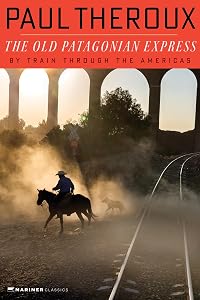
The travel writers I tend to prefer are those who “board in dread”: believing that staying home would be so much better than going away. Paul Theroux is the classic example of this Reluctant Tourist: in book after book seeming to suggest that seeing distant places is fundamentally torture, mixed with episodes of simple misery.
So, of course, I enjoyed this example of an amazing traveler, seeing amazing sights, having amazing adventures, because—much of the time—she’s enduring amazing hardship with the kind of “well...you know...shit happens” style of pluck and gumption that gets almost comical after reading awhile.
To begin with, one of the elements that makes this book so thought-provoking is the fact (and it is a Fact) that—a little over forty years later—this journey could not be replicated...by anyone.
The most optimistic, forceful, and pious Muslim woman could never ride a bicycle, unveiled and unaccompanied, along this route: Ireland, across Europe, to Tehran—all the way across Iran—all the way across Afghanistan—across the northern reach of Pakistan—and into India.
The politics in the region have changed so much, and so many new battlefields have opened new wounds that now a woman just attempting the transit could expect no happy ending—and could only hope that her very dire end would be private. Not uploaded to social media so that her family, her friends, and people who knew her as a child would not be appalled by her blood-drenched end.
In the happier (and certainly more innocent) world of 1963, Dervla Murphy has her troubles. Food is frequently scarce—and monotonous when abundant. Drinkable water is often a problem. Roads appear, here and there, but much of her route is unimproved. The people are dirty and smelly, and sometimes she’s sleeping on the floor in a corner. The route takes her through glaciers, and days when the metal of bicycle is too hot to touch.
But all of it is just “foreign”—none of it is “lethal”—and, again and again, she demonstrates a rare gift of meeting people more than halfway: inspiring them to assist her, to collect simple gifts, and attract the kind of good will that allows her to continue.
This book is, in a sense, one person’s “moon landing”.
With a working bicycle, a few changes of clothes, and a few pounds of English money in her pocket, Dervla Murphy makes a journey that no one might ever duplicate in its logistical details—and absolutely no one will ever make again in its sense of visiting parts of the world before they became famous as military and ideological battlefields.
Our traveler, in this case, just rode through—hoping for the best. On a lot of days, “the best” didn’t happen. But what often did happen was “very good”.
Highly recommended for anyone who admires a story of high adventure presented without photographs, with some pert comments, and a modest kind of shrug. This book begins as matter-of-factly as it ends: with Dervla Murphy announcing that—since it was her childhood ambition to ride a bicycle from her home in Ireland, to India—January of 1963 seemed as good a time as any to cross that item off her “To Do” list.
And so off she goes—totally alone—with nothing like the kit that a long-distance cyclist might carry now, on a bicycle that many of us would not consider sturdy enough for a jaunt to the Post Office and back.
The career of Travel Writer is an unusual one: since so much of it involves “ruining”. After all, the headline “The Ten Unspoiled Beaches of Anywhere” means that those beaches won’t be unspoiled too much longer. The job, most of the time, is giving directions to the Garden of Eden so a sweaty mob can hurry on down to Paradise and destroy it.
The travel writers I tend to prefer are those who “board in dread”: believing that staying home would be so much better than going away. Paul Theroux is the classic example of this Reluctant Tourist: in book after book seeming to suggest that seeing distant places is fundamentally torture, mixed with episodes of simple misery.
So, of course, I enjoyed this example of an amazing traveler, seeing amazing sights, having amazing adventures, because—much of the time—she’s enduring amazing hardship with the kind of “well...you know...shit happens” style of pluck and gumption that gets almost comical after reading awhile.
To begin with, one of the elements that makes this book so thought-provoking is the fact (and it is a Fact) that—a little over forty years later—this journey could not be replicated...by anyone.
The most optimistic, forceful, and pious Muslim woman could never ride a bicycle, unveiled and unaccompanied, along this route: Ireland, across Europe, to Tehran—all the way across Iran—all the way across Afghanistan—across the northern reach of Pakistan—and into India.
The politics in the region have changed so much, and so many new battlefields have opened new wounds that now a woman just attempting the transit could expect no happy ending—and could only hope that her very dire end would be private. Not uploaded to social media so that her family, her friends, and people who knew her as a child would not be appalled by her blood-drenched end.
In the happier (and certainly more innocent) world of 1963, Dervla Murphy has her troubles. Food is frequently scarce—and monotonous when abundant. Drinkable water is often a problem. Roads appear, here and there, but much of her route is unimproved. The people are dirty and smelly, and sometimes she’s sleeping on the floor in a corner. The route takes her through glaciers, and days when the metal of bicycle is too hot to touch.
But all of it is just “foreign”—none of it is “lethal”—and, again and again, she demonstrates a rare gift of meeting people more than halfway: inspiring them to assist her, to collect simple gifts, and attract the kind of good will that allows her to continue.
This book is, in a sense, one person’s “moon landing”.
With a working bicycle, a few changes of clothes, and a few pounds of English money in her pocket, Dervla Murphy makes a journey that no one might ever duplicate in its logistical details—and absolutely no one will ever make again in its sense of visiting parts of the world before they became famous as military and ideological battlefields.
Our traveler, in this case, just rode through—hoping for the best. On a lot of days, “the best” didn’t happen. But what often did happen was “very good”.
Highly recommended for anyone who admires a story of high adventure presented without photographs, with some pert comments, and a modest kind of shrug. show less
And so off she goes—totally alone—with nothing like the kit that a long-distance cyclist might carry now, on a bicycle that many of us would not consider sturdy enough for a jaunt to the Post Office and back.
The career of Travel Writer is an unusual one: since so much of it involves “ruining”. After all, the headline “The Ten Unspoiled Beaches of Anywhere” means that those beaches won’t be unspoiled too much longer. The job, most of the time, is giving show more directions to the Garden of Eden so a sweaty mob can hurry on down to Paradise and destroy it.
The travel writers I tend to prefer are those who “board in dread”: believing that staying home would be so much better than going away. Paul Theroux is the classic example of this Reluctant Tourist: in book after book seeming to suggest that seeing distant places is fundamentally torture, mixed with episodes of simple misery.
So, of course, I enjoyed this example of an amazing traveler, seeing amazing sights, having amazing adventures, because—much of the time—she’s enduring amazing hardship with the kind of “well...you know...shit happens” style of pluck and gumption that gets almost comical after reading awhile.
To begin with, one of the elements that makes this book so thought-provoking is the fact (and it is a Fact) that—a little over forty years later—this journey could not be replicated...by anyone.
The most optimistic, forceful, and pious Muslim woman could never ride a bicycle, unveiled and unaccompanied, along this route: Ireland, across Europe, to Tehran—all the way across Iran—all the way across Afghanistan—across the northern reach of Pakistan—and into India.
The politics in the region have changed so much, and so many new battlefields have opened new wounds that now a woman just attempting the transit could expect no happy ending—and could only hope that her very dire end would be private. Not uploaded to social media so that her family, her friends, and people who knew her as a child would not be appalled by her blood-drenched end.
In the happier (and certainly more innocent) world of 1963, Dervla Murphy has her troubles. Food is frequently scarce—and monotonous when abundant. Drinkable water is often a problem. Roads appear, here and there, but much of her route is unimproved. The people are dirty and smelly, and sometimes she’s sleeping on the floor in a corner. The route takes her through glaciers, and days when the metal of bicycle is too hot to touch.
But all of it is just “foreign”—none of it is “lethal”—and, again and again, she demonstrates a rare gift of meeting people more than halfway: inspiring them to assist her, to collect simple gifts, and attract the kind of good will that allows her to continue.
This book is, in a sense, one person’s “moon landing”.
With a working bicycle, a few changes of clothes, and a few pounds of English money in her pocket, Dervla Murphy makes a journey that no one might ever duplicate in its logistical details—and absolutely no one will ever make again in its sense of visiting parts of the world before they became famous as military and ideological battlefields.
Our traveler, in this case, just rode through—hoping for the best. On a lot of days, “the best” didn’t happen. But what often did happen was “very good”.
Highly recommended for anyone who admires a story of high adventure presented without photographs, with some pert comments, and a modest kind of shrug. This book begins as matter-of-factly as it ends: with Dervla Murphy announcing that—since it was her childhood ambition to ride a bicycle from her home in Ireland, to India—January of 1963 seemed as good a time as any to cross that item off her “To Do” list.
And so off she goes—totally alone—with nothing like the kit that a long-distance cyclist might carry now, on a bicycle that many of us would not consider sturdy enough for a jaunt to the Post Office and back.
The career of Travel Writer is an unusual one: since so much of it involves “ruining”. After all, the headline “The Ten Unspoiled Beaches of Anywhere” means that those beaches won’t be unspoiled too much longer. The job, most of the time, is giving directions to the Garden of Eden so a sweaty mob can hurry on down to Paradise and destroy it.
The travel writers I tend to prefer are those who “board in dread”: believing that staying home would be so much better than going away. Paul Theroux is the classic example of this Reluctant Tourist: in book after book seeming to suggest that seeing distant places is fundamentally torture, mixed with episodes of simple misery.
So, of course, I enjoyed this example of an amazing traveler, seeing amazing sights, having amazing adventures, because—much of the time—she’s enduring amazing hardship with the kind of “well...you know...shit happens” style of pluck and gumption that gets almost comical after reading awhile.
To begin with, one of the elements that makes this book so thought-provoking is the fact (and it is a Fact) that—a little over forty years later—this journey could not be replicated...by anyone.
The most optimistic, forceful, and pious Muslim woman could never ride a bicycle, unveiled and unaccompanied, along this route: Ireland, across Europe, to Tehran—all the way across Iran—all the way across Afghanistan—across the northern reach of Pakistan—and into India.
The politics in the region have changed so much, and so many new battlefields have opened new wounds that now a woman just attempting the transit could expect no happy ending—and could only hope that her very dire end would be private. Not uploaded to social media so that her family, her friends, and people who knew her as a child would not be appalled by her blood-drenched end.
In the happier (and certainly more innocent) world of 1963, Dervla Murphy has her troubles. Food is frequently scarce—and monotonous when abundant. Drinkable water is often a problem. Roads appear, here and there, but much of her route is unimproved. The people are dirty and smelly, and sometimes she’s sleeping on the floor in a corner. The route takes her through glaciers, and days when the metal of bicycle is too hot to touch.
But all of it is just “foreign”—none of it is “lethal”—and, again and again, she demonstrates a rare gift of meeting people more than halfway: inspiring them to assist her, to collect simple gifts, and attract the kind of good will that allows her to continue.
This book is, in a sense, one person’s “moon landing”.
With a working bicycle, a few changes of clothes, and a few pounds of English money in her pocket, Dervla Murphy makes a journey that no one might ever duplicate in its logistical details—and absolutely no one will ever make again in its sense of visiting parts of the world before they became famous as military and ideological battlefields.
Our traveler, in this case, just rode through—hoping for the best. On a lot of days, “the best” didn’t happen. But what often did happen was “very good”.
Highly recommended for anyone who admires a story of high adventure presented without photographs, with some pert comments, and a modest kind of shrug. show less
The highlights of this travelogue are undoubtedly Afghanistan and Pakistan. Readers who aren't acquainted (through her many later books) with Dervla Murphy's hard drinking, hard riding lifestyle might find this story a bit of a muddle. Take into account that this is essentially a first work by someone who travels in order to travel, rather than to write a comfortable book about travelling, and you might find her occasionally awkward or dry style less jarring. Unlike many who do something extraordinary and then write a passable book about it, Dervla Murphy then spends the rest of her life in (seemingly) constant motion, cycling and drinking her way across continents with as much aplomb as you or I'd go down to the shops. And yes, her show more writing style became smoother, and her insights into local cultures and issues very sharp indeed. What shines through in this early narrative though, and which is common to all of her work, is her fearless attitude and tremendous empathy for the people and cultures she travels through, and in many cases becomes a guest to. It is true that Dervla's insights may be at times naive, and certainly not informed by a university degree in political science or anthropology. But for just those same reasons, her commentary on tribal and village life in Afghanistan and Pakistan have considerable charm and value as an 'authentic' record.
Few writers wrote so well about travelling in this area in 1963, the only comparable journeying - to my knowledge - was by the Australian Peter Pinney who recorded 15 years of travel through Europe, Asia, Africa and the Americas in a series of books published in the 1950's and 1960's. Almost any of Dervla's books are recommended, but this is one of the best to start with. Highly recommended for anyone with an interest in 'rough' travel, or seeking insights into the people of Afghanistan or Pakistan. show less
Few writers wrote so well about travelling in this area in 1963, the only comparable journeying - to my knowledge - was by the Australian Peter Pinney who recorded 15 years of travel through Europe, Asia, Africa and the Americas in a series of books published in the 1950's and 1960's. Almost any of Dervla's books are recommended, but this is one of the best to start with. Highly recommended for anyone with an interest in 'rough' travel, or seeking insights into the people of Afghanistan or Pakistan. show less
This was much better than I expected going in and if you take more time than I gave it you would probably find it has a surprising amount to say.
In 1963, Dervla Murphy traveled from Ireland to India by bicycle – in fact, the writer and the painter from The Way of the World (see Bouvier) are briefly mentioned in her book “Full Tilt” (1965), in which she describes her journey, quickly through Europe, Turkey and Iran, and it much more detail afterwards. The book is fascinating for the insight it provides in the countries she traveled through in those days, quite different from what I suppose it is now. Funny enough, she is not that impressed by the Iranians - Persians, in her vocabulary, which is what they were, of course, back then. Persia is full of ‘physical dirt and moral corruption’, as she puts it, although she does recognize the elegance and dignity of some of the show more people. Perhaps she didn’t see take enough time; she cycled from Tabriz via Teheran and Meshid to Herat in Afghanistan in some 30 days. Or perhaps she just had some bad experiences, with over-attentive policemen and male guests of an inn she stayed in, which coloured her judgement. Which does in no way diminish the achievement, both the physical journey and the entertaining write-up. show less
Members
- Recently Added By
Lists

Best of Travel Narratives
142 works; 28 members
Adventure Travel & Exploration In Asia
31 works; 8 members

Non-Fiction Worth Reading
1,015 works; 255 members

Unshelved Book Clubs
579 works; 5 members

Read These Too
458 works; 9 members

Best cycling books (novels and narrative non-fiction)
15 works; 2 members

Club Read's Recommended Nonfiction Written by Women
618 works; 30 members
Author Information

Some Editions
Awards and Honors
Notable Lists
Common Knowledge
- Original publication date
- 1965
- People/Characters
- Roz
- Epigraph
- For my part I travel not to go anywhere, but to go. I travel for travel's sake. The great affair is to move, to feel the needs and hitches of our life more nearly, to come down off the feather-bed of civilization and find the... (show all) globe granite underfoot and strewn with cutting flints.
Robert Louis Stevenson - Dedication
- To the peoples of Afghanistan and Pakistan
with gratitude for their hospitality
with admiration for their principles and
with affection for those who befriended me - First words
- On my tenth birthday a bicycle and an atlas coincided as presents and a few days later I decided to cycle to India.
- Last words
- (Click to show. Warning: May contain spoilers.)So tomorrow, with Mrs Haddow's help, I shall look for some form of voluntary work here in India to keep me happy until Roz and I can get going again.
Classifications
Statistics
- Members
- 603
- Popularity
- 48,419
- Reviews
- 17
- Rating
- (3.88)
- Languages
- English, Estonian, German, Spanish
- Media
- Paper, Audiobook, Ebook
- ISBNs
- 21
- ASINs
- 7