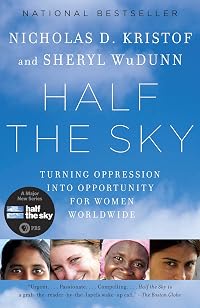
Half the Sky: Turning Oppression into Opportunity for Women Worldwide
by Nicholas D. Kristof, Sheryl WuDunn
On This Page
Description
Two Pulitzer Prize winners issue a call to arms against our era's most pervasive human rights violation: the oppression of women in the developing world. They show that a little help can transform the lives of women and girls abroad and that the key to economic progress lies in unleashing women's potential.Tags
Recommendations
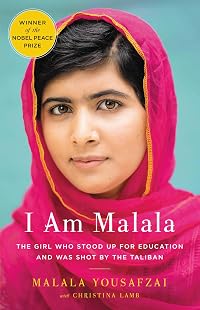
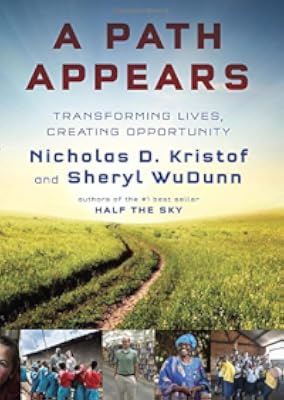
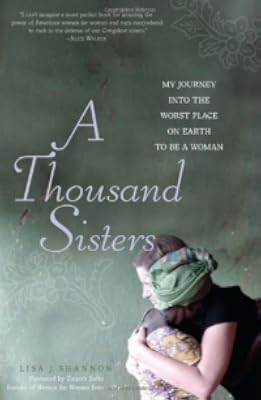

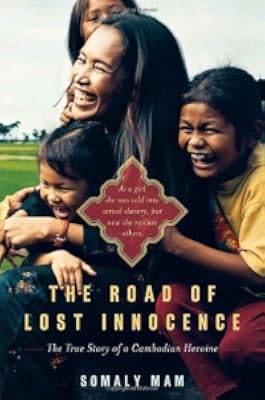

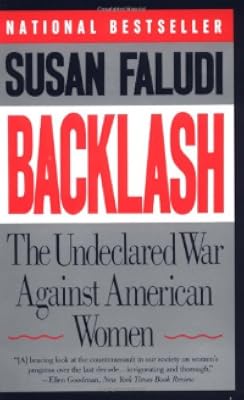
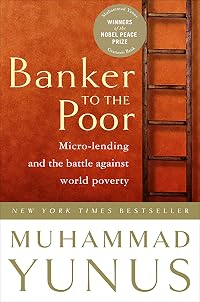
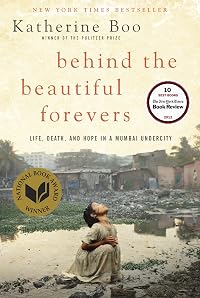
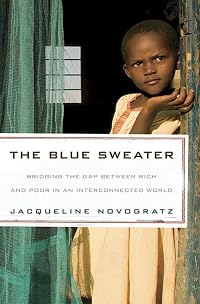
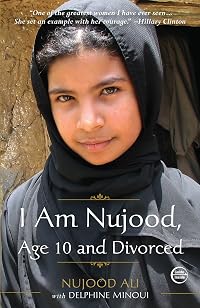
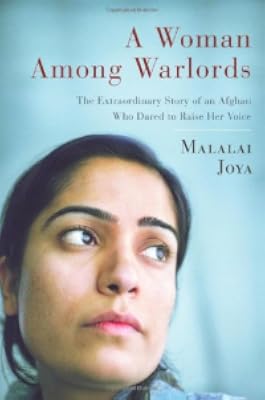
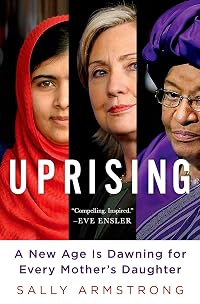







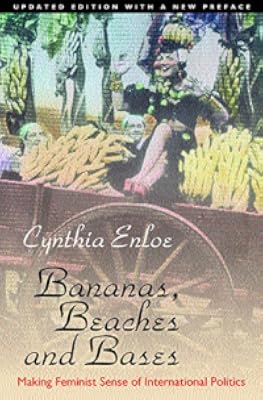
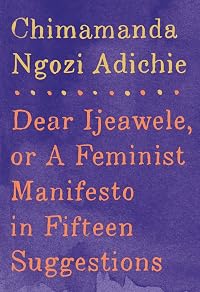
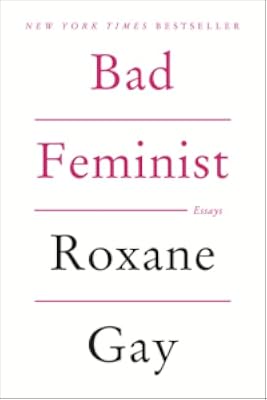
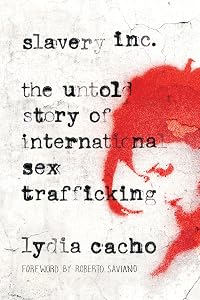
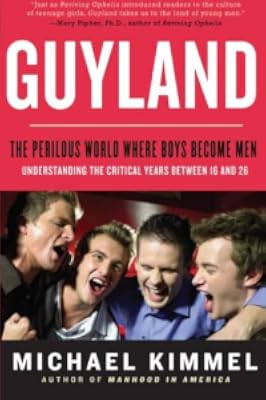

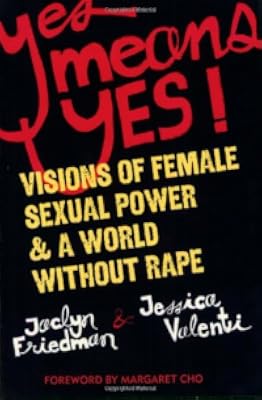
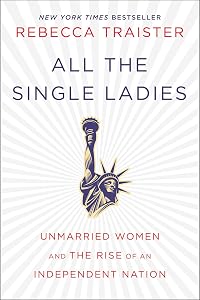

Member Recommendations
Member Reviews
This book was AMAZING and every single adult should read it. Even though I knew of most of the topics in this book about the plight of women worldwide, the book added so much depth to my knowledge and understanding. The authors use both personal interviews and a broader assessment of what aid is necessary to combat different women's issues. They also--and this is key--assess what is working, what is likely to be successful in the future, and what is NOT working. The book demonstrates that there is not one cause but multiple causes, and there is not one solution, but many different solutions, to issues affecting women. The authors are also pragmatic. They illustrate that some aid really isn't that effective, and they know that money show more isn't going to solve it all. They directly confront the feeling of "it's such a big problem, what can I do"? I think the authors are especially good at addressing the thornier moral issues involved. They address the issue of cultural sensitivity to these complex, deep-rooted women's issues that have been part of some cultures for thousands of years. Is it culturally respectful to barge in and demand change? Maybe not, but is it any better to stand by and let women be gang-raped as a means of winning a war? Is it okay to watch as women are sold like chattel and forced into sexual slavery at the ripe old age of ten, rather than appear culturally insensitive?While the book is disturbing and heartbreaking on many levels, it also manages the extremely difficult task of being hopeful and inspiring. I especially appreciated the many practical suggestions of what we can do right now to help. Unlike the crummy Three Cups of Tea book, this book actually did leave me feeling fired up to do something, and I'm going to. I'm already planning it. Please, everyone, read this book!! show less
“…more girls have been killed in the last fifty years, precisely because they were girls, than men were killed in all the wars of the twentieth century. More girls are killed in this routine ‘gendercide’ in any one decade than people were slaughtered in all the genocides of the twentieth century.”
Sex trafficking, forced prostitution, honor killings, rape and not giving girls the same medical attention and treatments as boys are given are all reasons for the above. “Every year, at least another 2 million girls worldwide disappear because of gender discrimination.” And barely any of this makes the ’news’. Horrific. The firsthand accounts of the cruelty and abuse suffered by women made my stomach turn. And ache. Reading show more about a world in which a girl's virginity is more important than her life, was just unfathomable. But it happens. And is happening.
“…far more women and girls are shipped into brothels each year in the early twenty-first century than African slaves were shipped into slave plantations each year in the eighteenth or nineteenth centuries…”
"Women hold up half the sky." - Chinese proverb show less
Sex trafficking, forced prostitution, honor killings, rape and not giving girls the same medical attention and treatments as boys are given are all reasons for the above. “Every year, at least another 2 million girls worldwide disappear because of gender discrimination.” And barely any of this makes the ’news’. Horrific. The firsthand accounts of the cruelty and abuse suffered by women made my stomach turn. And ache. Reading show more about a world in which a girl's virginity is more important than her life, was just unfathomable. But it happens. And is happening.
“…far more women and girls are shipped into brothels each year in the early twenty-first century than African slaves were shipped into slave plantations each year in the eighteenth or nineteenth centuries…”
"Women hold up half the sky." - Chinese proverb show less
Half the Sky : Turning Oppression into opportunity for Women Worldwide – Kristof/Wudunn
4 stars
“In the nineteenth century, the central moral challenge was slavery. In the Twentieth century, it was the battle against totalitarianism. We believe that in this century the paramount moral challenge will be the struggle for gender equality around the world.”
This is the authors’ stated opinion in the introduction of their meticulously researched book, Half the Sky. They go on to propose workable solutions to three appalling abuses facing women worldwide: sex trafficking and forced prostitution, gender-based violence and maternal mortality. Their solutions include girl’s education and micro finance which they show to have a proven show more track record.
This book was both easy and difficult to read. Statistics and policy discussions are interspersed with inspiring personal stories of women who overcome unimaginable difficulties to achieve for themselves and others. The stories of abuse and deprivation were enough to keep me awake at night and more than once had me in tears.
Although the authors make no secret of their liberal political views, they make a point of giving credit to any interventions that have a provable success rate. They give examples of more than one instance where their own beliefs were changed by careful consideration of the facts. For example: “Conservatives who have presumed that the key to preventing AIDS is abstinence-only education, and liberals who have focused on distribution of condoms, should both note that the intervention that has tested most cost-effective in Africa is neither.” And in a later discussion, "Religious conservatives…. have also saved lives in vast numbers by underwriting and operating clinics in some of the neediest parts of Africa and Asia…….All told some 25% of AIDS care worldwide is provided by church related groups.” They emphasize the need for controlled studies of any intervention to measure effectiveness without regard for personal beliefs or political correctness.
“If there is to be a successful movement on behalf of women in poor countries, it will have to bridge the God Gulf. Secular bleeding hearts and religious bleeding hearts will have to forge a common cause. That’s what happened two centuries ago in the abolitionist movement, when liberal deists and conservative evangelicals joined forces to overthrow slavery. And it’s the only way to muster the political will to get the now-invisible women onto the international agenda.”
They compare today’s battle with the abolitionist movement in the 19th century. They point out that Britain began the first onslaught to the institution of slavery by banning the slave trade in 1807 and becoming the first country to abolish slavery in 1833. They make a point of noting that taking this moral high road cost Great Britain both in lives and economic growth. Change doesn’t come without a price. The book ends with specific suggestions for macro government support and resources for ways in which individuals can make contributions to the cause. show less
Probably the most important book I will read this year. This is a call to action couched in a series of narratives that are passionate, disturbing, engrossing, and ultimately inspiring. It is difficult to read at times, though the gruesome details about rape, honor killings, prostitution, maternal morbidity and other violence done to women do serve the higher purpose of explaining the importance of these issues.
Sometimes the authors seem to have simplified things in order to present clear cases for one solution or another, and I do take issue with their promotion of industrialization as a solution to women's poverty, which needs some rethinking in the wake of Bangladesh's deadly sweatshop fire in 2012. They also -- for perfectly valid show more reasons --concentrate on the developing world, to the extent of minimizing any similar problems in the U.S. and Europe (which admittedly are not of the same scale, and are generally not condoned by an entire nation's culture or government). Their overall argument, however, is so compelling that I'm going to go set up an account on Kiva so I can channel my new knowledge into loans to people who need them. show less
Sometimes the authors seem to have simplified things in order to present clear cases for one solution or another, and I do take issue with their promotion of industrialization as a solution to women's poverty, which needs some rethinking in the wake of Bangladesh's deadly sweatshop fire in 2012. They also -- for perfectly valid show more reasons --concentrate on the developing world, to the extent of minimizing any similar problems in the U.S. and Europe (which admittedly are not of the same scale, and are generally not condoned by an entire nation's culture or government). Their overall argument, however, is so compelling that I'm going to go set up an account on Kiva so I can channel my new knowledge into loans to people who need them. show less
How could I not have known about this book until just recently? I don’t know when I’ve read a book that has made more of an impact on me. Admittedly, I read mainly fiction, but read of this book on the Kiva.org web site. I reserved it at the library and no sooner than reading a couple of chapters, I knew I had to purchase this book.
Probably the most impressive thing about this book is although it brings out very graphically the horrendously oppressive conditions that hundreds of millions of women and girls suffer with on a daily basis, it also has many relatively simple and doable solutions.
The first part of the book is filled with actually individual cases the authors found in their travels throughout many third world countries. show more Heart-wrenching stories of very young girls sold by their families, forced into prostitution and not having a shred of hope for a better life.
You’ll read things in this book that will make you tremendously angry, perhaps bring some tears but the optimistic solution is never too far behind.
We in developed countries take for granted that childbirth is relatively safe in this day and age but that is not the case in many many countries. Mothers and infants dying are everyday occurances in many places and millions of women who are going through their whole lives, through many births and have never, ever seen a doctor. Very young girls suffering horrendous injuries from unattending births.
The end of the book has a chapter called “What You Can Do” and “Four Steps You Can Take in the Next Ten Minutes”. To say this book is an eye-opener, inspirational, a call-to-arms is simply not strong enough. It needs to be read by everyone, period. show less
Probably the most impressive thing about this book is although it brings out very graphically the horrendously oppressive conditions that hundreds of millions of women and girls suffer with on a daily basis, it also has many relatively simple and doable solutions.
The first part of the book is filled with actually individual cases the authors found in their travels throughout many third world countries. show more Heart-wrenching stories of very young girls sold by their families, forced into prostitution and not having a shred of hope for a better life.
You’ll read things in this book that will make you tremendously angry, perhaps bring some tears but the optimistic solution is never too far behind.
We in developed countries take for granted that childbirth is relatively safe in this day and age but that is not the case in many many countries. Mothers and infants dying are everyday occurances in many places and millions of women who are going through their whole lives, through many births and have never, ever seen a doctor. Very young girls suffering horrendous injuries from unattending births.
The end of the book has a chapter called “What You Can Do” and “Four Steps You Can Take in the Next Ten Minutes”. To say this book is an eye-opener, inspirational, a call-to-arms is simply not strong enough. It needs to be read by everyone, period. show less
I was pleasantly surprised by this book in that it provided more critical analysis than I anticipated. Not only does the book have personal anecdotes that illustrate the issues affecting women around the word, it includes both successes and failures and a healthy amount of skepticism about outsider "assistance." Recommendations include the need to include men in solutions, which is vital to long term human success.
Rape, maternal mortality, sex trafficking, genital cutting, honor killings . . . this is not an easy book to read. The authors open the reader's eyes to the abysmal treatment of women in countries in Africa, the Middle East, and Asia through personal stories of women who've been horribly abused but manage to come through it all and help others in the process. Even though many of the stories are uplifting, I still was really down the whole time I was reading this. It just all seems so hopeless in a lot of ways. The authors spend a lot of time analyzing what kind of charities are actually working and what aren't (a lot of them aren't!) and they end the book by giving you concrete ideas to help.
I think their most important idea is that to show more make a difference you have to be there. They are big proponents of traveling abroad to aid charities, especially during college which I agree is a fantastic idea. Also, the charities that seem to make the most difference are those started and run by local women with financing help from westerners.
This is a very hard book to read, but I think it's an important one. show less
I think their most important idea is that to show more make a difference you have to be there. They are big proponents of traveling abroad to aid charities, especially during college which I agree is a fantastic idea. Also, the charities that seem to make the most difference are those started and run by local women with financing help from westerners.
This is a very hard book to read, but I think it's an important one. show less
Members
- Recently Added By
Published Reviews
ThingScore 88
It is a testament to their skills as writers and reporters that they've managed to write this call to action without having to raise their voices. The facts, as they learned long ago in China, speak loudly enough.
added by Shortride
Half the Sky manages to be inspiring and engrossing rather than numbing.
added by Shortride
An ancient Chinese proverb goes that women hold up half the sky. Nicholas D. Kristof and Sheryl WuDunn want that to be appreciated — on the ground. In the opening pages of this gripping call to conscience, the husband-and-wife team come out swinging: “Gendercide,” the daily slaughter of girls in the developing world, steals more lives in any given decade “than all the genocides of the show more 20th century.” No wonder Kristof and WuDunn, whose coverage of China for The New York Times won them a Pulitzer Prize, declare the global struggle for women’s equality “the paramount moral challenge” of our era. show less
added by jlelliott
Lists

Top Five Books of 2014
1,064 works; 398 members

Non-Fiction Worth Reading
1,016 works; 255 members

Feminism
167 works; 4 members

Office Library
41 works; 1 member
Author Information

6+ Works 4,637 Members
Nicholas D. Kristof shared a Pulitzer Prize with his wife in 1990 for their coverage for the New York Times of the Tiananmen democracy movement in China. He also coauthored China Wakes: The Struggle for the Soul of a Rising Power. Kristof has served as Times bureau chief in Hong Kong, Beijing, and Tokyo. He lives with his wife in New York City. show more (Publisher Provided) Nicholas D. Kristof was born on April 27, 1959 in Chicago Illinois. He graduated from Harvard College in 1981 and then won a Rhodes scholarship to Oxford, where he studied law and graduated with first class honors. He joined The New York Times in 1984, where he has held numerous positions including correspondent, columnist, bureau chief, and Associate Managing Editor. Kristof and his wife, Sheryl WuDunn, won a Pulitzer Prize in 1990 for their coverage of China's Tiananmen Square democracy movement. He won a second Pulitzer Prize in 2006 for commentary on genocide in Darfur. Kristof and WuDunn have written numerous books including A Path Appears: Transforming Lives, Creating Opportunity; Half the Sky: Turning Oppression into Opportunity for Women Worldwide; Thunder from the East: Portrait of a Rising Asia, and China Wakes: The Struggle for the Soul of a Rising Power. (Bowker Author Biography) show less

5 Works 4,583 Members
Some Editions
Awards and Honors
Awards
Distinctions
Work Relationships
Common Knowledge
- Canonical title
- Half the Sky: Turning Oppression into Opportunity for Women Worldwide
- Alternate titles
- Half the Sky
- Original publication date
- 2009-09-08
- Important places
- Kuala Lumpur, Malaysia; Forbesgunge, India; Pailin, Cambodia; Poipet, Cambodia
- Related movies
- Half the Sky (2012 | IMDb)
- Dedication
- For our children: Gregory, Geoffrey, and Caroline. Thanks for your love and patience when research for this book meant grumpy or absent parents and less cheering at your soccer games. You've enriched our journeys through diff... (show all)icult and oppressive countries, and you're wonderful kids to be arrested with!
And for all those on the front lines around the globe, saving the world, one woman at a time. - First words
- Srey Rath is a self-confident Cambodian teenager whose black hair tumbles over a round, light brown face.
The red-light district in the town of Forbesgunge does not actually have any red lights. - Quotations
- "Women hold up half the sky." - Chinese Proverb
What would men be without women? Scarce, sir, mighty scarce.- Mark Twain
Women might just have something to contribute to civilization other than their vaginas. - Christopher Buckley, Florence of Arabia
Although volume upon volume is written to prove slavery a very good thing, we never hear of the man who wishes to take the good of it, by being a slave himself. - Abraham Lincoln
Reasonable people adapt themselves to the world. Unreasonable people attempt to adapt the world to themselves. All progress, therefore, depends on unreasonable people.- George Bernard Shaw
The mechanism of violence is what destroys women, controls women, diminishes women and keeps women in their so- called place.- Eve Ensler (show all 9)
Would the world stand by it it were men who were dying just for completing their reproductive functions?- Asha Rose Migiro UN Deputy Secretary General 2007
Whenever cannibals are on the brink of starvation, Heaven in its infinite mercy, sends them a nice plump missionary.- Oscar Wilde
You must be the change you wish to see in the world. - Mahatma Gandhi - Last words
- (Click to show. Warning: May contain spoilers.)Now let's get on with it and speed up the day when women truly hold up half the sky.
- Blurbers
- Mortenson, Greg; Zakaria, Fareed; Hosseini, Khaled; Rice, Anne; Clooney, George; Jolie, Angelina (show all 7); Brokaw, Tom
Classifications
- Genres
- Sexuality and Gender Studies, General Nonfiction, Politics and Government, Nonfiction
- DDC/MDS
- 362.83091724 — Society, government, & culture Social problems and social services Social Welfare Problems of and services to other groups Women
- LCC
- HQ1236.5 .D44 .K75 — Social sciences The family. Marriage, Women and Sexuality The Family. Marriage. Women Women. Feminism
- BISAC
Statistics
- Members
- 3,118
- Popularity
- 5,654
- Reviews
- 90
- Rating
- (4.28)
- Languages
- 8 — Chinese, English, Finnish, French, German, Portuguese, Spanish, Swedish
- Media
- Paper, Audiobook, Ebook
- ISBNs
- 25
- ASINs
- 19