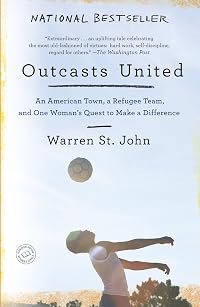
Outcasts United: The Story of a Refugee Soccer Team That Changed a Town
by Warren St. John
On This Page
Description
American-educated Jordanian Luma Mufleh founds a youth soccer team comprised of children from Liberia, Iraq, Afghanistan, and the Balkan states, and elsewhere in the refugee settlement town of Clarkston, Georgia, bringing the children together to discover their common bonds as they adjust to life in a new homeland.Tags
Recommendations
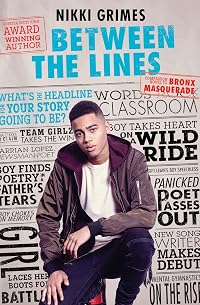
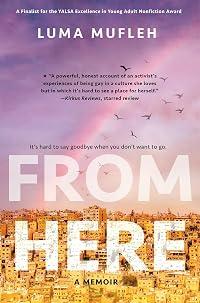
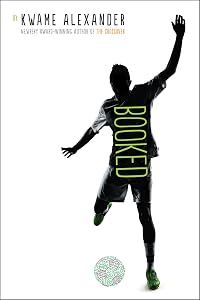
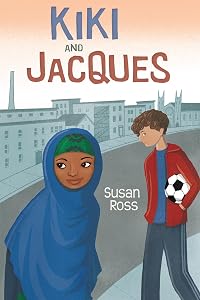
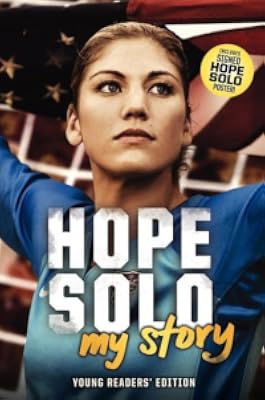
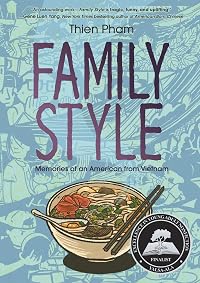
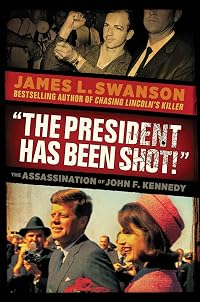
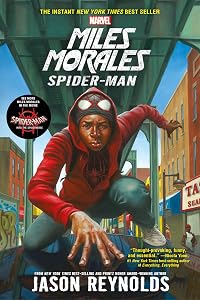
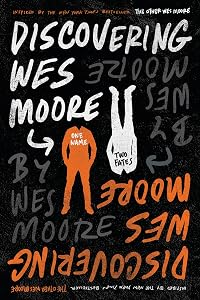


Member Recommendations
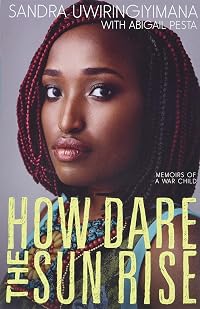
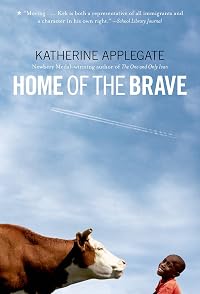
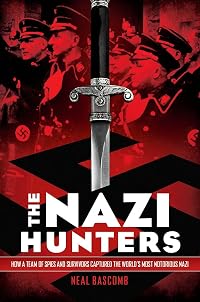
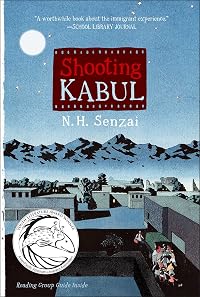
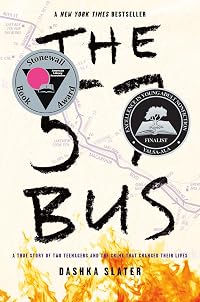
elbakerone Another great book about refugee life in America.
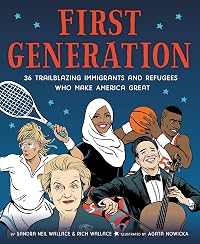
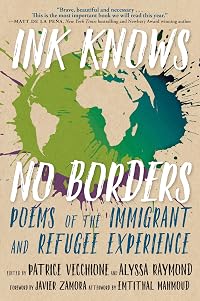
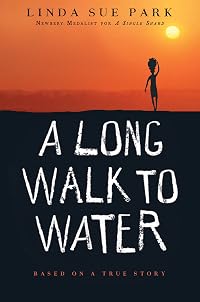
elbakerone Both these books tell powerful and inspirational stories about women making drastic differences in the lives of others.
Member Reviews
…"Give me your tired, your poor,
Your huddled masses yearning to breathe free,
The wretched refuse of your teeming shore.
Send these, the homeless, tempest-tost to me,
I lift my lamp beside the golden door!"
(from "The New Colosus" by Emma Lazarus, written in 1883; engraved on a bronze plaque and mounted inside the Statue of Liberty, 1903.)
Outcasts United: A Refugee Team, an American Town, is the compelling story of a diverse hodge-podge of some of the world's most "tired, poor, tempest-tost" youngsters ever to start new lives in the United States. Relocated from their violence-ruined homelands to a small, quiet suburb of Atlanta, the self-named "Fugees" find unexpected succor in the discipline and dedication of soccer training and show more competition.
Before reading it, I was a little afraid that Outcasts United would be another namby-pamby story of misfits who find society's recognition and peers' appreciation by their performance as a sports team, a là Disney. I am so glad to be wrong!
Author Warren St. John weaves the complicated stories of the refugees, their families, their phenomenal coach, and the town of Clarkston, Georgia into a compelling and thought-provoking narrative. Skillfully backtracking from present day problems of adaptation and assimilation, we are given the harrowing personal stories of the team members and their families.
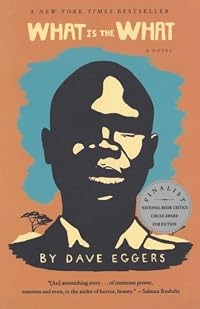
Almost every boy is a survivor of tribal warfare or outright genocide. Their stories are similar to the horrifying accounts in Daoud Hari's The Translator: A Tribesman's Memoir of Darfur and Alphonsion Deng's They Poured Fire on Us from the Sky: The True Story of Three Lost Boys from Sudan and Dave Eggers's What is the What. In Outcasts, the author's journalistic style assembles some very powerful synopses of modern African history and current events. For me, this was one of the most useful and informative parts of the book.
There would have been no Fugees team, and likely no organized soccer at all for the refugees, were it not for the trajectory that brought their incredible coach from Jordan, via Smith College—a woman of Muslim heritage and western education who was determined to create an independent life. Her personal story could be a book in itself. Her dedication and tough love approach to coaching, her perseverance and hard work, her intelligence and humanity, show us that real heroism is made more of hard work than anything else.
Recommended heartily to all readers, but especially to educators and community leaders. show less
Your huddled masses yearning to breathe free,
The wretched refuse of your teeming shore.
Send these, the homeless, tempest-tost to me,
I lift my lamp beside the golden door!"
(from "The New Colosus" by Emma Lazarus, written in 1883; engraved on a bronze plaque and mounted inside the Statue of Liberty, 1903.)
Outcasts United: A Refugee Team, an American Town, is the compelling story of a diverse hodge-podge of some of the world's most "tired, poor, tempest-tost" youngsters ever to start new lives in the United States. Relocated from their violence-ruined homelands to a small, quiet suburb of Atlanta, the self-named "Fugees" find unexpected succor in the discipline and dedication of soccer training and show more competition.
Before reading it, I was a little afraid that Outcasts United would be another namby-pamby story of misfits who find society's recognition and peers' appreciation by their performance as a sports team, a là Disney. I am so glad to be wrong!
Author Warren St. John weaves the complicated stories of the refugees, their families, their phenomenal coach, and the town of Clarkston, Georgia into a compelling and thought-provoking narrative. Skillfully backtracking from present day problems of adaptation and assimilation, we are given the harrowing personal stories of the team members and their families.
Almost every boy is a survivor of tribal warfare or outright genocide. Their stories are similar to the horrifying accounts in Daoud Hari's The Translator: A Tribesman's Memoir of Darfur and Alphonsion Deng's They Poured Fire on Us from the Sky: The True Story of Three Lost Boys from Sudan and Dave Eggers's What is the What. In Outcasts, the author's journalistic style assembles some very powerful synopses of modern African history and current events. For me, this was one of the most useful and informative parts of the book.
There would have been no Fugees team, and likely no organized soccer at all for the refugees, were it not for the trajectory that brought their incredible coach from Jordan, via Smith College—a woman of Muslim heritage and western education who was determined to create an independent life. Her personal story could be a book in itself. Her dedication and tough love approach to coaching, her perseverance and hard work, her intelligence and humanity, show us that real heroism is made more of hard work than anything else.
Recommended heartily to all readers, but especially to educators and community leaders. show less
 This review was written for LibraryThing Early Reviewers.
Warren St. John has written a terrific book tracing the lives of young refugees and the town they live in confronting a time of uncertainty, migration, and globalization. The focal point of the story are the various refugee soccer teams coached by Luma Mufleh. Soccer provides a point for integration, safety, and validation for many of the children, and St. John crisply writes about their various soccer matches. Luma's ceaseless advocacy and work for her teams is admirable. Her discipline is at times, too harsh, but the love for her charges, and their admiration for her practically radiates off of the pages. Intersperesed throughout the main narrative are the stories of the refugees themselves and the circumstances that brought them to show more the United States. These breaks from the main story were harrowing and potential eye-openers for people unaware of some of the experiences refugees face. My favorite aspects of the story are when St. John discusses how the town of Clarkson reacts to becoming a major refugee resettlement center. He balances the difficulties residents face with the opportunities some have gained, and paints a picture of a changing country. I always enjoy reading about globalization and its effects, but rarely is my view turned inwards. I also enjoy reading about immigrants and their stories about adapting while attempting to maintain a sense of their own identities. St. John addresses this as well, but focuses on the creation of new identities, especially a 'global' one as created through the Fugees team or through the changing businesses of Clarkson. This book was an incredibly quick and easy read. It's a glimpse into an issue and without being saccharine, it is a nice, reader's digest type story. I think it would make a great book for high school or middle school reading groups, or young adults interested in soccer. show less
This review was written for LibraryThing Early Reviewers.Outcasts United is not really a book about soccer. Sure, soccer is the backdrop upon which the story is told, but the book is really about the refugee kids, their families, the town of Clarkston, and Coach Luma. It is about how a bunch of kids who spoke ten plus different languages formed a tight bond and great friendships because of their common love of soccer. It is about how Luma Mufleh came to the United States against the will of her wealthy Jordanian parents to do what was best for her, despite how difficult she would find that to be. It is about how so many families, from so many different war-torn or poverty-stricken countries all came to live in the same town, how these families dealt with the extreme culture shock and adapted show more to life in the United States, and how Luma’s amazing strength and generosity helped so many of these families adjust. It is about how the residents of Clarkston, Georgia dealt with all these new faces, languages, and cultures in their small (mostly white) town – and for some residents, how they simply weren’t able to deal with these changes.
So much about this book fascinated me. I loved learning about the different circumstances that brought these families together in the United States, I loved learning about how they handled the huge changes they were forced into when they came to the U.S., and I loved reading about the camaraderie that developed between the boys on the team. Some of the boys had been taught from birth to hate people of certain nationalities, only to be faced with boys of these exact nationalities playing on their soccer team – and they had to find a way to get along, and more than that, think and behave as teammates. The story is ultimately a heartwarming one – nothing about these kids’ lives was easy, yet they were so successful in many ways (not JUST with soccer, although that’s definitely one of the ways).
Again, I really liked Outcasts United. Highly recommended. show less
So much about this book fascinated me. I loved learning about the different circumstances that brought these families together in the United States, I loved learning about how they handled the huge changes they were forced into when they came to the U.S., and I loved reading about the camaraderie that developed between the boys on the team. Some of the boys had been taught from birth to hate people of certain nationalities, only to be faced with boys of these exact nationalities playing on their soccer team – and they had to find a way to get along, and more than that, think and behave as teammates. The story is ultimately a heartwarming one – nothing about these kids’ lives was easy, yet they were so successful in many ways (not JUST with soccer, although that’s definitely one of the ways).
Again, I really liked Outcasts United. Highly recommended. show less
This review was written for LibraryThing Early Reviewers.I can't help but feel like a party pooper, writing a critical review of a "story of hope, conflict, and transformation on the playing fields of an American town," but write it I will. Outcasts United is the story of the troubled players on three youth soccer teams in Clarkston, Georgia--a smalltown Everywhere, USA...at least until its designation as a refugee resettlement center upsets the longstanding social order. In the refugees who must adapt to their new lives in America and the Clarkston residents who must adapt to their new lives alongside the refugees, St. John had all the makings of a compelling narrative.
And yet, reading Outcasts United is like getting a bag of potato chips when you were expecting a full meal. St. John may show more excel in his work as a reporter for the New York Times, but in his inability to develop any of the personalities or situations that populate the narrative beyond the length of a feature article, he lacks the chops necessary to write a book-length work. He excels at descriptive passages (to the point of repeating many of them three or four times), but after 200 pages readers have no more insight into the personalities of the African, Balkan, and Middle Eastern refugee children on the Outcast teams or their headstrong Jordanian coach than they did after the first fifty.
Other reviewers have pointed out the overwhelming presence of typos on just about every page of Outcasts, which can be forgiven in an ARC. But the problem goes deeper than that: St. John appears to write without paying much heed to the words he's setting to paper. For instance, an individual who failed to make the cut for the first- and second-ranked teams at his high school is inexplicably described as having a "promising career in soccer." Worse still, St. John's narrative is disappointingly superficial for a topic that offers so much room to explore issues of nationality, class, belonging, and culture. Take for instance the episode where Outcast coach Luma Mufleh is inexplicably pulled over and arrested while accompanying her team to an important match. The arresting officer won't explain why there's a warrant out for Mufleh: is it because her taillight is out? Or because her middle name is Hassan? St. John alludes to previous instances of police harassment of refugees as Mufleh is handcuffed in front of her players and carted off to jail.
And then the issue is dropped. Not only does St. John not see fit to ask her thoughts on the arrest, or those of her players, he doesn't even see fit to explain why she was arrested at all. This is not the only instance where St. John inexplicably declines to explore the deeper repercussions of the issues he himself raises, and it's deeply unsatisfying whenever it occurs. And ultimately, it's what keeps Outcasts from reaching its potential as a full course meal. show less
And yet, reading Outcasts United is like getting a bag of potato chips when you were expecting a full meal. St. John may show more excel in his work as a reporter for the New York Times, but in his inability to develop any of the personalities or situations that populate the narrative beyond the length of a feature article, he lacks the chops necessary to write a book-length work. He excels at descriptive passages (to the point of repeating many of them three or four times), but after 200 pages readers have no more insight into the personalities of the African, Balkan, and Middle Eastern refugee children on the Outcast teams or their headstrong Jordanian coach than they did after the first fifty.
Other reviewers have pointed out the overwhelming presence of typos on just about every page of Outcasts, which can be forgiven in an ARC. But the problem goes deeper than that: St. John appears to write without paying much heed to the words he's setting to paper. For instance, an individual who failed to make the cut for the first- and second-ranked teams at his high school is inexplicably described as having a "promising career in soccer." Worse still, St. John's narrative is disappointingly superficial for a topic that offers so much room to explore issues of nationality, class, belonging, and culture. Take for instance the episode where Outcast coach Luma Mufleh is inexplicably pulled over and arrested while accompanying her team to an important match. The arresting officer won't explain why there's a warrant out for Mufleh: is it because her taillight is out? Or because her middle name is Hassan? St. John alludes to previous instances of police harassment of refugees as Mufleh is handcuffed in front of her players and carted off to jail.
And then the issue is dropped. Not only does St. John not see fit to ask her thoughts on the arrest, or those of her players, he doesn't even see fit to explain why she was arrested at all. This is not the only instance where St. John inexplicably declines to explore the deeper repercussions of the issues he himself raises, and it's deeply unsatisfying whenever it occurs. And ultimately, it's what keeps Outcasts from reaching its potential as a full course meal. show less
This review was written for LibraryThing Early Reviewers.Outcasts United, A Refuge Team, an American Town by Warren St. John (pp 300). This imminently readable book is about a Young Jordanian-American woman coach and members of several of her soccer teams comprised of recent immigrants, a polyglot of Iraqis, Burundians, Liberians, Bosnians, Somalis, Afghanis, and others. As newly relocated immigrants, these young kids were dealing with torn apart families, poverty, prejudice, assimilation, cultural differences, language barriers, and more challenges than most of us can even imagine. To a large extent the players and their families were not particularly welcome where they landed in American (outside Atlanta, though it could have been anywhere). However, they persevered, as did the town’s show more residents who begrudgingly and unevenly accepted them. The author did a good job of withholding judgement about the various supposed bad actors in the story, doing his best to explain different perspectives and reactions to uninvited change that tested the tolerance and understanding of many of the people in the community. Above all the story is inspiring, but it is also aggravating, frustrating, nauseating, and enervating, even across the chasm separating reality and the written word. The coach, Luma Mufleh, is an amazing woman who devoted her life to soccer and young people in desperate need of the sport, friendship, leadership, strict discipline, and structure she offered. Her efforts taxed her, her players, players’ families, the town as a whole, and many of the community’s members. Despite many successes by a variety of measures, there is no wonderful, fulfilling ending. Rather the struggle continues, and this tale underscores the need for all of us to do the extremely hard work of building our own communities, including all residents and constituencies. show less
Wow! This was an amazing book. St. John followed a season with the Fugees soccer teams in Clarkston, Georgia. What makes the Fugees teams different from the usual kid soccer teams elsewhere in suburban Atlanta and around the country is that all the kids on the teams are refugees from war torn nations around the world who have been relocated to southern Clarkston. St. John focuses not only on the kids, roughly middle school aged, but on their families, histories, their unique coach, and on the rapidly changing face of the town of Clarkston. He weaves all of this together seamlessly, presenting a compelling story of the difficulties the refugees present to a town mired in its sleepy past, the escape that a seriously underfunded and show more ignored soccer program can offer to children who have seen and survived the worst that fellow human beings have to offer, and how the two things can come together: in conflict or in harmony. The personal histories here are completely horrific and engrossing. Coach Luma is inspiring. And the road blocks thrown up by the town for no good reason are infuriating. But St. John doesn't present shy away from the troubles that have visited the town with the huge influx of refugees. And he doesn't portray Mufleh, the female Jordanian coach volunteering her time, as without flaws. He tries to be fairly balanced, detailing ways in which the town has adapted and grown and made the advent of so many international peoples a positive one even as he highlights short-sightedness on the part of others in town. A definite challenge, one that was well done and kept me reading long past when the light should have been turned off, I would recommend this to anyone interested in narrative non-fiction. show less
This review was written for LibraryThing Early Reviewers.My library director asked me to read this book so I could potentially discuss it's eligibility for a Community Reads book.
I went in skeptical. I like very specific kinds of nonfiction, and I didn't think this was any kind of what I liked. I dragged my feet on reading it too (I checked it out over a month ago, had to renew it).
I shouldn't have worried. A narrative that focuses on a highly independent woman from Jordan who saw a community need and fed it slowly, building up her reputation and building that of her teams.
She saw kids who needed to do something to keep them safe (not just from the world, but from themselves: as is repeatedly mentioned, refugees often suffer from PTSD or other emotional fallout from simply having to leave show more their home and come to a new place, where they don't always speak the language fluently at first, among other things.). She saw, also, kids who liked to play soccer, but had no formal training. She saw kids who needed a small, manageable habit, that needed friends desperately, who needed leadership, who needed something to do while parents were out working at ungodly hours to keep their kids eating and in a home.
This woman went from one team of varying ages to three in the space of a couple years, and managed to see one of them almost to a regional WIN against teams that had been playing together for about a decade.
This was a vastly satisfying book and I highly recommend it. show less
I went in skeptical. I like very specific kinds of nonfiction, and I didn't think this was any kind of what I liked. I dragged my feet on reading it too (I checked it out over a month ago, had to renew it).
I shouldn't have worried. A narrative that focuses on a highly independent woman from Jordan who saw a community need and fed it slowly, building up her reputation and building that of her teams.
She saw kids who needed to do something to keep them safe (not just from the world, but from themselves: as is repeatedly mentioned, refugees often suffer from PTSD or other emotional fallout from simply having to leave show more their home and come to a new place, where they don't always speak the language fluently at first, among other things.). She saw, also, kids who liked to play soccer, but had no formal training. She saw kids who needed a small, manageable habit, that needed friends desperately, who needed leadership, who needed something to do while parents were out working at ungodly hours to keep their kids eating and in a home.
This woman went from one team of varying ages to three in the space of a couple years, and managed to see one of them almost to a regional WIN against teams that had been playing together for about a decade.
This was a vastly satisfying book and I highly recommend it. show less
Members
- Recently Added By
Published Reviews
ThingScore 63
The book is a sports story, a sociological study, a tale of global and local politics, and the story of a determined woman who became involved in the lives of her young charges.
added by khuggard
St. John begins with an inspiring description of a beautifully played game and then delves into the team's formation, but his storytelling takes on the methodical approach of a long series of newspaper articles that lack narrative flair and progression.
added by khuggard
Author Information
2+ Works 1,548 Members
Some Editions
Awards and Honors
Awards
Distinctions
Notable Lists
Common Knowledge
- Canonical title*
- FC Verschoppelingen
- Original title
- Rifugiati football club
- Original publication date
- 2009
- People/Characters
- Luma Mufleh; The Fugees
- Important places
- Clarkston, Georgia, USA; Atlanta, Georgia, USA
- Dedication
- For Nicole
- First words
- On a cool spring afternoon at a soccer field in northern Georgia, two teams of teenage boys were going through their pregame warm-ups when the heavens began to shake.
- Last words
- (Click to show. Warning: May contain spoilers.)"Beautiful!" he called out, his voice echoing across the complex's terraced array of green fields. "Beautiful! Beautiful! Beautiful!"
- Publisher's editor
- Jackson, Christopher
- Canonical DDC/MDS
- 796.334092
*Some information comes from Common Knowledge in other languages. Click "Edit" for more information.
Classifications
- Genres
- Sports and Leisure, Nonfiction
- DDC/MDS
- 796.334092 — Arts & recreation Recreation, sports, and performing arts Athletic and outdoor sports and games Ball sports Inflated ball driven by the foot Soccer standard subdivisions Biography And History
- LCC
- GV942.7 .L86 — Geography, Anthropology and Recreation Recreation. Leisure Recreation. Leisure Sports Ball games: Baseball, football, golf, etc.
- BISAC
Statistics
- Members
- 1,289
- Popularity
- 18,936
- Reviews
- 101
- Rating
- (3.93)
- Languages
- Dutch, English, Italian
- Media
- Paper, Audiobook, Ebook
- ISBNs
- 20
- ASINs
- 9

