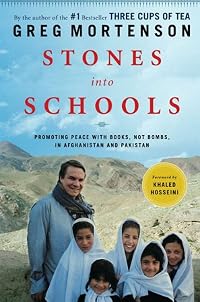
Stones into Schools: Promoting Peace with Books, Not Bombs, in Afghanistan and Pakistan
by Greg Mortenson
On This Page
Description
In this dramatic first-person narrative, Greg Mortenson picks up where "Three Cups of Tea" left off in 2003, recounting his relentless, ongoing efforts to establish schools for girls in Afghanistan; his extensive work in Azad Kashmir and Pakistan after a massive earthquake hit the region in 2005; and the unique ways he has built relationships with Islamic clerics, militia commanders, and tribal leaders even as he was dodging shootouts with feuding Afghan warlords and surviving an eight-day show more armed abduction by the Taliban. show lessTags
Recommendations





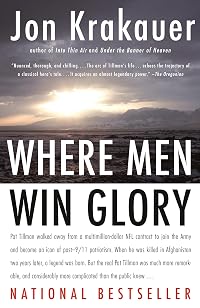





Member Recommendations
BookWallah And now for the rest of the story... warning this is not pretty.
31
Member Reviews
If ever a story inspired faith in the human capacity for compassion, nobility, and generosity, Greg Mortenson’s, as told in his new non-fiction book [Stones into Schools], is the one.
Near the end of Mortenson’s previous book, [Three Cups of Tea], he tells of a ragged and leathery band of horsemen from the Wahkan Corridor of Afghanistan emerging from a mist, their mounts galloping as if something was on their heels. The urgency of their gait announced the looming winter snows, which would choke off the pass to their home from rest of the world for the next eight months. Their mission was inspired by stories of a strange American who was building schools in the rural villages of northwestern Pakistan, and encouraging girls to attend. show more They wanted a school for their children, for their girls.
The Wakhan Corridor is one of the most forbidding and harsh locales in the world, surrounded by China, Afgahnistan, Pakistan, and Tajikistan, part of the former Soviet Union. The average life expectancy is forty-four; the maternal mortality rate is second only to Liberia; and there is only one road connecting it to the outside world, a rutted and jagged single lane that is barely passable four months of the year. No destination better suits Mortenson’s philosophy of seeking out the “people at the end of the road” for his efforts. True to form, he promised the weathered emissaries that he would build them a school with no idea of how to do it. Mortenson’s efforts, along with his odd-ball A-Team on the ground in the region, to build a school in the Wakhan Corridor provide the archetype, albeit a rather extreme one, for all of their other school projects in Afghanistan and Pakistan.
Moternson’s simple message of peace and progress through education, especially for girls, has gained a great deal of traction around the world. [Three Cups of Tea] is now required reading for every Special Operations soldier who deploys to Afghanistan. One Lieutenant Colonel, who commanded forces in one of the most volatile regions of Afghanistan, used Mortenson’s own model of engaging village and tribal leaders to help restore some measure of stability, and then he convinced Mortenson to build schools there. Several members of the United States Congress nominated Mortenson for the Nobel Peace Prize in 2009; though, sadly, the honor was awarded to President Obama. And Mortenson now spends about eight to nine months of the year on the road collecting thousands of dollars from cash-strapped Americans who are eager to reach out in some small way to people in need, people they understand who need education more than soldiers.
Mortenson’s compassion and generosity shine through even more brightly here than in [Three Cups of Tea] because he personally penned this new book. But nothing in the pages of [Stones into Schools] gleams like Mortenson’s humility. This shy introvert didn’t write this book as an egotistical act. He was obviously moved by a sense of purpose and obligation that we would all do well to find in ourselves. Imagine what Central Asia would look like if all American military leaders and politicians focused half of this country’s efforts and resources in the region on education and community building instead of military power. Imagine what the schools in our own country would look like if we had more educators and leaders who felt the way Mortenson does about the power of education. Imagine what our country would look like if we all had just a small measure of his spirit.
Bottom Line: I’ve rarely thought of any book as a ‘must read,’ but Mortenson’s books might just change the way you view the world. If they inspire you to act in even the smallest of ways, then the promise of his message will endure. Please read [Three Cups of Tea] and [Stones into Schools].
Five bones!!!!! show less
Near the end of Mortenson’s previous book, [Three Cups of Tea], he tells of a ragged and leathery band of horsemen from the Wahkan Corridor of Afghanistan emerging from a mist, their mounts galloping as if something was on their heels. The urgency of their gait announced the looming winter snows, which would choke off the pass to their home from rest of the world for the next eight months. Their mission was inspired by stories of a strange American who was building schools in the rural villages of northwestern Pakistan, and encouraging girls to attend. show more They wanted a school for their children, for their girls.
The Wakhan Corridor is one of the most forbidding and harsh locales in the world, surrounded by China, Afgahnistan, Pakistan, and Tajikistan, part of the former Soviet Union. The average life expectancy is forty-four; the maternal mortality rate is second only to Liberia; and there is only one road connecting it to the outside world, a rutted and jagged single lane that is barely passable four months of the year. No destination better suits Mortenson’s philosophy of seeking out the “people at the end of the road” for his efforts. True to form, he promised the weathered emissaries that he would build them a school with no idea of how to do it. Mortenson’s efforts, along with his odd-ball A-Team on the ground in the region, to build a school in the Wakhan Corridor provide the archetype, albeit a rather extreme one, for all of their other school projects in Afghanistan and Pakistan.
Moternson’s simple message of peace and progress through education, especially for girls, has gained a great deal of traction around the world. [Three Cups of Tea] is now required reading for every Special Operations soldier who deploys to Afghanistan. One Lieutenant Colonel, who commanded forces in one of the most volatile regions of Afghanistan, used Mortenson’s own model of engaging village and tribal leaders to help restore some measure of stability, and then he convinced Mortenson to build schools there. Several members of the United States Congress nominated Mortenson for the Nobel Peace Prize in 2009; though, sadly, the honor was awarded to President Obama. And Mortenson now spends about eight to nine months of the year on the road collecting thousands of dollars from cash-strapped Americans who are eager to reach out in some small way to people in need, people they understand who need education more than soldiers.
Mortenson’s compassion and generosity shine through even more brightly here than in [Three Cups of Tea] because he personally penned this new book. But nothing in the pages of [Stones into Schools] gleams like Mortenson’s humility. This shy introvert didn’t write this book as an egotistical act. He was obviously moved by a sense of purpose and obligation that we would all do well to find in ourselves. Imagine what Central Asia would look like if all American military leaders and politicians focused half of this country’s efforts and resources in the region on education and community building instead of military power. Imagine what the schools in our own country would look like if we had more educators and leaders who felt the way Mortenson does about the power of education. Imagine what our country would look like if we all had just a small measure of his spirit.
Bottom Line: I’ve rarely thought of any book as a ‘must read,’ but Mortenson’s books might just change the way you view the world. If they inspire you to act in even the smallest of ways, then the promise of his message will endure. Please read [Three Cups of Tea] and [Stones into Schools].
Five bones!!!!! show less
Whether you know Stones into Schools because of the phenomenon that was Three Cups of Tea or because Stones into Schools became a best seller in its own right, there is no denying its impact. The fast paced we-must-build-schools story picks up right where Three Cups of Tea left off. Mortenson has established himself as humanitarian extraordinaire, but he wants to do more, more, more. He makes a solemn promise to a band of Kirghiz horsemen to build schools in a remote area of Afghanistan called Bozai Gumbaz. This is the dramatic retelling (and lots of humble bragging) of how he barely kept that promise.
If you read beyond the endless list of accomplishments and focus on the efforts of the people around Mortenson, inspiration can be show more easily found. Especially after the events of October 8th, 2005 in northern Pakistan when an earthquake rocked the landscape into rubble.
Confessional: I got a little weary of all of the "I talk" Mortenson did throughout both Three Cups of Tea and Stones into Schools. I did this, I did that. I am this. I am all that. I couldn't get the image of him riding around on a camel wearing a cape and mask out of my head. But, for all of his avarice I appreciated the exposure to the culture, operations, and obsessions of the Taliban. When you are held hostage by American news organizations you only get one side of the story and as they always say, there are three sides: your, mine, and the truth. show less
If you read beyond the endless list of accomplishments and focus on the efforts of the people around Mortenson, inspiration can be show more easily found. Especially after the events of October 8th, 2005 in northern Pakistan when an earthquake rocked the landscape into rubble.
Confessional: I got a little weary of all of the "I talk" Mortenson did throughout both Three Cups of Tea and Stones into Schools. I did this, I did that. I am this. I am all that. I couldn't get the image of him riding around on a camel wearing a cape and mask out of my head. But, for all of his avarice I appreciated the exposure to the culture, operations, and obsessions of the Taliban. When you are held hostage by American news organizations you only get one side of the story and as they always say, there are three sides: your, mine, and the truth. show less
I loved "Three Cups of Tea", Greg's first book, which I discovered years after it was published. So I was very happy to realize I was only a few months late on Stones Into Schools! Another fascinating, educational, moving, incredible book. I want to know more more more about every aspect of the work of Greg and the CAI. I want to know details about every single school - how it was made, how they acquired the supplies and got them to the site, etc. This is not a complaint, this is just to show how VERY interested this book has made me!
I loved learning about the history of each area Greg talks about, and meeting individuals and hearing their stories, and reading about the care and dedication each person has who joins with the CAI in show more building schools. The emotional care taking made me cry a few times - memorials built on school grounds to the children who perished there during war or earthquakes, details taken to ensure safety of the children, and especially the fact that Greg and his staff listen to the people themselves - including children - and learn from them what is most needed. As in the case where a child tells Greg directly what one item will bring children back to a school that was destroyed by an earthquake - he followed her advice and had success.
The drive for the education of children and adults is so strong, and is rather heady to read about - in a good way. It stirs me and makes me want to work toward this myself! Everyone should be able to read and write, EVERYONE.
So I give this book 5 stars and wish I could give it more. I eagerly await the next book from Greg, and will be monitoring his websites and such for updates. show less
I loved learning about the history of each area Greg talks about, and meeting individuals and hearing their stories, and reading about the care and dedication each person has who joins with the CAI in show more building schools. The emotional care taking made me cry a few times - memorials built on school grounds to the children who perished there during war or earthquakes, details taken to ensure safety of the children, and especially the fact that Greg and his staff listen to the people themselves - including children - and learn from them what is most needed. As in the case where a child tells Greg directly what one item will bring children back to a school that was destroyed by an earthquake - he followed her advice and had success.
The drive for the education of children and adults is so strong, and is rather heady to read about - in a good way. It stirs me and makes me want to work toward this myself! Everyone should be able to read and write, EVERYONE.
So I give this book 5 stars and wish I could give it more. I eagerly await the next book from Greg, and will be monitoring his websites and such for updates. show less
Every bit as good as Three Cups of Tea.
With minimum repetition from Three Cups of Tea, this book sets the scene and is off at a gallop. It throbs with a sense of urgency as Greg and his intrepid team surmount countless obstacles to build schools throughout Pakistan and Afghanistan, particularly schools for girls.
Mike Bryan's writing is brilliant. He has the job of piecing together numerous, apparently disjointed, stories into one coherent narrative and he does it flawlessly. Never does it become stilted or lose its flow; it reads like a novel.
Several reviewers have said that Greg Mortenson should get the Nobel Peace Peize for his work and he would certainly get my vote. Not only does he struggle tirelessly to reach isolated areas with show more education for women, but he has the sense to realise when his greatest service is to travel round the US presenting his cause and soliciting donations for the ongoing work, even though he would far rather be out in the thick of it.
A truly amazing book about a dedicated man that everyone should read. show less
With minimum repetition from Three Cups of Tea, this book sets the scene and is off at a gallop. It throbs with a sense of urgency as Greg and his intrepid team surmount countless obstacles to build schools throughout Pakistan and Afghanistan, particularly schools for girls.
Mike Bryan's writing is brilliant. He has the job of piecing together numerous, apparently disjointed, stories into one coherent narrative and he does it flawlessly. Never does it become stilted or lose its flow; it reads like a novel.
Several reviewers have said that Greg Mortenson should get the Nobel Peace Peize for his work and he would certainly get my vote. Not only does he struggle tirelessly to reach isolated areas with show more education for women, but he has the sense to realise when his greatest service is to travel round the US presenting his cause and soliciting donations for the ongoing work, even though he would far rather be out in the thick of it.
A truly amazing book about a dedicated man that everyone should read. show less
La prefazione è di Khaled Hosseini. Il testo di per sé non è che sia un capolavoro letterario. Ma merita per l'argomento. E' un resoconto delle attività dell'autore, Greg Mortenson, alpinista statunitense che dopo un'esperienza difficile sui monti più alti del mondo e il contatto con le civiltà chirghise, pakistane e afghane decide di iniziare a costruire scuole femminili nelle zone più isolate e poi anche a Kabul, senza fondi governativi ma tutto tramite la sua fondazione, il CAI (Centre Asia Institute). La storia della sua folgorazione è raccontata in un libro precedente, Tre tazze di tè, in cui narra come si sia perso su un ghiacciaio e dopo una notte da solo al freddo abbia trovato soccorso in un isolato villaggio e abbia show more promesso a una bambina, che scriveva la lezione sulla sabbia con un bastoncino, di costruirvi una scuola. La costruzione delle scuole viene portata avanti in totale accordo e collaborazione con le popolazioni locali, tramite i consigli degli anziani del villaggio, all'inizio senza mettere di mezzo né i governi centrali né quello statunitense (si interesseranno alla cosa alcuni membri dell'esercito USA ma a livello totalmente personale). Questo ha comportato un notevole appoggio popolare (tra l'altro molte scuole sono in zone molto isolate e non i centri importanti) e ciò anche nei momenti più duri ha permesso agli istituti di essere difesi dalla polizia locale e dalla popolazione stessa dagli attentati talebani, che hanno colpito queste realtà in modo minore rispetto ad altre realtà "ufficiali". Il denaro proviene da donazioni di privati statunitensi. Le insegnanti sono donne locali e anche i principali artefici della costruzione e degli aspetti logistici sono persone afghane o pakistane, a volte ex combattenti. Nessun uomo afghano o pakistano in questi villaggi ha anteposto motivi religiosi alla necessità di istruire le donne. Nemmeno quando accanto alle scuole sono stati costruiti dei laboratori in cui anche le donne adulte possono imparare l'abc, l'economia domestica, le basi sanitarie. E' stato un incendio: donne costrette all'isolamento hanno cominciato a partecipare più delle bambine, creando circoli di lettura e arrivando a discutere anche di politica, e con una volontà pressante di imparare l'uso di telefonini e computer. Il testo è un po' all'americana, nel senso che loda un po' se stesso, ma ne ha anche ben donde. E' un po' retorico, ma i piccoli episodi raccontanti sono molto iconici. Alcuni lo hanno criticato, ma i suoi libri hanno avuto molto successo, tanto che il primo è stato letto in molte scuole americane ai ragazzini delle medie. In un momento storico come questo, dove domina lo slogan "aiutiamoli a casa loro", solo una piccola parte di chi aiuta e una parte pressoché nulla degli stessi che proclamano lo slogan stesso, fanno realmente qualcosa per migliorare le condizioni di vita dei popoli potenzialmente migranti. Ogni iniziativa in questo senso va benedetta, lodata, diffusa, possibilmente partecipata. Greg Mortenson è figlio d'arte, è nato da genitori bianchi in Tanzania e ha vissuto molti anni in Africa. Uomini come lui dovrebbero nascerne di più. Se è buonismo, beh, sempre meglio del cattivismo. show less
This book essentially picks up where Three Cups of Tea left off. With minor exceptions Mortenson doesn't back track and he goes into much more depth about the challenges faced building schools or other buildings in areas which have been through three decades of wars.
I was most interested in the fascinating group of people he has hired to work for him in Pakistan and Afghanistan (whom he calls his 'Dirty Dozen') who do the ground work he can't do most of the year when he's in the U.S. These men are incredibly committed, resourceful, and driven to succeed. Their jobs are unbelieveably difficult and dangerous, yet they succeed every day. They were quite inspiring.
This book taught me a great deal about the people and landscape of both show more Pakistan and Afghanistan, and gave me a little insight into the U. S. military presence as well. Recommended. show less
I was most interested in the fascinating group of people he has hired to work for him in Pakistan and Afghanistan (whom he calls his 'Dirty Dozen') who do the ground work he can't do most of the year when he's in the U.S. These men are incredibly committed, resourceful, and driven to succeed. Their jobs are unbelieveably difficult and dangerous, yet they succeed every day. They were quite inspiring.
This book taught me a great deal about the people and landscape of both show more Pakistan and Afghanistan, and gave me a little insight into the U. S. military presence as well. Recommended. show less
I found this book a little anti-climatic after reading "Three Cups of Tea". I believe if I hadn't already read that book, I would have found this book more engrossing. It isn't that this book wasn't good enough on its own, but more that I found it hard to top the 1st book.
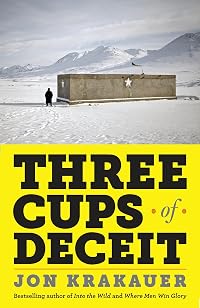
Worse was finding out about a follow-up book by Jon Krakauer, "Three Cups of Deceit", in which Krakauer details financial improprieties by Mortenson, as well as explaining that many of the most dramatic stories in "Three Cups of Tea", those which make the story so compelling, were totally fabricated. Those invented stories make for a compelling book, however it becomes a letdown to find out that Mortenson diverts so much of the donated money to his personal use rather show more than for the students he purports to support. show less
Worse was finding out about a follow-up book by Jon Krakauer, "Three Cups of Deceit", in which Krakauer details financial improprieties by Mortenson, as well as explaining that many of the most dramatic stories in "Three Cups of Tea", those which make the story so compelling, were totally fabricated. Those invented stories make for a compelling book, however it becomes a letdown to find out that Mortenson diverts so much of the donated money to his personal use rather show more than for the students he purports to support. show less
Members
- Recently Added By
Published Reviews
ThingScore 75
How could a man whose success had been based on such self-effacing relief work reconcile humility with celebrity? Mr. Mortenson’s second and very different book, “Stones Into Schools,” provides an answer. As this new book’s strong, opinionated voice makes clear, he was never all that humble in the first place. And he was never shy.
added by Shortride
Lists

Reading or Libraries
6 works; 1 member

Schools...high school to college
65 works; 2 members

Asiatic Settings
21 works; 1 member

War and Weapons and the Aftereffects
29 works; 1 member
Author Information

Greg Mortenson was born in 1957 in St. Cloud, Minnesota. From 1958 - 1973, he lived on the slopes of Mt. Kilimanjaro, Tanzania where his father, Dempsey, co-founded the teaching hospital, Kilimanjaro Christian medical Center (KCMC), and where his mother, Jerene, founded the International School Moshi. After serving in the U.S. Army in Germany from show more 1977 - 1979, Mortenson graduated from the University of South Dakota in 1983 with an Associate Degree in Nursing and a Bachelor's Degree in Chemistry. He is the co-founder of the nonprofit Central Asia Institute and founder of Pennies for Peace, and is the co-author of the #1 New York Times best-seller, Three Cups of Tea, which has won several awards including Time Magazine's Asia Book of the Year. Mortenson is a humanitarian and has dedicated his life to promote education, especially for girls, in remote regions of Pakistan and Afghanistan, where he has established over 78 schools. In 2009, Pakistan's government awarded Mortenson Pakistan's highest civil award, the Sitara-e-Pakistan ("Star of Pakistan"). Mortenson has received many other awards including National Award for Citizen Diplomacy in 2008, Rotary International Paul Harris Award in 2007, and Red Cross (Montana) "Humanitarian of the Year" in 2005. As of 2009, Mortenson has also received 10 honorary doctorates. Mortenson is married to Dr. Tara Bishop, a clinical psychologist. They have two children. show less
All Editions
Some Editions
Awards and Honors
Awards
Distinctions
Work Relationships
Common Knowledge
- Original publication date
- 2009-12-01
- Important places
- Afghanistan; Pakistan
- Epigraph
- "Every leaf of the tree becomes a page of the Book
Once the heart is opened and it has learned to read"
--Saadi of Shiraz - Dedication
- To the noble people of Afghanistan and Pakistan, and to the 120 million school-age children in the world who are deprived of education.
- First words
- In September of 2008, a woman with piercing green eyes named Nasreen Baig embarked on an arduous journey from her home in the tiny Pakistani village of Zuudkhan south along the Indus River and down the precipitous Karakoram H... (show all)ighway to the bustling city of Rawalpindi.
- Last words
- (Click to show. Warning: May contain spoilers.)He was a man who understood the virtue of small things.
- Blurbers
- Mullen, Admiral Mike; Friedman, Thomas L.; Rubin, Trudy; Gardner, Marilyn
- Original language
- English
Classifications
- Genres
- Nonfiction, General Nonfiction, Biography & Memoir
- DDC/MDS
- 371.8234209581 — Society, government, & culture Education Schools and their activities; special education Culture Studies Fagging and hazing; Bullying; German student duels
- LCC
- LC2330 .M66 — Education Special aspects of education Special aspects of education Education of special classes of persons Women
- BISAC
Statistics
- Members
- 2,062
- Popularity
- 10,063
- Reviews
- 50
- Rating
- (3.98)
- Languages
- 5 — Chinese, English, French, Italian, Swedish
- Media
- Paper, Audiobook, Ebook
- ISBNs
- 31
- ASINs
- 16