
Khaled Hosseini
Author of The Kite Runner
About the Author
Khaled Hosseini was born in Kabul, Afghanistan on March 4, 1965. He received a bachelor's degree in biology from Santa Clara University in 1988 and a medical degree from the University of California-San Diego's School of Medicine in 1993. He was a practicing internist from 1996 to 2004. While in show more medical practice, he began writing his first novel, The Kite Runner, which was published in 2003. His other books include A Thousand Splendid Suns and And the Mountains Echoed. In 2006, he was named a Goodwill Envoy to UNHCR, the United Nations Refugee Agency. He established The Khaled Hosseini Foundation, a nonprofit that provides humanitarian assistance to the people of Afghanistan. (Bowker Author Biography) show less
Image credit: Khaled Hosseini, in Mantova, Italy on 11th march 2014
Works by Khaled Hosseini
[Title missing] 5 copies
Hezar Khorshid-e Derakhshan 1 copy
NJË MIJË DIEJ VEZULLUES 1 copy
DHE MALET OSHËTIJNË 1 copy
De vliegenraar 1 copy
Associated Works
Stones into Schools: Promoting Peace with Books, Not Bombs, in Afghanistan and Pakistan (2009) — Foreword — 2,065 copies, 50 reviews
Light the Dark: Writers on Creativity, Inspiration, and the Artistic Process (2017) — Contributor — 165 copies, 5 reviews
Tagged
Common Knowledge
- Other names
- خالد حسینی
- Birthdate
- 1965-03-04
- Gender
- male
- Education
- Santa Clara University (BS|Biology|1988)
University of California, San Diego (MD|1993) - Occupations
- physician
writer - Organizations
- UNHCR, The United Nations Refugee Agency [U.S. envoy]
Khaled Hosseini Foundation - Agent
- Elaine Koster
- Nationality
- USA
- Birthplace
- Kabul, Afghanistan
- Places of residence
- Kabul, Afghanistan (birth)
Tehran, Iran
Paris, Île-de-France, France
San Jose, California, USA - Map Location
- Afghanistan
Members
Discussions
The Kite Runner by Khaled Hosseini in Book talk (October 2019)
Reviews

Just when you think nothing worse could happen to our main character, Amir, it mercilessly and devastatingly does. Yet by the end just when circumstances seem beyond help there is a glimmer of redeeming hope, of the possibility of living a good life. It might be fair to say this could also be said of Afghanistan, Amir's homeland. Hosseini gives us a strong sense of Afghanistan, its history, its people and leaves us wanting something better for it. This a powerful novel that moves well from show more beginning to end. And, yes, kite flying is so important to the unfolding story.
Quotes: (page 136) “Long before the Roussi army marched into Afghanistan, long before villages were burned and schools destroyed, long before mines were planted like seeds of death and children buried in rock-pile graves, Kabul had become a city of ghosts for me. A city of harelipped ghosts.
America was different. America was a river, roaring along unmindful of the past. I could wade into this river, let my sins drown to the bottom, let waters carry me someplace far. Someplace with no ghosts, no memories, and no sins.”
(page 226) “I wished Rahim Khan hadn't called me. I wish he had let me live on in my own oblivion. But he had called me. And what Rahim Khan revealed to me changed things. Made me see how my entire life, long before the winter of 1975, dating back to when that singing Hazara women was nursing me, had been a cycle of lies, betrayals, and secrets.”
(page 301) “What you did was wrong, Amir jan, but do not forget you were a boy when it happened. A troubled little boy. You were too hard on yourself then, and you still are---I saw it in your eyes in Peshawar. But I hope you will heed this. A man who has no conscience, no goodness, does not suffer. I hope your suffering comes to an end with this journey to Afghanistan.” show less
Quotes: (page 136) “Long before the Roussi army marched into Afghanistan, long before villages were burned and schools destroyed, long before mines were planted like seeds of death and children buried in rock-pile graves, Kabul had become a city of ghosts for me. A city of harelipped ghosts.
America was different. America was a river, roaring along unmindful of the past. I could wade into this river, let my sins drown to the bottom, let waters carry me someplace far. Someplace with no ghosts, no memories, and no sins.”
(page 226) “I wished Rahim Khan hadn't called me. I wish he had let me live on in my own oblivion. But he had called me. And what Rahim Khan revealed to me changed things. Made me see how my entire life, long before the winter of 1975, dating back to when that singing Hazara women was nursing me, had been a cycle of lies, betrayals, and secrets.”
(page 301) “What you did was wrong, Amir jan, but do not forget you were a boy when it happened. A troubled little boy. You were too hard on yourself then, and you still are---I saw it in your eyes in Peshawar. But I hope you will heed this. A man who has no conscience, no goodness, does not suffer. I hope your suffering comes to an end with this journey to Afghanistan.” show less

The Kite Runner is an emotional, unflinching exploration of guilt, redemption, and the complicated ties that bind fathers and sons. Khaled Hosseini masterfully crafts a story that stretches across decades of personal and national turmoil in Afghanistan, inviting readers into a deeply personal narrative set against the devastating consequences of history, war, and silence.
At the heart of the novel is the relationship between Amir, a privileged boy, and Hassan, the son of his father's servant. show more Their friendship is marked by deep affection but also by painful inequality—and a betrayal that haunts Amir into adulthood. What makes this book particularly powerful is its willingness to delve into the darker sides of human nature: cowardice, guilt, shame, and the often paralyzing struggle to make amends.
While the novel includes scenes and themes that are difficult to process—violence, abuse, and moral failure—they are essential to the integrity of the story. Hosseini doesn’t include them for shock value but to provoke empathy and a sense of shared responsibility. These moments are necessary reminders that injustice and cruelty thrive not only through the actions of the wicked but through the inaction of the silent.
What truly elevates The Kite Runner is its duality—it is both a story of personal atonement and a mirror reflecting the soul of a fractured nation. The prose is poetic yet grounded, and every character, no matter how minor, feels fully realized.
Though the book may be a challenging read for some, it's precisely this emotional weight that gives it such lasting impact. It forces readers to reflect on their own choices, courage, and capacity for forgiveness. It's not just a novel—it's an awakening. show less
At the heart of the novel is the relationship between Amir, a privileged boy, and Hassan, the son of his father's servant. show more Their friendship is marked by deep affection but also by painful inequality—and a betrayal that haunts Amir into adulthood. What makes this book particularly powerful is its willingness to delve into the darker sides of human nature: cowardice, guilt, shame, and the often paralyzing struggle to make amends.
While the novel includes scenes and themes that are difficult to process—violence, abuse, and moral failure—they are essential to the integrity of the story. Hosseini doesn’t include them for shock value but to provoke empathy and a sense of shared responsibility. These moments are necessary reminders that injustice and cruelty thrive not only through the actions of the wicked but through the inaction of the silent.
What truly elevates The Kite Runner is its duality—it is both a story of personal atonement and a mirror reflecting the soul of a fractured nation. The prose is poetic yet grounded, and every character, no matter how minor, feels fully realized.
Though the book may be a challenging read for some, it's precisely this emotional weight that gives it such lasting impact. It forces readers to reflect on their own choices, courage, and capacity for forgiveness. It's not just a novel—it's an awakening. show less
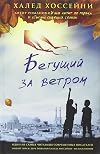
Проникновенная, пробирающая до самого нутра история о дружбе и верности, о предательстве и искуплении. Нежный, ироничный и по-хорошему сентиментальный, роман Халеда Хоссейни напоминает живописное полотно, которое можно разглядывать бесконечно.История разворачивается show more в довоенном Кабуле 1970-х. В этом волшебном городе, переливающемся всеми оттенками золота и лазури, живут два мальчика-погодка, Амир и Хасан. Один принадлежал к местной аристократии, другой - к презираемому меньшинству. У одного отец был красив и важен, у другого - хром и жалок. Господин и слуга, принц и нищий, красавец и калека. Но не было на свете людей ближе, чем эти два мальчика. Вскоре кабульская идиллия сменится грозными бурями. И мальчиков, словно двух бумажных змеев, подхватит эта буря и разметает в разные стороны. У каждого своя судьба, своя трагедия, но они, как и в детстве, связаны прочнейшими узами.Ты бежишь з... show less
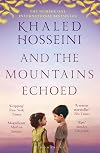
Although not as brutal, hard-hitting or shocking as The Kite Runner and A Thousand Splendid Suns, And the Mountains Echoed is still a great book.
Like the roots of Shadbagh’s ancient oak tree, the ripple effect stemming from brother and sister, Abdullah and Pari, born in this poverty-stricken village, spreads far and wide - from Shadbagh to Kabul, Paris and Pakistan, from the Greek Island of Tinos to sunny California.
While the devasting effects of war, corruption and displacement in show more Afghanistan are still key to this moving family saga, windows to a wider world weave all the threads of the evolving story into a rich tapestry.
Recurring themes of disfigurement and ill health, absent mothers and desperate fathers, unrequited love, forbidden love and enduring love make for an emotional read.
The poignancy of a tin of feathers, the painstaking plucking away of nightmares and wishing on ten falling leaves; the concept of cutting off a little finger to save a hand, the miraculous power of memory, majestic mountains and the magnetic pull of home will all stay with me for a long time.
Despite having to occasionally double-check timeframes and who was who I really enjoyed And the Mountains Echoed. show less
Like the roots of Shadbagh’s ancient oak tree, the ripple effect stemming from brother and sister, Abdullah and Pari, born in this poverty-stricken village, spreads far and wide - from Shadbagh to Kabul, Paris and Pakistan, from the Greek Island of Tinos to sunny California.
While the devasting effects of war, corruption and displacement in show more Afghanistan are still key to this moving family saga, windows to a wider world weave all the threads of the evolving story into a rich tapestry.
Recurring themes of disfigurement and ill health, absent mothers and desperate fathers, unrequited love, forbidden love and enduring love make for an emotional read.
The poignancy of a tin of feathers, the painstaking plucking away of nightmares and wishing on ten falling leaves; the concept of cutting off a little finger to save a hand, the miraculous power of memory, majestic mountains and the magnetic pull of home will all stay with me for a long time.
Despite having to occasionally double-check timeframes and who was who I really enjoyed And the Mountains Echoed. show less
Lists
. (1)
100 New Classics (1)
Pageturners (1)
Refugee crisis (1)
Women's Stories (1)
storage (1)
War Literature (1)
Bullies (1)
READ 2025 (1)
Delete This List (1)
Books About Boys (1)
BitLife (1)
BBC Big Read (1)
Boeken. (1)
First Novels (1)
Bildungsromans (1)
Translingualism (1)
My TBR list (3)
Reading Globally (2)
Afghanistan (2)
Florida (2)
Allie's Wishlist (2)
Books I've read (2)
Favourite Books (2)
Five star books (3)
Asia (3)
2000s decade (2)
100 knjiga (1)
A Novel Cure (1)
Coming of Age (1)
Carole's List (1)
Unread books (1)
1970s Narratives (1)
AP Lit (2)
Awards


You May Also Like


Associated Authors
Statistics
- Works
- 28
- Also by
- 5
- Members
- 101,931
- Popularity
- #88
- Rating
- 4.2
- Reviews
- 2,727
- ISBNs
- 671
- Languages
- 42
- Favorited
- 242
