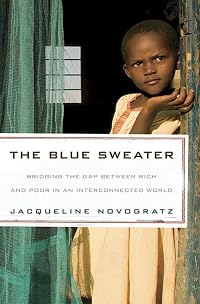
The Blue Sweater
by Jacqueline Novogratz 
On This Page
Description
"From her first stumbling efforts as a young idealist venturing forth in Africa to the creation of the trailblazing organization she runs today, Jacqueline Novogratz tells stories with unforgettable characters. She shows, in ways both hilarious and heartbreaking, how traditional charity often fails, but how a new form of philanthropic investing called "patient capital" can help make people self-sufficient and can change millions of lives. More than just an autobiography or a how-to guide to show more addressing poverty, The Blue Sweater is a call to action that challenges us to grant dignity to the poor and to rethink our engagement with the world."--P. [4] of cover. show lessTags
Recommendations
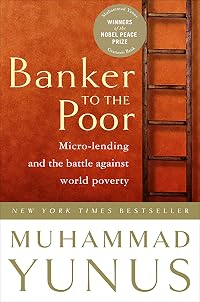
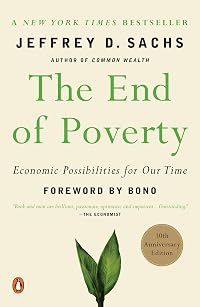
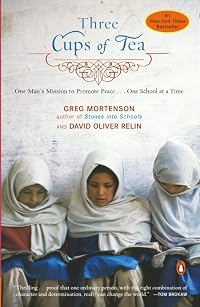
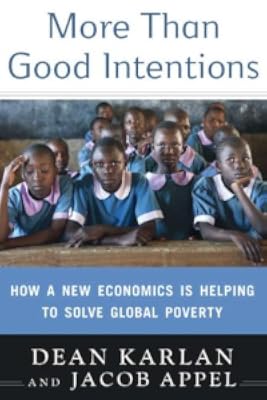
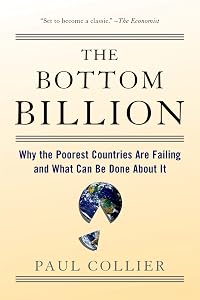

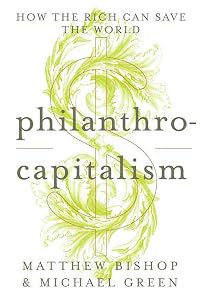
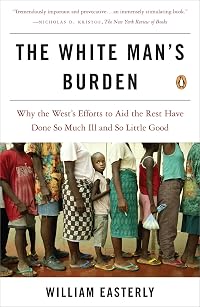
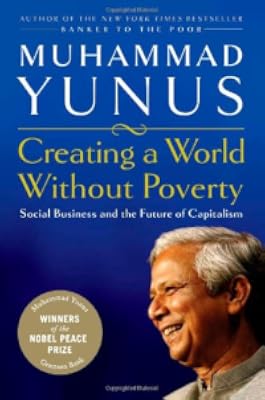
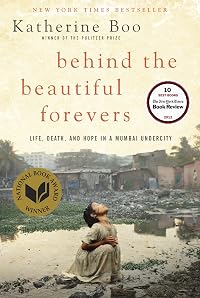
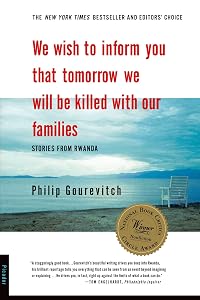
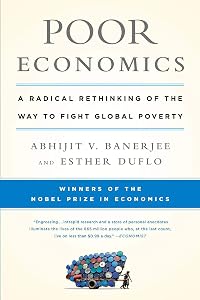
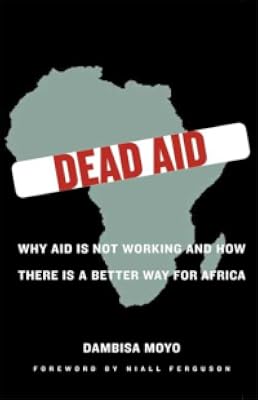


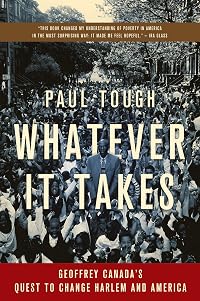

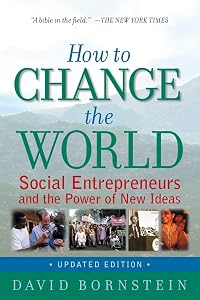



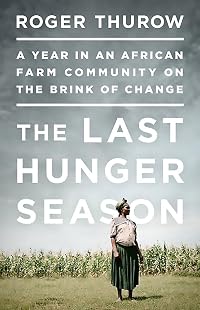








Member Recommendations
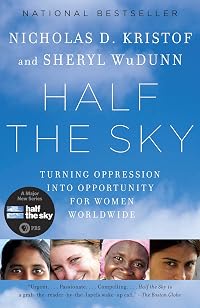
espertus Both are inspiring accounts of the growth of organizations that harness market forces to empower impoverished people to improve their own lives.
Member Reviews
The economic gap between the rich and poor has increased in recent decades, yet the access to technology in many ways democratizes the world. Increasingly, many of the rich don’t find much meaning in just earning another dollar. Here, Jacqueline Novogratz shares her tale of receiving a business education but not aspiring to Wall Street. Instead, she went to Africa and saw the potential to introduce capitalistic motivations for the greater cause of human happiness.
Capitalism has gotten a bad name when individuals live for money alone. But Adam Smith originally wrote The Wealth of Nations as a natural account of how commerce actually happens and contributes to human happiness through accruing wealth. Novogratz digs deeply into Smith’s show more well to describe her life journey. After college, she started companies like microfinance ventures in central Africa to advance women’s well-being there. She returned to the US, but still kept an ideal of combining philanthropy and for-profit business in the same venture. She calls this “social entrepreneurship” and has applied these concepts globally in Africa and south Asia.
Along her path, she also had to reckon with a changed central Africa. Her efforts started with a focus on Rwanda just before the genocide. Then tragedy struck, and friends died. Other friends were jailed for committing atrocities. The entire country changed. She talks about navigating her relationships around this trauma. She seems to feel an uneasy peace about this event in a way that transcends logic. These reflections provide the most interesting human factors of her account.
I myself am not in business, economics, or philanthropy – clearly the main fields of this book. (I write software for medical research instead.) Nonetheless, this book reminds me of a large human search for meaning. Capitalism is just a tool for these ends, for individual happiness and for others’. Although its themes are clearly rooted in an optimism from the the 21st century’s first decade, anyone who wants to unite material benefits with universal human flourishing – in whatever field – can appreciate Novogratz’s account. show less
Capitalism has gotten a bad name when individuals live for money alone. But Adam Smith originally wrote The Wealth of Nations as a natural account of how commerce actually happens and contributes to human happiness through accruing wealth. Novogratz digs deeply into Smith’s show more well to describe her life journey. After college, she started companies like microfinance ventures in central Africa to advance women’s well-being there. She returned to the US, but still kept an ideal of combining philanthropy and for-profit business in the same venture. She calls this “social entrepreneurship” and has applied these concepts globally in Africa and south Asia.
Along her path, she also had to reckon with a changed central Africa. Her efforts started with a focus on Rwanda just before the genocide. Then tragedy struck, and friends died. Other friends were jailed for committing atrocities. The entire country changed. She talks about navigating her relationships around this trauma. She seems to feel an uneasy peace about this event in a way that transcends logic. These reflections provide the most interesting human factors of her account.
I myself am not in business, economics, or philanthropy – clearly the main fields of this book. (I write software for medical research instead.) Nonetheless, this book reminds me of a large human search for meaning. Capitalism is just a tool for these ends, for individual happiness and for others’. Although its themes are clearly rooted in an optimism from the the 21st century’s first decade, anyone who wants to unite material benefits with universal human flourishing – in whatever field – can appreciate Novogratz’s account. show less
This was not a book I would have chosen to read on my own, but our book group voted to read it so I thought it would be a good stretch. Turned out it wasn't a favorite of many of us but we had a great discussion about it: about the author, the concepts she presents, and about poverty in third world countries. One thing that struck me about this memoir (and was incredibly distracting from the point of the book) was how careless Novogratz was - she put herself in danger time and again while living in Africa: running on the beach alone and being mugged by three men, driving in a car alone with an unknown man out into the desert, having her house broken into and all her clothes and other items stolen and she doesn't prosecute the thief. She show more climbs an 11,000 ft. volcano in shorts and a t-shirt, she eats street food in several third world countries - it was difficult to take her seriously when she seemed to often put herself at risk. But her intentions were good (to bridge the gap between rich and poor) and the first two thirds of the book were interesting enough as I learned of her strategies to help people develop successful businesses via micro-finance rather than just take handouts. The last third of this book got very bogged down with numbers and statistics and was no longer interesting to me. show less
Jacqueline Novogratz was twenty-five years old and living in Kigali, Rawanda when she saw something that would form her philosophy of connectedness: a young boy walked down a dirt road in Africa wearing the blue sweater Novogratz had donated to a charity in America when she was just a teen. The idea that our actions (or inactions) may have an impact on others which we may never be aware of, was a powerful one for Novogratz who had come to Africa wanting to understand what stood between wealth and poverty. Educated as an international banker, her journey to bridge the global gap between the very poor and the very rich would eventually lead her to create The Acumen Fund – a nonprofit organization which raises charitable monies – not show more to give away, but for careful investment in entrepreneurs who have the vision to deliver essential services to the poor: a man who built a company which provides safe water to more than a quarter of a million of India’s rural poor, an agricultural products designer whose ability to sell drip irrigation systems to small-holder farmers has enabled them to double their yields and income, and a malaria bed net manufacturer in Africa whose business employs more than 7,000 people (mostly poor women) while providing bed nets to 16 million people a year.
The Blue Sweater is a memoir of sorts – a journey of one woman who believed she could make a difference in the lives of poor people which would be sustainable. Jacqueline Novogratz began her incredible journey at the age of twenty-five when she traveled to Africa under the auspices of a nonprofit microfinance organization for women. The years which followed allowed her to meet amazing individuals who had vision and strength of character, people who were eager to lift themselves out of poverty if only given the tools to do so. One of Novogratz’s first projects was to create a bank for women which would enable them to open savings accounts and get small loans to start and nurture businesses in Rawanda…not a simple process given a culture which had supported laws like the Rawanda Family Code – a law which was especially detrimental to women who had few rights and were the property of their husbands. Bride price was still in effect in the mid-80s when Novogratz arrived in Africa and it was a tradition which would prove difficult to change.
Novogratz shares the lessons she learned and the mistakes she made in her book with an honesty and warmth that is hard not to admire. The basic idea of dignity and self-worth being important to ALL people, is a strong theme in the book. Poverty steals an individual’s ability to make choices, and Novogratz demonstrates this idea over and over in The Blue Sweater.
Novogratz is an amazing writer. She brings to life the people, culture and geography of Africa, and shows her journey from a naive twenty-something into a woman with the wisdom and confidence to build a million dollar business tackling the issue of global poverty in ways which are revolutionary. I loved her descriptions of not only Africa, but also India and Pakistan. It is easy to see where an idealistic young woman would be drawn to these countries.
Novogratz brings to life the people she has met – the villagers, her mentors, the entrepreneurs who have impressed her, and those who have joined in her efforts to elevate people from poverty. She shares their wisdom and their philosophies in a seamless narrative that at times reads like a novel. The section of the book where she returns to Africa after the horrific Rawandan genocide, were riveting and moving.
The personal stories in the book are balanced with facts about poverty, finance, and economics which are written in such a way to be understandable to those without an economics background. For example, when Novogratz writes about the investment style of patient capital (‘not traditional charity, not traditional business investment, but something in-between‘), she takes the confusion away from the concept and pares it down in human terms.
I loved this book. I loved that I learned something about poverty I didn’t know. I loved that the book offered optimism and hope for a problem that far too often makes one want to turn away because of the vastness of it. The Blue Sweater is a captivating book written with passion and knowledge. It is a book which really is a must read…because, after all, we are all connected.
Highly recommended. show less
The Blue Sweater is a memoir of sorts – a journey of one woman who believed she could make a difference in the lives of poor people which would be sustainable. Jacqueline Novogratz began her incredible journey at the age of twenty-five when she traveled to Africa under the auspices of a nonprofit microfinance organization for women. The years which followed allowed her to meet amazing individuals who had vision and strength of character, people who were eager to lift themselves out of poverty if only given the tools to do so. One of Novogratz’s first projects was to create a bank for women which would enable them to open savings accounts and get small loans to start and nurture businesses in Rawanda…not a simple process given a culture which had supported laws like the Rawanda Family Code – a law which was especially detrimental to women who had few rights and were the property of their husbands. Bride price was still in effect in the mid-80s when Novogratz arrived in Africa and it was a tradition which would prove difficult to change.
Novogratz shares the lessons she learned and the mistakes she made in her book with an honesty and warmth that is hard not to admire. The basic idea of dignity and self-worth being important to ALL people, is a strong theme in the book. Poverty steals an individual’s ability to make choices, and Novogratz demonstrates this idea over and over in The Blue Sweater.
Novogratz is an amazing writer. She brings to life the people, culture and geography of Africa, and shows her journey from a naive twenty-something into a woman with the wisdom and confidence to build a million dollar business tackling the issue of global poverty in ways which are revolutionary. I loved her descriptions of not only Africa, but also India and Pakistan. It is easy to see where an idealistic young woman would be drawn to these countries.
Novogratz brings to life the people she has met – the villagers, her mentors, the entrepreneurs who have impressed her, and those who have joined in her efforts to elevate people from poverty. She shares their wisdom and their philosophies in a seamless narrative that at times reads like a novel. The section of the book where she returns to Africa after the horrific Rawandan genocide, were riveting and moving.
The personal stories in the book are balanced with facts about poverty, finance, and economics which are written in such a way to be understandable to those without an economics background. For example, when Novogratz writes about the investment style of patient capital (‘not traditional charity, not traditional business investment, but something in-between‘), she takes the confusion away from the concept and pares it down in human terms.
I loved this book. I loved that I learned something about poverty I didn’t know. I loved that the book offered optimism and hope for a problem that far too often makes one want to turn away because of the vastness of it. The Blue Sweater is a captivating book written with passion and knowledge. It is a book which really is a must read…because, after all, we are all connected.
Highly recommended. show less
While the central tenet is allied with those held by academics like Dambisa Moyo and William Easterly, who argue that development aid (not to be confused with humanitarian aid) is a hindrance more than a service, Jacqueline Novogratz’s ‘The Blue Sweater’ is a personal, reflective and deeply humane testament to the power of economic development in Sub-Saharan Africa. Partly a heartfelt reflection on her years in Rwanda, before and after the 1994 genocide and partly a lighthearted memoir of a young activist trying to find where she is welcome (and more amusingly, where she is not) in the world around her, this book is a warmly toned, inspiriting guide to making a difference in our communities.
While the central tenet is allied with those held by academics like Dambisa Moyo and William Easterly, who argue that development aid (not to be confused with humanitarian aid) is a hindrance more than a service, Jacqueline Novogratz’s ‘The Blue Sweater’ is a personal, reflective and deeply humane testament to the power of economic development in Sub-Saharan Africa. Partly a heartfelt reflection on her years in Rwanda, before and after the 1994 genocide and partly a lighthearted memoir of a young activist trying to find where she is welcome (and more amusingly, where she is not) in the world around her, this book is a warmly toned, inspiriting guide to making a difference in our communities.
The author attempts to apply the feel-good theory of donating clothing on the larger NGO platform. Seeing that her donated blue sweater was being worn by someone in a developing country seemed to give her the naive belief that she can help people with her ideas, without taking into consideration their culture, desires, and motivations. A great lesson is understanding that your way is not necessarily the right way or the only way.
stunning and inspirational! if you have a single humanitarian bone in your body, then you need to read this book. both educational and entertaining, The Blue Sweater discusses fundamentally important concepts facing the world today - the crushing poverty that is rampant in many countries, disease, genocide, and, on a more positive note, responsible philanthropy. "What is needed going forward is a philosophy based on human dignity, which all of us need and crave. We can end poverty if we start by looking at all human beings as part of a single global community that recognizes that everyone deserves a chance to build a life worth living."with this lofty goal, Novogratz takes us on the journey that has been her life and work. she touches show more on several subjects - micro-financing for the poor, incremental housing, drip irrigation, bed netting, etc - all the sorts of things that she has worked with and for over the course of the last 30 years, ultimately trying to improve the quality of life of those that she works with.forgoing a promising career in banking, Novogratz begins her journey by going to Africa to assist in developing a women's micro-finance organization, with the notion of "help a woman and you help a family". in Africa, where much of the book is set, we are immersed in the rich culture and people that helped make the endeavors both challenging and successful. following several years in Africa, we follow Novogratz back to the United States to develop a philanthropy seminar, helping to establish the importance of responsible giving, which ultimately leads her to the creation of the Acumen Fund, an organization devoted to responsible investments in international organizations. we also follow Novogratz back to Africa following the Rwandan genocide of 1994, which resulted in the mass killing of nearly 500,000 people, where she reconnects with many of the people that she worked with earlier, which was both heartbreaking and uplifting.the book was organized a little haphazardly, i think, but the overlaying theme was unmistakable. poverty can be overcome, and despite our differences culturally, we are all human and of the same fabric. working together, learning from our mistakes, we can build a better world. "Our world's challenge is not simply to determine how we punish, but instead how we prevent the kinds of atrocities that can come only from a deep-seated fear of the Other in our midst. Such fear is fueled in a world where the rich feel above the system and the poor feel entirely left out."what i liked most about this book was Novogratz's honesty, with her goals and often, with her mistakes. it is obvious that the things she attempted were not easy, that there were mistakes to be made, and she writes of them openly and shares the opportunity to learn from them. highly recommended!i've always known that i wanted to do something with my life that made an impact - and i know i'm not alone in this, but putting these desires into words has always been challenging for me. now, when people ask what i mean, i think i'll just hand them this book.this book was received from Rodale Books (via goodreads) for review. for more information about The Acumen Fund, please visit http://www.acumenfund.org/. show less
Members
- Recently Added By
Published Reviews
I am not so sure I could honestly tell you to rush out and get this book. I read it from cover to cover, but it took me several weeks to finish. I was struggling with it. It was not written in a fashion that "sucked me in." I was initially intrigued by the story of "the blue sweater" which gave this book its name, and also serves as a true story creatively used to entice book sales. The show more endearing "we-are-all-connected" story about Jaqueline's charity sweater she finds being worn several years later by a young boy in Africa is told in the first four pages of the book. It is not mentioned again until page 243. The totality of the book didn't feed my spirit like I was anticipating. In the end (in the middle of the book actually) I was left asking myself "Is this all I get?" And in the end I felt there was no real pay off for me muddling through to the end. show less
added by phylameana
The Blue Sweater tells the story of Novogratz’s career from international banking to philanthropy.
added by lemontwist
Author Information

2+ Works 590 Members
Jacqueline Novogratz is founder and CEO of Acumen Fund, a nonprofit venture capital firm for the poor that invests in sustainable enterprise.
Jacqueline Novogratz is a LibraryThing Author, an author who lists their personal library on LibraryThing.
Awards and Honors
Common Knowledge
- Canonical title
- The Blue Sweater
- Original publication date
- 2009-02
- People/Characters
- John Gardner; Cate Muther; Agnes Ntamabyariro
- Important places
- Kigali, Rwanda; Rwanda; Kenya
- Important events
- Rwandan Genocide
- Dedication
- My family helped make me who I am...and they join me in dedicating this book to our larger family, those countless millions around the world who lack money and security but possess dignity and an indomitable spirit. For thei... (show all)r time is coming, and this story is for them.
- First words
- They say a journey of a thousand miles begins with a single step. I took mine and fell flat on my face.
- Last words
- (Click to show. Warning: May contain spoilers.)We have only one world for all of us on earth, and the future really is ours to create, in a world we dare to imagine together.
- Blurbers
- Zakaria, Fareed; Godin, Seth; Bradley, Bill; Robinson, Mary; Berkley, Beth; Toole, Daniel
Classifications
Statistics
- Members
- 532
- Popularity
- 56,129
- Reviews
- 19
- Rating
- (3.84)
- Languages
- Dutch, English, Spanish
- Media
- Paper, Audiobook, Ebook
- ISBNs
- 9
- UPCs
- 1
- ASINs
- 9