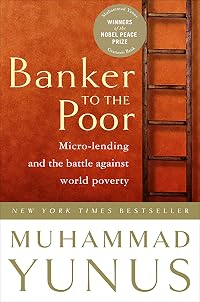
Banker to the Poor: Micro-Lending and the Battle Against World Poverty
by Muhammad Yunus
On This Page
Description
Winner of the 2006 Nobel Peace Prize This autobiography of the world-renowned, visionary economist who came up with a simple but revolutionary solution to end world poverty--micro-credit--has become the classic text for a growing movementTags
Recommendations



Member Recommendations
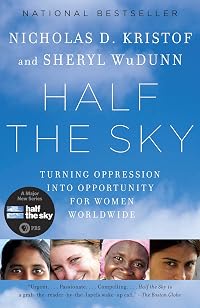
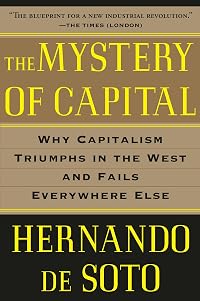
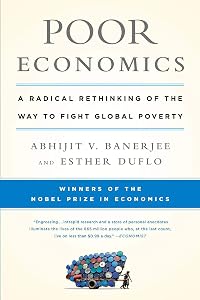
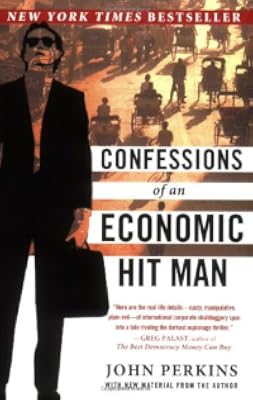
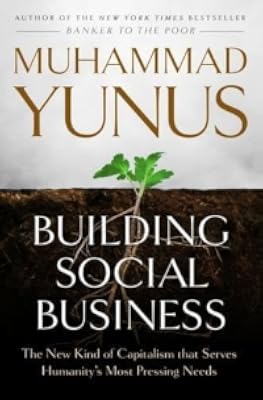
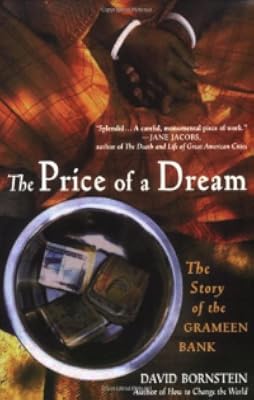
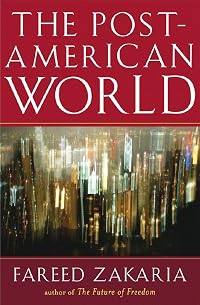
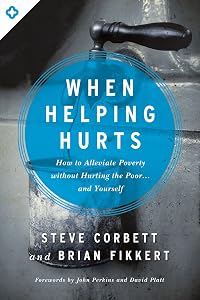
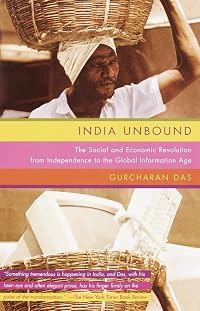
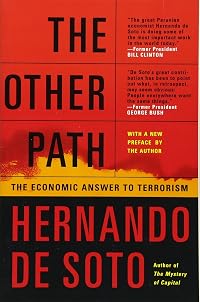
espertus Both are inspiring accounts of the growth of organizations that harness market forces to empower impoverished people to improve their own lives.
Member Reviews
"Give a man a fish and you feed him for a day; teach him to fish and you feed him for a lifetime." Until I read this book I did not see the absolute and immense arrogance and bias in this statement. Bias: If a poor person knows how to fish, but doesn't, it's because he is lazy. If he is not lazy, clearly he does not know how to fish or he would. Arrogance: Give and you feed him, teach him and, again you feed him. He gets no credit.
The goal of the Grameen Bank, the primary subject of this book would have said it differently. Give a person, usually a woman, a fish, and you feed her for a day. Remove the obstacles that prevent her from fishing and the opportunity for her to feed herself and her family result. "YOU", as the primary part of show more the result, disappears.
For our supposed fisherman, let us suppose he does know how to fish, would like to fish, but where he lives you cannot fish from the bank. You need a boat. But our fisherman's wife was sick and needed medicine and to buy it, the fisherman had to sell his boat. A poor man since his wife's illness, he cannot buy the materials to make another boat. What good is "teaching him to fish"? No bank will loan him the money to build the boat, he has no collateral.
But there is one bank that will loan him the $100 to buy the boat building materials. This bank knows the poor work hard, they want to succeed and they know, if they blow this chance, that is the end of the road for them. They can't NOT pay back that loan. Every week he pays the bank $2.00. At the end of a year, the loan is paid. Used to paying the $2.00 a week, now he puts that money in the bank as savings. He has started on a road to pull him and his family out of the bonds of poverty
Grameen Bank was a new concept and Muhammad Yunus, who defined how it would work received the Nobel Prize for Economics. Through his efforts, the Bank and those set up in a similar pattern have helped hundreds of thousands of individuals escape poverty by setting up small businesses of their own. He has proved the poor have the capacity to escape poverty when they are empowered to pull themselves out. They have pulled themselves above the poverty line. They have seen to it their children have gotten an education, many of the children of illiterate parents have gone to college through the successes made possible by micro-loans. Successes possible through basic capitalism, not government hand-outs..
Repayment? The banks providing micro-loans to the poor have a 98% repayment rate. These people do not default. They cannot afford to. Grameen came to being in Bangladesh but was exported to many other countries, and not only developing countries. The barriers they had to overcome were myriad. Their success is incredible. It's effect is so significant it may be pointing a way to truly help make poverty a thing of the past. show less
The goal of the Grameen Bank, the primary subject of this book would have said it differently. Give a person, usually a woman, a fish, and you feed her for a day. Remove the obstacles that prevent her from fishing and the opportunity for her to feed herself and her family result. "YOU", as the primary part of show more the result, disappears.
For our supposed fisherman, let us suppose he does know how to fish, would like to fish, but where he lives you cannot fish from the bank. You need a boat. But our fisherman's wife was sick and needed medicine and to buy it, the fisherman had to sell his boat. A poor man since his wife's illness, he cannot buy the materials to make another boat. What good is "teaching him to fish"? No bank will loan him the money to build the boat, he has no collateral.
But there is one bank that will loan him the $100 to buy the boat building materials. This bank knows the poor work hard, they want to succeed and they know, if they blow this chance, that is the end of the road for them. They can't NOT pay back that loan. Every week he pays the bank $2.00. At the end of a year, the loan is paid. Used to paying the $2.00 a week, now he puts that money in the bank as savings. He has started on a road to pull him and his family out of the bonds of poverty
Grameen Bank was a new concept and Muhammad Yunus, who defined how it would work received the Nobel Prize for Economics. Through his efforts, the Bank and those set up in a similar pattern have helped hundreds of thousands of individuals escape poverty by setting up small businesses of their own. He has proved the poor have the capacity to escape poverty when they are empowered to pull themselves out. They have pulled themselves above the poverty line. They have seen to it their children have gotten an education, many of the children of illiterate parents have gone to college through the successes made possible by micro-loans. Successes possible through basic capitalism, not government hand-outs..
Repayment? The banks providing micro-loans to the poor have a 98% repayment rate. These people do not default. They cannot afford to. Grameen came to being in Bangladesh but was exported to many other countries, and not only developing countries. The barriers they had to overcome were myriad. Their success is incredible. It's effect is so significant it may be pointing a way to truly help make poverty a thing of the past. show less
Subtitled about micro-lending, I expected the book might be something of a dry economic treatice on banking. However, quite the contrary, the book was an engaging story of how Muhammad Yunus, an economic professor in Bangladesh in the 1970's, took small steps to improve the status of the poor villagers near his school. This eventually led to the forming of the Grameen Bank which has become a major source of poverty elimination and has loaned billions to the poor. The results are near-unbelievable, and resulted in his receipt of the 2006 Nobel Peace Prize.
His efforts began with his effort to do more than lecture on economic theory and actually bring economic benefit to his country. His volunteers idenfied a local example of a village show more woman who scraped by in life making bamboo stools. But she needed to borrow money for supplies, and then had to pay back that money after her labor, leaving only pennies for herself and her children. The cycle continued on a daily basis. By lending her the money she needed for supplies out of his own pocket, she was able to keep the profits for herself, gradually earning enough to break free of the money-lender and raise her family from total poverty. Through this beginning, he found support to loan very small amounts of money to very poor people, enabling them to become self-employed instead of giving most of the money earned to the middlemen. He chose to deal with the very poorest in his native Bangladesh, and almost exclusively with women, who had the fewest opportunities for success in this society.
The Peace Prize he was awarded recognized that lasting peace can not be achieved unless large population groups find ways in which to break out of poverty. Micro-credit is one such means. Development from below also serves to advance democracy and human rights.
The book describes how micro-lending has succeeded from this small beginning, and benefited millions, not only in Bangladesh, but also in many countries around the world. He also was invited to the U.S. and intiated efforts during the Clinton years, although the initial efforts were not easy given the background of welfare and charity in this country. He shows the harmful side of a welfare mentality in this country, and how small financial backing to individuals can be a liberating force and bring economic benefit. He also shows how these efforts, while socially responsible and be profitable for banks as well. I found this to be a very enlightening book. show less
His efforts began with his effort to do more than lecture on economic theory and actually bring economic benefit to his country. His volunteers idenfied a local example of a village show more woman who scraped by in life making bamboo stools. But she needed to borrow money for supplies, and then had to pay back that money after her labor, leaving only pennies for herself and her children. The cycle continued on a daily basis. By lending her the money she needed for supplies out of his own pocket, she was able to keep the profits for herself, gradually earning enough to break free of the money-lender and raise her family from total poverty. Through this beginning, he found support to loan very small amounts of money to very poor people, enabling them to become self-employed instead of giving most of the money earned to the middlemen. He chose to deal with the very poorest in his native Bangladesh, and almost exclusively with women, who had the fewest opportunities for success in this society.
The Peace Prize he was awarded recognized that lasting peace can not be achieved unless large population groups find ways in which to break out of poverty. Micro-credit is one such means. Development from below also serves to advance democracy and human rights.
The book describes how micro-lending has succeeded from this small beginning, and benefited millions, not only in Bangladesh, but also in many countries around the world. He also was invited to the U.S. and intiated efforts during the Clinton years, although the initial efforts were not easy given the background of welfare and charity in this country. He shows the harmful side of a welfare mentality in this country, and how small financial backing to individuals can be a liberating force and bring economic benefit. He also shows how these efforts, while socially responsible and be profitable for banks as well. I found this to be a very enlightening book. show less
I just finished reading "Banker to the Poor" by Muhammad Yunus, and WOW. This book is amazing, inspirational, and eye-opening. I hope everyone reads it.
From the book cover: “In 1983, Muhammad Yunus established Grameen, a bank devoted to providing the poorest of Bangladesh with miniscule loans. Twenty-three years later they won the Nobel Prize for Peace for their work in eradicating poverty. This is an inspiring story of one man’s realization that access to even a small amount of credit can transform the lives of the poorest citizens of the world.”
The key difference between Yunus’ approach and everyone else’s approach isn’t in the policies his bank uses (well, they are very important, but they came about as a result of this): show more he sees and treats poor people as people first, and as competent, trustworthy, talented people who are survivors. Over and over again he had to deflect opposition from people who believe poor people are lazy, they are too unskilled, they need training, they’ll never pay the money back, they’ll waste the money, and so on. But Yunus knew that the poorest people would realize the chance the micro-loan really was: a chance to save their life, and their children’s lives. Yunus has proven that people do not live in poverty because they are stupid or lazy, they live in poverty because they are trapped there by unfair systems (credit systems, governmental systems, charity). He says Grameen shows that credit is a human right, and “breaks the bondage of collateral.” He has a dream to end poverty worldwide (which Yunus describes as a world in which no one dies of hunger and every person can take care of his or her basic life needs). I think if enough people read this book and take action we will achieve his dream.
Grameen hasn’t stopped at banking…over time as they see the needs, they’ve created many businesses designed to give power and a chance to the poorest people: cell phone companies, fisheries, wholesale/middleman for hand-woven cloth, and others. Grameen has positive effects on the environment: reduced birthrates are a result of the micro-loans to the poorest of the poor and Grameen has been bringing solar power to the villages in Bangladesh to power cell phones through it’s “phone ladies.”
Micro-loans are a powerful tool for women’s liberation (95% of Grameen’s borrowers are women): women in Bangladesh, where Grameen was started, typically never even leave their homes, much less have jobs or interact with men outside of their families. But the women who get micro-loans go on to interact more with people outside their families, they gain their own independence by becoming financially able to care for themselves and their children. Birth rates even decrease after micro-loans! And it isn’t limited to a third-world country in Bangladesh. A few similar programs have been created here in the United States and this is a quote from the book by a woman in Chicago “I never expected that I would ever earn money. My husband never gives me any money to spend. We shop together. He pays. I never had money of my own. For the fifteen years I have lived in America, I have never even had a bank account. Now I have money and I have my own bank account. I have a checkbook. My husband does not know anything about it. I have not dared to tell him yet.” That woman had never really experienced true adulthood until her micro-loan.
These are real loans; each borrower is fully expected to pay back both principal and interest, even after a disaster like a cyclone. Grameen is a for-profit bank. And at the end of the day, the borrowers gain self-confidence, self-esteem, independence, and money—they gain a real life.
Amazing transformative change from a $25 or $600 loan! This is truly revolutionary. Please go to www. GrameenFoundation.org and see what they are doing. Read the book Banker to Poor: Micro-lending and battle against world poverty. Donate $100 (or more!) to the Grameen Foundation today. show less
From the book cover: “In 1983, Muhammad Yunus established Grameen, a bank devoted to providing the poorest of Bangladesh with miniscule loans. Twenty-three years later they won the Nobel Prize for Peace for their work in eradicating poverty. This is an inspiring story of one man’s realization that access to even a small amount of credit can transform the lives of the poorest citizens of the world.”
The key difference between Yunus’ approach and everyone else’s approach isn’t in the policies his bank uses (well, they are very important, but they came about as a result of this): show more he sees and treats poor people as people first, and as competent, trustworthy, talented people who are survivors. Over and over again he had to deflect opposition from people who believe poor people are lazy, they are too unskilled, they need training, they’ll never pay the money back, they’ll waste the money, and so on. But Yunus knew that the poorest people would realize the chance the micro-loan really was: a chance to save their life, and their children’s lives. Yunus has proven that people do not live in poverty because they are stupid or lazy, they live in poverty because they are trapped there by unfair systems (credit systems, governmental systems, charity). He says Grameen shows that credit is a human right, and “breaks the bondage of collateral.” He has a dream to end poverty worldwide (which Yunus describes as a world in which no one dies of hunger and every person can take care of his or her basic life needs). I think if enough people read this book and take action we will achieve his dream.
Grameen hasn’t stopped at banking…over time as they see the needs, they’ve created many businesses designed to give power and a chance to the poorest people: cell phone companies, fisheries, wholesale/middleman for hand-woven cloth, and others. Grameen has positive effects on the environment: reduced birthrates are a result of the micro-loans to the poorest of the poor and Grameen has been bringing solar power to the villages in Bangladesh to power cell phones through it’s “phone ladies.”
Micro-loans are a powerful tool for women’s liberation (95% of Grameen’s borrowers are women): women in Bangladesh, where Grameen was started, typically never even leave their homes, much less have jobs or interact with men outside of their families. But the women who get micro-loans go on to interact more with people outside their families, they gain their own independence by becoming financially able to care for themselves and their children. Birth rates even decrease after micro-loans! And it isn’t limited to a third-world country in Bangladesh. A few similar programs have been created here in the United States and this is a quote from the book by a woman in Chicago “I never expected that I would ever earn money. My husband never gives me any money to spend. We shop together. He pays. I never had money of my own. For the fifteen years I have lived in America, I have never even had a bank account. Now I have money and I have my own bank account. I have a checkbook. My husband does not know anything about it. I have not dared to tell him yet.” That woman had never really experienced true adulthood until her micro-loan.
These are real loans; each borrower is fully expected to pay back both principal and interest, even after a disaster like a cyclone. Grameen is a for-profit bank. And at the end of the day, the borrowers gain self-confidence, self-esteem, independence, and money—they gain a real life.
Amazing transformative change from a $25 or $600 loan! This is truly revolutionary. Please go to www. GrameenFoundation.org and see what they are doing. Read the book Banker to Poor: Micro-lending and battle against world poverty. Donate $100 (or more!) to the Grameen Foundation today. show less
A first hand take on success stories and pit falls in micro-finance institutions. The books captures Younis's and Grameen Banks spirit very well and does justice to its goal of winning over people to this economic philosophy.
But the book is not very well structured. Goes back and forth while discussing ideas and comes out as a some what scattered collection of thoughts. And also towards the end , the attempt to project micro finance as a panacea for all economic issues of the world sounds a bit lame. It depends heavily on emotional appeal and not economic wisdom.
But the book is not very well structured. Goes back and forth while discussing ideas and comes out as a some what scattered collection of thoughts. And also towards the end , the attempt to project micro finance as a panacea for all economic issues of the world sounds a bit lame. It depends heavily on emotional appeal and not economic wisdom.
At times philosophical and at others practical, Yunus does a good job outlining his trial-and-error method for creating the Grameen Bank microfinance system. However, the picture he paints is not complete. The actually effectiveness of microfinance is more mixed than Yunus portrays in this book. Still, it is a good starting point to understand how it works and how the idea came into existence.
Below are some additional thoughts on Yunus and his approach to poverty reduction:
Capitalism can be used to overcome the faults of capitalism. This is the most fundamentally inspiring aspect of Yunus' work. He recognized the serious problems associated with poverty perpetuated by the economic system in Bangladesh and globally. Rather than seek some show more sort of communist revolution (a.k.a. Bolshevik problem solving), he decided to use the system to fix the problem. Rather than become jaded at the poor distribution mechanisms of capitalism, he found creative ways to overcome the institutionalized problems by lending to those without physical collateral. This is the true genius of Yunus: he used a broken system to fix the system. In doing so, countless lives have improved greatly.
Microcredit's potential lies in its flexibility. By showing how similar concepts have worked in both rural Bangladesh and inner-city Chicago, Yunus demonstrates the adaptable and flexible nature of microcredit lending to lift the poorest of the poor out of poverty. However, there are still regions and areas that need creative people to expand microcredit to their poor. This is the exciting area of microfinance (one in which I hope to spend some of my career ;) ).
Developed countries institutionalized the status of the poor more than developing nations. Thanks to the well-intentioned programs of social welfare in developed nations (especially Europe, in this case), people are unable to work to bring themselves out of poverty. Yunus describes how he was unable to extend loans to some people because then they would lose their government benefits before they were able to survive on their earned income. This is disappointing. By trying to fix the problem, developed nations have perpetuated the problem. Finding a way to fix this is needed. However, I don't claim to have anything close to the answer (although I will be mulling this over in my head for some time).
We all can make a difference. Extreme poverty is fixable. We each can work to make a difference by finding sustainable solutions to the problems that keep the poor poor. Yunus has only one example--more need to be found. Learn more.
Although I know this post sounds like I've drunk the microcredit Kool-Aid, it is incredibly exciting to hear about a development economics program that actually works. Too often, there are only temporary solutions to a long-term problem. It is easy to fix things in the short-term, but it requires more creative work to fix things permanently. Yunus may have the beginning of an answer to one of humankind's greatest problems. Finally, there are still some questions left unanswered: what are the long-term effects of not having a poorest of the poor in an economy; do prices rise at the same rate that the poor increase their income negating any potential standard of living increase; and what is the limit to whom microcredit can apply--when is enough enough? show less
Below are some additional thoughts on Yunus and his approach to poverty reduction:
Capitalism can be used to overcome the faults of capitalism. This is the most fundamentally inspiring aspect of Yunus' work. He recognized the serious problems associated with poverty perpetuated by the economic system in Bangladesh and globally. Rather than seek some show more sort of communist revolution (a.k.a. Bolshevik problem solving), he decided to use the system to fix the problem. Rather than become jaded at the poor distribution mechanisms of capitalism, he found creative ways to overcome the institutionalized problems by lending to those without physical collateral. This is the true genius of Yunus: he used a broken system to fix the system. In doing so, countless lives have improved greatly.
Microcredit's potential lies in its flexibility. By showing how similar concepts have worked in both rural Bangladesh and inner-city Chicago, Yunus demonstrates the adaptable and flexible nature of microcredit lending to lift the poorest of the poor out of poverty. However, there are still regions and areas that need creative people to expand microcredit to their poor. This is the exciting area of microfinance (one in which I hope to spend some of my career ;) ).
Developed countries institutionalized the status of the poor more than developing nations. Thanks to the well-intentioned programs of social welfare in developed nations (especially Europe, in this case), people are unable to work to bring themselves out of poverty. Yunus describes how he was unable to extend loans to some people because then they would lose their government benefits before they were able to survive on their earned income. This is disappointing. By trying to fix the problem, developed nations have perpetuated the problem. Finding a way to fix this is needed. However, I don't claim to have anything close to the answer (although I will be mulling this over in my head for some time).
We all can make a difference. Extreme poverty is fixable. We each can work to make a difference by finding sustainable solutions to the problems that keep the poor poor. Yunus has only one example--more need to be found. Learn more.
Although I know this post sounds like I've drunk the microcredit Kool-Aid, it is incredibly exciting to hear about a development economics program that actually works. Too often, there are only temporary solutions to a long-term problem. It is easy to fix things in the short-term, but it requires more creative work to fix things permanently. Yunus may have the beginning of an answer to one of humankind's greatest problems. Finally, there are still some questions left unanswered: what are the long-term effects of not having a poorest of the poor in an economy; do prices rise at the same rate that the poor increase their income negating any potential standard of living increase; and what is the limit to whom microcredit can apply--when is enough enough? show less
Light on ideas, heavy on preaching and a more than a little aggrandizement, but certainly a topic worth of attention. The book is a quick read and is inspiring even when it is banal. I wouldn't have minded a bit more depth into How Things Work and Why They Do, but the people aspect and personal anecdotes that illustrate the story Grameen are fascinating in and of themselves.
My face to face book club is reading this one for May. I'll say this for it, I never would have picked this book up on my own.
On the plus side, Yunus' passion for eradicating poverty does come through, and I think he is the real deal. He has worked with many politicians and philanthropists, and he names names. As an economist, he is good at explaining what could have been complex concepts and bringing them down to terms that are very understandable and clear. I admire his devotion to working with the poor in a way that is very respectful and preserving of their dignity. It really is a tale of what one man can do to make change, and in that regard, it is extremely compelling.
On the less good side, while the book was a fast read, it also show more was somewhat boring. I mean how interesting can you make a book about loans be? The answer - - not very. I sort of felt that the book lacked some soul, but I really forgive Yunus because you can't make the truth be something that it isn't. The truth is that if you loan very poor people some money, some industrious ones will develop a cottage industry that is enough to ensure that they eat and that they have a roof over their heads. And in Bangladesh, that's saying a lot. But it isn't really a rags to riches story . . .it's more like a rags to better rags story.
Yunus also feels compelled to share many numerical specifics - - and frankly I think that is appropriate because it lends substance to his book. It's also - - not that interesting.And there is the fact that he has a certain air of self importance that while it may be justified is still slightly annoying.
So all in all, he takes a tough-to-write about topic and does a good enough job with it to publish a book the mainstream public can enjoy. That's pretty impressive. And my hat is off to him for the good he has done for poverty stricken people worldwide. show less
On the plus side, Yunus' passion for eradicating poverty does come through, and I think he is the real deal. He has worked with many politicians and philanthropists, and he names names. As an economist, he is good at explaining what could have been complex concepts and bringing them down to terms that are very understandable and clear. I admire his devotion to working with the poor in a way that is very respectful and preserving of their dignity. It really is a tale of what one man can do to make change, and in that regard, it is extremely compelling.
On the less good side, while the book was a fast read, it also show more was somewhat boring. I mean how interesting can you make a book about loans be? The answer - - not very. I sort of felt that the book lacked some soul, but I really forgive Yunus because you can't make the truth be something that it isn't. The truth is that if you loan very poor people some money, some industrious ones will develop a cottage industry that is enough to ensure that they eat and that they have a roof over their heads. And in Bangladesh, that's saying a lot. But it isn't really a rags to riches story . . .it's more like a rags to better rags story.
Yunus also feels compelled to share many numerical specifics - - and frankly I think that is appropriate because it lends substance to his book. It's also - - not that interesting.And there is the fact that he has a certain air of self importance that while it may be justified is still slightly annoying.
So all in all, he takes a tough-to-write about topic and does a good enough job with it to publish a book the mainstream public can enjoy. That's pretty impressive. And my hat is off to him for the good he has done for poverty stricken people worldwide. show less
Members
- Recently Added By
Author Information

29+ Works 2,395 Members
Muhammad Yunus, a native of Bangladesh, is the founder of Grameen Bank and the father of microcredit, an economic movement that has helped lift millions of families around the world out of poverty. Yunus and Grameen Bank are winners of the 2006 Nobel Peace Prize, and Yunus won the Presidential Medal of Freedom in 2009 and the Congressional Gold show more Medal in 2013. show less
Some Editions
Awards and Honors
Awards
Common Knowledge
- Canonical title
- Banker to the Poor: Micro-Lending and the Battle Against World Poverty
- Original publication date
- 1999
- People/Characters
- Muhammad Yunus
- Important places
- Dhaka, Bangladesh
- First words
- Chittagong, the largest port in Bangladesh, is a commercial city of 3 million people.
- Last words
- (Click to show. Warning: May contain spoilers.)This would be a world we could all be proud to live in.
- Blurbers
- Clinton, Hillary Rodham
- Original language
- French
Classifications
Statistics
- Members
- 1,397
- Popularity
- 16,931
- Reviews
- 37
- Rating
- (3.98)
- Languages
- 10 — Chinese, Dutch, English, French, German, Greek, Italian, Spanish, Swedish, Portuguese (Portugal)
- Media
- Paper, Audiobook, Ebook
- ISBNs
- 37
- ASINs
- 16