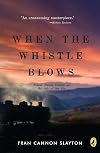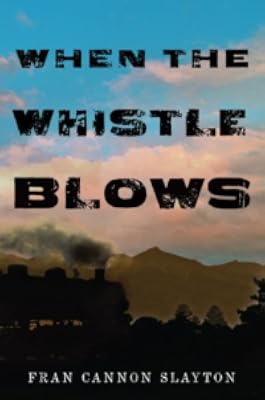
When the Whistle Blows
by Fran Slayton
On This Page
Description
Jimmy Cannon tells about his life in the 1940s as the son of a West Virginia railroad man, loving the trains and expecting one day to work on the railroad like his father and brothers.Tags
Recommendations






Member Reviews
Around the end of World War II, the tiny town of Rowlesburg, West Virginia, is undergoing some great and affecting changes. For years and years, steam engines have been a way of life for those living in Rowlesburg, but now there are rumors of diesel engines, and being out of a job, and the town turning into a ghost.
In the midst of this all is Jimmy Cannon, a typical boy who wants to have fun with his friends and have his father get off his back. Jimmy’s father wants him to escape the dying Rowlesburg, but Jimmy has his heart set on working on the railroads, just like every Cannon before him. As a result, he feels like his father is always working against him. As the years pass, however, and Jimmy gets into scrapes or learns lessons, show more he realizes that his impenetrable father may be one of the best men he’ll ever know.
If you like historical fiction coming-of-age vignettes, you can’t do any better than Fran Cannon Slayton’s debut, WHEN THE WHISTLE BLOWS. While it’s not the kind of fiction I usually enjoy, the voice, characters, setting, and stories are really all delightful.
The synopsis heavily emphasizes Jimmy’s relationship with his father, but really, that theme is rather a gentle undercurrent throughout that builds into a touching ending. I enjoyed every vignette, one for every Halloween between 1943 and 1949. Each story stands strong alone and shows us what life is like for the teenaged Jimmy growing up in rural West Virginia. They’re entertaining, such as Jimmy’s friends’ Halloween mischief; they’re heartwarming, with the high school football championship game.
Death, laughter, adolescent naivety, and growth weave in and out of the prose, which is age, gender, and regionally appropriate. Indeed, Jimmy’s voice feels remarkably genuine: you will not mistake him as anyone other than a boy growing up in mid-twentieth century America, and at the same time he is completely relatable.
The development of Jimmy’s relationship with his father may have been a bit too subtle for me, given the importance the book seems to place on this pivotal relationship. It can occasionally make the vignettes feel disjointed. Overall, however, I am satisfied with the subtlety; we’re not hit over the head with news of their relationship, which allows us to understand and appreciate Jimmy and his father individually.
Like I said earlier, historical fiction is not my forte, but even so I can see Jimmy’s stories resonated with me long after I closed this book. WHEN THE WHISTLE BLOWS has a magical and timeless appeal, and is probably one of the most understated debut books of the year, so I encourage you to pick this up if your interest is the slightest bit piqued. You will be rewarded for doing so. show less
In the midst of this all is Jimmy Cannon, a typical boy who wants to have fun with his friends and have his father get off his back. Jimmy’s father wants him to escape the dying Rowlesburg, but Jimmy has his heart set on working on the railroads, just like every Cannon before him. As a result, he feels like his father is always working against him. As the years pass, however, and Jimmy gets into scrapes or learns lessons, show more he realizes that his impenetrable father may be one of the best men he’ll ever know.
If you like historical fiction coming-of-age vignettes, you can’t do any better than Fran Cannon Slayton’s debut, WHEN THE WHISTLE BLOWS. While it’s not the kind of fiction I usually enjoy, the voice, characters, setting, and stories are really all delightful.
The synopsis heavily emphasizes Jimmy’s relationship with his father, but really, that theme is rather a gentle undercurrent throughout that builds into a touching ending. I enjoyed every vignette, one for every Halloween between 1943 and 1949. Each story stands strong alone and shows us what life is like for the teenaged Jimmy growing up in rural West Virginia. They’re entertaining, such as Jimmy’s friends’ Halloween mischief; they’re heartwarming, with the high school football championship game.
Death, laughter, adolescent naivety, and growth weave in and out of the prose, which is age, gender, and regionally appropriate. Indeed, Jimmy’s voice feels remarkably genuine: you will not mistake him as anyone other than a boy growing up in mid-twentieth century America, and at the same time he is completely relatable.
The development of Jimmy’s relationship with his father may have been a bit too subtle for me, given the importance the book seems to place on this pivotal relationship. It can occasionally make the vignettes feel disjointed. Overall, however, I am satisfied with the subtlety; we’re not hit over the head with news of their relationship, which allows us to understand and appreciate Jimmy and his father individually.
Like I said earlier, historical fiction is not my forte, but even so I can see Jimmy’s stories resonated with me long after I closed this book. WHEN THE WHISTLE BLOWS has a magical and timeless appeal, and is probably one of the most understated debut books of the year, so I encourage you to pick this up if your interest is the slightest bit piqued. You will be rewarded for doing so. show less
Reading more like a collection of short stories than a novel Slayton has created a touching and intimate look at the life of her main character Jimmy and his family. Transitioning from one year to the next using the central focus of one particular day (in this case Halloween) allows for each individual snapshot to flow together in a way that provides readers a great view of Jimmy’s life and how he’s lived it. The transitions are abrupt in the way that we are able to discern that a new year has come upon us but not so abrupt that the story doesn’t work or that we’re unable to follow along with the premise.
Where Slayton does a remarkable job is in showcasing the strong bond between Jimmy and his family. She does so delicately and show more in muted tones as we see festive, emotional and sometimes tragic events throughout the eyes of this boy. Slayton subtly shows his growth from a curious and precocious youngster into a thoughtful man while allowing him to maintain core values of tradition and family. Informing the story is the appearance of the local railroad through which the reader is threaded through the passage of time. Ever present in scene, dialogue or just as a thought in the mind of the reader it was this element that made the story more about home than anything else. The vivid imagery of Rowlesburg (Jimmy’s hometown) and it’s railroad industry allows the reader to really feel the character’s physical surroundings and relate to why it is that Jimmy has such a fondness for his hometown. In the end we learn that his life isn’t just all about the people he encountered but the place where he grew up and cherished. It informed his relationships and his decisions in a way any living and breathing family member would yet didn’t stand out as over the top or too dramatic a character.
In my opinion this book would be a great quick read for a reluctant boy. Not only does it focus on a male protagonist the situations tend to show situations that a boy may relate well to — pranks, sports, and general mischief. Even better, is the fact that within those elements are interwoven the more tangibly emotional aspects of family dynamics, work ethic and sense of belonging. There are some soulful and meaningful lessons to be learned.
This is not to say that the book is not appealing to girls as well as I enjoyed it a great deal. I just envision it’s greatest strength (characterization and plot) appealing to boys who don’t typically enjoy reading as much as playing sports or video games. Further, the fact that it is a quick read doesn’t diminish it’s impact on the reader. The story is in depth and emotional providing an entertaining and enjoyable journey from start to finish. show less
Where Slayton does a remarkable job is in showcasing the strong bond between Jimmy and his family. She does so delicately and show more in muted tones as we see festive, emotional and sometimes tragic events throughout the eyes of this boy. Slayton subtly shows his growth from a curious and precocious youngster into a thoughtful man while allowing him to maintain core values of tradition and family. Informing the story is the appearance of the local railroad through which the reader is threaded through the passage of time. Ever present in scene, dialogue or just as a thought in the mind of the reader it was this element that made the story more about home than anything else. The vivid imagery of Rowlesburg (Jimmy’s hometown) and it’s railroad industry allows the reader to really feel the character’s physical surroundings and relate to why it is that Jimmy has such a fondness for his hometown. In the end we learn that his life isn’t just all about the people he encountered but the place where he grew up and cherished. It informed his relationships and his decisions in a way any living and breathing family member would yet didn’t stand out as over the top or too dramatic a character.
In my opinion this book would be a great quick read for a reluctant boy. Not only does it focus on a male protagonist the situations tend to show situations that a boy may relate well to — pranks, sports, and general mischief. Even better, is the fact that within those elements are interwoven the more tangibly emotional aspects of family dynamics, work ethic and sense of belonging. There are some soulful and meaningful lessons to be learned.
This is not to say that the book is not appealing to girls as well as I enjoyed it a great deal. I just envision it’s greatest strength (characterization and plot) appealing to boys who don’t typically enjoy reading as much as playing sports or video games. Further, the fact that it is a quick read doesn’t diminish it’s impact on the reader. The story is in depth and emotional providing an entertaining and enjoyable journey from start to finish. show less
A coming-of-age story set in a Rowlesburg WV from 1943 to 1949. The Cannon men have always worked on the steam engines at the Baltimore & Oriole railroad. Jimmy can hardly wait to grow up and take his turn as a machinist. His father keeps warning his boys that the era of the steam engine is coming to an end and that a good education will give them more options, but Jimmy’s older brothers – Bill and Mike both quit school at sixteen to work on the engines.
The book shines a light on boyhood – night time mischief, football games, first day of deer hunting season, favorite teachers and hated principal. It’s also an exploration of the father-son relationship, and how one boy struggles to figure out just what kind of man his father show more is.
Slayton has organized the work as a series of snapshots. Each of the seven chapters takes place on the same calendar date but in seven successive years. I thought she handled this pretty well, though if the reader doesn’t notice the year changing (chapter subheadings are not something I usually read), it can be confusing. show less
The book shines a light on boyhood – night time mischief, football games, first day of deer hunting season, favorite teachers and hated principal. It’s also an exploration of the father-son relationship, and how one boy struggles to figure out just what kind of man his father show more is.
Slayton has organized the work as a series of snapshots. Each of the seven chapters takes place on the same calendar date but in seven successive years. I thought she handled this pretty well, though if the reader doesn’t notice the year changing (chapter subheadings are not something I usually read), it can be confusing. show less
Slayton, F.C. (2009). When the Whistle Blows. New York: Philomel Books.
9780399251894
162 pages.
Appetizer: Rooted in the history of 1940s Rowlesburg, West Virginia, this fictional story shares how Jimmy spends each All Hallows' Eve starting with the year he's twelve or thirteen to the time he's about eighteen or nineteen. Over the years, Jimmy and his friends and family deal with the loss of a loved one, seek revenge for a prank, battle for a day off of school, and compete in an intense football game, among other things.
The opening on the first page (quoted below) and the following descriptions of the space and of Jimmy's world sucked me in and kept me reading. For example, I absolutely love the description on mage five:
"It's cold out show more here. The fog's oozing down the sides of the mountains. Typical West Virginia October. But not typical Rowlesburg. I don't think I've ever been outside so late--or so early?--in my whole life. I blink to get my bearings. The town's different this time of night--like a log all hollowed out with dark rot. There are no bunches of us boys kicking the can in the street. No ladies headed towards the five-and-dime, swatting their kids in line behind them. Just lampposts and pavement and fog. Even the echo of the Mallet engine's whistle sounds like a ghost of its daylight self."
Nice, right?
Jimmy is growing up with the whistles of the trains always in the background and it seems with death always near by, since working the rails is dangerous work. As Jimmy ages, he takes on dealing with his evolving relationships with his older brothers and father. His father desires for Jimmy to stay in school and graduate instead of quitting to work on the railroad as the rest of his family has done. But Jimmy would like nothing more than to join his father and brothers.
I love the structure of the book, showing a short piece of Jimmy's life during the Halloween season and continue to grow the same tensions and reference the events of the previous years. Very well put together.
As I continued reading though, I did start to wonder about the lack of racial representation. Part of this is because in the first story, Jimmy is woken by his brother to follow the adult men to a secret society meeting. When reading that, my mind immediately went to the dark KKK place. And it was a nice break that that wasn't the direction the story was going. But as the stories went on, racial tensions are never addressed. World War II only gets one or two brief references and all of the female characters in the book exist at the very periphery of the stories.
Now, having given that critique, none of those things are the focus of the story. This is very much a boy book about the relationships among guys.
Dinner Conversation:
"Every time I go to jump on a steam train as it chugs its way through Rowlesburg--
Every time I throw out my hands to grab the rusty metal rungs and haul myself up onto the side of one of them black coal cars, hoisting my knees up over its churning, screeching wheels--
Every single time I jump on a train--my heart thumps even noisier in my ears than the clanking of the old iron horse I'm hopping onto" (p. 1).
"The society? A pilot light goes on in the back of my head. Whisperings I've heard before. Rumors about men meeting in the dead of night. Of unseen rituals. Secret initiations. My memory kick-starts, recollecting the way me and Mike--and in my earliest memories, even Bill--used to peek down the steps late at night, way after bedtime, watching Dad walk out the kitchen's door with a bottle of whiskey in his hand. Going to a meeting, Mary Etta, he'd say to Mom. A society meeting. A meeting we kids weren't supposed to know anything about, much less discuss" (p. 7).
"Meet me back here at eight o'clock to defend the honor of this Platoon!"
Cheers go up as if we're already avenged. Everyone gets on their bikes and rides off towards home. Everyone but Neil Fisher.
"Okay, ol'Platoon buddy, what's the plan?"
"I'll 'splain you the whole thing when we meet back here at eight, Neil."
"So you don't have one then."
I look over at him. "Right" (pp. 33-34).
"Mr. Evans came to Rowlesburg direct from New York City, and he thinks hunting is what he calls "savage." Us kids think he's what we call "an idiot." Lonnie Brice, who's been in the tenth grade for the last three years, called him a daggone Yankee to his face in the hallway just yesterday. Lonnie got a three-day suspension for that little bit of protest. So then Wigger Bowles did the same thing, and he got a three-day suspension, too. It wasn't until Mr. Evans had suspended about ten other boys that he finally figured out that he'd been suspending them all so they wouldn't have to be in school tomorrow, which is the first day of hunting season. Of course that's exactly what they'd wanted in the first place, so Mr. Evans had to back up and cancel every last one of their suspensions. Dad says they got all kinds of sense in New York City excepting the common kind" (p. 49).
To Go with the Meal:
To bring When the Whistle Blows into a class, I would probably read one of the early chapters aloud around Halloween. Then to incorporate a creative activity, a teacher could assign students to write their own All Hallows' Eve reflections or works of fictions. Students could also voice or write the stories of how their own families arrived in the U.S.
A teacher could also include the book into social studies lessons about American life in the 1940s. A teacher could focus on the book's sense of regionalism and the fact that Rowlesburg was a railroad town and the economic impact that has on a location as technologies change or companies close. A student interested in trains would probably enjoy the way they enter into the settings and tensions.
Tasty Rating: !!!! show less
9780399251894
162 pages.
Appetizer: Rooted in the history of 1940s Rowlesburg, West Virginia, this fictional story shares how Jimmy spends each All Hallows' Eve starting with the year he's twelve or thirteen to the time he's about eighteen or nineteen. Over the years, Jimmy and his friends and family deal with the loss of a loved one, seek revenge for a prank, battle for a day off of school, and compete in an intense football game, among other things.
The opening on the first page (quoted below) and the following descriptions of the space and of Jimmy's world sucked me in and kept me reading. For example, I absolutely love the description on mage five:
"It's cold out show more here. The fog's oozing down the sides of the mountains. Typical West Virginia October. But not typical Rowlesburg. I don't think I've ever been outside so late--or so early?--in my whole life. I blink to get my bearings. The town's different this time of night--like a log all hollowed out with dark rot. There are no bunches of us boys kicking the can in the street. No ladies headed towards the five-and-dime, swatting their kids in line behind them. Just lampposts and pavement and fog. Even the echo of the Mallet engine's whistle sounds like a ghost of its daylight self."
Nice, right?
Jimmy is growing up with the whistles of the trains always in the background and it seems with death always near by, since working the rails is dangerous work. As Jimmy ages, he takes on dealing with his evolving relationships with his older brothers and father. His father desires for Jimmy to stay in school and graduate instead of quitting to work on the railroad as the rest of his family has done. But Jimmy would like nothing more than to join his father and brothers.
I love the structure of the book, showing a short piece of Jimmy's life during the Halloween season and continue to grow the same tensions and reference the events of the previous years. Very well put together.
As I continued reading though, I did start to wonder about the lack of racial representation. Part of this is because in the first story, Jimmy is woken by his brother to follow the adult men to a secret society meeting. When reading that, my mind immediately went to the dark KKK place. And it was a nice break that that wasn't the direction the story was going. But as the stories went on, racial tensions are never addressed. World War II only gets one or two brief references and all of the female characters in the book exist at the very periphery of the stories.
Now, having given that critique, none of those things are the focus of the story. This is very much a boy book about the relationships among guys.
Dinner Conversation:
"Every time I go to jump on a steam train as it chugs its way through Rowlesburg--
Every time I throw out my hands to grab the rusty metal rungs and haul myself up onto the side of one of them black coal cars, hoisting my knees up over its churning, screeching wheels--
Every single time I jump on a train--my heart thumps even noisier in my ears than the clanking of the old iron horse I'm hopping onto" (p. 1).
"The society? A pilot light goes on in the back of my head. Whisperings I've heard before. Rumors about men meeting in the dead of night. Of unseen rituals. Secret initiations. My memory kick-starts, recollecting the way me and Mike--and in my earliest memories, even Bill--used to peek down the steps late at night, way after bedtime, watching Dad walk out the kitchen's door with a bottle of whiskey in his hand. Going to a meeting, Mary Etta, he'd say to Mom. A society meeting. A meeting we kids weren't supposed to know anything about, much less discuss" (p. 7).
"Meet me back here at eight o'clock to defend the honor of this Platoon!"
Cheers go up as if we're already avenged. Everyone gets on their bikes and rides off towards home. Everyone but Neil Fisher.
"Okay, ol'Platoon buddy, what's the plan?"
"I'll 'splain you the whole thing when we meet back here at eight, Neil."
"So you don't have one then."
I look over at him. "Right" (pp. 33-34).
"Mr. Evans came to Rowlesburg direct from New York City, and he thinks hunting is what he calls "savage." Us kids think he's what we call "an idiot." Lonnie Brice, who's been in the tenth grade for the last three years, called him a daggone Yankee to his face in the hallway just yesterday. Lonnie got a three-day suspension for that little bit of protest. So then Wigger Bowles did the same thing, and he got a three-day suspension, too. It wasn't until Mr. Evans had suspended about ten other boys that he finally figured out that he'd been suspending them all so they wouldn't have to be in school tomorrow, which is the first day of hunting season. Of course that's exactly what they'd wanted in the first place, so Mr. Evans had to back up and cancel every last one of their suspensions. Dad says they got all kinds of sense in New York City excepting the common kind" (p. 49).
To Go with the Meal:
To bring When the Whistle Blows into a class, I would probably read one of the early chapters aloud around Halloween. Then to incorporate a creative activity, a teacher could assign students to write their own All Hallows' Eve reflections or works of fictions. Students could also voice or write the stories of how their own families arrived in the U.S.
A teacher could also include the book into social studies lessons about American life in the 1940s. A teacher could focus on the book's sense of regionalism and the fact that Rowlesburg was a railroad town and the economic impact that has on a location as technologies change or companies close. A student interested in trains would probably enjoy the way they enter into the settings and tensions.
Tasty Rating: !!!! show less
Readers follow Jimmy Cannon's life between 1943 and 1949 as he relates events that are taking place in the little West Virginia town where his father is the railroad foreman. Each of the chapters takes place on All Hallows' Eve of that particular year, his father's birthday and a day that "you never know what kind of exciting things just might head down the tracks on All Hallows' Eve-- besides the trains, I mean." The ordinary events in this coming-of-age story are bittersweet and quietly luminous, and make for an enjoyable and nostalgic read.
Everything in this book takes place on Halloween, advancing a year with each chapter. Jimmy, beginning at age 12, lives in a small town in West Virginia where the steam railroad dominates the economy. He's anxious to join the railroad, but his stern and unreadable father predicts that the diesel trains will do away with the jobs eventually. The reader gets an understanding of how new technology can change a way of life for an entire community, as well as a glimpse of how much more freedom kids used to have and how the independence was good in a way but also how it made things really wild. I think kids will like it, though some who are looking for action may not like the time spent on how Jimmy doesn't understand his father. Some of the show more pranks can be fun to read about, like when the new principal (a Yankee) threatened to expell anyone who didn't come to school on the first day of the hunting season. Some men in the town, led by Jimmy's father, secretly boarded up all of the doors and windows of the school in the night so that no one could go to school. Imagine that happening today! show less
Jimmy Cannon lives in the little railroad town of Rowlesburg, West Virginia, and is a boy of his place and time. His world is Rail’s general store, and raising mischief with his pals, and going hunting, and playing on the high school football team. He grows up surrounded by the men of the town, from his troublesome older brothers Bill and Mike, to his Uncle Clarence the biology teacher, to the machinists of the railroad yard. Yet among all these men, the one man that Jimmy can never see eye-to-eye with is his father. Jimmy’s father doesn’t hunt, says that the railroad isn’t a worthwhile career for a man, and doesn’t believe that Jimmy’s football team can ever win the county championship. More alike than they know, Jimmy and show more his father share a orneriness that builds a wall between them. As Jimmy says, “I know I’ll never understand that man. Even if I live to another hundred All Hallows’ Eves.”
All Hallows Eve is a significant date for Jimmy because it’s the date of his father’s birthday. The seven connected stories that make up When The Whistle Blows begin on All Hallows’ Eve in 1943, and each takes place on All Hallow’ Eve in the following year. As the years pass, we follow Jimmy through experiences that range from lighthearted to tragic as he grows up and tries to find his place in the town. There is a midnight mission to spy on a secret society of older men, a plan to take revenge on some bullies that goes wildly awry, a new principal’s heretical refusal to close school on the first day of hunting season, heart-wrenching tragedies, and more. Throughout, Slayton deftly captures the experience of growing up “small town” in a bygone era without irony or judgement. When the Whistle Blows is as much Rowlesburg’s story as it is Jimmy’s, but at the heart of each of these tales is Jimmy’s struggle to comprehend his father. Step by step, each of these stories bring Jimmy closer to the heart of who his father truly is, until the end of his father’s story and the beginning of Jimmy’s own. Review by Book Dads show less
All Hallows Eve is a significant date for Jimmy because it’s the date of his father’s birthday. The seven connected stories that make up When The Whistle Blows begin on All Hallows’ Eve in 1943, and each takes place on All Hallow’ Eve in the following year. As the years pass, we follow Jimmy through experiences that range from lighthearted to tragic as he grows up and tries to find his place in the town. There is a midnight mission to spy on a secret society of older men, a plan to take revenge on some bullies that goes wildly awry, a new principal’s heretical refusal to close school on the first day of hunting season, heart-wrenching tragedies, and more. Throughout, Slayton deftly captures the experience of growing up “small town” in a bygone era without irony or judgement. When the Whistle Blows is as much Rowlesburg’s story as it is Jimmy’s, but at the heart of each of these tales is Jimmy’s struggle to comprehend his father. Step by step, each of these stories bring Jimmy closer to the heart of who his father truly is, until the end of his father’s story and the beginning of Jimmy’s own. Review by Book Dads show less
Members
- Recently Added By
Author Information
1 Work 170 Members
Awards and Honors
Awards
Distinctions
Classifications
- Genres
- Fiction and Literature, Kids, Tween, Children's Books
- DDC/MDS
- 813.6 — Literature & rhetoric American literature in English American fiction in English 2000-
- LCC
- PZ7 .S63128 .W — Language and Literature Fiction and juvenile belles lettres Fiction and juvenile belles lettres Juvenile belles lettres
- BISAC
Statistics
- Members
- 170
- Popularity
- 192,115
- Reviews
- 17
- Rating
- (3.78)
- Languages
- English
- Media
- Paper, Audiobook, Ebook
- ISBNs
- 14
- ASINs
- 3