
Daniel Martin
by John Fowles
On This Page
Description
A new trade paperback edition of "a masterpiece of symbolically charged realism....Fowles is the only writer in English who has the power, range, knowledge, and wisdom of a Tolstoy or James" (John Gardner, Saturday Review). The eponymous hero of John Fowles's largest and richest novel is an English playwright turned Hollywood screenwriter who has begun to question his own values. Summoned home to England to visit an ailing friend, Daniel Martin finds himself back in the company of people who show more once knew him well, forced to confront his buried past, and propelled toward a journey of self-discovery through which he ultimately creates for himself a more satisfying existence. A brilliantly imagined novel infused with a profound understanding of human nature, Daniel Martin is John Fowles at the height of his literary powers. show lessTags
Recommendations























Member Reviews
«Дэниел Мартин», Книга, которую сам Фаулз (31.03.1926–05.11.2005) называл «примером непривычной, выходящей за рамки понимания обывателя философии» и одновременно «попыткой постичь, каково это — быть англичанином». Перед вами — британский «сад расходящихся тропок».Фаулз — величайший прозаик нашего времени У него удивительное чувство слова, мастерское владение литературным языком и поразительный дар создавать show more поистине волшебные строки.«Дэниел Мартин» — настоящий tour de force, взрыв энергетического воображения и страстной искренности, книга, даже случайные недостатки которой, без сомнения, куда более привлекательны, чем скромные удачи многих других писателей. Калейдоскоп ярчайших персонажей и завораживающе-драматичных сюжетных поворотов… Равно хороши и сцены девонширского детства героя, и романтическая «идиллия» отношений с девушкой-соседкой, и изящно-ироничные картины гедонистического Голливуда, и изумительные «путевые заметки»… «Дэниел Мартин» — роман старомодный в лучшем смысле этого слова: читатель может войти в книгу и погрузиться в неё полностью. Несомненный шедевр… Образец сдержанного аристократизма. show less
This is a book about middle-aged angst. The protagonist is Daniel Martin, and we catch up with him living in California. He's in his forties, and living with a twenty-something actress. Both are from the UK and trying to make their way in Hollywood, Daniel as a screenwriter and Jenny as an actress. John Fowles is an excellent and very literate author. His character descriptions, and his descriptions of the feelings and emotions that Daniel faces in his mid-life crisis are breathtaking. The book is set internationally - as it starts in California, moves to England, and then to Cairo and Syria and it spans three decades of Daniel's life. Daniel realizes that he has to go back home to the UK to face his past in order to put his present show more into perspective. An old, unaddressed rift among Daniel and a couple of his friends kicks off his discovery of himself. We follow Daniel on his journey to self-discovery and we are there with all of his innermost feelings as he comes to terms with the past, deals with the present difficulties, and plans for a very uncertain future. The book is also an enduring love story that survives decades and distances. This is a big, sprawling tome of a book, that is riveting in its simplicity. Highly recommended. show less
Story: 2 / 10
Characters: 5
Setting: 7
Prose: 7
"Tell me a story." That's my reading philosophy. I pick up a book, either because it was recommended or won an annual genre award, but I don't read the description. I simply trust the author to reveal the story to me. I've gone years without reading the back of the book. After this book, that era is over.
Daniel Martin was the second book I've read by John Fowles. A work colleague recommended The Magus and I absolutely loved it. He then went on to recommend to Daniel Martin. Both books have fairly loose plots. While the latter does have significant events that result from the character relationships, the former doesn't. Basically nothing happens in Daniel Martin. Nothing in 700 pages. show more Unforgivable.
This was a long book to hate. Frankly, I'm scarred, afraid of returning to another John Fowles book in the future. Worse than that, I'm also going to have to start reading book descriptions. I would have known not to approach Daniel Martin if I had read the lacklustre description. Live and learn. show less
Characters: 5
Setting: 7
Prose: 7
"Tell me a story." That's my reading philosophy. I pick up a book, either because it was recommended or won an annual genre award, but I don't read the description. I simply trust the author to reveal the story to me. I've gone years without reading the back of the book. After this book, that era is over.
Daniel Martin was the second book I've read by John Fowles. A work colleague recommended The Magus and I absolutely loved it. He then went on to recommend to Daniel Martin. Both books have fairly loose plots. While the latter does have significant events that result from the character relationships, the former doesn't. Basically nothing happens in Daniel Martin. Nothing in 700 pages. show more Unforgivable.
This was a long book to hate. Frankly, I'm scarred, afraid of returning to another John Fowles book in the future. Worse than that, I'm also going to have to start reading book descriptions. I would have known not to approach Daniel Martin if I had read the lacklustre description. Live and learn. show less
I remember reading somewhere that this was John Fowles' difficult book. Having found most of his books rather tricky, that would explain why i've waited a long time before getting round to this one. Is it difficult? Perhaps. It plays with different timescales, narratives and perspectives. It deals with the inner worlds of some very privileged characters in a small anglo elite. It treats with philosophy, politics, social class and religion and it makes a very long journey out of what might be seen externally as a small event. But as an insight into its time and place - the over indulged immediate post war generation, transitioning from tradition to a very unsure new world, it is exceptionally thoughtful and creative. And as a book about show more the difficulties of love it is never less than intriguing, if self indulgent and over analytical. It's worth savouring and questioning.. show less
Renowned British novelist John Fowles published Daniel Martin in 1977, and has said that it is his favorite of his novels (in a 1986 interview with Professor Emerita Susan Onega of the University of Zaragoza: Jonathan, Richard, “Maramarietta.com, 2025, https://www.maramarietta.com/the-arts/fiction/john-fowles/, retrieved June 9, 2025). It’s a challenging work of fiction, and shows Fowles to be a master of the form. It will reward readers who love sophisticated conversation; erudite analyses of aesthetics and psychology; inward dialogue; and unorthodox approaches to writing fiction.
Dan Martin is a British screenwriter who in the 1970s has achieved worldly success in Hollywood. He’s attended Oxford University, been married and show more divorced, has a grown daughter, and is in a relationship with a young actress about his daughter’s age. A man with whom he attended Oxford (and is now a don) has fallen deathly ill and summons him from America because he wants to see Martin before he dies.
The meeting proceeds but events take a sudden shocking turn. As a result Dan vaults into a bout of soul searching; he realizes he has been pursuing the wrong things, including his partners, in his life, and now has a clear vision of what, and whom, he wants to pursue.
And this in broad strokes is the plot of the novel. But recounting the plot does nothing to establish in the prospective reader’s mind the depth of Dan’s yearning, nor of the erudition with which he pursues his goals. There is a lot of give and take, a lot of conversational thrusting and parrying with his chosen lover/wife/partner to be.
Along with deep and sometimes persuasive discussions of society and philosophy in England and America, we encounter Fowles’s playing with the narrative: he switches from third person to first person in an effort, I think, to capture Dan’s approach to his writing, and his view of himself. The book is full of philosophical asides, but they’re always in service to the protagonist’s thinking at the moment.
I’m reining myself in from doing a more in-depth analysis of this book. I will say it is rich in sparkling true-to-life conversation, spot-on in the way inner dialogues of highly educated people flow, surprising in how the author plays with narrative in an ultra-modern way, and rewarding in its dénouement.
https://bassoprofundo1.blogspot.com/2025/06/daniel-martin-by-john-fowles.html show less
Dan Martin is a British screenwriter who in the 1970s has achieved worldly success in Hollywood. He’s attended Oxford University, been married and show more divorced, has a grown daughter, and is in a relationship with a young actress about his daughter’s age. A man with whom he attended Oxford (and is now a don) has fallen deathly ill and summons him from America because he wants to see Martin before he dies.
The meeting proceeds but events take a sudden shocking turn. As a result Dan vaults into a bout of soul searching; he realizes he has been pursuing the wrong things, including his partners, in his life, and now has a clear vision of what, and whom, he wants to pursue.
And this in broad strokes is the plot of the novel. But recounting the plot does nothing to establish in the prospective reader’s mind the depth of Dan’s yearning, nor of the erudition with which he pursues his goals. There is a lot of give and take, a lot of conversational thrusting and parrying with his chosen lover/wife/partner to be.
Along with deep and sometimes persuasive discussions of society and philosophy in England and America, we encounter Fowles’s playing with the narrative: he switches from third person to first person in an effort, I think, to capture Dan’s approach to his writing, and his view of himself. The book is full of philosophical asides, but they’re always in service to the protagonist’s thinking at the moment.
I’m reining myself in from doing a more in-depth analysis of this book. I will say it is rich in sparkling true-to-life conversation, spot-on in the way inner dialogues of highly educated people flow, surprising in how the author plays with narrative in an ultra-modern way, and rewarding in its dénouement.
https://bassoprofundo1.blogspot.com/2025/06/daniel-martin-by-john-fowles.html show less
Rather like reading The Magus, updated for the middle-aged.
There is nothing surprising here: the elements of the story are laid out early on, and they follow their inevitable course.
As one would expect from Fowles, lots of insight, vivid description, careful dissecting of behaviour and motivation.
"Us-or-them" comparisons abound: England and America, England and Europe, Literature and Hollywood, Oxford and plebs.
There is nothing surprising here: the elements of the story are laid out early on, and they follow their inevitable course.
As one would expect from Fowles, lots of insight, vivid description, careful dissecting of behaviour and motivation.
"Us-or-them" comparisons abound: England and America, England and Europe, Literature and Hollywood, Oxford and plebs.
I have read just about all of Fowles' books, and this one is the best. The story grabs your interest from the beginning and holds it to the end. The author is a superior storyteller, and although his intellect is always on display, this book doesn't demand nearly as much of the reader as some of his others, such as the Magus.
Members
- Recently Added By
Lists

Favorite Long Books
330 works; 42 members

20th Century Literature
1,161 works; 55 members

Publisher's Weekly Bestsellers - Part II - 1940 - 1979
355 works; 6 members

Books I Own But Haven't Read
144 works; 2 members

Fiction with Men's Given Names in the Title
302 works; 11 members
Books We Love to Reread
695 works; 299 members
Author Information

48+ Works 26,195 Members
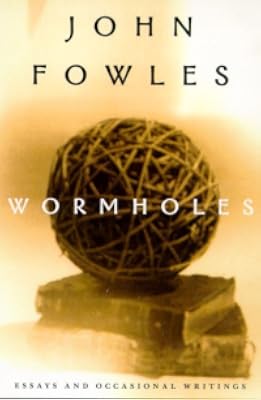
John Fowles was born in Essex, England, in 1926. He attended the University of Edinburgh for a short time, left to serve in the Royal Marines, and then returned to school at Oxford University, where he received a B.A. in French in 1950. Fowles taught English in France and Greece, as well as at St. Godric's College in London. Although the main show more theme in all Fowles's fiction is freedom, there are few other similarities in his books. He has deliberately chosen to explore a different style or genre for each novel: The Collector, his first novel, is an intellectual thriller; The Magus is an adolescent learning novel, tracing the emotional development of the central character; Daniel Martin tries, in the modernist style, to depict psychological reality; Mantissa is a comedic allegory that takes place entirely inside the narrator's head; Maggot combines mystery, science fiction, and history; and The Ebony Tower is a collection of short stories. Fowles explored yet another genre, historical fiction, with his best-known novel, The French Lieutenant's Woman, which received the W. H. Smith Literary Award in 1970 and was made into a movie, starring Meryl Streep and Jeremy Irons, in 1981. An intriguing feature of this novel is that it has three different endings. Fowles's nonfiction includes Aristos: A Self Portrait in Ideas; Poems; and Wormholes: Essays and Other Occasional Writings. In addition, he has written the text for several books of photographs, including The Tree, for which Fowles received the Christopher Award in 1982. He died on November 5, 2005 at the age of 79. (Bowker Author Biography) show less
Awards and Honors
Work Relationships
Common Knowledge
- Canonical title
- Daniel Martin
- Original title
- Daniel Martin
- Alternate titles*
- Дэниел Мартин : шедевр английской литературы в одном томе
- Original publication date
- 1977
- Epigraph
- The crisis consists precisely in the fact that the old is dying and the new cannot be born; in this interregnum a great variety of morbid symptoms appears. — Antonio Gramsci, Prison Notebooks
- First words
- Whole sight; or all the rest is desolation.
- Last words
- (Click to show. Warning: May contain spoilers.)That evening, in Oxford, leaning beside Janein her kitchen while she cooked supper for them, Dan told her with a suitable irony that at least he had found a last sentence for the novel he was never going to write. She laughed at such flagrant Irishry; which is perhaps why, in the end, and in the knowledge that Dan's novel can never be read, lies eternally in the future, his ill-concealed ghost has made that impossible last his own impossible first.
- Original language
- English
*Some information comes from Common Knowledge in other languages. Click "Edit" for more information.
Classifications
Statistics
- Members
- 1,268
- Popularity
- 19,412
- Reviews
- 10
- Rating
- (3.63)
- Languages
- 14 — Czech, Danish, English, Estonian, French, German, Hungarian, Italian, Polish, Romanian, Russian, Spanish, Swedish, Turkish
- Media
- Paper, Ebook
- ISBNs
- 30
- ASINs
- 16