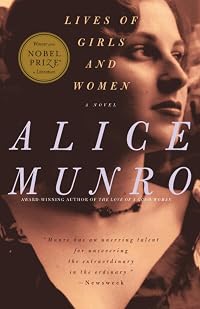
Lives of Girls and Women
by Alice Munro
On This Page
Description
WINNER OF THE NOBEL PRIZE(R) IN LITERATURE 2013 The only novel from Alice Munro-award-winning author of The Love of a Good Woman--is an insightful, honest book, "autobiographical in form but not in fact," that chronicles a young girl's growing up in rural Ontario in the 1940's. Del Jordan lives out at the end of the Flats Road on her father's fox farm, where her most frequent companions are an eccentric bachelor family friend and her rough younger brother. When she begins spending more time show more in town, she is surrounded by women-her mother, an agnostic, opinionted woman who sells encyclopedias to local farmers; her mother's boarder, the lusty Fern Dogherty; and her best friend, Naomi, with whom she shares the frustrations and unbridled glee of adolescence. Through these unwitting mentors and in her own encounters with sex, birth, and death, Del explores the dark and bright sides of womanhood. All along she remains a wise, witty observer and recorder of truths in small-town life. The result is a powerful, moving, and humorous demonstration of Alice Munro's unparalleled awareness of the lives of girls and women. show lessTags
Recommendations

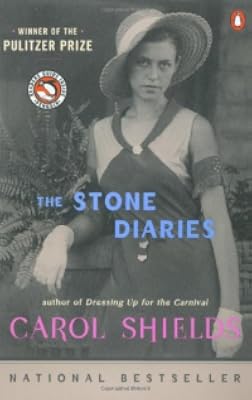
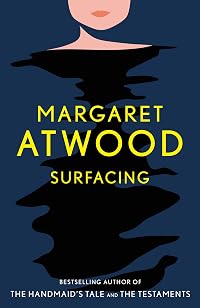

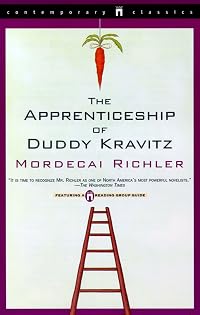
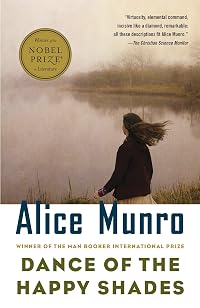








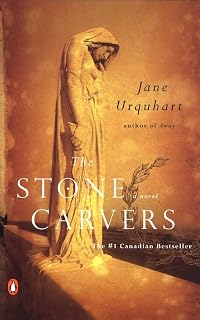
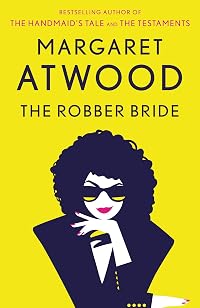
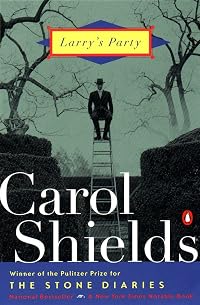
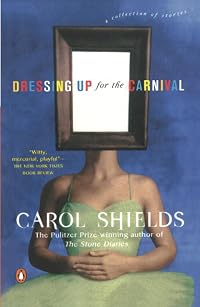
Member Recommendations
betterthanchocolate The young artist, educated. The provincial confines of small town Ontario, negotiated. And great prose.
by anonymous user
Jozefus De vergelijking is vaker gemaakt. Beide boeken bestaan uit losse verhalen over een protagonist(e) die opgroeit in een fictief provinciestadje. En in beide gevallen vertoont dat stadje een opvallende gelijkenis met de plaats waar de auteur zelf is opgegroeid.
Member Reviews
Chosen for our book group because of Munro's recent death, this was a fantastic read. I haven't read anything by her because I am not a fan of short stories and even though it could be argued this was not really a novel, it was more novel than a set of themed short stories.
The novel tells of the coming-of-age of Del, the narrator who is gradually revealed to us. The stories/chapters each detail a particular point in the growing up but also include all the details of small town life that are going on around Del and her family. We start with Flats Road where Del and her family live much to her mother's chagrin. The place is aptly named with Del's mother saying that they live at the end of Flats Road to make it sound as if they don't come show more from there. In this story we are introduced to the fact that Del's mother is a disappointed woman but one who has modern ideas that don't fit with the rest of her local society or family and who reminds me not a little of Mrs Bucket (pronounced Bouquet). This out of the way, small place is contrasted with the big city where Uncle Benny goes to rescue a little girl and who gets completely and utterly lost and can only come home, never getting to the address that he was searching for. Surely, this is a metaphor for their lives.
The third story, Princess Ida, shifts focus to Del's mother and being unfulfilled in terms of education. By this time, Del and her mother are living in Jubilee whilst Del's father and brother remain out on the edge of the country at the fox farm. Del's mother tries to break into the society where she feels she belongs but it appears desperate and she is ignored by the other women and eventually gives up. It is at this point that Del realises that she is embarrased by her mother and starts to consider her own place in the world.
For the women in this book there is a constant struggle between pride, shame, ambition and education versus sex, jobs and families. I loved the Aunts in the second story, Heirs of the Living Body, who were clever but trained to be domestic and were excellent at it. But sometimes, their cleverness slipped out as they discussed others,
The nimble malice that danced under their courtesies . . .
p49
The writing is sublime, smooth and flowing with all the detail of small towns beautifully brought to our attention. When talking about the woman who led the book club in Jubilee, Munro writes
She had a magnificent name she would serve up to people sometimes, like a scaly fish on a platter, all its silvery, scaly syllables intact, but it was no use, nobody in Jubilee could pronounce or remember it.
p92
In one sentence we learn of the town's difficulties with a foreign name, their attitudes towards it, and how its owner played on this.
I am pretty sure one of the questions that we will discuss will in some way focus on the different ways men and girls and women are portrayed in the book.
The men are frequently weak or failures - Del's dad and her brother and the failed fox farm, uncultured - Uncle Benny, abusive - Uncle Craig, violent and religious zealots, unattractive physically although interesting intellectually.
The women are often under-educated but clever, long -suffering, constantly butting up against society's expectations, spinsters and beautiful but very young. Del is a girl/woman who knows she wants more than Jubilee can offer and that she wants to be a writer. Marriage, babies, housework - she knows this is not for her and has seen the humiliation and shame this has brought on her mother. show less
The novel tells of the coming-of-age of Del, the narrator who is gradually revealed to us. The stories/chapters each detail a particular point in the growing up but also include all the details of small town life that are going on around Del and her family. We start with Flats Road where Del and her family live much to her mother's chagrin. The place is aptly named with Del's mother saying that they live at the end of Flats Road to make it sound as if they don't come show more from there. In this story we are introduced to the fact that Del's mother is a disappointed woman but one who has modern ideas that don't fit with the rest of her local society or family and who reminds me not a little of Mrs Bucket (pronounced Bouquet). This out of the way, small place is contrasted with the big city where Uncle Benny goes to rescue a little girl and who gets completely and utterly lost and can only come home, never getting to the address that he was searching for. Surely, this is a metaphor for their lives.
The third story, Princess Ida, shifts focus to Del's mother and being unfulfilled in terms of education. By this time, Del and her mother are living in Jubilee whilst Del's father and brother remain out on the edge of the country at the fox farm. Del's mother tries to break into the society where she feels she belongs but it appears desperate and she is ignored by the other women and eventually gives up. It is at this point that Del realises that she is embarrased by her mother and starts to consider her own place in the world.
For the women in this book there is a constant struggle between pride, shame, ambition and education versus sex, jobs and families. I loved the Aunts in the second story, Heirs of the Living Body, who were clever but trained to be domestic and were excellent at it. But sometimes, their cleverness slipped out as they discussed others,
The nimble malice that danced under their courtesies . . .
p49
The writing is sublime, smooth and flowing with all the detail of small towns beautifully brought to our attention. When talking about the woman who led the book club in Jubilee, Munro writes
She had a magnificent name she would serve up to people sometimes, like a scaly fish on a platter, all its silvery, scaly syllables intact, but it was no use, nobody in Jubilee could pronounce or remember it.
p92
In one sentence we learn of the town's difficulties with a foreign name, their attitudes towards it, and how its owner played on this.
I am pretty sure one of the questions that we will discuss will in some way focus on the different ways men and girls and women are portrayed in the book.
The men are frequently weak or failures - Del's dad and her brother and the failed fox farm, uncultured - Uncle Benny, abusive - Uncle Craig, violent and religious zealots, unattractive physically although interesting intellectually.
The women are often under-educated but clever, long -suffering, constantly butting up against society's expectations, spinsters and beautiful but very young. Del is a girl/woman who knows she wants more than Jubilee can offer and that she wants to be a writer. Marriage, babies, housework - she knows this is not for her and has seen the humiliation and shame this has brought on her mother. show less
I gave myself two days to settle with this book before even attempting a review. Two days of thinking and reflecting and confirming the marvel that is this book. As one can tell from the title of the book, Munro focuses on the relationships between girls and women in this book and each chapter marked a new development for Del, the protagonist of this story.
Del is a precocious girl living first at the outskirts and then in the poor small town of Jubilee, Canada. Her mother writes in the paper and sells encyclopedias, and is considered an eccentric for her agnosticism, beliefs in women’s reproductive rights and other notions that of course must have been extremely “liberal” in a small and religious town in the 1940s, and her father show more is a fox farmer who lingers at the edges of the story for the most part.
Told in the first person and from Del’s point of view, we journey with her through her childhood and the characters that people her life and thoughts, her awakenings and conflicts and disasters and emerge with her at the end, fully nourished. The kind of story that grows and grows with each turn of the page, filled with brilliant understandings of life, death, spiritualit(ies)y, friendships and love.
One of the most exciting and fascinating aspects of this story is the town of Jubilee itself and the rich detail Munro furnishes it with. From its economic and recreational activities to the townspeople themselves, she creates such an intricate mesh, a breathing steaming town.
If you liked Toni Morrison’s [b:Sula|11346|Sula|Toni Morrison|https://images.gr-assets.com/books/1441578153s/11346.jpg|3207953], William Maxwell’s [b:So Long, See You Tomorrow|14276|So Long, See You Tomorrow|William Maxwell|https://images.gr-assets.com/books/1390750749s/14276.jpg|1267189], Willa Cather’s [b:My Ántonia|17150|My Ántonia (Great Plains Trilogy, #3)|Willa Cather|https://images.gr-assets.com/books/1389151307s/17150.jpg|575450] or [b:The Neapolitan Novels|26828169|The Neapolitan Novels|Elena Ferrante|https://images.gr-assets.com/books/1443412457s/26828169.jpg|46858867] of Elena Ferrante, then you’ll most likely like this one too. With this book Munro solidifies her place in my heart as one of my favourite writers, a great book. show less
Del is a precocious girl living first at the outskirts and then in the poor small town of Jubilee, Canada. Her mother writes in the paper and sells encyclopedias, and is considered an eccentric for her agnosticism, beliefs in women’s reproductive rights and other notions that of course must have been extremely “liberal” in a small and religious town in the 1940s, and her father show more is a fox farmer who lingers at the edges of the story for the most part.
Told in the first person and from Del’s point of view, we journey with her through her childhood and the characters that people her life and thoughts, her awakenings and conflicts and disasters and emerge with her at the end, fully nourished. The kind of story that grows and grows with each turn of the page, filled with brilliant understandings of life, death, spiritualit(ies)y, friendships and love.
One of the most exciting and fascinating aspects of this story is the town of Jubilee itself and the rich detail Munro furnishes it with. From its economic and recreational activities to the townspeople themselves, she creates such an intricate mesh, a breathing steaming town.
If you liked Toni Morrison’s [b:Sula|11346|Sula|Toni Morrison|https://images.gr-assets.com/books/1441578153s/11346.jpg|3207953], William Maxwell’s [b:So Long, See You Tomorrow|14276|So Long, See You Tomorrow|William Maxwell|https://images.gr-assets.com/books/1390750749s/14276.jpg|1267189], Willa Cather’s [b:My Ántonia|17150|My Ántonia (Great Plains Trilogy, #3)|Willa Cather|https://images.gr-assets.com/books/1389151307s/17150.jpg|575450] or [b:The Neapolitan Novels|26828169|The Neapolitan Novels|Elena Ferrante|https://images.gr-assets.com/books/1443412457s/26828169.jpg|46858867] of Elena Ferrante, then you’ll most likely like this one too. With this book Munro solidifies her place in my heart as one of my favourite writers, a great book. show less
A masterful and seminal work of prose fiction, Alice Munro’s Lives of Girls and Women explores the place of women in mid-20th-century society and pivots on the gradual awakening of narrator Del Jorden to the realization that there is more to being female than catering to the needs of men. Resembling a collection of linked stories more so than a standard novel, Munro’s deeply felt, minutely observed narrative describes Del’s pre-teen and teenage years growing up in Jubilee, a small town in rural Ontario, in the years before, during and immediately following World War II. On the surface, Del’s upbringing does not challenge the boundaries of convention. Her father is an unassertive man who supports his family by raising foxes for show more pelts. Her mother is a housewife who has known hardship. But there is nothing conventional about Del’s approach to life, which is skeptical and outward-looking. Del’s intrepid, tireless curiosity is driven primarily by her vivacious, opinionated mother, who harbours lofty ambitions for her brainy daughter. (Indeed, as presented to the reader, Del’s father is little more than a cipher and plays a minimal role in her childhood.) In the opening story, “The Flats Road,” Del is living with her mother, father and younger brother Owen outside Jubilee on a shabby property where her father keeps his foxes and a few other animals. It is a neighbourhood populated by misfits and eccentrics where everyone is poor. Later on, Del has moved into Jubilee with her mother where they live in a rented house on River Street. Her mother takes in boarders, and, in “Princess Ida,” has embarked on a career selling encyclopedias. For Del on the cusp of womanhood, her mother—who does not attend church and expresses an acute disdain bordering on hostility for organized religion—who loves opera and pushes her daughter to excel at school—is a source of pride, embarrassment and inspiration. The novel chronicles the growth of Del’s complex interior life along with her occasionally reckless forays in the external world, and depicts her sexual awakening, her evolving attitude toward boys and love and the mysterious world beyond Jubilee that, she comes to realize, will nurture her but also try to crush her. The novel shows us Del’s struggles with her maturing body and the triumphs and misadventures that shape her into a self-aware young woman with a loving heart who values knowledge and independence. Lives of Girls and Women is a truthful, candid, supremely intelligent novel. Sometimes shocking, it is elegantly written with humour and irony. This is a novel that confronts human desire and depravity head on. It is not Alice Munro’s style to cushion the blow, to spare her characters suffering. Del Jordan often fails, sometimes in spectacular fashion. Her struggles are universal and sear themselves on the reader’s memory. Del Jordan is one of the most authentically human fictional characters you will ever encounter. Once you’ve read her story you will not forget her. show less
I had a hard time getting in to this story. It describes a world I've only read about, rural Canada before I was born. I was also put off by the negativity. The characters generally had negative views of the world. Whenever they could have seen something positive they instead found something negative to focus on. Eventually I was glad I persisted as this is a one of a kind that is worth the time.
We follow a central character, Del Jordan, a young girl growing up in a rural Canadian town. We also see, through Del's eyes, her mother, Ada. Indeed one way of interpreting what happens is Del slowly but surely rejecting Ada. Father and brother are out of town living on a failing fox farm and are much less central to the story. Ada is the town show more curmudgeon who rejects the religiosity of those around her. Ada's independence is through her work as a traveling encyclopedia sales person. She clearly sees her daughter as her chance to get beyond life in this closeminded society.
But Del has other ideas. As a young girl she explores the different churches and religions of her town. She secretly attends different services and examining the types of people she finds and the practices that each hold dear. She is not looking to join any of them but finds them all in some way comforting. As she gets a little older the experimentation and the rejection get a little more pointed. We witness Del's curiosity about bodies and sensuality and eventually smoking and drinking. This is where we I began to fell like a voyeur as Del explains her thoughts about topics rarely communicated to anyone else and even less described in detail in literature. Del is the smart girl in all her classes and Ada clearly expects her to win a scholarship and be able to move beyond the confines of the town, Del teams up with the top boy in school but eventually is drawn to someone she finds while attending Baptist services. He wins her heart and slowly but surely introduces her to sex. She's a willing partner. She doesn't work hard on the exam needed to get a scholarship and not surprisingly does not win one. Frank wants to marry her but wants her to first to be baptized which is a bridge too far for Del. It's a deal breaker for Frank.
I learned that this novel was really a cycle of short stories. This probably explains something strange. At two different points we are introduced to the same character as if we did not already know about her. At first I dismissed it as poor editing. Maybe it was done to keep each chapter more like a short story.
There's a epilogue where we learn than Del has become a writer. It almost felt like it was a way for Munro to introduce a little noise about who in her real life these characters were based on. It did not feel connected to the rest of the novel. show less
We follow a central character, Del Jordan, a young girl growing up in a rural Canadian town. We also see, through Del's eyes, her mother, Ada. Indeed one way of interpreting what happens is Del slowly but surely rejecting Ada. Father and brother are out of town living on a failing fox farm and are much less central to the story. Ada is the town show more curmudgeon who rejects the religiosity of those around her. Ada's independence is through her work as a traveling encyclopedia sales person. She clearly sees her daughter as her chance to get beyond life in this closeminded society.
But Del has other ideas. As a young girl she explores the different churches and religions of her town. She secretly attends different services and examining the types of people she finds and the practices that each hold dear. She is not looking to join any of them but finds them all in some way comforting. As she gets a little older the experimentation and the rejection get a little more pointed. We witness Del's curiosity about bodies and sensuality and eventually smoking and drinking. This is where we I began to fell like a voyeur as Del explains her thoughts about topics rarely communicated to anyone else and even less described in detail in literature. Del is the smart girl in all her classes and Ada clearly expects her to win a scholarship and be able to move beyond the confines of the town, Del teams up with the top boy in school but eventually is drawn to someone she finds while attending Baptist services. He wins her heart and slowly but surely introduces her to sex. She's a willing partner. She doesn't work hard on the exam needed to get a scholarship and not surprisingly does not win one. Frank wants to marry her but wants her to first to be baptized which is a bridge too far for Del. It's a deal breaker for Frank.
I learned that this novel was really a cycle of short stories. This probably explains something strange. At two different points we are introduced to the same character as if we did not already know about her. At first I dismissed it as poor editing. Maybe it was done to keep each chapter more like a short story.
There's a epilogue where we learn than Del has become a writer. It almost felt like it was a way for Munro to introduce a little noise about who in her real life these characters were based on. It did not feel connected to the rest of the novel. show less
The title of this novel by short story writer Alice Munro comes from the chapter of the same name in which Del Jordan's mother says to her "there is a change coming I think in the lives of girls and women. Yes. But it is up to us to make it all come. . . ". Published in 1972 during the rise of modern feminism its main characters are girls and women and their "making sense" of their world.
Like Munro's "The Beggar Maid," published later, this book consists of interconnected stories. However, the time frame here is much shorter than the later one and, therefore with fewer gaps in time, reads more like a novel.
It is the coming-of-age story of Del Jordan, from her early years at home on the farm, through her school days in town and, finally, show more graduation from high school. We learn of her early interest in reading and writing, and see her shaping her spiritual beliefs, sharing tittilating secrets with her best friend, her first crushes and first loves. Vignettes of people and events give a nostalgic and often very funny view of small town life.
The characters in the story are so carefully drawn with Munro's characteristic turn of phrase that they are brought vividly to life. None is more alive than Del's mother and her relationship with Del. While often disparaging of the remarks and advice of her mother, Del grows up with her own version of her mother's worldview.
An epilogue, a story in itself, describes Del's imagining her first short story, how it would be about her small town, and how she would change names and places to create something new, but based on truth. I suspect it is how this novel was constructed.
This early book is one in an oeuvre of work worthy of the Nobel Prize for literature, which Munro won in 2013. show less
Like Munro's "The Beggar Maid," published later, this book consists of interconnected stories. However, the time frame here is much shorter than the later one and, therefore with fewer gaps in time, reads more like a novel.
It is the coming-of-age story of Del Jordan, from her early years at home on the farm, through her school days in town and, finally, show more graduation from high school. We learn of her early interest in reading and writing, and see her shaping her spiritual beliefs, sharing tittilating secrets with her best friend, her first crushes and first loves. Vignettes of people and events give a nostalgic and often very funny view of small town life.
The characters in the story are so carefully drawn with Munro's characteristic turn of phrase that they are brought vividly to life. None is more alive than Del's mother and her relationship with Del. While often disparaging of the remarks and advice of her mother, Del grows up with her own version of her mother's worldview.
An epilogue, a story in itself, describes Del's imagining her first short story, how it would be about her small town, and how she would change names and places to create something new, but based on truth. I suspect it is how this novel was constructed.
This early book is one in an oeuvre of work worthy of the Nobel Prize for literature, which Munro won in 2013. show less
Lives of Girls and Women by Alice Munro is a collection of inter-woven short stories that chronicle the coming-of-age of Del Jordan and her relationships with various characters in the small Ontario town of Jubilee. Some classify this work as a novel but however one defines the book, the author’s gift of capturing human emotions through her beautiful and understated writing shines through.
The author captures many of the thoughts and feelings that females go through as they grow from little girls to young women. The uncertainty of maturing at different rates from one’s friends, the feelings of being left behind by one’s peers, the curiosity about life in general and sex in particular are told with humour, pathos, and drama. In show more writing about everyday events, Munro’s talent for remarkable and relatable prose is highlighted.
Lives of Girls and Women was my introduction to Alice Munro and this empathetic story about one young girl’s rites of passage was a pleasure to read. show less
The author captures many of the thoughts and feelings that females go through as they grow from little girls to young women. The uncertainty of maturing at different rates from one’s friends, the feelings of being left behind by one’s peers, the curiosity about life in general and sex in particular are told with humour, pathos, and drama. In show more writing about everyday events, Munro’s talent for remarkable and relatable prose is highlighted.
Lives of Girls and Women was my introduction to Alice Munro and this empathetic story about one young girl’s rites of passage was a pleasure to read. show less
I thought when I picked this up that it was a collection of short stories. It's not. It's a novel, albeit one that seems at first to be fairly loosely structured, about a girl coming of age in a small town in Ontario during and after World War II. It's the first thing of Munro's I've read aside from a couple of stories I encountered in anthologies, but based on those -- and, I guess, on the fact that she has a Nobel Prize to her name -- I expected to be impressed by this one, and I was not disappointed. Munro's writing is, well, impressive. She has a great talent for describing things -- people, places, emotions, experiences -- in perfectly apt, subtly insightful ways, and the result here simultaneously feels like one woman's very show more specific, personal story and like a broad, deep, realistic reflection on the lives of girls and women in general. show less
Members
- Recently Added By
Published Reviews
ThingScore 100
Geweldige dialogen, psychologische finesse, intensiteit, filosofische diepgang: het zijn de superieure ingrediënten van deze bijzondere collectie.
added by Jozefus
.Munro's women...often find themselves caught on the margins of shifting cultural mores and pulled between conflicting imperatives--between rootedness and escape, domesticity and freedom, between tending to familial responsibilities or following the urgent promptings of their own hearts.
added by KayCliff
A very likable book -- a very real book -- virtues not to be underestimated or overlooked.
added by Nickelini
Lists

1001 Books You Must Read Before You Die
1,448 works; 1,132 members

The Best of Canadian Literature
235 works; 33 members

Female Protagonist
1,056 works; 57 members
Female Author
1,235 works; 65 members

Books Set in Canada
80 works; 16 members

500 Great Books by Women
507 works; 60 members
Books Set in Small Towns and Villages
278 works; 16 members

Literary Works Read in College
316 works; 15 members

Books Read in 2018
4,360 works; 110 members

Canada
42 works; 3 members

To Read
29 works; 2 members

Books You Read For University
184 works; 3 members

Books recommended by Calgary Public Library staff
1,588 works; 4 members
Author Information

126+ Works 30,402 Members
Alice Munro was born Alice Laidlaw in Wingham, Ontario on July 10, 1931. She published her first story, The Dimensions of a Shadow, while a student at the University of Western Ontario in 1950. She left the university in 1951 to get married and start a family. In 1972 she became Writer in Residence at the University of Western Ontario. Her first show more collection, Dance of the Happy Shades, was published in 1968 and won the Governor General's Award, Canada's highest literary prize. Her other works include Lives of Girls and Women, The View from Castle Rock, Something I've Been Meaning to Tell You, Too Much Happiness, and Dear Life. She has received several awards including the Governor General's Award for fiction for Who Do You Think You Are? and The Progress of Love, the Giller Prize for Runaway in 2004, the Man Booker International Prize in 2009 for her lifetime body of work, and the 2013 Nobel Prize in Literature. Her stories have appeared in numerous publications including The New Yorker, The Paris Review, and The Atlantic Monthly. Also, in 2013, her title Dear Life: Stories made The New York Times Best Seller List. (Bowker Author Biography) show less
Awards and Honors
Notable Lists
Work Relationships
Is contained in
Has as a study
Has as a student's study guide
Common Knowledge
- Canonical title
- Lives of Girls and Women
- Original title
- Lives of Girls and Women
- Original publication date
- 1971
- Dedication
- for Jim
- First words
- We spent days along the Wawanash River, helping Uncle Benny fish.
- Quotations
- "Nothing that could be said by us would bring us together; words were our enemies....the world I saw with him was something not far from what I thought animals must see, the world without names."
"I opened it up at the want ads, and got a pencil, so I could circle any job that seemed possible. I made myself understand what I was reading, and after some time I felt a mild, sensible gratitude for these printed words, th... (show all)ese strange possibilities. " - Last words
- (Click to show. Warning: May contain spoilers.)"Yes," I said, instead of thank you.
- Original language
- English
Classifications
Statistics
- Members
- 2,063
- Popularity
- 10,045
- Reviews
- 48
- Rating
- (4.03)
- Languages
- 11 — Danish, Dutch, English, German, Hebrew, Hungarian, Italian, Polish, Portuguese, Spanish, Swedish
- Media
- Paper, Audiobook, Ebook
- ISBNs
- 68
- ASINs
- 12