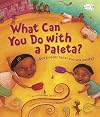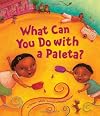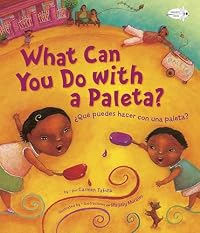
What Can You Do with a Paleta? (Tomas Rivera Mexican American Children's Book Award)
by Carmen Tafolla, Magaly Morales (Illustrator)
On This Page
Description
A young Mexican American girl celebrates the paleta, an icy fruit popsicle, and the many roles it plays in her lively barrio.Tags
Recommendations




Member Reviews
There's more to do with a paleta (popsicle) than just eat it - you can turn your tongue colors and scare your brother, learn to make tough decisions (which flavor?), make new friends, give yourself a big blue mustache, make a masterpiece, use it to cool off, and more! This is a warm-toned, joyful celebration of life in the young narrator's barrio, and would make a great read-aloud at storytime.
This was read for the week 6 discussion post.
I was transported to the Mexican-American barrio in this book and could taste the flavors of the paletas as the little girl in the story explained all the myriad of ways one can enjoy and use a popsicle! The author includes many sensory details.
I was transported to the Mexican-American barrio in this book and could taste the flavors of the paletas as the little girl in the story explained all the myriad of ways one can enjoy and use a popsicle! The author includes many sensory details.
Two kids get paletas from the paleta cart and think of all the things they can do with them. They could draw on the ground, they could give themselves a mustache, but they decide the best thing to do is to eat them.
Fairly simple, but lovely colorful drawings. There are enough Spanish words to provide a sense of specificity but not so many that I, a person who does not know any Spanish, couldn’t easily read it. My niece was not terribly into it yet but we’re going to get paletas soon so hopefully that will change.
Fairly simple, but lovely colorful drawings. There are enough Spanish words to provide a sense of specificity but not so many that I, a person who does not know any Spanish, couldn’t easily read it. My niece was not terribly into it yet but we’re going to get paletas soon so hopefully that will change.
Summary: The book begins, "What would you do with a Paleta?" There is then a description of where you can find a paleta, where the roses bloom beautiful colors, where you can smell crispy tacos and warm buttery tortillas. It then goes into detail with all of the ideas one could do with a paleta, such as making tough decisions between flavors, making friends by sharing, creating a masterpiece with the colors of the paleta. The list continues, and the story ends just how it began by asking, "what can you do with a paleta?", and describing the roses, sound of the accordion, and aromatic smell of the food.
Personal Reaction: I found this book refreshing. It is not often that I hear Hispanic American children's literature. This story show more incorporated repetition as well as clues from the pictures. Although I did not know what paleta was in the beginning of the story, the pictures were so stunning and revealing it didn't take long. There were other words used in the story as well that were in spanish, but flowed nicely because of the way they were used and the pictures. It was not only a fun book, because who doesn't love ice cream, it gave insight into another culture, touched on sharing, and was a great example of how to show kindness to one another. There was a very personal feel to the story that was heartwarming.
Extension Ideas:
1. Teach the class a couple key phrases in Spanish, and continue using them throughout the duration of the school year.
2. Make homemade ice cream in the classroom! show less
Personal Reaction: I found this book refreshing. It is not often that I hear Hispanic American children's literature. This story show more incorporated repetition as well as clues from the pictures. Although I did not know what paleta was in the beginning of the story, the pictures were so stunning and revealing it didn't take long. There were other words used in the story as well that were in spanish, but flowed nicely because of the way they were used and the pictures. It was not only a fun book, because who doesn't love ice cream, it gave insight into another culture, touched on sharing, and was a great example of how to show kindness to one another. There was a very personal feel to the story that was heartwarming.
Extension Ideas:
1. Teach the class a couple key phrases in Spanish, and continue using them throughout the duration of the school year.
2. Make homemade ice cream in the classroom! show less
This was a very cute book. My favorite part was the illustrations which were captivating and colorful. This is a book that celebrates cultural diversity. This is a great book to use in a classroom as well as at home to introduce kids to a culture which they may not know much about: Mexican-American families. Although the greatest part about this book was that it is written in English and in Spanish too. This would be so ideal for bilingual classrooms!
I enjoyed the book “What can you do with a paleta” for various of reasons. First, the book was a bilingual book which is so essential to what many students face which is being knowledgeable of one language but being unable to transfer that information to another language. This books allow students to be exposed to multiple languages at once. I also enjoy the book because of the recognition of the culture used along with the illustrations. The pictures were very descriptive and related to Mexican-American children. Next, I love the way the language transition and how the text is formatted. For ELL students, they can read the language that they are accustomed to and under there is the proper translation that matches the words. For show more students who speak English, they can have exposure to a new language and connect it to theirs right above it. Last, the structure of the book is important. How the book is set up, the students would read the Spanish version and the English translation is under that text. Overall, I believe that this book does a great job of exposure and incorporating culture into the classroom. show less
This is a very fun and easy read for children. Although I am not a native spanish-speaker, this book made it very simple to learn and read spanish words through recognition and context. The book is intended for a latin-american child or children who transition through english to spanish daily. In this book, we follow two characters, in which one character gives a tour of the barrio (neighborhood). In doing this, we learn simple spanish words and can enjoy the festivities and importance of community. The illustrations use bright colors which are complimentary to the hispanic tradition, as well as depicting the barrio setting, which many are familiar with but some may not know about. We learn all about how the paleta is a sweet, juicy show more popscicle treat which is the star of the barrio on a hot summers day. There are so many things to do with a paleta, and I didn't even know what it was before reading this book! show less
Members
- Recently Added By
Lists

Children's picture books with kids of color
129 works; 15 members
Author Information

30+ Works 1,415 Members
Some Editions
Awards and Honors
Awards
Distinctions
Notable Lists
Common Knowledge
- Original publication date
- 2014
Classifications
Statistics
- Members
- 490
- Popularity
- 61,330
- Reviews
- 31
- Rating
- (4.06)
- Languages
- English, Multiple languages
- Media
- Paper, Ebook
- ISBNs
- 13
- ASINs
- 2