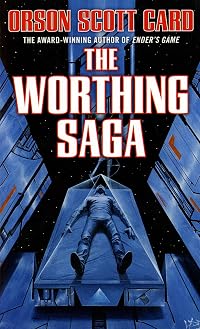
The Worthing Saga
by Orson Scott Card
The Worthing Chronicle (Collections and Selections — omnibus (3, plus selections from 1))
On This Page
Description
It was a miracle of science that permitted human beings to live, if not forever then for a long, long time. Some people, anyway. The rich, the powerful, they lived their lives at the rate of one year every ten. Somec created two societies: that of people who lived out their normal span and died, and those who slept away the decades, skipping over the intervening years and events. It allowed great plans to be put into motion. It allowed interstellar empires to be built. It came near to show more destroying humanity.After eons of decadence and stagnation, a few seed ships were sent out to save our species. Each carried human embryos, supplies, teaching robots, and one man. The Worthing Saga is the story of one of these men, Jason Worthing, and the world he found for the seed he carried.
This is a full cast recording, with an afterword read by Orson Scott Card.
. show less
Tags
Recommendations
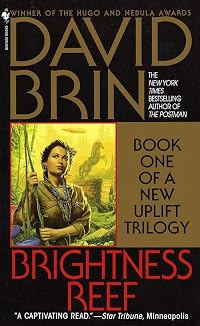
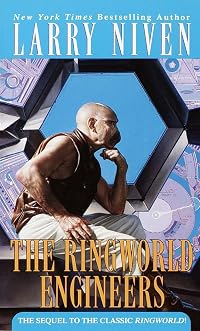
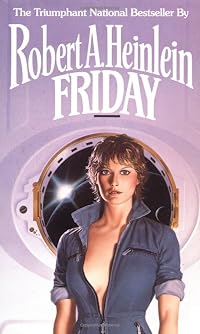
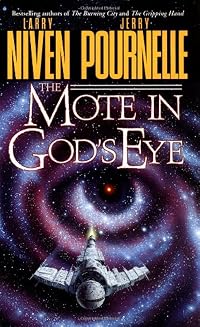





Member Recommendations
sturlington Theme of achieving immortality.
Member Reviews
First sentence: In many places in the Peopled Worlds, the pain came suddenly in the midst of the day's labor. It was as if an ancient and comfortable presence left them, one that they had never noticed until it was gone, and no one knew what to make of it at first, though all knew at once that something had changed deep at the heart of the world.
ETA: I think this is the fourth time I've reviewed it for Becky's Book Reviews. I listened on audio book this time around. IT was mostly great. I absolutely love the first half--the framework stories. The short stories are hit and miss. I like some of them a LOT...and I detest/loathe others. The book as a whole is one that sticks with me vividly.
Premise/plot: Lared's life is turned upside down show more when 'the Day of Pain' comes. The son of a blacksmith, Lared, has been accustomed--as has the whole world, to life being somewhat safe, comfortable, routine. They know no other life. Truly the idea of pain, sorrow, grief being completely and totally foreign. Yet all that changes on 'the day of pain' and soon two strangers will come to their village and Lared will learn the truth--the whole truth and nothing but the truth. It won't always be easy or fun. In fact, Lared will hate most of what he's given. Yet Lared will write a true history...'the worthing saga.'
My Thoughts: Worthing Saga is one of my favorite, favorite books. And my FAVORITE Card novel. (Though I love Ender's Game and Speaker for the Dead.)
I love the world-building. I find the three settings within the book to be fascinating. (There is Lared's home planet which is the present-day setting; there is Capital, the planet from Jason Worthing's memory and stories, Capital becomes "real" to Lared as he experiences Worthing's memories through dreams; there is Worthing, the planet that Jason colonized with a handful of colonists thousands of years before the novel opens, again this planet becomes "real" to Lared as he experiences other people's memories through Justice, Jason's descendent.) Readers get a taste of all these societies and communities. Capital is decadent and immoral and corrupt. It is obsessed with the notion of eternity--of living forever. It "lives forever" by drug use. Somec. You might be under Somec--asleep--for anywhere from one year to ten years, and then awake for anywhere from one day (like the Empress) to three years. But somec disrupts EVERYTHING good and natural about life. An example of the decadence and immorality can be seen in the "lifeloops." People filming/recording their "real" lives for everyone to watch. Most--if not all lifeloops--are graphic in nature. It's hard not to be disgusted by the depiction. (For example, one actress complaining to her agent that he better not hire any seven year old boys for her next film.) Closely connected to the world-building, is the mythology of it. How Abner Doon's name lives on. He IS the devil. How Jason Worthing's name lives on. How people see him as being GOD. Both men are very much human, having strengths and weaknesses, being oh-so-fallible. But they have become collectively so much more than that. They've lost their humanity. Truth has been shaped and reshaped too many times to allow for them to be just human.
I love the characterization. I love getting to know Lared, Sala, Jason, and Justice. Not to mention all the men and women from the memories and stories. (I have a soft spot for Hoom.) I love the storytelling. I love the dialogue. I love how everything is layered together. How the story all comes together. How Lared slowly but surely pieces things together and comes to understand--if understand is the right word--the world. Card's characters are so very human, so vulnerable, so fallible. Readers see humans at their best and at their absolute worst within The Worthing Saga. Moments of compassion and redemption make it so worth while.
I love the ideas. I love the depth and substance. That is not to say that I agree absolutely with every single philosophical idea within the book. But it goes places most fiction doesn't. It asks real questions, tough questions. It explores ideas. One also sees the consequences (or possible consequences) of ideas. But it encourages you to think about deep things, to explore questions like why is there pain? why is there suffering? would the world be a better place without pain, without suffering? Is pain a necessary evil? Do we only feel joy and happiness because we know about pain and sorrow? what makes life beautiful? do we become better people through our struggles with life?
I do enjoy the framework. The Worthing Chronicle (1982) makes up half of The Worthing Saga. This is THE story with Lared being visited by Jason and Justice shortly after the day of pain disrupts his community. (It really is a haunting opening.) The second half of the book consists of short stories. Most of these short stories were written years before The Worthing Chronicle and were previously published. Tales of Capitol (1979): "Skipping Stones," "Second Chance," "Lifeloop," "Breaking the Game," "Killing Children," and "What Will We Do Tomorrow." Tales from the Forest of Waters (1990, 1980): "Worthing Farm," "Worthing Inn," and "The Tinker." Of these stories, I find Skipping Stones, Second Chance, and Breaking the Game to be most memorable. After you've read these stories, you almost need to go back and reread the first section. I'm not sure you can fully appreciate the book without rereading it a few times and absorbing it. Most of the stories--but certainly not all of them--are emotional. I love that the book is a book to be EXPERIENCED.
ETA: YET I do have to say that I don't absolutely love everything. Some of the stories are EXTREMELY graphic and disturbing...one might even say disgusting. Not all of the stories. Not even most of the stories. And they are there to show the corruption and sickness of what humanity has become...so I guess they somewhat serve a purpose. Yet this one is distasteful in places. show less
ETA: I think this is the fourth time I've reviewed it for Becky's Book Reviews. I listened on audio book this time around. IT was mostly great. I absolutely love the first half--the framework stories. The short stories are hit and miss. I like some of them a LOT...and I detest/loathe others. The book as a whole is one that sticks with me vividly.
Premise/plot: Lared's life is turned upside down show more when 'the Day of Pain' comes. The son of a blacksmith, Lared, has been accustomed--as has the whole world, to life being somewhat safe, comfortable, routine. They know no other life. Truly the idea of pain, sorrow, grief being completely and totally foreign. Yet all that changes on 'the day of pain' and soon two strangers will come to their village and Lared will learn the truth--the whole truth and nothing but the truth. It won't always be easy or fun. In fact, Lared will hate most of what he's given. Yet Lared will write a true history...'the worthing saga.'
My Thoughts: Worthing Saga is one of my favorite, favorite books. And my FAVORITE Card novel. (Though I love Ender's Game and Speaker for the Dead.)
I love the world-building. I find the three settings within the book to be fascinating. (There is Lared's home planet which is the present-day setting; there is Capital, the planet from Jason Worthing's memory and stories, Capital becomes "real" to Lared as he experiences Worthing's memories through dreams; there is Worthing, the planet that Jason colonized with a handful of colonists thousands of years before the novel opens, again this planet becomes "real" to Lared as he experiences other people's memories through Justice, Jason's descendent.) Readers get a taste of all these societies and communities. Capital is decadent and immoral and corrupt. It is obsessed with the notion of eternity--of living forever. It "lives forever" by drug use. Somec. You might be under Somec--asleep--for anywhere from one year to ten years, and then awake for anywhere from one day (like the Empress) to three years. But somec disrupts EVERYTHING good and natural about life. An example of the decadence and immorality can be seen in the "lifeloops." People filming/recording their "real" lives for everyone to watch. Most--if not all lifeloops--are graphic in nature. It's hard not to be disgusted by the depiction. (For example, one actress complaining to her agent that he better not hire any seven year old boys for her next film.) Closely connected to the world-building, is the mythology of it. How Abner Doon's name lives on. He IS the devil. How Jason Worthing's name lives on. How people see him as being GOD. Both men are very much human, having strengths and weaknesses, being oh-so-fallible. But they have become collectively so much more than that. They've lost their humanity. Truth has been shaped and reshaped too many times to allow for them to be just human.
I love the characterization. I love getting to know Lared, Sala, Jason, and Justice. Not to mention all the men and women from the memories and stories. (I have a soft spot for Hoom.) I love the storytelling. I love the dialogue. I love how everything is layered together. How the story all comes together. How Lared slowly but surely pieces things together and comes to understand--if understand is the right word--the world. Card's characters are so very human, so vulnerable, so fallible. Readers see humans at their best and at their absolute worst within The Worthing Saga. Moments of compassion and redemption make it so worth while.
I love the ideas. I love the depth and substance. That is not to say that I agree absolutely with every single philosophical idea within the book. But it goes places most fiction doesn't. It asks real questions, tough questions. It explores ideas. One also sees the consequences (or possible consequences) of ideas. But it encourages you to think about deep things, to explore questions like why is there pain? why is there suffering? would the world be a better place without pain, without suffering? Is pain a necessary evil? Do we only feel joy and happiness because we know about pain and sorrow? what makes life beautiful? do we become better people through our struggles with life?
I do enjoy the framework. The Worthing Chronicle (1982) makes up half of The Worthing Saga. This is THE story with Lared being visited by Jason and Justice shortly after the day of pain disrupts his community. (It really is a haunting opening.) The second half of the book consists of short stories. Most of these short stories were written years before The Worthing Chronicle and were previously published. Tales of Capitol (1979): "Skipping Stones," "Second Chance," "Lifeloop," "Breaking the Game," "Killing Children," and "What Will We Do Tomorrow." Tales from the Forest of Waters (1990, 1980): "Worthing Farm," "Worthing Inn," and "The Tinker." Of these stories, I find Skipping Stones, Second Chance, and Breaking the Game to be most memorable. After you've read these stories, you almost need to go back and reread the first section. I'm not sure you can fully appreciate the book without rereading it a few times and absorbing it. Most of the stories--but certainly not all of them--are emotional. I love that the book is a book to be EXPERIENCED.
ETA: YET I do have to say that I don't absolutely love everything. Some of the stories are EXTREMELY graphic and disturbing...one might even say disgusting. Not all of the stories. Not even most of the stories. And they are there to show the corruption and sickness of what humanity has become...so I guess they somewhat serve a purpose. Yet this one is distasteful in places. show less
The Worthing Saga is a collection of Card’s works originally published separately that depict the zenith, subsequent collapse and rise again of a far-future human society. In this culture, a drug called somec, which produces a state of suspended animation, has made long-distance spaceflight a possibility, but has also engendered a pseudo-immortality for the rich and privileged, who sleep away years of their lives and only awaken for brief periods. As a result, they are like stones skipping along the surfaces of their lives, rather than actually living them.
In the opening novella, The Worthing Chronicle, Jason Worthing relates the history of this culture. His family has genetically inherited psychic abilities, but a massacre caused by show more Jason’s father has made all the Worthings outcasts. He grows up on a planet called Capitol, which has been completely covered by buildings and infrastructure. Learning of a plot to bring down Capitol, Worthing leaves for an unsettled planet with a pre-selected group of colonists: his own enemies and detractors. But an accident during the journey causes the colonists’ memories to be destroyed while they are under the somec. Essentially, they are adult infants who Worthing must teach and raise, giving him the opportunity to create a culture entirely from scratch. Eventually, he leaves his fledgling society in the hands of his descendants and goes to sleep for several thousand years, until they have advanced enough to figure out how to awaken him.
While Worthing is sleeping, his family’s genetic abilities are augmented by inbreeding, until they become so psychically powerful that they are able to control the lives of their subjects. They eliminate pain, grief and accidental death, creating a veritable paradise, one in which human progress is essentially stalled, however. Then one day, pain returns to the world, as does Jason Worthing.
This history, related by Worthing through dreams to a young scribe, is fascinating and often harrowing, covering tens of thousands of years of history and leading up to an explanation for why pain, death and sorrow have returned. The short stories that follow fill in the gaps left by the novella, detailing some of the more critical events in the history of Capitol and Worthing. Card has fully realized several societies in The Worthing Saga, and his answers to the what-if questions he poses — What if immortality were possible? What if pain and suffering were eliminated? — are both epic and meaningful. show less
In the opening novella, The Worthing Chronicle, Jason Worthing relates the history of this culture. His family has genetically inherited psychic abilities, but a massacre caused by show more Jason’s father has made all the Worthings outcasts. He grows up on a planet called Capitol, which has been completely covered by buildings and infrastructure. Learning of a plot to bring down Capitol, Worthing leaves for an unsettled planet with a pre-selected group of colonists: his own enemies and detractors. But an accident during the journey causes the colonists’ memories to be destroyed while they are under the somec. Essentially, they are adult infants who Worthing must teach and raise, giving him the opportunity to create a culture entirely from scratch. Eventually, he leaves his fledgling society in the hands of his descendants and goes to sleep for several thousand years, until they have advanced enough to figure out how to awaken him.
While Worthing is sleeping, his family’s genetic abilities are augmented by inbreeding, until they become so psychically powerful that they are able to control the lives of their subjects. They eliminate pain, grief and accidental death, creating a veritable paradise, one in which human progress is essentially stalled, however. Then one day, pain returns to the world, as does Jason Worthing.
This history, related by Worthing through dreams to a young scribe, is fascinating and often harrowing, covering tens of thousands of years of history and leading up to an explanation for why pain, death and sorrow have returned. The short stories that follow fill in the gaps left by the novella, detailing some of the more critical events in the history of Capitol and Worthing. Card has fully realized several societies in The Worthing Saga, and his answers to the what-if questions he poses — What if immortality were possible? What if pain and suffering were eliminated? — are both epic and meaningful. show less
It's hard to believe that this is a 70's scifi! I even double-checked to make sure it really was written in the 70s.
The story comes ahead of the scifi, the characters feel real, and the author makes you care what happens. There's an underlying sense of injustice running throughout that the author makes us want to correct. I wanted the story to go faster - not to get through it but because I wanted to know what happened before it actually did. I ended up not skipping to the finish to find out, but it was a struggle to restrain myself.
The story comes ahead of the scifi, the characters feel real, and the author makes you care what happens. There's an underlying sense of injustice running throughout that the author makes us want to correct. I wanted the story to go faster - not to get through it but because I wanted to know what happened before it actually did. I ended up not skipping to the finish to find out, but it was a struggle to restrain myself.
Consider me a fan of Orson Scott Card. More specifically, consider me a fan of most of the books he wrote in the 80's and 90's. The Worthing Sage is from that era and is a crafty blend of science fiction and fantasy, and it succeeds in addressing themes generally out of reach for other genres.
Through the scientific magic of somec, a drug that allows for extended periods of ageless sleep, one can now exist past a normal life span, and, with the right technology, one can also travel immense interstellar distances to colonize worlds across the galaxy. This is the story of Jason Worthing's journey across time and through space, and of the new world he built and would ultimately alter it forever.
This book is actually a compilation of an show more earlier novel, The Worthing Chronicle, and a series of short stories starring some of the secondary characters. show less
Through the scientific magic of somec, a drug that allows for extended periods of ageless sleep, one can now exist past a normal life span, and, with the right technology, one can also travel immense interstellar distances to colonize worlds across the galaxy. This is the story of Jason Worthing's journey across time and through space, and of the new world he built and would ultimately alter it forever.
This book is actually a compilation of an show more earlier novel, The Worthing Chronicle, and a series of short stories starring some of the secondary characters. show less
I have read Capitol, Hot Sleep, and the Worthing Chronicle, so much of this novel was not new. However, the presentation and format was different, and there is definitely new material that adds to the story.
Much of the Capitol - Worthing - Somec story is a dystopian tale. Sometimes the stories are depressing or hard to read. However, I have found value in each one. The book is centered around one large narrative, which pieces together some short stories of the past, and then closes with some more short stories.
I find something magical, mystical, and sometimes a little prophetic in this story of characters. One of the greatest things I get from Card's writing is instruction on human behavior and how people act in certain situations. show more Often this is painful, sometimes it is revelatory, and rarely it is victorious. I think this mirrors how our own lives go. We stumble through life with family, friends, and acquaintances and (for myself) seem to follow this pattern. show less
Much of the Capitol - Worthing - Somec story is a dystopian tale. Sometimes the stories are depressing or hard to read. However, I have found value in each one. The book is centered around one large narrative, which pieces together some short stories of the past, and then closes with some more short stories.
I find something magical, mystical, and sometimes a little prophetic in this story of characters. One of the greatest things I get from Card's writing is instruction on human behavior and how people act in certain situations. show more Often this is painful, sometimes it is revelatory, and rarely it is victorious. I think this mirrors how our own lives go. We stumble through life with family, friends, and acquaintances and (for myself) seem to follow this pattern. show less
This book needs it’s own blog post, or two. As a writer – just reading this book you learn so much abut the writing process and how to see other characters through one character’s eyes. You can also learn how to weave, I think it was 20,000 years of history into a story, and literally thousands of characters as well, and the story still makes perfect sense. Not only that, he also picked a current time, and wove the telling of the ancient story within the current storyline in an excellent manner.
Also, a bit Tolkeinish – he kept his originals of some of the stories of characters and included expanded versions of their stories as separate stories at the end of the book. By the end, you really know the minor characters much better, show more and are glad to get to know them. The last two short stories, didn’t match as well, with the main storyline, yet that is sometimes how original drafts of a story work – they change.
Whether you are a writer, or a reader, this is an excellent universe to enjoy. This is one of those twenty four hour stories – have plenty of food, water, time, and a nice pillow available, as you can’t put the book down! show less
Also, a bit Tolkeinish – he kept his originals of some of the stories of characters and included expanded versions of their stories as separate stories at the end of the book. By the end, you really know the minor characters much better, show more and are glad to get to know them. The last two short stories, didn’t match as well, with the main storyline, yet that is sometimes how original drafts of a story work – they change.
Whether you are a writer, or a reader, this is an excellent universe to enjoy. This is one of those twenty four hour stories – have plenty of food, water, time, and a nice pillow available, as you can’t put the book down! show less
Card goes back to some of his first science fiction writing and melds the early tales into a compelling saga. Jason Worthing, blue-eyed mind reader, is sent from Capitol on a colony ship. His ship is attacked and his colonists memories are erased. He has to raise them as children in adult bodies. He creates a 'utopian' society. This book collects stories of Jason's childhood and Jason's children both before they leave Capitol and after, as well as a time far, far into the future when Jason returns to have his tale written.
I had read a lot of the stories that are collected into this book. The narrative that introduces the stories is seamless, and serves to introduce them as a whole tale, instead of fragments. It was like I was reading show more them for the first time, even though I already knew what happened. Actually, it was nice to have had that background, as it made the tales much more poignant.
Card's novels are less the science of science fiction and more how the people relate to the technology. He always tells a compelling tale. I recommend this to any sci-fi fan. show less
I had read a lot of the stories that are collected into this book. The narrative that introduces the stories is seamless, and serves to introduce them as a whole tale, instead of fragments. It was like I was reading show more them for the first time, even though I already knew what happened. Actually, it was nice to have had that background, as it made the tales much more poignant.
Card's novels are less the science of science fiction and more how the people relate to the technology. He always tells a compelling tale. I recommend this to any sci-fi fan. show less
Members
- Recently Added By
Lists

Books Read in 2009
464 works; 11 members

Space Colonization
100 works; 26 members

Best Science Fiction Novels
816 works; 430 members
Author Information

575+ Works 214,574 Members
Orson Scott Byron Walley Card, was born in 1951 and studied theater at Brigham Young University. He received his B.A. in 1975 and his M.A. in English in 1981. He wrote plays during that time, including Stone Tables (1973) and the musical, Father, Mother, Mother and Mom (1974). A Mormon, Scott served a two-year mission in Brazil before starting show more work as a journalist in Utah. He also designed games at Lucas Film Games, 1989-92. He is best known for his science fiction novels, including the popular Ender series. Well known titles include A Planet Called Treason (1979), Treasure Box (1996), and Heartfire (1998). He has also written the guide called How to Write Science Fiction and Fantasy (1990). His novel Ender's Game and its sequel Speaker for the Dead, both won Hugo and Nebula awards, making Card the only author to win both prizes in consecutive years. His titles Shadows in Flight, Ruins and Ender's Game made The New York Times Best Seller List. He is also the author of The First Formic War Series, which includes the titles Earth Unaware, Earth Afire, and Earth Awakens. (Bowker Author Biography) show less
All Editions
Some Editions
Series

Work Relationships
Contains
Is a retelling of
Common Knowledge
- Canonical title
- The Worthing Saga
- Original title
- The Worthing Chronicle
- Original publication date
- 1989
- People/Characters
- Abner Doon; Justice; Jason Worthing
- Dedication
- For Laird and Sally
because the right tales are true to you - First words
- In many places in the Peopled Worlds, the pain came suddenly in the midst of the day's labor.
- Last words
- (Click to show. Warning: May contain spoilers.)Martin Keeper went away downstairs.
- Original language
- English
Classifications
Statistics
- Members
- 2,024
- Popularity
- 10,387
- Reviews
- 27
- Rating
- (3.72)
- Languages
- English, French, Spanish
- Media
- Paper, Audiobook, Ebook
- ISBNs
- 19
- ASINs
- 4