On This Page
Description
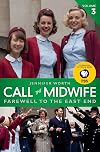
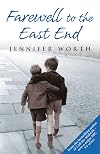
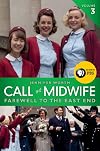
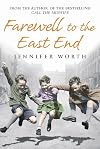
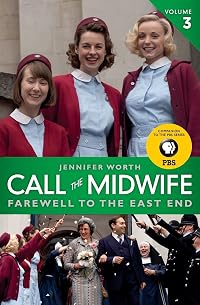
The last book in the trilogy begun by Jennifer Worth's New York Times bestseller and the basis for the PBS series Call the MidwifeWhen twenty-two-year-old Jennifer Worth, from a comfortable middle-class upbringing, went to work as a midwife in the poorest section of postwar London, she not only delivered hundreds of babies and touched many lives, she also became the neighborhood's most vivid chronicler. Call the Midwife: Farewell to the East End is the last book in Worth's memoir trilogy, show more which the Times Literary Supplement described as "powerful stories with sweet charm and controlled outrage" in the face of dire circumstances.
Here, at last, is the full story of Chummy's delightful courtship and wedding. We also meet Megan'mave, identical twins who share a browbeaten husband, and return to Sister Monica Joan, who is in top eccentric form. As in Worth's first two books, Call the Midwife: A Memoir of Birth, Joy, and Hard Times and Call the Midwife: Shadows of the Workhouse, the vividly portrayed denizens of a postwar East End contend with the trials of extreme poverty--unsanitary conditions, hunger, and disease--and find surprising ways to thrive in their tightly knit community.
A rich portrait of a bygone era of comradeship and midwifery populated by unforgettable characters, Call the Midwife: Farewell to the East End will appeal to readers of Frank McCourt, Katherine Boo, and James Herriot, as well as to the fans of the acclaimed PBS show based on the trilogy.
. show less
Tags
Recommendations




Member Reviews
Again very readable and not just a memoir, but a bit of sociology. It did run out of steam at the end. It was good to read about how the real counterparts of the characters on the TV show ran their course. I am angry at the show writers about what they did to Cynthia's true story. I'm very glad that Jennifer Worth is honest and caring about Cynthia having depression. I am angry that the show writers had to fabricate a sexual assault as an etiology for the TV character's mental health issues. Mental illness isn't like that, and they shouldn't have done that: It was an injustice to the true Cynthia and her treatment in Worth's memoir.
This is the third of a trilogy of memoirs about life in London's East End in the 50's. The parts I liked the most were the anecdotes that directly related to the author, Jennifer Worth, and her time working as a midwife. The first book was the best in this respect.
This third book started and ended with the more personal anecdotes, but kind of meandered around with other people's stories in the middle. When she told a story that she had gotten second or third hand, she told it with intimate details as if she had been there. While it says something for her descriptive powers and imagination, these chapters felt out of place in a collection of memoirs.
One of my favorite things about this installment was that she let us know how everyone's show more lives turned out-Chummy and David, Cynthia, Trixie, and the beloved nuns at the convent. It was nice to read about where their lives went and how many of them stayed in touch with each other.
The chapter called The Captain's Daughter was a little too open-minded with its approach to the situation Chummy walked into. She was clearly the star of the piece, and it was when she started her relationship with David, so the story needed to be in there. But I felt offended by how the daughter was repeatedly described as "cheerful" and the men were characterized at being so concerned for her. I can't imagine someone whose father made her a prostitute for every man on his ship, including himself, when she was 14 and had just lost her mother as being cheerful about it. Delusional maybe, after years of it, but not happy. And as for the men who used her like a toy-I would bet their concern went as far as the concern they might have for a pet dog. I don't know what anyone could have done for the captain's daughter, especially since they left before Chummy could get back to check on the baby, but I would have liked the tone of this chapter to have more anger and sadness on the woman's behalf.
All three books are worth reading-Jennifer Worth was a great storyteller. I don't know if she had a photographic memory or simply kept a detailed diary, but she really brought the time and the people to life in these books. show less
This third book started and ended with the more personal anecdotes, but kind of meandered around with other people's stories in the middle. When she told a story that she had gotten second or third hand, she told it with intimate details as if she had been there. While it says something for her descriptive powers and imagination, these chapters felt out of place in a collection of memoirs.
One of my favorite things about this installment was that she let us know how everyone's show more lives turned out-Chummy and David, Cynthia, Trixie, and the beloved nuns at the convent. It was nice to read about where their lives went and how many of them stayed in touch with each other.
The chapter called The Captain's Daughter was a little too open-minded with its approach to the situation Chummy walked into. She was clearly the star of the piece, and it was when she started
All three books are worth reading-Jennifer Worth was a great storyteller. I don't know if she had a photographic memory or simply kept a detailed diary, but she really brought the time and the people to life in these books. show less
I liked this a little more than the previous books primarily because there are some great stories about Chummy in here.
I originally watched the TV series and read this afterward out of curiosity, and I feel very conflicted about the results. On the one hand, I enjoyed the episode where Sister Evangelina and Trixie board that ship and deliver the baby to the "ship's woman". It's funny and fun and I think it's one of Trixie's best episodes. I also think it has a better conclusion.
On the other hand, I feel robbed of an amazing Chummy episode. The story in the book is incredibly inspiring and just... well... it's great. I'm sad I never got to see that on-screen.
This book also contains the conclusions for the characters in the series, which show more was interesting and a bit depressing to read. Of course most (if not all) of the characters are dead; I understand how time works. On the hand, it was interesting to finally see where everyone ended up.
I still am not a big fan of these books. I think they provide an excellent look at the history of certain fields of medicine, various important things about different types of inequality, and the struggles of women for equal rights. I think they drag, are a bit dated, but are at least a nice companion to the TV series if you're a fan. Might find it hard to rewatch the show afterward, though, given all that was changed. show less
I originally watched the TV series and read this afterward out of curiosity, and I feel very conflicted about the results. On the one hand, I enjoyed the episode where Sister Evangelina and Trixie board that ship and deliver the baby to the "ship's woman". It's funny and fun and I think it's one of Trixie's best episodes. I also think it has a better conclusion.
On the other hand, I feel robbed of an amazing Chummy episode. The story in the book is incredibly inspiring and just... well... it's great. I'm sad I never got to see that on-screen.
This book also contains the conclusions for the characters in the series, which show more was interesting and a bit depressing to read. Of course most (if not all) of the characters are dead; I understand how time works. On the hand, it was interesting to finally see where everyone ended up.
I still am not a big fan of these books. I think they provide an excellent look at the history of certain fields of medicine, various important things about different types of inequality, and the struggles of women for equal rights. I think they drag, are a bit dated, but are at least a nice companion to the TV series if you're a fan. Might find it hard to rewatch the show afterward, though, given all that was changed. show less
This non-fiction work has been made famous by the BBC series of the same name which was based on Jennifer Worth’s memoirs. Being a big fan of the series, I was eager to read the book, and I was not disappointed.
If you have seen the series, many of the stories and characters contained within this book will be familiar to you; if you haven’t seen it (first of all, why not?!) and second of all, it doesn’t matter a jot. The book preceded the show and therefore you don’t need any prior knowledge to enjoy this book.
Rather than a chronological account, the author tells many different stories from her time at Nonnatus House in the East End of London as a midwife. Many of the stories are heartwarming and amusing, but there are also some show more tragic tales – the story of Mary, a young girl who ran away from Ireland to escape abuse only to find a worse fate waiting for her in London, is heartbreaking.
I felt that the characters of the Nuns of Nonnatus House were well described, although I didn’t feel that I learned much about Jennifer (Jenny) herself. It is clear from her writing that she was well-educated and intelligent, but other than that, she is largely reticent about her private life. However, the real heart of this book lies in the East End characters and indeed the East End itself – I feel that she brought the time period to life very well, and overall I thoroughly enjoyed the book.
Highly recommended. show less
If you have seen the series, many of the stories and characters contained within this book will be familiar to you; if you haven’t seen it (first of all, why not?!) and second of all, it doesn’t matter a jot. The book preceded the show and therefore you don’t need any prior knowledge to enjoy this book.
Rather than a chronological account, the author tells many different stories from her time at Nonnatus House in the East End of London as a midwife. Many of the stories are heartwarming and amusing, but there are also some show more tragic tales – the story of Mary, a young girl who ran away from Ireland to escape abuse only to find a worse fate waiting for her in London, is heartbreaking.
I felt that the characters of the Nuns of Nonnatus House were well described, although I didn’t feel that I learned much about Jennifer (Jenny) herself. It is clear from her writing that she was well-educated and intelligent, but other than that, she is largely reticent about her private life. However, the real heart of this book lies in the East End characters and indeed the East End itself – I feel that she brought the time period to life very well, and overall I thoroughly enjoyed the book.
Highly recommended. show less
The third of Jennifer Worth's memoirs of her times as a nurse/midwife in London's 1950's East End.. Her books have been the basis of the wildly popular series "Call the Midwife." Her very personal stories about her friends and their patients are interspersed with discourses on poverty, birth control, abortion, and tuberculosis. I found the personal stories far more successful and grew to love Trixie, Cynthia, Chummy and Sister Monica Joan and the other nuns of St. Nonantus House.
Jennifer Worth concludes her memoir trilogy with Farewell to the East End. She seems to have exhausted most of her own extraordinary childbirth experiences in her first book. The second book focuses more on home health care rather than midwifery. This one gets back to midwifery, but recounts experiences of Worth's fellow midwives, Cynthia, Trixie, and Chummy. I liked this one better than the second book, but not as well as book one. This is mostly a second-hand account of things that happened in the 1950s and it's difficult to tell how much accuracy has been lost in the retelling. Worth refers to events that she related in her first two books so it would be better to read those books first.
This third installment wraps up Worth's series of memoirs set in London's East End in the 1950's. It's a mix of odds and ends stories, all interesting in their own right, but providing little narrative cohesion--which is perfectly OK. I think she wanted to wrap up the loose ends and get a couple more patient stories in front of readers. My favorite part was the end where she gave us summaries of what happened to all the major nurse and nun characters. But I would have liked to know what happened to Mrs. B and Fred, as well.
Having watched the series on TV before reading the books, it was fun to see how the TV writers dealt with the material: combining some characters, switching others, but ultimately staying true to the original story show more telling which focused on the effects of grinding poverty, poor housing, and lack of education. The flip side is the obvious affection Worth had for the resilience, good humor, and hope of the people who had to soldier through what today would be considered intolerable conditions. A very worthwhile series, easy reading, but touches a resonant chord in modern times. show less
Having watched the series on TV before reading the books, it was fun to see how the TV writers dealt with the material: combining some characters, switching others, but ultimately staying true to the original story show more telling which focused on the effects of grinding poverty, poor housing, and lack of education. The flip side is the obvious affection Worth had for the resilience, good humor, and hope of the people who had to soldier through what today would be considered intolerable conditions. A very worthwhile series, easy reading, but touches a resonant chord in modern times. show less
Members
- Recently Added By
Lists

Books Read in 2016
4,666 works; 199 members

Best books made into television
66 works; 4 members
Author Information

14+ Works 5,521 Members
Jennifer Worth was born Jennifer Lee in Clacton-on-Sea, Essex on September 25, 1935. She trained as a nurse at the Royal Berkshire Hospital in Reading, and then moved to London to train as a midwife. She later worked at the Royal London Hospital, the Elizabeth Garrett Anderson Hospital in Euston, and the Marie Curie Hospital in Hampstead. She left show more nursing in 1973 to study music. She received the Licentiate of the London College of Music in 1974 and was awarded a Fellowship ten years later. She taught and performed solo and in choirs throughout the United Kingdom and Europe. When she felt her musical talents ebbing, she turned to writing. She wrote three books about her experience as a midwife: Call the Midwife, Shadows of the Workhouse, and Farewell to the East End. These books are the basis of the BBC television series Call the Midwife. Her other works include Food Allergy: The Hidden Cause? and In the Midst of Life. She died of cancer on May 31, 2011 at the age of 75. (Bowker Author Biography) show less
Series

Work Relationships
Common Knowledge
- Canonical title
- Farewell to the East End
- Original title
- Farewell to the East End
- Alternate titles
- Call the Midwife: Farewell to the East End; Farewell to the East End: The Last Days of the East End Midwives
- Original publication date
- 2009
- People/Characters
- Jennifer Worth
- Important places
- London, England, UK (East End); Poplar, London, England, UK
- Related movies
- Call the Midwife (2012 | IMDb)
- Epigraph
- In 1855 Queen Victoria wrote to her daughter Vicky, the Crown Princess of Prussia, who was expecting a baby:
What you say about the pride of giving life to an immortal soul is very fine, but I own I cannot enter int... (show all)o all that. I think very much more of our being like a cow or a dog at such moments, when our poor nature becomes so very animal and unecstatic. - Dedication
- Dedicated to Cynthia for a lifetime of friendship
- First words
- Someone once said that youth is wasted on the young.
Classifications
- Genres
- Biography & Memoir, Nonfiction, General Nonfiction
- DDC/MDS
- 618.20092 — Applied science & technology Medicine & health Gynecology, obstetrics, pediatrics, geriatrics Pregnancy
- LCC
- RG950 .W676 — Medicine Gynecology and Obstetrics Gynecology and obstetrics Obstetrics Maternal care. Prenatal care services
- BISAC
Statistics
- Members
- 946
- Popularity
- 28,088
- Reviews
- 34
- Rating
- (4.13)
- Languages
- Dutch, English, Finnish, Italian
- Media
- Paper, Audiobook, Ebook
- ISBNs
- 23
- ASINs
- 10