
E. R. Braithwaite (1912–2016)
Author of To Sir, With Love
About the Author
Eustace Edward Ricardo Braithwaite was born in Georgetown, British Guiana on June 27, 1912. He studied at Queen's College, Guyana and at the City College of New York. He moved to Britain after working at an oil refinery in Aruba. In 1940, he volunteered for service in the Royal Air Force. In 1949, show more he received a master's degree in physics from Cambridge University. From 1960 to 1963, he was a human-rights officer at the World Veterans Federation and from 1963 to 1966, he was a lecturer and education consultant at Unesco. From 1967 to 1969, he served as the first permanent representative of Guyana to the United Nations. He was later Guyana's ambassador to Venezuela. He taught at several universities including Howard University, New York University, and Florida State University. He wrote several books during his lifetime including Paid Servant, A Kind of Homecoming, Choice of Straws, Reluctant Neighbors, and Honorary White: A Visit to South Africa. To Sir, With Love, a memoir of teaching in London's deprived East End, was adapted into a film starring Sidney Poitier in 1967. He died on December 12, 2016 at the age of 104. (Bowker Author Biography) show less
Image credit: E.R. Braithwaite in the early 1960s.
Works by E. R. Braithwaite
Associated Works
The Penguin Book of Migration Literature: Departures, Arrivals, Generations, Returns (2019) — Contributor — 96 copies
Reader's Digest Condensed Books 1963 v02: A River Ran Out of Eden / Escape from Red China / The Surgeon / Smith and Jones / To Sir with Love / ....and presumed dead (1963) — Author — 27 copies
Reader's Digest Best Sellers 1966: The Source | Intern | Hotel St. Gregory | To Sir, With Love (1966) — Author — 22 copies
Tagged
Common Knowledge
- Other names
- Braithwaite, Eustace Edward Ricardo (birth name)
Braithwaite, Ricky - Birthdate
- 1912-06-27
- Date of death
- 2016-12-12
- Gender
- male
- Education
- Gonville and Caius, Cambridge (MSc ∙ Phd ∙ Physics|1949)
City College of New York - Occupations
- teacher
social worker
diplomat
academic
novelist - Organizations
- United Nations
Howard University
World Veterans Federation
UNESCO
Royal Air Force - Awards and honors
- Cacique Crown of Honour (2012)
Anisfield-Wolf Book Award (1961) - Short biography
- Edward Ricardo Braithwaite (born June 27, 1912 in Georgetown, Guyana) is a Guyanese novelist, writer, teacher, and diplomat, best known for his partially autobiographical accounts of his career experiences as a highly educated black man in a range of public service and professional roles. Braithwaite had a privileged beginning in life: both his parents went to Oxford University and he describes growing up with education, achievement, and parental pride surrounding him. He attended Queen's College, Guyana and then the City College of New York (1940). During World War II, he joined the Royal Air Force as a pilot - he would later describe this experience as one where he had felt no discrimination based on his skin colour or ethnicity. He went on to attend the University of Cambridge (1949), from which he earned a bachelor's degree and a doctorate in physics. After the war, like many other ethnic minorities, despite his extensive training, Braithwaite could not find work in his field and, disillusioned, reluctantly took up a job as a schoolteacher in the East End of London. The book To Sir, With Love (1959) was based on his experiences there. While writing his book about the school, Braithwaite turned to social work and it became his job to find foster homes for non-white children for the London County Council. His harrowing experiences resulted in his second novel Paid Servant (1962). Braithwaite's numerous writings have primarily dealt with the difficulties of being an educated black man, a black social worker, a black teacher, and simply a human being in inhumane circumstances. In 1973, the South African ban on Braithwaite's books was lifted and he reluctantly applied to visit the country. He was granted a visa and the status 'Honorary White' which gave him significantly more freedom and privileges than the indigenous black population, but less than the whites. He recorded the experiences and horror he witnessed during the six weeks he spent in South Africa in Honorary White. Braithwaite continued to write novels and short stories throughout his long international career as an educational consultant and lecturer for UNESCO; permanent representative to the United Nations for Guyana; Guyana's ambassador to Venezuela; and academic. He taught English studies at New York University; in 2002, was writer in residence at Howard University, Washington, D.C.; associated himself with Manchester Community College, Connecticut, during the 2005-2006 academic year as visiting professor, also serving as commencement speaker and receiving an honorary degree.
- Nationality
- Guyana
- Birthplace
- Georgetown, British Guiana
- Places of residence
- Georgetown, Guyana
New York, New York, USA
Cambridge, England, UK
London, England, UK
Washington, D.C., USA - Place of death
- Rockville, Maryland, USA
Members
Reviews
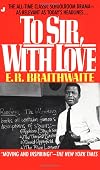
Born in British Guyana (now Guyana), E.R. Braithwaite was trained as an engineer, and after serving in the RAF during WWII, he expected he would have no trouble finding work in his chosen field in Great Britain. However, it became clear very quickly that no one was willing to hire him because of the colour of his skin. It was only due to a chance encounter that he decided to apply for a teaching job. Not surprisingly, he was assigned to a school with one of the worst reputations in the East show more End of London.
Despite the fact that Braithwaite is determined to see teaching as a job not a career, he decides to make the best of it. Unfortunately, his first weeks are a disaster. Not only the colour of his skin but his patrician upbringing, and his lack of training make it almost impossible for him to relate to his students. At first, the problems seem insurmountable. The children are belligerent and deliberately offensive, testing him at every opportunity and, at first, he retaliates with anger. But somewhere along the way, he reassesses his own attitude towards his students. He determines to change the rules; he will scrap the lesson plan and they can talk about anything as long as they treat each other with respect. To this end, he is to be called Sir, the girls will be addressed as Miss, and the boys by their last names. By treating these children as adults, he wins, not only their respect but their love.
Braithwaite’s autobiographical novel is a fascinating look at the effect a good teacher can have on their students. It also gives an interesting look at the hopes and dreams people from British colonial countries placed on Britain and how the reality was so far from those dreams:
“Yes, it is wonderful to be British – until one comes to Britain”
In the end, though, it is an inspiring tale of how minds and attitudes can be changed if people are willing to listen to and treat each other each other with respect. Written in 1959, I have read comments from other reviewers saying that this novel is outdated. Personally, I think its message has never been more fresh or more needed show less
Despite the fact that Braithwaite is determined to see teaching as a job not a career, he decides to make the best of it. Unfortunately, his first weeks are a disaster. Not only the colour of his skin but his patrician upbringing, and his lack of training make it almost impossible for him to relate to his students. At first, the problems seem insurmountable. The children are belligerent and deliberately offensive, testing him at every opportunity and, at first, he retaliates with anger. But somewhere along the way, he reassesses his own attitude towards his students. He determines to change the rules; he will scrap the lesson plan and they can talk about anything as long as they treat each other with respect. To this end, he is to be called Sir, the girls will be addressed as Miss, and the boys by their last names. By treating these children as adults, he wins, not only their respect but their love.
Braithwaite’s autobiographical novel is a fascinating look at the effect a good teacher can have on their students. It also gives an interesting look at the hopes and dreams people from British colonial countries placed on Britain and how the reality was so far from those dreams:
“Yes, it is wonderful to be British – until one comes to Britain”
In the end, though, it is an inspiring tale of how minds and attitudes can be changed if people are willing to listen to and treat each other each other with respect. Written in 1959, I have read comments from other reviewers saying that this novel is outdated. Personally, I think its message has never been more fresh or more needed show less
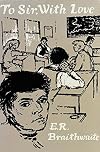
Okay, seriously? My fourth one-star rating in a row as of recently? I am going to sit down and read my favorite book soon, to clear my mind of bad books and remind myself good ones await me. I am listening to Enya's "A Day Without Rain" album to soothe my crankiness, even.
I tried to read this when I was eleven. I read anything I could get my hands on. I vaguely understood it. My aunt brought the movie over, and I understood that a lot more clearly. Twenty years later, I saw tons and tons of show more ads for a romance with a strikingly similar name, and wondered if it had been re-released. I was curious to learn if I'd think differently of the book as an adult. I did.
This is a memoir that was published in 1959. It takes place in 1950s England. There's many references to WWII and its effects. So I'd consider this also classic literature: it being published more than sixty years ago. If this were a novel, my review would continue henceforth: "I'm not one for classic literature. The first fifty pages could have easily been cut. The plot was boring and predictable. It was undoubtedly revolutionary for its time in terms of race relations, plot, and reflections on racism." But this is a memoir, so...this guy has a -lot- of inner monologue and he goes on and on, especially when describing how people look and sound. There's an enormous amount of misogyny in this. I don't care that it was probably very typical for the time period. It was awful to read, and to have a teacher freely announce he thought that way of his students especially. Sir refers to his female students as sluts and women around him--ones who ride the same bus, ones who are more senior in teaching, just women in general--as bitches. He drools over several female students while simultaneously despising how they dress. So, he's got a massive madonna/whore complex. Towards girls he has power over. Who haven't even finished puberty yet. GROSS. One student wears a gray sweater regularly and no bra, and Sir cannot shut up internally about her greasy sweater and huge, wobbly breasts. She's probably too poor to have a bra, weirdo. When it's hard to put food on the table, water and electricity aren't always manageable, either. I had to make these choices for a long time until I went on a bunch of welfare by moving to a different city. Now I'm being kicked off some of it and will have to make those decisions all over again. Sir would yap at me inwardly too, certainly.
Sir describes everyone ever in ways I find odd. He teaches typical teenagers and is offended by this, and by their grinding poverty over which they have no control. They're trashy, though, and have terrible manners, which he sets out to correct while mentally calling them horrible names. If this were a novel, I'd call him a Gary Stu: he's rude to students, considers many other senior teachers beneath him, is hired on the spot, was trained in an entirely different field, can't stand teenagers or poor people; and is still praised and turns the kids' lives around. Perhaps his arrogance and condescension are defense mechanisms against the racism and hardships he does face. It's increasingly grating to read on the page, though. The movie cuts a bunch of this--his inner monologue that makes up 80% of the book is dropped, and he's just a stern teacher, not a creep. The adaptation does a great job with the action in the book, or what little there is. Watch it instead of reading the thoughts of a creepy, bitter teacher. show less
I tried to read this when I was eleven. I read anything I could get my hands on. I vaguely understood it. My aunt brought the movie over, and I understood that a lot more clearly. Twenty years later, I saw tons and tons of show more ads for a romance with a strikingly similar name, and wondered if it had been re-released. I was curious to learn if I'd think differently of the book as an adult. I did.
This is a memoir that was published in 1959. It takes place in 1950s England. There's many references to WWII and its effects. So I'd consider this also classic literature: it being published more than sixty years ago. If this were a novel, my review would continue henceforth: "I'm not one for classic literature. The first fifty pages could have easily been cut. The plot was boring and predictable. It was undoubtedly revolutionary for its time in terms of race relations, plot, and reflections on racism." But this is a memoir, so...this guy has a -lot- of inner monologue and he goes on and on, especially when describing how people look and sound. There's an enormous amount of misogyny in this. I don't care that it was probably very typical for the time period. It was awful to read, and to have a teacher freely announce he thought that way of his students especially. Sir refers to his female students as sluts and women around him--ones who ride the same bus, ones who are more senior in teaching, just women in general--as bitches. He drools over several female students while simultaneously despising how they dress. So, he's got a massive madonna/whore complex. Towards girls he has power over. Who haven't even finished puberty yet. GROSS. One student wears a gray sweater regularly and no bra, and Sir cannot shut up internally about her greasy sweater and huge, wobbly breasts. She's probably too poor to have a bra, weirdo. When it's hard to put food on the table, water and electricity aren't always manageable, either. I had to make these choices for a long time until I went on a bunch of welfare by moving to a different city. Now I'm being kicked off some of it and will have to make those decisions all over again. Sir would yap at me inwardly too, certainly.
Sir describes everyone ever in ways I find odd. He teaches typical teenagers and is offended by this, and by their grinding poverty over which they have no control. They're trashy, though, and have terrible manners, which he sets out to correct while mentally calling them horrible names. If this were a novel, I'd call him a Gary Stu: he's rude to students, considers many other senior teachers beneath him, is hired on the spot, was trained in an entirely different field, can't stand teenagers or poor people; and is still praised and turns the kids' lives around. Perhaps his arrogance and condescension are defense mechanisms against the racism and hardships he does face. It's increasingly grating to read on the page, though. The movie cuts a bunch of this--his inner monologue that makes up 80% of the book is dropped, and he's just a stern teacher, not a creep. The adaptation does a great job with the action in the book, or what little there is. Watch it instead of reading the thoughts of a creepy, bitter teacher. show less

I must be on a sentimental journey involving some of my favorite films and the books they were based on. First, it was The Shrinking Man, and now it's To Sir, With Love.
This time, the book compares very favorably to the movie. In the book, we see everything through the eyes of "Sir" instead of being an outsider-looking-in as we are in the movie. There are several things that were either glossed over or not even brought up in the movie-- in many cases I think the filmmakers wanted the show more audience to use common sense to realize, for instance, that the reason why Braithwaite could not get an engineering position was due to racism, not the fact that there were no jobs available. In fact, almost everything relating to racism was left out of the movie, no doubt in an effort to make it palatable to the greatest number of moviegoers.
My final verdict? I still love the movie starring Sidney Poitier; I always will. But I am very glad that I read E.R. Braithwaite's autobiography. In reading the book I feel as though I've gotten much closer to learning the entire story while the movie gives me the Reader's Digest condensed version. show less
This time, the book compares very favorably to the movie. In the book, we see everything through the eyes of "Sir" instead of being an outsider-looking-in as we are in the movie. There are several things that were either glossed over or not even brought up in the movie-- in many cases I think the filmmakers wanted the show more audience to use common sense to realize, for instance, that the reason why Braithwaite could not get an engineering position was due to racism, not the fact that there were no jobs available. In fact, almost everything relating to racism was left out of the movie, no doubt in an effort to make it palatable to the greatest number of moviegoers.
My final verdict? I still love the movie starring Sidney Poitier; I always will. But I am very glad that I read E.R. Braithwaite's autobiography. In reading the book I feel as though I've gotten much closer to learning the entire story while the movie gives me the Reader's Digest condensed version. show less
Overall, nearly a five-star read for me. To Sir, With Love is a remarkable story. The writing is exceptionally clear and to the point while the characters spring to life on the page. My one small issue; I felt as though Braithwaite bathed himself in an overly rosy light at times. Being an autobiography, I understand that we only get one side of the stories presented. As such, I found myself wondering how the children and other faculty might remember those days?
Regardless of this one small show more issue, after more than half a century since its release, the book remains eminently readable and still resonates deeply. It is a snapshot of the times - at least as how the times were perceived by a person of color with a privileged upbringing. The fact that Braithwaite went on to become ambassador does speak volumes for his credibility so perhaps events really did happen precisely how he portrays. show less
Regardless of this one small show more issue, after more than half a century since its release, the book remains eminently readable and still resonates deeply. It is a snapshot of the times - at least as how the times were perceived by a person of color with a privileged upbringing. The fact that Braithwaite went on to become ambassador does speak volumes for his credibility so perhaps events really did happen precisely how he portrays. show less
Lists
Awards


You May Also Like


Associated Authors
Statistics
- Works
- 10
- Also by
- 7
- Members
- 1,641
- Popularity
- #15,655
- Rating
- 3.9
- Reviews
- 34
- ISBNs
- 99
- Languages
- 1
- Favorited
- 2
