
Erich Segal (1937–2010)
Author of Love Story
About the Author
Erich Segal was a writer, educator, and screenwriter. He was born in Brooklyn, New York on June 16, 1937. He graduated from Harvard University with a B.A. in 1958, a M.A. in 1959, and a Ph.D. in 1964. Segal began a teaching career at Harvard University before moving to Yale University in 1964. He show more was also a visiting professor in classics at Princeton University and the University of Munich. He achieved international acclaim for his verse translations of Roman playwright Plautus and delivered papers before the American Philological Association and the American Comparative Literature Association. Segal collaborated on the 1958 Harvard Hasty Pudding Club production and wrote several Hollywood screenplays, including the 1968 animated Beatles film, Yellow Submarine and A Change of Seasons. His most famous novel was Love Story, written in 1970. The book was made into a film in 1970. He received a Golden Globe Award and an Oscar nomination for his screenplay. His other novels include Oliver's Story, The Class, and Doctors. He died of a heart attack on January 17, 2010 at the age of 72. (Bowker Author Biography) show less
Image credit: Erich Segal - Photographer Karen Segal ©
Series
Works by Erich Segal
Love story Opowiesc Olivera 1 copy
Muškarac, žena i dijete 1 copy
Víra a láska 1 copy
Ljubavna priča 1 copy
Razred 1 copy
Chlapci z Harvardu 1 copy
Kto nepozná lásku 1 copy
Unpaid Dues 1 copy
Comedey without the fun 1 copy
Terence's plays 1 copy
Associated Works
The Dialogues of Plato: Apology; Crito; Euthyphro; Phædo; Protagoras; Meno; Symposium; Gorgias, Part III (1986) — Introduction — 569 copies, 3 reviews
Four Comedies: The Braggart Soldier, The Brothers Menaechmus, The Haunted House, The Pot of Gold (1996) — Translator, some editions — 390 copies, 1 review
Reader's Digest Condensed Books 1980 v04: Sadie Shapiro, Matchmaker / The Cradle Will Fall / Man, Woman and Child / Bess and Harry / The Wolf and the Buffalo (1980) — Contributor — 32 copies
Reader's Digest Condensed Books 1977 v03: Tisha / The Dragon / Oliver's Story / Majesty / Overboard (1977) — Author — 31 copies
Reader's Digest Best Sellers 1971: Place in the Woods | Secret Woman | Christiaan Barnard: One Life | The Homecoming | Love Story (1971) — Author — 20 copies
Reader's Digest Condensed Books 1989 vM: Doctors / Gracie / The Giant's Shadow / The Toothache Tree (1989) — Author — 12 copies
Reader's Digest Best Sellers 1978: Oliver's Story | The R Document (1978) — Author — 10 copies, 1 review
Reader's Digest Condensed Books: Five Past Midnight • Only Love • Killing Floor • The Shadowy Horses (1997) 8 copies
Reader's Digest Auswahlbücher, Bestseller-Sonderband - Für'n Groschen Brause / Control Tower / Mann, Frau und Kind (1984) 3 copies
Der Weiße Hai 2 / Mrs. Pollifax auf Safari / Oliver's Story / Am Ende der Flut (1978) — Contributor — 3 copies
Reader's Digest Auswahlbücher 223 - Die Versuchung / Only Love - die Liebe allein / Das Medusaprojekt / Ashana (1999) 2 copies
Great Lion of God, Love Story, Bomber, and, Lone Woman (Reader's Digest Condensed Books) (1971) — Author — 1 copy
Una vita per un premio (Segal Erich) - Rotta di tempesta (Cornwell Bernard) - La scelta di Tom (Plain Belva) - il cane della brughiera (Locke Angela) — Author — 1 copy
Reader's Digest Condensed Books: Man, Woman and Child • Ice Brothers • The Citadel • Sadie Shapiro Matchmaker (1981) 1 copy
Selezione della narrativa mondiale contiene: Malevil - Una diagnosi controversa - Un uomo,una donna e un bambino - Un serpente a Central Park (1981) — Contributor — 1 copy
Tagged
Common Knowledge
- Canonical name
- Segal, Erich
- Legal name
- Segal, Erich Wolf
- Birthdate
- 1937-06-16
- Date of death
- 2010-01-17
- Gender
- male
- Education
- Harvard University (BA|1958|MA|1959|Ph.D|1965)
- Occupations
- classicist
university professor
popular novelist
screenwriter - Organizations
- National Advisory Council of the Peace Corps
Yale University (professor - English literature)
Harvard University
Wolfson College, Oxford (professor) - Agent
- Andrew Nurnberg Associates
- Relationships
- Segal, Francesca (daughter)
- Short biography
- Erich Segal (June 16, 1937 – January 17, 2010) was an American author, screenwriter, and Classics Professor. He was best known for writing the phenomenally successful novel Love Story (1970), and the hit major motion picture of the same name.
- Cause of death
- heart attack
- Nationality
- USA
- Birthplace
- Brooklyn, New York, USA
- Places of residence
- New England, USA
New York, New York, USA - Place of death
- London, England, UK
- Burial location
- Golders Green's Hoop Lane Cemetery, London, England, UK
- Associated Place (for map)
- USA
Members
Reviews
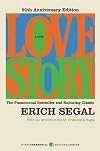
I inherited a bunch of Segal books from my grandmother when I was a teen and quickly fell in love with a few of them. I wanted to give this a re-read in adulthood to see if it'd be worth keeping and actually decided to listen to the audiobook which is read by Segal and has backing music from the film. It was so short and incredibly enjoyable. I've read the book, I've watched the film, Segal tells us she's gonna die with the first line, yet I still got all teary and weepy when it happened. show more
When I was a teen, I used to think the line that quickly became a tagline for this book "love means never having to say your sorry" was an extremely silly, misguided line. But as an adult, I realize that I've never really exchanged serious apologies with the people I love most in the world. We simply don't do things to each other that require apologies. We also know each other's intentions and hearts so well that the forgiveness is already assumed. At the moment Jenny utters this line, neither her or Oliver are owed an apology because their words and actions were completely consistent with who they were when they first met. They are who they are and an apology for their actions would mean they'd have to apologize for their identities, which one shouldn't have to do in a loving relationship.
When Oliver utters this line at the very end, it initially didn't sit as well with me because I felt Oliver owed his father an apology for the entire length of the book, something Jenny and I agreed on. But that actually reinforces the truth in Segal's line. Oliver's father feels he owes his son an apology because he knows his son doesn't love him nor accept the type of father he's been. And as a reader I think Oliver owes his father an apology because I don't understand how a parent can completely love and accept someone who's been so ungrateful. The relationship is so strained that they're practically strangers to each other, so apologies feel very necessary.
None of this is important though, because I actually hate that this line became what everyone remembered from Love Story. The most important line to me was from Jenny alone: "Screw Paris. Screw Paris and music and all the crap you think you stole from me." At its core, Love Story is really a story about holding on to the good things in life because you have no idea how long your life will be. Going out with no regrets is the major aim of living. If you have to let go of money and stability and success to hold onto something that really lights you up and makes you happy, then that's something you should probably do. Be happy and hope you live long enough for all that other stuff to come back around to you. show less
When I was a teen, I used to think the line that quickly became a tagline for this book "love means never having to say your sorry" was an extremely silly, misguided line. But as an adult, I realize that I've never really exchanged serious apologies with the people I love most in the world. We simply don't do things to each other that require apologies. We also know each other's intentions and hearts so well that the forgiveness is already assumed. At the moment Jenny utters this line, neither her or Oliver are owed an apology because their words and actions were completely consistent with who they were when they first met. They are who they are and an apology for their actions would mean they'd have to apologize for their identities, which one shouldn't have to do in a loving relationship.
When Oliver utters this line at the very end, it initially didn't sit as well with me because I felt Oliver owed his father an apology for the entire length of the book, something Jenny and I agreed on. But that actually reinforces the truth in Segal's line. Oliver's father feels he owes his son an apology because he knows his son doesn't love him nor accept the type of father he's been. And as a reader I think Oliver owes his father an apology because I don't understand how a parent can completely love and accept someone who's been so ungrateful. The relationship is so strained that they're practically strangers to each other, so apologies feel very necessary.
None of this is important though, because I actually hate that this line became what everyone remembered from Love Story. The most important line to me was from Jenny alone: "Screw Paris. Screw Paris and music and all the crap you think you stole from me." At its core, Love Story is really a story about holding on to the good things in life because you have no idea how long your life will be. Going out with no regrets is the major aim of living. If you have to let go of money and stability and success to hold onto something that really lights you up and makes you happy, then that's something you should probably do. Be happy and hope you live long enough for all that other stuff to come back around to you. show less
An interesting project. This is the story of Oliver eighteen months after his wife dies. He is getting pressured from all angles to get out there and start dating again so he doesn't end up permanently alone like his father-in-law Phil. Much of this book is consumed by Oliver dating a woman named Marcie, who unlike Jenny, is in the same class as Oliver's incredibly wealthy family.
This book gave me anxiety because I really did not want Oliver to move on from Jenny even though I knew he show more should. And then, as he enters into this relationship with Marcie, which is clearly happening too soon, its easy to see how unfair he's being to her and how hard she is trying to be the person she thinks he wants her to be when in reality all he wants is Jenny. He wants his wife back.
Marcie and Oliver have different communication styles and core values that make them a poor match no matter the situation, but Oliver can't see that because he's still trying to figure out what he wants out of life now that he can't have Jenny. He's a mess. And thankfully, he's seeing a therapist about it.
I've only known one person who's lost a spouse like this and pursued dating too soon afterwards and the issues presented in Oliver's Story feel fairly accurate. Weird judgements and decisions being made, impulsiveness, unfair treatment of potential partners. This felt like an accurate portrayal of dating while mourning.
I think I would have enjoyed this book more though if Segal had focused on more of Oliver's life, outside of work and dating Marcie. Every time his friends, his family, Phil or even his secretary Anita showed up in the book, it was so much more enjoyable. show less
This book gave me anxiety because I really did not want Oliver to move on from Jenny even though I knew he show more should. And then, as he enters into this relationship with Marcie, which is clearly happening too soon, its easy to see how unfair he's being to her and how hard she is trying to be the person she thinks he wants her to be when in reality all he wants is Jenny. He wants his wife back.
Marcie and Oliver have different communication styles and core values that make them a poor match no matter the situation, but Oliver can't see that because he's still trying to figure out what he wants out of life now that he can't have Jenny. He's a mess. And thankfully, he's seeing a therapist about it.
I've only known one person who's lost a spouse like this and pursued dating too soon afterwards and the issues presented in Oliver's Story feel fairly accurate. Weird judgements and decisions being made, impulsiveness, unfair treatment of potential partners. This felt like an accurate portrayal of dating while mourning.
I think I would have enjoyed this book more though if Segal had focused on more of Oliver's life, outside of work and dating Marcie. Every time his friends, his family, Phil or even his secretary Anita showed up in the book, it was so much more enjoyable. show less
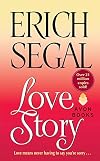
I woke up to my sister weeping. To my amazement, she was reading a book, not something she did often unless required for school. I reached across the space between our twin beds and pushed the book up enough to see the title - "Love Story." I rolled my eyes and pulled my tattered baby blanket over my face. Through her sobs, my sister insisted that I read this, the "best" book she ever read. Grumbling that it was the ONLY book she ever read, I tossed it on my bookstack.
Some time later, "Love show more Story" came off the bookstack and into my hands. I read it quickly, and recall making fun of my sister for deeming this the best book EVER. Maudlin, predictable, and way too gooey for my taste at 14 (and at 58).
Yet I remember this story above so many others that I would deem better plotted or written. Is it because my sister woke me as she cried her way through the end of it? My shock that she was actually reading a book for the pleasure of it? Or that Love Story became something of a cultural icon of the 1970's, a tale everyone talked of (mostly because they saw the movie) and mooned over? Or did it really do that thing that few books do-stick in my head so I can take it back out and examine it as I try to understand why this particular tale stays with me when others are gone the moment the last page is turned.
OK, I cried at the end, too. Don't tell my sister! show less
Some time later, "Love show more Story" came off the bookstack and into my hands. I read it quickly, and recall making fun of my sister for deeming this the best book EVER. Maudlin, predictable, and way too gooey for my taste at 14 (and at 58).
Yet I remember this story above so many others that I would deem better plotted or written. Is it because my sister woke me as she cried her way through the end of it? My shock that she was actually reading a book for the pleasure of it? Or that Love Story became something of a cultural icon of the 1970's, a tale everyone talked of (mostly because they saw the movie) and mooned over? Or did it really do that thing that few books do-stick in my head so I can take it back out and examine it as I try to understand why this particular tale stays with me when others are gone the moment the last page is turned.
OK, I cried at the end, too. Don't tell my sister! show less

3.5 stars
Oliver is a hockey player at an ivy league college. Jenny works in the library. Oliver is rich; Jenny is not. Yet, they still fall in love. However, we know from the first sentence that Jenny will die young.
This was surprisingly short! I thought I’d seen the movie years ago, but now I’m not sure; it’s possible I only saw bits and pieces. I think it would have been nice if things hadn’t moved so quickly in the story, if the reader had more time to get to know Oliver and show more Jenny. I thought the end would devastate me, even knowing how it ended, but it didn’t. It was still a good story, overall, but I guess I just expected a bit more. show less
Oliver is a hockey player at an ivy league college. Jenny works in the library. Oliver is rich; Jenny is not. Yet, they still fall in love. However, we know from the first sentence that Jenny will die young.
This was surprisingly short! I thought I’d seen the movie years ago, but now I’m not sure; it’s possible I only saw bits and pieces. I think it would have been nice if things hadn’t moved so quickly in the story, if the reader had more time to get to know Oliver and show more Jenny. I thought the end would devastate me, even knowing how it ended, but it didn’t. It was still a good story, overall, but I guess I just expected a bit more. show less
Lists
Awards


You May Also Like


Associated Authors
Statistics
- Works
- 46
- Also by
- 34
- Members
- 7,660
- Popularity
- #3,182
- Rating
- 3.4
- Reviews
- 108
- ISBNs
- 382
- Languages
- 23
- Favorited
- 7
