
Arthur Hailey (1920–2004)
Author of Airport
About the Author
Television film writer Arthur Hailey was born in England in 1920, where he was a decorated pilot in the RAF from 1939 to 1947. When he was 27, he emigrated to Canada where he served in the RCAF in 1951. Hailey was best known as author of over twenty television plays. His first, Flight into Danger show more (1956), was conceived on a business trip when he imagined what would happen if the pilots became unable to land the plane and he had to step in. Drawing on his professional history but with no experience in the publishing industry, he blind-mailed his script and it was accepted. While the TV-movie genre made his reputation as a writer, Hailey has gone on to write a number of novels, including In High Places (1962), Hotel (1965), Airport (1968),The Moneychangers (1975), Strong Medicine (1984) and Detective (1997). All his novels have been published in foreign-language editions, and many have been adapted for the screen. He died of a suspected stroke in 2004. (Bowker Author Biography) show less
Works by Arthur Hailey
The Evening News Vol 1 1 copy
Reader's Digest 4 in 1 Airport etc. (Need Other Titles) — Author — 1 copy
The Young Doctors 1 copy
Selezione dal libro 1 copy
Denar 1 copy
Holiday Makers 1 copy
Reader's Digest 4 in 1 Overload etc. (Need Other Titles) — Author — 1 copy
Sidste nyt! bind 2 1 copy
Sidste nyt! bind 1 1 copy
Associated Works
Reader's Digest Condensed Books 1985 v02: Julie / Strong Medicine / Polsinney Harbour / Proof (1985) — Author — 48 copies, 2 reviews
Reader's Digest Condensed Books 1975 v03: Mrs. 'Arris Goes to Moscow / The Moneychangers / The Massacre at Fall Creek / Collision (1975) — Author — 35 copies, 1 review
Reader's Digest Condensed Books 1990 v02: Straight / No Roof but Heaven / The Evening News / The Courtship of Peggy McCoy (1990) — Author — 32 copies
Reader's Digest Condensed Books 1979 v01: Eye of the Needle / Orphan Train / Overload / A Dangerous Magic (1979) — Author — 32 copies
Reader's Digest Condensed Books 1978 v05: Summer Lightning / Tara Kane / Flight into Danger / Raquela; A Woman of Israel / The Snake (1978) — Author — 25 copies
Reader's Digest Condensed Books 1960 v02: The Final Diagnosis / Mrs 'Arris Goes to New York / Strangers in the Forest / The Haunting of Hill House / Wolfpack (1960) — Author — 23 copies
Reader's Digest Best Sellers 1966: The Source | Intern | Hotel St. Gregory | To Sir, With Love (1966) — Author — 22 copies
Reader's Digest Best Sellers 1969: Airport | Nicholas and Alexandra | The Kitchen Madonna | Vanished (1969) — Author — 20 copies
Reader's Digest Auswahlbücher 159 - Bittere Medizin. Die Ladies von Missalonghi. Der Tunnel. Meine Zeit mit Anne Frank (1977) 13 copies
Reader's Digest Auswahlbucher 177 : Reporter. Und gäbe es Hoffnung nicht. Unbestechlich. Suchhund Sam (1991) — Author — 7 copies
Biblioteca de Selecciones: El pequeño John Willie | Los Cambistas | ¿Dónde están los niños? | La mujer desnuda (1976) 6 copies
Reader's Digest Condensed Books: Edge of Glass | The Fox and the Hound | Airport | The Men Who Marched Away (1968) 5 copies
Reader's Digest Condensed Books: The Eagle Has Landed • Mother Knew Best • The Moneychangers • Kitten with Blue Eyes (1971) 4 copies
Hochspannung. - Hausmann, Manfred: Der Hüttenfuchs. - Paretti, Sandra: Maria Canossa. - Higgins Clark, Mary: Wo waren S (1981) 3 copies
Reader's Digest Condensed Books: Death Roll • The Evening News • The Flight of the Swan • Tiebreaker (1990) 3 copies
Reader's Digest Condensed Books: The Third Day • Jamie • Hotel • Episode • The Bird of Dawning (1965) — Author — 2 copies
Ön i fjärran/Banken/Var är barnen?/Kolokvinttjuven (Det bästas bokval, sammandrag) — Contributor — 2 copies
De blokhut; De steppenruiters; Geluk in gevaar; Vlucht 714 antwoord niet meer... (1974) 2 copies, 1 review
Het Beste Boek 79: De zuidwesthoek / De geldmagnaten / De drie gezichten van Eve / Zaterdag kreeg de rabbi honger 2 copies, 1 review
Het Beste Boek 42: Binkie / Luchthaven onder hoogspanning / Kongo kitaboe / Nicolaas en Alexandra 2 copies, 1 review
Het Beste Boek 145: Het avondnieuws / Geschenk van het leven / De herberg aan het meer / Diep in het dal (1990) 2 copies, 1 review
Het Beste Boek 34: Strijd tegen de duisternis / Hotel in New Orleans / De vlucht van de Phoenix / Dagboek van een dokter (1967) 2 copies, 1 review
Reader's Digest Auswahlbücher, Bestseller-Sonderband - Die Bankiers / Vogelfrei / Winterstürme / Kleine Welt in Tessin (1979) 1 copy
Hoe ik volmaakt werd; Hoogspanning; In de schaduw van de troon; De dassen van Summercomb — Author — 1 copy, 1 review
De uitbrekers; Wielen; Scherven brengen toch geluk; Afscheid van een koning — Author — 1 copy, 1 review
Reader's Digest Auswahlbücher, Bestseller-Sonderband - Ein Falke für die Königin / Sarang der Tiger / Hotel / Der Bastian — Author — 1 copy
Reader's Digest Condensed Books: Strong Medicine • Callanish • Who Has Seen the Wind • Stillwatch 1 copy
Reader's Digest Condensed Books: The Master Mariner • The Snow Tiger • Alone in the Wilderness • Overload (1979) 1 copy
Reader's Digest Condensed Books: Overload • Lovey • The Thorn Birds • The Shadow of the Falcon (1978) 1 copy
Biblioteca de selecciones (Hotel St. Gregory, La Jaula Del Prejuicio, El Tiempo, El Interno) — Author — 1 copy
Volume XI: 1. West Wind to Hawaii; 2. The Final Diagnosis; 3. Jungle Girl; 4. Act One: An An Autobiography; 4. Woman of Straw — Contributor — 1 copy
Tagged
Common Knowledge
- Canonical name
- Hailey, Arthur
- Legal name
- Hailey, Arthur Frederick
- Birthdate
- 1920-04-05
- Date of death
- 2004-11-24
- Gender
- male
- Education
- left school at 14
- Occupations
- writer
office clerk
Flight Lieutenant
estate agent
salesman
advertising agent (show all 8)
scriptwriter
trade magazine editor - Organizations
- Royal Air Force (WWII)
- Awards and honors
- Air Efficiency Award
- Relationships
- Hailey, Sheila (2nd wife)
- Cause of death
- stroke
- Nationality
- UK
Canada - Birthplace
- Luton, Bedfordshire, England, UK
- Places of residence
- Lyford Cay, New Providence, Bahamas
Luton, Bedfordshire, England, UK
Toronto, Ontario, Canada - Place of death
- Lyford Cay, New Providence, Bahamas
Members
Reviews

Lincoln International Airport is in the third day of battling a major snowstorm. Flights are delayed, others are cancelled, the snow-removal crews are working overtime, and one of the runways is blocked by a stuck plane. Meanwhile, whiny NIMBYs who moved into homes built beside the airport are staging a demonstration about the noise, and then of course (of course!) there’s a bomb threat on one of the flagship planes. Alongside this aviation drama is the personal drama involving the airport show more manager, a prestigious pilot, a flight attendant, and an air traffic controller.
For most of this book I was practically bouncing up and down in my seat with glee. All of the nerdy details were FANTASTIC. I LOVED all of it—the snow removal, the aircraft maintenance, the control tower, the competing priorities, the churning foam of activity under the slick veneer of a then-modern airport waiting to join the jet age. I wished my pilot friends were around so I could read entire passages out to them and ask “Is this true? Do they really talk like this? This sounds really accurate.” Arthur Hailey obviously plotted the whole thing very carefully and did his research. It’s very well structured and holds up soundly. It is a LONG book, though, surprisingly for what I expected to be more like a cheap thriller, so you may require more patience than anticipated.
The only thing I wasn’t really crazy about was the storylines involving various sexual shenanigans. Pilot/flight attendant romance? Yawn. One female character being mostly remembered for having a bust visible from space? Come ON. What is this, Airplane!? Actually, the film of this movie and of a previous TV movie of Hailey’s, Flight into Danger, which was eventually adapted into Zero Hour!, were the inspiration for that much-beloved comedy masterpiece. So in a way it helped to roll my eyes at the naughty scenes and write it off as “well, that’s Airplane! for you.”
I’d recommend this if you like well-structured thrillers, or perhaps other air disaster novels with nerdy technical details, such as Michael Crichton’s Airframe. show less
For most of this book I was practically bouncing up and down in my seat with glee. All of the nerdy details were FANTASTIC. I LOVED all of it—the snow removal, the aircraft maintenance, the control tower, the competing priorities, the churning foam of activity under the slick veneer of a then-modern airport waiting to join the jet age. I wished my pilot friends were around so I could read entire passages out to them and ask “Is this true? Do they really talk like this? This sounds really accurate.” Arthur Hailey obviously plotted the whole thing very carefully and did his research. It’s very well structured and holds up soundly. It is a LONG book, though, surprisingly for what I expected to be more like a cheap thriller, so you may require more patience than anticipated.
The only thing I wasn’t really crazy about was the storylines involving various sexual shenanigans. Pilot/flight attendant romance? Yawn. One female character being mostly remembered for having a bust visible from space? Come ON. What is this, Airplane!? Actually, the film of this movie and of a previous TV movie of Hailey’s, Flight into Danger, which was eventually adapted into Zero Hour!, were the inspiration for that much-beloved comedy masterpiece. So in a way it helped to roll my eyes at the naughty scenes and write it off as “well, that’s Airplane! for you.”
I’d recommend this if you like well-structured thrillers, or perhaps other air disaster novels with nerdy technical details, such as Michael Crichton’s Airframe. show less
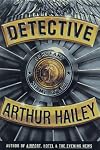
Arthur Hailey is a talented writer, but this novel about a priest turned cop was slow and, at times, almost dull. Some chapters read like a detective manual for beginners. Detective Malcolm Anslie is portrayed as an educated, savvy, and caring public servant with a lovely family, but I found him confusing. In the story, he is a by-the-book detective, yet he sabotages his career by having a yearlong affair with a co-worker who becomes his senior at work. It was difficult for me to reconcile show more his behavior with his character's work ethic. The plot was complicated and far-fetched. Commissioner Cynthia Ernst was damaged yet brilliant, but her simple stupidity became her undoing, which I found unrealistic. show less

I had never read any of Hailey's umpty-million books until I picked up this BookCrossing release. As a novel I give it a “high average” score. I enjoyed it, but was also shocked by it in a way I’m sure the author did not intend.
First things first: This is a medical thriller, with layers of suspenseful subplots that all reach their greatest tension at the same time — a neat trick. It would have worked even better if Hailey hadn’t slipped into prose, late in the book, that sounds show more like it should be intoned by Charlton Heston in a beard and nightgown:
What have we built here? O’Donnell searched his mind. Is it, in truth, a place of healing? Or have we raised, in folly, a whited sepulcher — an empty, antiseptic shrine?
I enjoyed the book’s antiquity: It was published in 1959, so characters ask the local operator to place a call to New York (“Thank you, New York”). The nurses have to live in the “nurse's home,” a dormitory with a curfew. The doctors all pause now and again to light a cigarette and draw the smoke gratefully into their lungs. (It’s still five years until the Surgeon-General’s famous report.)
But here’s what shocked me.
He asked a girl clerk behind the desk, “Which technicians are free?”
She consulted a list. “There’s Jane or Mr. Firban.”
“I think we’ll have Firban do this one. . . .” [208]
Get it? Women in this novel are “girls” who are addressed by their first names. Men are men, and they get a “Mr.” This is true throughout the book: Even a senior surgeon, the only woman on staff, is called “Lucy” (’though I’ll admit she’s at least never called a “girl doctor”).
But what makes this stuff shocking (not just abhorrent) is that it’s also clear that the author is trying his darndest to be modern and to write strong, intelligent, progressive women characters. He even writes little lectures on the subject. Here’s one:
He knew, too, that difference in sex had little to do with it, that women were often stouter than men in mind and heart, and that apparent masculinity was sometimes a hollow pose designed to camouflage internal weakness. [234]
Well and good. Yet Hailey’s strong women, unlike his men, are still subject to incapacitating fits of emotion. And what scares me is, I suspect he’s not just making it up, and that women really were socialized this way, believing it was “natural” to go physically weak with desire for a man — much as women of an earlier era learned to faint, to really lose consciousness, at moments of social stress.
Then there’s the feminine intelligence à la Hailey. We find that an expectant mother, praised by her doctor as “an intelligent girl,” is actually a ponderous thinker. We can tell this because Hailey lets us listen to her thoughts. Here’s how the passage ends: She smiled at that. She guessed she really was intelligent. After all, she had proved she still possessed her old classroom ability to understand and memorize. Then she told herself: Don’t be smug; besides, it’s a baby you’re having, not an end-of-semester exam.
I probably ought to give Hailey some credit for being a good observer. Mrs. John Alexander’s thought process, just cited, is of a kind that was routine in the 1950s and is still with us today. I know because of my mother’s testimony. She was in college then, being trained to understand that girls, no matter how intelligent in their way, did not enter certain professions such as engineering. Who did she think she was, after all — some kind of girl genius? An Alice Einstein? A man?
When I finished the book, I had to give my mother a call. show less
First things first: This is a medical thriller, with layers of suspenseful subplots that all reach their greatest tension at the same time — a neat trick. It would have worked even better if Hailey hadn’t slipped into prose, late in the book, that sounds show more like it should be intoned by Charlton Heston in a beard and nightgown:
What have we built here? O’Donnell searched his mind. Is it, in truth, a place of healing? Or have we raised, in folly, a whited sepulcher — an empty, antiseptic shrine?
I enjoyed the book’s antiquity: It was published in 1959, so characters ask the local operator to place a call to New York (“Thank you, New York”). The nurses have to live in the “nurse's home,” a dormitory with a curfew. The doctors all pause now and again to light a cigarette and draw the smoke gratefully into their lungs. (It’s still five years until the Surgeon-General’s famous report.)
But here’s what shocked me.
He asked a girl clerk behind the desk, “Which technicians are free?”
She consulted a list. “There’s Jane or Mr. Firban.”
“I think we’ll have Firban do this one. . . .” [208]
Get it? Women in this novel are “girls” who are addressed by their first names. Men are men, and they get a “Mr.” This is true throughout the book: Even a senior surgeon, the only woman on staff, is called “Lucy” (’though I’ll admit she’s at least never called a “girl doctor”).
But what makes this stuff shocking (not just abhorrent) is that it’s also clear that the author is trying his darndest to be modern and to write strong, intelligent, progressive women characters. He even writes little lectures on the subject. Here’s one:
He knew, too, that difference in sex had little to do with it, that women were often stouter than men in mind and heart, and that apparent masculinity was sometimes a hollow pose designed to camouflage internal weakness. [234]
Well and good. Yet Hailey’s strong women, unlike his men, are still subject to incapacitating fits of emotion. And what scares me is, I suspect he’s not just making it up, and that women really were socialized this way, believing it was “natural” to go physically weak with desire for a man — much as women of an earlier era learned to faint, to really lose consciousness, at moments of social stress.
Then there’s the feminine intelligence à la Hailey. We find that an expectant mother, praised by her doctor as “an intelligent girl,” is actually a ponderous thinker. We can tell this because Hailey lets us listen to her thoughts. Here’s how the passage ends: She smiled at that. She guessed she really was intelligent. After all, she had proved she still possessed her old classroom ability to understand and memorize. Then she told herself: Don’t be smug; besides, it’s a baby you’re having, not an end-of-semester exam.
I probably ought to give Hailey some credit for being a good observer. Mrs. John Alexander’s thought process, just cited, is of a kind that was routine in the 1950s and is still with us today. I know because of my mother’s testimony. She was in college then, being trained to understand that girls, no matter how intelligent in their way, did not enter certain professions such as engineering. Who did she think she was, after all — some kind of girl genius? An Alice Einstein? A man?
When I finished the book, I had to give my mother a call. show less
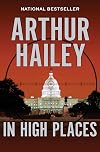
Arthur Hailey, the master of fiction-with-realistic-settings, has taken Canadian politics as the backdrop for In High Places. As can be expected, he has presented the human side of politics with all things good, bad and ugly. Though it is an engaging read right through, for someone who has read and enjoyed most of his works for the inside details that he provides of the industries in which the stories are set, it is somewhat unsatisfying. It feels as if Hailey was on a deadline to finish show more writing this novel. Or else, Canadian politics is, maybe, not as colourful as that of many other nations and, choosing it as the setting, Hailey could do nothing more. That said, I enjoyed this one too, though not as much as I had done his other great works. So it is between 3 and 4 stars, rounded up to 4 due to my bias towards Hailey! show less
Lists
Awards


You May Also Like


Associated Authors
Statistics
- Works
- 53
- Also by
- 47
- Members
- 9,196
- Popularity
- #2,608
- Rating
- 3.5
- Reviews
- 114
- ISBNs
- 590
- Languages
- 25
- Favorited
- 15