
Irving Wallace (1916–1990)
Author of The People's Almanac Presents the Book of Lists
About the Author
Irving Wallace was born March 19, 1916 in Chicago, Illinois. He began writing for various magazines at age 15 and worked as a screenwriter for a number of Hollywood studios---Columbia, Fox, Warner Brothers, Universal, and MGM from 1950 to 1959, then he turned solely to writing books. His first show more major bestseller was The Chapman Report in 1960, a fictional account of a sexual research team's investigations of a wealthy Los Angeles suburb. Among other fictional works by Wallace are The Prize and The Word. His meticulously researched fiction often has the flavor of spicy journalism. A great deal of research goes into his novels, which cover a wide variety of subjects, from the presentation of the Nobel Prize to political scenarios. With their recurring dramatic confrontations, his novels lend themselves well to screenplay adaptation, and most of them have been filmed, including The Chapman Report and The Prize. Wallace has also compiled several nonfiction works with his family, including The People's Almanac and The Book of Lists, both of which have spawned sequels. Irving Wallace died June 29, 1990 in Los Angeles, California at the age of 74 from pancreatic cancer. (Bowker Author Biography) show less
Series
Works by Irving Wallace
The Nympho and Other Maniacs: The Lives, the Loves and the Sexual Adventures of Some Scandalous and Liberated Ladies (1971) 202 copies, 1 review
Fabulous Originals: Lives of Extraordinary People Who Inspired Memorable Characters in Fiction (1955) 25 copies
O Cavalheiro de Domingo 3 copies
The Seventh Secret/Audio Cassettes — Author — 2 copies
As três sereias 2 copies
A Vigésima Sétima Mulher 2 copies
La creación de una novela 2 copies
O prémio 1 copy
HIl Ipresidente: romanzo 1 copy
Kirjavaliot - Lentokapteeni, Kulkuri ja olkihattuinen tyttö, R - salainen asiakirja, Luojanluomat ystäväni (1977) 1 copy
A vig℗esima s℗etima mulher 1 copy
A palavra 1 copy
A hetedik titok 1 copy
Yancy Derringer: Loot from Richmond — Scriptwriter — 1 copy
The Silver Queen 1 copy
O milagre 1 copy
A sala V.I.P 1 copy
Le requin 1 copy
Clube de Fãs 1 copy
Fan club 1 copy
El todopoderoso 1 copy
Argumentos fabulosos 1 copy
O COMPLÔ (PVL42) 1 copy
The prophets of doom 1 copy
Fan Club. Vol II 1 copy
DELICESINE 1 copy
GIZLI CENNET 1 copy
Irving Wallace 1 copy
O Maior Espectáculo do Mundo 1 copy
A Senha (PVL40) 1 copy
La fontana della giovinezza 1 copy
Sedem minut 1 copy
O LEITO CELESTIAL 1 copy
O PRÉMIO 1 copy
O Fã-clube 1 copy
Ben Hur 1 copy
Ninfomaníacas e Outras 1 copy
Reader's Digest Condensed Books - The Man/Scott's Last Expedition/Hall Of Mirrors/The Ashes Of Loda 1 copy
Het Komplot 1 copy
O sétimo segredo 1 copy
Titreşim 1 copy
Associated Works
Scoundrels & Scalawags: 51 Stories of the Most Fascinating Characters of Hoax and Fraud (1968) — Contributor — 58 copies, 1 review
Reader's Digest Condensed Books 1986 v02: An Ark on The Flood / The Seventh Secret / Come Spring / Break In (1986) — Author — 45 copies
Reader's Digest Condensed Books 1977 v01: Mrs. Pollifax on Safari / The R Document / Home Before Dark / The Glory Boys / The Spuddy (1977) — Contributor — 28 copies
Reader's Digest Best Sellers 1978: Oliver's Story | The R Document (1978) — Author — 10 copies, 1 review
Reader's Digest Condensed Books: Thunder at Dawn • Tisha • The Long Long Dances • The R Document (1913) 9 copies
Reader's Digest Condensed Books: King of the Golden Valley • The Hunt for Red October • This Giving Heart • The Seventh Secret (1986) 4 copies
Reader's Digest Condensed Books: The Man | Scott's Last Expedition | Hall of Mirrors | The Ashes of Loda (1966) — Author — 3 copies
Een madonna voor Marta; De President; De wereldreis van de Gipsy Moth; Spion met twee gezichten — Author — 1 copy, 1 review
Il settimo segreto - Richiamo selvaggio - Una voce al telefono - La signora Pollifax e il Budda di Hong Kog — Contributor — 1 copy
RDCBLP The Seventh Secret | Arnie and a House Full of Company — Author — 1 copy
Tagged
Common Knowledge
- Canonical name
- Wallace, Irving
- Other names
- Wallechinsky, David
- Birthdate
- 1916-03-19
- Date of death
- 1990-06-29
- Gender
- male
- Education
- Kenosha Central High School, Kenosha, Wisconsin, USA
Williams Institute, Berkeley, California, USA
Los Angeles City College - Occupations
- journalist
screenwriter
novelist - Organizations
- US Army Air Force (WWII)
- Awards and honors
- Supreme Award of Merit, George Washington Carver Memorial Institute (1964)
Silver medal, Commonwealth Club (1965)
Award of Excellence, Popular Culture Association (1974)
Venice Rosa d'Oro award (1975) - Agent
- Paul Gitlin
- Relationships
- Wallace, Sylvia (wife)
Wallechinsky, David (son)
Wallace, Amy (daughter) - Cause of death
- pancreatic cancer
- Nationality
- USA
- Birthplace
- Chicago, Illinois, USA
- Places of residence
- Chicago, Illinois, USA
Kenosha, Wisconsin, USA
Hollywood, California, USA - Place of death
- Los Angeles, California, USA
- Burial location
- Hillside Memorial Park Cemetery, Culver City, California, USA
- Associated Place (for map)
- California, USA
Members
Discussions
Fictious Russian soon-to-be-President of Russia secretly goes to Lourdes, France healing springs. in Name that Book (August 2011)
Reviews

Irving Wallace's novel The Fan Club was quite successful when it was published in 1974, spending nearly six months on the NYT best seller list and serving as the basis for a movie project that never got to the shooting stage. Like most popular novels of its period, it has since fallen into obscurity. It is a "thriller" about the abduction, rape, ransom, and rescue of a sex-symbol movie star. I read a portion of it in the 1980s and I came back to read the whole thing more than thirty years show more later.
Rather than a single psychopathic villain (cf. Straub's Hellfire Club), the story offers a misfit team of perpetrators. This feature seems to be an indictment of masculine pack dynamics: the group is morally less than the sum of its parts, while operationally greater than them. This notion is bolstered by fact that the most practically capable and ethically depraved of the four culprits has a military background, having participated in atrocities as an American soldier in Viet Nam.
The four "fan club" malefactors are repeatedly identified by their roles, rather than proper names--first for purposes of concealment in the journal kept by their organizer, and then in the mental indexing performed by their captive victim. These roles--the Club President i.e. "Dreamer," Accountant i.e. "Milquetoast," Insurance Person i.e. "Salesman," and Mechanic i.e. "Evil One"--seem to suggest an allegorical reading, where the diverse character types of the four could represent larger social functions, or even psychological components (e.g. self, super-ego, ego, and id).
Except for some passages from the notebooks of the Dreamer-instigator, the novel is told in an omniscient third-person voice, but using an assortment of characters for perspective orientation. For the most part, focus alternates between the fan club members on the one hand and their captive on the other, with all of the post-abduction rapes and assaults emphasizing her perspective. She does survive the ordeal, and it seems clear that she would not have done so without her own resourcefulness and personal agency.
By making his President/Dreamer character a writer, Wallace invites suspicion of an element of self-portraiture in this eventually declared anti-hero. This protagonist treats the predatory fan club as an "experiment" in the real-world manifestation of fantasy. Are we supposed to congratulate Wallace on having chosen to write a fiction rather than carrying out the sort of criminal acts about which he wrote? The decision here to leave the Dreamer at large and unrehabilitated may have been intended as a horror-style coda to signal the persistence of evil. But given the extent to which the entire novel might be construed as rape-as-entertainment, it does come off disturbingly as "no comeuppance!"--especially in today's interpretive climate. While I do not myself insist on moral justice in fictional narrative, Emma Bovary this fellow is not.
In any case, I do think the book was more interesting than the only other Wallace novel I've read, the later Celestial Bed, which shares some of its preoccupations--even signaling them in the title, which featured as an invocation (with the same historical referent) in The Fan Club. show less
Rather than a single psychopathic villain (cf. Straub's Hellfire Club), the story offers a misfit team of perpetrators. This feature seems to be an indictment of masculine pack dynamics: the group is morally less than the sum of its parts, while operationally greater than them. This notion is bolstered by fact that the most practically capable and ethically depraved of the four culprits has a military background, having participated in atrocities as an American soldier in Viet Nam.
The four "fan club" malefactors are repeatedly identified by their roles, rather than proper names--first for purposes of concealment in the journal kept by their organizer, and then in the mental indexing performed by their captive victim. These roles--the Club President i.e. "Dreamer," Accountant i.e. "Milquetoast," Insurance Person i.e. "Salesman," and Mechanic i.e. "Evil One"--seem to suggest an allegorical reading, where the diverse character types of the four could represent larger social functions, or even psychological components (e.g. self, super-ego, ego, and id).
Except for some passages from the notebooks of the Dreamer-instigator, the novel is told in an omniscient third-person voice, but using an assortment of characters for perspective orientation. For the most part, focus alternates between the fan club members on the one hand and their captive on the other, with all of the post-abduction rapes and assaults emphasizing her perspective. She does survive the ordeal, and it seems clear that she would not have done so without her own resourcefulness and personal agency.
By making his President/Dreamer character a writer, Wallace invites suspicion of an element of self-portraiture in this eventually declared anti-hero. This protagonist treats the predatory fan club as an "experiment" in the real-world manifestation of fantasy. Are we supposed to congratulate Wallace on having chosen to write a fiction rather than carrying out the sort of criminal acts about which he wrote? The decision here to leave the Dreamer at large and unrehabilitated may have been intended as a horror-style coda to signal the persistence of evil. But given the extent to which the entire novel might be construed as rape-as-entertainment, it does come off disturbingly as "no comeuppance!"--especially in today's interpretive climate. While I do not myself insist on moral justice in fictional narrative, Emma Bovary this fellow is not.
In any case, I do think the book was more interesting than the only other Wallace novel I've read, the later Celestial Bed, which shares some of its preoccupations--even signaling them in the title, which featured as an invocation (with the same historical referent) in The Fan Club. show less

The first "Book of Lists" became an instant favourite of mine when I first read it, back in the dim, dark ages of the 1980s. At the time I was too young to understand many of the people or events referenced but "The Book of Lists" fired my desire to know what the hell these people were talking about and so helped me become the uncrowned King of obscure trivia.
Even if great wads of cash fell out of the book the first time I opened it, nothing could match the impact the first "Book of Lists" show more had on me, so naturally no. 3 was going to pale in comparison. Of course, this should not take away from "The Book of Lists 3", because where else could you find, for example, a list of "14 persons who suffered from severe depression", followed immediately by "Rating 36 home-grown vegetables"? show less
Even if great wads of cash fell out of the book the first time I opened it, nothing could match the impact the first "Book of Lists" show more had on me, so naturally no. 3 was going to pale in comparison. Of course, this should not take away from "The Book of Lists 3", because where else could you find, for example, a list of "14 persons who suffered from severe depression", followed immediately by "Rating 36 home-grown vegetables"? show less
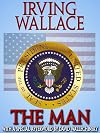
This work, published in 1964, is about the surprising accession of a black man to the office of the presidency of the United States after the unexpected deaths of the president, the vice-president and the Speaker of the House of Representatives. In 1964, this would have been an amazing event, as the book demonstrates. I don't even remember (I was too young) if there were any black Americans in Congress at that time (John Lewis? not yet?). Now that we have had a black president who was show more popular enough to be elected to 2 terms in office, I suppose I must ask, as mentioned in the other review, whether this book is still relevant. I think the answer is unequivocally yes. "Bypassing" the color barrier with Barack Obama was certainly momentous, but we must acknowledge that Barack Obama was somehow able to relate to people of all races and nationalities possibly because of his experiences in a biracial family and maybe also because he was/is extremely charismatic and intelligent. However he still faced issues regarding his skin color — remember that some people claimed he wasn't American — and the color barrier still exists in our society.
Having said this, I only gave this book 3 1/2 stars because it took so long to get to the interesting points. By slowly and solidly building the backgrounds of the characters and the story, it took a lot of patience to get to the part where conflicts and matters of race were injected into the daily running of the country and caused so much difficulty for President Dilman. Nevertheless, by the time I finished the book, I found that I liked it very much. The question that needs to be asked on a regular basis is: how do our black brethren in this country feel about our white countrymen? And vice versa? Sadly, there is still so much racial violence. Can we ever become a colorblind society? What will it take to reach that goal? The outcome in the book is not perfect and it does not suggest that much progress will be made by having the first black president (at least in the 1960s) but the story gives us hope and suggests the value of all victories — large and small — towards that goal. show less
Having said this, I only gave this book 3 1/2 stars because it took so long to get to the interesting points. By slowly and solidly building the backgrounds of the characters and the story, it took a lot of patience to get to the part where conflicts and matters of race were injected into the daily running of the country and caused so much difficulty for President Dilman. Nevertheless, by the time I finished the book, I found that I liked it very much. The question that needs to be asked on a regular basis is: how do our black brethren in this country feel about our white countrymen? And vice versa? Sadly, there is still so much racial violence. Can we ever become a colorblind society? What will it take to reach that goal? The outcome in the book is not perfect and it does not suggest that much progress will be made by having the first black president (at least in the 1960s) but the story gives us hope and suggests the value of all victories — large and small — towards that goal. show less

I read "The intimate sex lives of famous people" for the first time many years ago now, when the youth I possessed was particularly calloused and my knowledge of sex somewhat limited.
One can imagine the shock I felt then to read of things like Havelock Ellis being a urination voyeur, James Boswell's weird fixation on trees and coprophilia (I looked this up in a dictionary and got the surprise of my life).
"The intimate sex lives of famous people" consists of short biographies of over one show more hundred famous people from history, ranging from Tsar Alexander II of Russia to Emile Zola, with attention given to whatever fetishes or peculiarities each figure enjoyed (for Alexander it was his collection of erotica, while Zola was a polygamist). The authors attempt to show that without knowledge of the sex lives of the famous, how can we fully understand their public actions. Well, it certainly gave me a more rounded understanding of some famous people.
In decades since "The intimate sex lives of famous people" was first released, sex as a topic for discussion has become more open and so the contents of the book feels less risque, and in fact sound quite conservative compared to the tell-all stories of today's celebs.
My favourite biography would have to be of Jean-Jacques Rousseau, who had a spanking fetish, was into exposing himself in public (which led to him being attacked by a posse of broomstick carrying women), who fell in lust with inanimate objects (much to the consternation of the owners of such objects) and "Sex became so painful for him that he gave it up entirely for the last twenty-three years of his life, returning to masturbation."
I wholeheartedly recommend this book to anyone curious enough to want to know what famous people got up to in their spare time. show less
One can imagine the shock I felt then to read of things like Havelock Ellis being a urination voyeur, James Boswell's weird fixation on trees and coprophilia (I looked this up in a dictionary and got the surprise of my life).
"The intimate sex lives of famous people" consists of short biographies of over one show more hundred famous people from history, ranging from Tsar Alexander II of Russia to Emile Zola, with attention given to whatever fetishes or peculiarities each figure enjoyed (for Alexander it was his collection of erotica, while Zola was a polygamist). The authors attempt to show that without knowledge of the sex lives of the famous, how can we fully understand their public actions. Well, it certainly gave me a more rounded understanding of some famous people.
In decades since "The intimate sex lives of famous people" was first released, sex as a topic for discussion has become more open and so the contents of the book feels less risque, and in fact sound quite conservative compared to the tell-all stories of today's celebs.
My favourite biography would have to be of Jean-Jacques Rousseau, who had a spanking fetish, was into exposing himself in public (which led to him being attacked by a posse of broomstick carrying women), who fell in lust with inanimate objects (much to the consternation of the owners of such objects) and "Sex became so painful for him that he gave it up entirely for the last twenty-three years of his life, returning to masturbation."
I wholeheartedly recommend this book to anyone curious enough to want to know what famous people got up to in their spare time. show less
Lists
Awards


You May Also Like


Associated Authors
Statistics
- Works
- 103
- Also by
- 15
- Members
- 9,019
- Popularity
- #2,665
- Rating
- 3.6
- Reviews
- 139
- ISBNs
- 585
- Languages
- 17
- Favorited
- 7