Amy Wallace (1955–2013)
Author of Creativity, Inc.: Overcoming the Unseen Forces That Stand in the Way of True Inspiration
About the Author
Series
Works by Amy Wallace
Creativity, Inc.: Overcoming the Unseen Forces That Stand in the Way of True Inspiration (2014) 2,108 copies, 70 reviews
The Prodigy: A Biography of William James Sidis, America's Greatest Child Prodigy (1986) 66 copies, 3 reviews
The book of lists: the original compendium of curious information (Canadian edition) (2005) 41 copies
Closing Time 1 copy
The Gardeners 1 copy
Associated Works
Tagged
Common Knowledge
- Legal name
- Wallace, Amy Deborah
- Other names
- Finnegan, Ellis Laura
- Birthdate
- 1955-07-3
- Date of death
- 2013-08-10
- Gender
- female
- Occupations
- writer
- Relationships
- Wallace, Irving (father)
Wallace, Sylvia (mother)
Wallechinsky, David (brother) - Nationality
- USA
- Birthplace
- Los Angeles, California, USA
- Places of residence
- Los Angeles, California, USA
- Place of death
- Los Angeles, California, USA
- Associated Place (for map)
- Los Angeles, California, USA
Members
Reviews
I first came across William James Sidis back around 2000 on the internet, on the site by Dan Mahony. Unfortunately that site, sidis dot net, in all its Web 1.0 glory, is slowly dying since the 2016 death of Mahony. This is the only book-length biography of Sidis, written without notes, citations, or a bibliography by one Amy Wallace, a churner-outer of nonfiction books of trivial quality. It is well-written, well-researched, and well-interviewed, but it is not scholarly and a little too show more chatty. But, with Mahony’s death and the death of all people remotely connected to Sidis, this will probably be the best biography we’ll ever get. Mahony collected some fine research and tracked down everything he could about Sidis, from newspaper accounts to memoirs to interviews and even the papers saved by his family members, especially Sidis’s sister. But, aside from collecting it and presenting it, he never truly analyzed it or synthesized it, and never produced a biography in any real sense. Maybe someone will.
So, how is the book. It is a chronological and sometimes thematical narrative biography of William James Sidis, a child prodigy, son of Boris Sidis, a pioneering psychologist, and Sarah Sidis, a stern mother with an unused M.D. (gotten at a time when few women even attended college), and godson of the august scholar William James. Sidis had prodigous memory skills, learned languages easily, read voraciously and precociously, and, most notedly, had tremendous mathematical skills. He graduated Harvard as a teen, lectured on the fourth dimension, and even published an obscure book on cosmological physics. And, by age twenty or so, did nothing with it. He disdained academia, he hated his mother, he never mentioned his father. He retreated into menial jobs as a comptometer operator, devolved into socialistic and anarchistic politics, lived cheek by jowl, wrote drivelous history, and, most famously, or infamously, collected and wrote about street car transfer ticket collecting (inventing a hobby and study he coined “peridromophily”). Shunning his childhood publicity and a conscientious objector, he died young and mostly alone at the tail end of the Second World War. It’s a sad but engrossing tale. As a “gifted” kid myself, I understand some of his hobbies and self-world. But his total retreat from manners, society, and the like I find inexplicable.
Nice images (more on Mahony’s site), index, but no notes or bibliography (again, the late Mahony has a sort of bibliography on his link-deathing website). Good, interesting, but could be so much better. The thrust of Wallace, and Mahony, is that the prodigy didn’t burn out and destroy his gifts, he just channelled them into unexplainable anti-social pursuits. Creeping under the surface is a non-condemnation condemnation of his odd upbringing; that Sidis’s parents raised a damaged prodigy. Let the reader decide. show less
So, how is the book. It is a chronological and sometimes thematical narrative biography of William James Sidis, a child prodigy, son of Boris Sidis, a pioneering psychologist, and Sarah Sidis, a stern mother with an unused M.D. (gotten at a time when few women even attended college), and godson of the august scholar William James. Sidis had prodigous memory skills, learned languages easily, read voraciously and precociously, and, most notedly, had tremendous mathematical skills. He graduated Harvard as a teen, lectured on the fourth dimension, and even published an obscure book on cosmological physics. And, by age twenty or so, did nothing with it. He disdained academia, he hated his mother, he never mentioned his father. He retreated into menial jobs as a comptometer operator, devolved into socialistic and anarchistic politics, lived cheek by jowl, wrote drivelous history, and, most famously, or infamously, collected and wrote about street car transfer ticket collecting (inventing a hobby and study he coined “peridromophily”). Shunning his childhood publicity and a conscientious objector, he died young and mostly alone at the tail end of the Second World War. It’s a sad but engrossing tale. As a “gifted” kid myself, I understand some of his hobbies and self-world. But his total retreat from manners, society, and the like I find inexplicable.
Nice images (more on Mahony’s site), index, but no notes or bibliography (again, the late Mahony has a sort of bibliography on his link-deathing website). Good, interesting, but could be so much better. The thrust of Wallace, and Mahony, is that the prodigy didn’t burn out and destroy his gifts, he just channelled them into unexplainable anti-social pursuits. Creeping under the surface is a non-condemnation condemnation of his odd upbringing; that Sidis’s parents raised a damaged prodigy. Let the reader decide. show less
Creativity, Inc.: Overcoming the Unseen Forces That Stand in the Way of True Inspiration by Ed Catmull
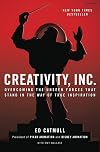
Ed Catmull's "Creativity, Inc." is one part company history, one part memoir, and one part leadership lesson. Normally that might be a recipe for disaster, but when the author is a founder and president of Pixar Animation the results are an insightful look at how to organize and manage in such a way as to unlock people's creativity, energy, and passion.
Catmull is unflinchingly honest about both the successes and failures of Pixar. This lends great credibility to his management insights since show more they are born of real-world experience and the pain of experimentation and discovery. Catmull is adamant that failure is not necessarily a setback and, coupled with an expectation of honesty and candor when working with peers, this conviction serves as the backbone of how he has run Pixar.
A special note should be made of the epilogue in which Catmull reminisces about his years of collaboration with Steve Jobs. Catmull paints a moving and personal picture of the legendary CEO -- one that is at odds with the public perception of a cold, calculating leader. It's a wonderful tribute that also underscores the advice he gives in the book.
"Creativity, Inc." is a great read for managers and leaders, especially in fields that require agility and creativity, and would benefit anyone looking for ways to lead with integrity.
Disclaimer: I received a free pre-publication copy of this book from LibraryThing's Early Reviewer program. show less
Catmull is unflinchingly honest about both the successes and failures of Pixar. This lends great credibility to his management insights since show more they are born of real-world experience and the pain of experimentation and discovery. Catmull is adamant that failure is not necessarily a setback and, coupled with an expectation of honesty and candor when working with peers, this conviction serves as the backbone of how he has run Pixar.
A special note should be made of the epilogue in which Catmull reminisces about his years of collaboration with Steve Jobs. Catmull paints a moving and personal picture of the legendary CEO -- one that is at odds with the public perception of a cold, calculating leader. It's a wonderful tribute that also underscores the advice he gives in the book.
"Creativity, Inc." is a great read for managers and leaders, especially in fields that require agility and creativity, and would benefit anyone looking for ways to lead with integrity.
Disclaimer: I received a free pre-publication copy of this book from LibraryThing's Early Reviewer program. show less
This review was written for LibraryThing Early Reviewers.Creativity, Inc.: Overcoming the Unseen Forces That Stand in the Way of True Inspiration by Ed Catmull
If you are reading this book strictly from the aspect of how to build a creative culture – that is, if you go into reading this book wearing blinders that only allow you to look for specific tips about creativity – then you may be in for a disappointment. (Then again, if you go into anything about creativity with blinders on then you will be disappointed. Creativity is about throwing the blinders off. But I digress.) Take the blinders off and revel in the joy and creativity that is show more Pixar.
Of course this book delivers on the promise to talk about how Pixar built and maintained a creative culture. And there is information here that can get anyone started in that direction. But to focus on that aspect of the book is to do it a disservice – there is a whole lot more here.
First, for the animation freak/Pixar fan/Disney nerd (that last one is me) there are fascinating stories about the development of the movies that have become classics. There are stories of the false starts and misdirections and twists and turns that led to development of some of the most famous Pixar movies. We are allowed access into the meetings where these battles are hashed out. We learn about the movies that might have been, and why those movies would have been so much worse than the ones we experienced.
Want to know how Toy Story 2 got the tension it needed to escape reaching a far too predictable end? Want to know what stayed and what was ejected from the first (unworkable) versions of Up? Want to know how a pivotal scene was changed in a way that kept Mr. Incredible from becoming a dislikable, dominating thug of a husband - all without changing a single line of dialogue? All these stories and many more (sorry about the cliché) are included, all providing insights into the movies and insights into the way teams work when they are at their best.
Second, for the individual who wants to learn about leadership there are invaluable lessons. They are not explicitly brought forward; after all, this is a book that focuses on creativity. But within you see how Ed and the team work as leaders. In fact, the lessons about leadership may be more valuable than those about creativity. (And it is worth noting that Ed actually sells himself and executive leaders short. He constantly gives the credit to the creative environment and the people. But the leadership underpinning these is the real reason for Pixar's success. But then, a true leader does point somewhere else rather than at him or herself.)
One great example of how leadership is shown happens near the end of the book when executives realize that the creative, sharing atmosphere they have built may be coming apart under the pressures of size and speed. The actions taken by the leadership team show better than words how they believe the principles they are preaching. And the ability to listen and act (and take on the barbs that are part of the realization) perfectly exemplified the traits any leader should show.
Third, for anyone looking for insights regarding the broad aspects of business – teamwork, motivation, any of the areas people tend to identify as necessary for things to work well – the book is rife with them. I cannot count the number of dog-eared pages I put on this book. Here are a few quotes. "[You have] to be able to engender support for those ideas among the people who'd be charged with employing them." "Making something great is the goal." "Craft is what we are expected to know; art is the unexpected use of our craft." "...failure is a manifestation of learning and exploration." Small snippets of important insights, they are only a taste of the ideas brought forward in the book.
And, finally, the book, as promised, is for the creative person. It talks about creativity, it talks about how to build a creative environment, it talks about how to celebrate creativity, it talks about how to embrace creativity. Others may quibble that there is not the focus on creativity that is promised. But I say that creativity is so riddled throughout the book you cannot walk away without having learned something about that intangible skill.
This is just a flat out entertaining book. It is written in a style that is easygoing, but never pedestrian. And I am hard pressed to believe you can't find something of value for yourself after you've read it. Because it covered so much territory, because it was so well written, and because I found myself consistently gobsmacked by the content within the book, I would say it is one of the best books I have read in a long time. I am quite convinced it will remain so well into the future. show less
Of course this book delivers on the promise to talk about how Pixar built and maintained a creative culture. And there is information here that can get anyone started in that direction. But to focus on that aspect of the book is to do it a disservice – there is a whole lot more here.
First, for the animation freak/Pixar fan/Disney nerd (that last one is me) there are fascinating stories about the development of the movies that have become classics. There are stories of the false starts and misdirections and twists and turns that led to development of some of the most famous Pixar movies. We are allowed access into the meetings where these battles are hashed out. We learn about the movies that might have been, and why those movies would have been so much worse than the ones we experienced.
Want to know how Toy Story 2 got the tension it needed to escape reaching a far too predictable end? Want to know what stayed and what was ejected from the first (unworkable) versions of Up? Want to know how a pivotal scene was changed in a way that kept Mr. Incredible from becoming a dislikable, dominating thug of a husband - all without changing a single line of dialogue? All these stories and many more (sorry about the cliché) are included, all providing insights into the movies and insights into the way teams work when they are at their best.
Second, for the individual who wants to learn about leadership there are invaluable lessons. They are not explicitly brought forward; after all, this is a book that focuses on creativity. But within you see how Ed and the team work as leaders. In fact, the lessons about leadership may be more valuable than those about creativity. (And it is worth noting that Ed actually sells himself and executive leaders short. He constantly gives the credit to the creative environment and the people. But the leadership underpinning these is the real reason for Pixar's success. But then, a true leader does point somewhere else rather than at him or herself.)
One great example of how leadership is shown happens near the end of the book when executives realize that the creative, sharing atmosphere they have built may be coming apart under the pressures of size and speed. The actions taken by the leadership team show better than words how they believe the principles they are preaching. And the ability to listen and act (and take on the barbs that are part of the realization) perfectly exemplified the traits any leader should show.
Third, for anyone looking for insights regarding the broad aspects of business – teamwork, motivation, any of the areas people tend to identify as necessary for things to work well – the book is rife with them. I cannot count the number of dog-eared pages I put on this book. Here are a few quotes. "[You have] to be able to engender support for those ideas among the people who'd be charged with employing them." "Making something great is the goal." "Craft is what we are expected to know; art is the unexpected use of our craft." "...failure is a manifestation of learning and exploration." Small snippets of important insights, they are only a taste of the ideas brought forward in the book.
And, finally, the book, as promised, is for the creative person. It talks about creativity, it talks about how to build a creative environment, it talks about how to celebrate creativity, it talks about how to embrace creativity. Others may quibble that there is not the focus on creativity that is promised. But I say that creativity is so riddled throughout the book you cannot walk away without having learned something about that intangible skill.
This is just a flat out entertaining book. It is written in a style that is easygoing, but never pedestrian. And I am hard pressed to believe you can't find something of value for yourself after you've read it. Because it covered so much territory, because it was so well written, and because I found myself consistently gobsmacked by the content within the book, I would say it is one of the best books I have read in a long time. I am quite convinced it will remain so well into the future. show less
This review was written for LibraryThing Early Reviewers.Creativity, Inc.: Overcoming the Unseen Forces That Stand in the Way of True Inspiration by Ed Catmull
Creativity, Inc.: Overcoming the Unseen Forces That Stand in the Way of True Inspiration tackles Pixar and Disney from the view of technology, individuality, and artistry. All while creating a viable business.
As a graphic designer, we balance creativity and responsibility. Like Pixar, we’re in the business of bottling and selling our imaginations.
Ed Catmull, the computer scientist who became president of Pixar Animation Studios and Walt Disney Animation Studios, deals with this awesome show more collision of seemingly conflicting interests with sincerity right out of Wall-E.
I’m a huge pop culture fanatic: My friends would do trivia and one night they turned in a guess before I even heard the question figuring no one would know the answer. I felt shocked to learn that no one else knew who played Robin in the old Adam West version of Batman. It was Burt Ward, people. Burt Ward. Do people not know this?
So as you can imagine, I’ve laughed and cried with Pixar in the theatre over the years. Remember in Toy Story 3 when Woody and friends held hands and resigned themselves to incineration? You have no soul if that didn’t rock you to the core.
You'll love to hear the story of how creativity and business collided to make Disney magic. show less
As a graphic designer, we balance creativity and responsibility. Like Pixar, we’re in the business of bottling and selling our imaginations.
Ed Catmull, the computer scientist who became president of Pixar Animation Studios and Walt Disney Animation Studios, deals with this awesome show more collision of seemingly conflicting interests with sincerity right out of Wall-E.
I’m a huge pop culture fanatic: My friends would do trivia and one night they turned in a guess before I even heard the question figuring no one would know the answer. I felt shocked to learn that no one else knew who played Robin in the old Adam West version of Batman. It was Burt Ward, people. Burt Ward. Do people not know this?
So as you can imagine, I’ve laughed and cried with Pixar in the theatre over the years. Remember in Toy Story 3 when Woody and friends held hands and resigned themselves to incineration? You have no soul if that didn’t rock you to the core.
You'll love to hear the story of how creativity and business collided to make Disney magic. show less
Lists
Awards
You May Also Like
Associated Authors
Statistics
- Works
- 28
- Also by
- 2
- Members
- 5,295
- Popularity
- #4,702
- Rating
- 4.0
- Reviews
- 116
- ISBNs
- 148
- Languages
- 12
- Favorited
- 2


