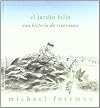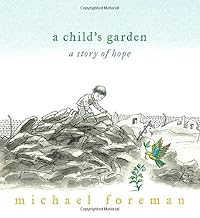
A Child's Garden: A Story of Hope
by Michael Foreman
On This Page
Description
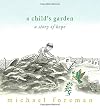
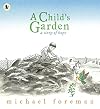
Living in ruin and rubble with a wire fence and soldiers separating him from the cool hills where his father used to take him as a small child, a boy's tiny, green plant shoot gives him hope in a bleak landscape.Tags
Recommendations







Member Reviews
I thought this was an excellent book to start children in the process of understanding the complex issues of the Palestinian conflict with Isreal and possibly our future in America from a child's perspective.
It uses a single plant as a symbol of hope and joy for children in an area decimated by an adult war and poverty. Even when this plant is destroyed again, it is a child from the other side of "the fence" that rebuilds hope. A sad but lovely book.
It uses a single plant as a symbol of hope and joy for children in an area decimated by an adult war and poverty. Even when this plant is destroyed again, it is a child from the other side of "the fence" that rebuilds hope. A sad but lovely book.
This book uses seeds and roots and particularly the way in which they spread to illustrate to children how to have hope in hard situations. When a little boy notices a sprout among rubble, he nurtures it until it grows big enough to cover the fence separating his town from the next. When soldiers tear his plant down, he is heartbroken but quickly notices that some new seeds have begun sprouting on both sides of the fence. A powerful line in the book reads, "Roots are deep and seeds spread.". I think this sends a great message to children to be brave and hopeful.
In "A Child's Garden" a boy is surrounded by rubble and ruin but finds a shoot growing. For me, this shoot is a symbol of his hope. The boy finds the shoot and takes very good care of it. He waters it and gives it love, he watches it grow tall and strong. sadly one day the soldiers come along and tear his shoot, now a grapevine, down and destroy everything. When reading the story, a reader can see that in the same way the boy cares for his hope and it builds and gets stronger. Once his hope is strong the soldiers come along and tear it down. The story then continues with the seeds of the vine creating more shoots and growing again. In the same way, the boy's hope starts to grow again and this time "the soldiers [can] return, [because] show more roots are deep, and seeds spread". The story was beautiful, it showed a child surrounded by ruin, rubble and poverty but it never broke his hope of a better life. show less
I'm not sure what the time period this book is written in but the fence and soldiers tells me that it might be during the Holocaust. My favorite part of this book is that as the garden grows, the pictures in this book go from black and white to colorful then back to black and white when it was ruined. I think this book has a powerful message because each time the garden was ruined it kept coming back and brought so much joy. I think the vine is a symbol, a physical representation of the two sides coming together. Even though this book kind of has a lot going on the language is simple enough for younger audiences and I think they could gain a lot from this book. Definitely one of my favorite reads of the semester.
When a young boy's life has been turned upside down, he struggles to survive as he is barricaded behind a fence. One day, he finds a little plant in the ruins. The boy cares for the plant and it turns into a beautiful grapevine, which attracts all the village children, and together they laugh and play. The soldiers on the other side destroy the vine, but throughout the seasons, seeds from the vine survived on the opposite side of the fence. One day, he sees a girl watering the seeds, and the soldiers nearby do not pay her any mind. The girl tends to the seeds and not long after, the boy has a plant sprouting on his side also. Together, their plants grow into long vines and become intertwined, covering the fence. All the children are show more happy again, and they hope one day the fence will disappear forever. This has got to be one of my favorite books ever! I absolutely love the illustrations and the story line. In the pictures, everything is black and white except for plant. When the plant grows and children start playing again, everything is in color. The color illustrations scream hope and joy to readers. Also, I like the message of friendship and how two people from different backgrounds can become friends and have a common interest. A great book that will leave all readers feeling happy and hopeful. show less
A Child's Garden is a great story about how one little seed can spread hope. The illustrations are the shining light in this story. All of the pictures are in black and white except for the little plant that the boy sees growing. This boy lives on the poorer looking side of the barbed wire fence. There is rubble and broken down houses everywhere. One the other side of the fence, the buildings look strong and stable. This boy tends to his plant and it grows huge as a grape vine. It covers the barbed wire fence and children come to play on it. There is beautiful coloring on the pages with the vine across the fence. The guards come and rip the vine out. They throw it into a ditch across the fence. It grows over there and reaches the fence show more on the other side after a little girl waters it. Some of the seeds survived on the little boy's side of the fence. The two vines merged. This represents the unity of people on those sides. The little boy hopes that one day the fence will be down again.
This book has great symbols for such a simple story. The vine growing back after being ripped out of the ground and the vines intertwining are representations of the fight that people have to push on. The illustrations made this book wonderful. show less
This book has great symbols for such a simple story. The vine growing back after being ripped out of the ground and the vines intertwining are representations of the fight that people have to push on. The illustrations made this book wonderful. show less
I liked reading this book a lot. This book is about a boy who finds hope and beauty in a tiny green plant in a pile of rubble. There is a wire fence and soldiers in the story that separate the ruins from the non ruins. However, the single plant found in the ruins brings together the people on both sides of the fence.This book symbolizes to readers that people can always come together regardless of their differences.
Members
- Recently Added By
Author Information

110+ Works 3,893 Members
Michael Foreman was born in Pakefield, Suffolk on March 21, 1938. At the age of fifteen, Foreman began to study art. His first children's book was published while he was still a student. He earned his M. A. from the Royal College of Art and since then, has written and/or illustrated many children's books. After leaving art school Michael traveled show more all over the world making films and television commercials. He has also worked on magazines, book jackets, animated films, and TV ads. He even worked for the police, sketching criminals described by witnesses. Foreman has won the Kate Greenaway Award twice, the Smarties Book Prize, The Kurt Maschler Award, the Children's Book Award, the Bologna Book Prize and the Francis William's Illustration Award twice. (Bowker Author Biography) show less
Awards and Honors
Awards
Notable Lists
Classifications
Statistics
- Members
- 132
- Popularity
- 246,727
- Reviews
- 11
- Rating
- (4.36)
- Languages
- English, Spanish
- Media
- Paper
- ISBNs
- 6
- ASINs
- 2