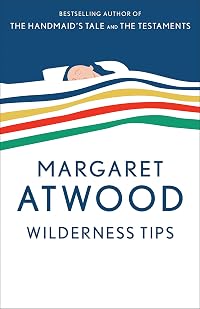
Wilderness Tips
by Margaret Atwood
On This Page
Description
From the #1 New York Times bestselling author of The Handmaid's TaleIn each of these tales Margaret Atwood deftly illuminates the shape of a whole life: in a few brief pages we watch as characters progress from the vulnerabilities of adolescence through the passions of youth into the precarious complexities of middle age. The past resurfaces in the present in ways both subtle and dramatic: the body of a lost Arctic explorer emerges from the ice, a 2,000-year-old bog man turns up in an show more archeological dig, a man with dark secrets marries his lover’s sister, a girl who disappears on a canoe trip haunts her friend many decades later. The richly layered stories in Wilderness Tips map interior landscapes shaped by time, regret, and lost chances, endowing even the most unassuming of lives with a disquieting intensity. show less
Tags
Recommendations














Member Reviews
Ten short stories, published in the late 80s or early 90s, focusing largely on the lives of women (or, more specifically, white Canadian women). These feature different stages of life, from childhood to middle age. Most of them feature extramarital affairs to some extent: having them, not having them, thinking about them, ending them. There is, I think, a repeated theme about the ways in which women's sexuality and desire for male companionship are complicatedly tangled up with the expectation of (or the reality of of) marriage, domesticity, and babies. Some of the women here really want to keep those things separate, others perhaps make a choice between them, and most of them feel conflicted and variable desires for both.
The writing show more is very good, unsurprisingly, and makes all of these lives feel real, interesting, and meaningful. show less
The writing show more is very good, unsurprisingly, and makes all of these lives feel real, interesting, and meaningful. show less
I really enjoyed several of the stories in this collection. A few didn't really grab me, a couple were really excellent, but they were all readable...so I'm giving it an arbitrary 4.
These stories are pretty much all about middle-aged white English Canadian women in the context of Canada, Canadian identity, and various points in Canadian history (mostly 20th century). There are different sorts of women and I found a lot of them utterly fascinating. But the little details of growing up Canadian -- things like historical events, name brands, and the maze of the Toronto underground that people raised elsewhere have no context for -- are really wonderfully drawn. I'd be happier if there were more of a social conscience (beyond white, show more mostly-middle class feminism), but it's unfair to judge the social conscience of a book published in 1989 by the attitude shifts of the past twenty years.
Still, some fascinating characters... :) show less
These stories are pretty much all about middle-aged white English Canadian women in the context of Canada, Canadian identity, and various points in Canadian history (mostly 20th century). There are different sorts of women and I found a lot of them utterly fascinating. But the little details of growing up Canadian -- things like historical events, name brands, and the maze of the Toronto underground that people raised elsewhere have no context for -- are really wonderfully drawn. I'd be happier if there were more of a social conscience (beyond white, show more mostly-middle class feminism), but it's unfair to judge the social conscience of a book published in 1989 by the attitude shifts of the past twenty years.
Still, some fascinating characters... :) show less
Wilderness Tips contains ten superbly crafted stories, in which life doesn’t always turn out quite how it was expected to, consequences must be faced, time flies as it does in life. All of this within the confines of ordinary life. I’m not going to describe in detail every story – as ten is rather a lot to write about – so I shall instead attempt to give a flavour of the collection.
The stories – some of which span years, even decades – focus mainly on the lives of women, and the men who inhabit their lives. Toronto, its environs and the Canadian woods are the settings for these stories – some taking place in slightly more rural settings – two of the stories taking in the world of the summer camp. I have always known, show more that had I been born in Canada or the US I would have simply despised the summer camp. Yet just as the world of the hotel or the boarding school is deeply fascinating and wreathed in stories as they are places that pull unrelated people together – so is the North American summer camp similarly fascinating. I wonder if that explains the fact that these two stories, True Trash and Death by Landscape were among my favourites.
True Trash is the story which opens the collection, and a group of young boys with some binoculars spy on a group of waitresses as they sunbathe. The waitresses – subject to much speculation and fantasy – are only three or four years older than the boys – lie in the sun and read romance stories in trashy magazines. Here Atwood recreates the atmosphere of the camp beautifully, the sexual tensions between the boys and these older girls, that heady, complicated time when one is somehow stranded between childhood and adulthood. The story of the consequences of that summer continue many years later – but I naturally can’t say too much about that.
“Between two oval hills of pink granite there’s a small crescent of beach. The boys, wearing their bathing suits (as they never do on canoe trips but only around the camp where they might be seen by girls), are doing their laundry, standing up to their knees and swabbing their wet T-shirts and underpants with yellow bars of Sunlight soap. This only happens when they run out of clothes, or when the stench of dirty socks in the cabin becomes too overpowering. Darce, the counsellor is supervising, stretched out on a rock, taking the sun on his already tanned torso and smoking a fag. It’s forbidden to smoke in front of the campers but he knows this bunch won’t tell. To be on the safe side he’s furtive it, holding the cigarette down close to the rock and sneaking quick puffs.”
(True Trash)
The second camp story – actually the fifth story in, Death by Landscape – in which a woman recalls a mysterious and shocking incident at her summer camp years before. Atwood’s description of a traditional old camp, little changed since the start of the century, and the remote, mountainous countryside surrounding it is perfect. In her apartment, where she now lives alone, Lois has a collection of landscape paintings, which take her back to the world of that camp.
“She bought them because she wanted them. She wanted something that was in them. Although she could not have said at the time what it was. It was not peace: she does not find them peaceful in the least. Looking at them fills her with a wordless unease. Despite the fact that there are no people in them or even animals, it’s as if there is something, or someone, looking back out.”
(Death by Landscape)
Several of the women in these stories are professional women – journalists or lawyers -making their way in the world of men. In Hairball, for instance, Kat, a magazine editor, undergoes surgery to remove a growth – there’s a horrifying description of it – which I shall spare you. Kat takes her tumour home in a bottle of formaldehyde. Kat’s married lover; Gerald – takes the opportunity of her absence from work to ease her out – a betrayal which takes her breath away. Kat takes a terrible, stomach churning revenge. It is a quite brilliant story, slightly disturbing, but with a superb sting in the tail. In Uncles; Susanna, a journalist has her success ruined by the poisonous jealously of a male colleague – the uncles of the title the men whose praise and approval she worked so hard to achieve when she was a girl. The uncles had protected and provided for Susanna and her mother, and Susana can’t help but search for uncle like figures as she starts out in her career. In Weight, another professional woman – a lawyer sleeps around, seeming always to be making omelettes for other women’s husbands. She remembers Molly – who she was at college with – they shared similar dreams of fighting feminism and achieving professional greatness. Now our narrator, engineers a meeting with a rich man – she is only interested in his money – though it isn’t for herself she wants it – but for a shelter for battered women – to be called Molly’s Place.
In the title story Wilderness Tips, we witness the strange dynamic between three sisters. George, once a Hungarian refugee – has been successful in Canada and married one of the sisters. George has cheated on his wife with one of her sisters – and is now dancing around the third – quite successful in this too it seems. George’s past very different to his present – which he can’t help but recall as his wife Prue shows of the effect of her red bandannas.
“‘It’s the forties look,” she says to George, hand on her hip, doing a pirouette. “Rosie the Riveter. From the war. Remember her?”
George, whose name is not really George, does not remember. He spent the forties rooting through garbage bag heaps and begging, and doing other things unsuitable for a child. He has a dim memory of some film star posed on a calendar tattering on a latrine wall. Maybe this is the one Prue means. He remembers for an instant his intense resentment of the bright, ignorant smile, the well-fed body. A couple of buddies had helped him take her apart with the rusty blade from a kitchen knife they’d found somewhere in the rubble. He does not consider telling any of this to Prue.”
(wilderness Tips)
Wilderness Tips is a wonderful collection which beautifully explores aspects of Canadian life, between the sixties and the nineties. show less
The stories – some of which span years, even decades – focus mainly on the lives of women, and the men who inhabit their lives. Toronto, its environs and the Canadian woods are the settings for these stories – some taking place in slightly more rural settings – two of the stories taking in the world of the summer camp. I have always known, show more that had I been born in Canada or the US I would have simply despised the summer camp. Yet just as the world of the hotel or the boarding school is deeply fascinating and wreathed in stories as they are places that pull unrelated people together – so is the North American summer camp similarly fascinating. I wonder if that explains the fact that these two stories, True Trash and Death by Landscape were among my favourites.
True Trash is the story which opens the collection, and a group of young boys with some binoculars spy on a group of waitresses as they sunbathe. The waitresses – subject to much speculation and fantasy – are only three or four years older than the boys – lie in the sun and read romance stories in trashy magazines. Here Atwood recreates the atmosphere of the camp beautifully, the sexual tensions between the boys and these older girls, that heady, complicated time when one is somehow stranded between childhood and adulthood. The story of the consequences of that summer continue many years later – but I naturally can’t say too much about that.
“Between two oval hills of pink granite there’s a small crescent of beach. The boys, wearing their bathing suits (as they never do on canoe trips but only around the camp where they might be seen by girls), are doing their laundry, standing up to their knees and swabbing their wet T-shirts and underpants with yellow bars of Sunlight soap. This only happens when they run out of clothes, or when the stench of dirty socks in the cabin becomes too overpowering. Darce, the counsellor is supervising, stretched out on a rock, taking the sun on his already tanned torso and smoking a fag. It’s forbidden to smoke in front of the campers but he knows this bunch won’t tell. To be on the safe side he’s furtive it, holding the cigarette down close to the rock and sneaking quick puffs.”
(True Trash)
The second camp story – actually the fifth story in, Death by Landscape – in which a woman recalls a mysterious and shocking incident at her summer camp years before. Atwood’s description of a traditional old camp, little changed since the start of the century, and the remote, mountainous countryside surrounding it is perfect. In her apartment, where she now lives alone, Lois has a collection of landscape paintings, which take her back to the world of that camp.
“She bought them because she wanted them. She wanted something that was in them. Although she could not have said at the time what it was. It was not peace: she does not find them peaceful in the least. Looking at them fills her with a wordless unease. Despite the fact that there are no people in them or even animals, it’s as if there is something, or someone, looking back out.”
(Death by Landscape)
Several of the women in these stories are professional women – journalists or lawyers -making their way in the world of men. In Hairball, for instance, Kat, a magazine editor, undergoes surgery to remove a growth – there’s a horrifying description of it – which I shall spare you. Kat takes her tumour home in a bottle of formaldehyde. Kat’s married lover; Gerald – takes the opportunity of her absence from work to ease her out – a betrayal which takes her breath away. Kat takes a terrible, stomach churning revenge. It is a quite brilliant story, slightly disturbing, but with a superb sting in the tail. In Uncles; Susanna, a journalist has her success ruined by the poisonous jealously of a male colleague – the uncles of the title the men whose praise and approval she worked so hard to achieve when she was a girl. The uncles had protected and provided for Susanna and her mother, and Susana can’t help but search for uncle like figures as she starts out in her career. In Weight, another professional woman – a lawyer sleeps around, seeming always to be making omelettes for other women’s husbands. She remembers Molly – who she was at college with – they shared similar dreams of fighting feminism and achieving professional greatness. Now our narrator, engineers a meeting with a rich man – she is only interested in his money – though it isn’t for herself she wants it – but for a shelter for battered women – to be called Molly’s Place.
In the title story Wilderness Tips, we witness the strange dynamic between three sisters. George, once a Hungarian refugee – has been successful in Canada and married one of the sisters. George has cheated on his wife with one of her sisters – and is now dancing around the third – quite successful in this too it seems. George’s past very different to his present – which he can’t help but recall as his wife Prue shows of the effect of her red bandannas.
“‘It’s the forties look,” she says to George, hand on her hip, doing a pirouette. “Rosie the Riveter. From the war. Remember her?”
George, whose name is not really George, does not remember. He spent the forties rooting through garbage bag heaps and begging, and doing other things unsuitable for a child. He has a dim memory of some film star posed on a calendar tattering on a latrine wall. Maybe this is the one Prue means. He remembers for an instant his intense resentment of the bright, ignorant smile, the well-fed body. A couple of buddies had helped him take her apart with the rusty blade from a kitchen knife they’d found somewhere in the rubble. He does not consider telling any of this to Prue.”
(wilderness Tips)
Wilderness Tips is a wonderful collection which beautifully explores aspects of Canadian life, between the sixties and the nineties. show less
Margaret Atwood writes beautiful prose, each of these stories evokes a real feel of time and place -from summer camp; first love; looking back on life and career. The only thing is that none of them invoke a feel of peace or contentment with life. These are stories of loss and pain and sacrifice, I made the mistake of reading 3 or 4 in a row without stopping. This is a collection to be savoured slowly — to think about life and choices. Beautiful; evocative and to be read slowly.
This is an odd little colleciton of stories. They are set at different time periods, but they all seem to have an air of nostalgia about them, even the most contemporary of the short stories has that air of the best of life having been in the past. While most are set in, or referring to, nature, this is nature raw in tooth and claw, it's not necessarily a safe nature.
There's not a lot that actually happens in each story, but each one has undercurrents and they hint at hidden depths. It's an intriguing set of stories.
There's not a lot that actually happens in each story, but each one has undercurrents and they hint at hidden depths. It's an intriguing set of stories.
In Wilderness Tips, Margaret Atwood writes ten short stories that are at once poignant and deeply disturbing. Each story illustrates one moment in a person’s life that changes them forever. They grow from young and idealistic to old and bitter in the space of a few pages and all of the stories ended up being dark in one way or another. They all carried themes of loss, missed opportunities, mistakes, dead ends and sad realizations.
They all took place in Canada, with some containing native Canadians and some transplanted from England or Europe. They almost all featured promiscuity and sexual affairs, often as the norm, and they all had one hard earned life lesson to impart. The tales spanned the decades from “the war years” of World show more War II up until the late eighties and early nineties and all of the changes that took place in that time. The women’s movement took special prominence in these stories as they described the changes they in particular experience over that span of sixty years of human history, especially the changing face of womanhood and feminism.
Of the stories that struck me the most there was "True Trash", illuminating the difference between the "dot dot dot" of romance in the war years and the sexually explicit romance of modern day. "Hairball" was also a disturbing look at the changing face of womanhood and what women have had to give up in order to get ahead. "Death by Landscape" was one of the more horrifying stories about a camping trip gone horribly wrong and the insight, or perhaps just blind stabbing hope, it left one of the campers with. "The Age of Lead" was especially poignant because it wasn't until long after this book was published that the bpa-lining in plastic containers was discovered to be bad and that was just more of the same of the over arching theme in this story, making this one incredibly relevant to modern day.
While the themes may have been dark all of these stories had an inner kernel of truth that both you and the characters cannot escape. Time goes by fast, change happens, choices have to be made but it is ultimately you that has to live with the consequences.
Favorite Quote:
It's the forties look," she says to George, hand on her hip, doing a pirouette. "Rosie the Riveter. From the war. Remember her?"
George, whose name is not really George, does not remember. He spent the forties rooting through garbage bag heaps and begging, and doing other things unsuitable for a child. He has a dim memory of some film star posed on a calendar tattering on a latrine wall. Maybe this is the one Prue means. He remembers for an instant his intense resentment of the bright, ignorant smile, the well-fed body. A couple of buddies had helped him take her apart with the rusty blade from a kitchen knife they'd found somewhere in the rubble. He does not consider telling any of this to Prue.
--Wilderness Tips show less
They all took place in Canada, with some containing native Canadians and some transplanted from England or Europe. They almost all featured promiscuity and sexual affairs, often as the norm, and they all had one hard earned life lesson to impart. The tales spanned the decades from “the war years” of World show more War II up until the late eighties and early nineties and all of the changes that took place in that time. The women’s movement took special prominence in these stories as they described the changes they in particular experience over that span of sixty years of human history, especially the changing face of womanhood and feminism.
Of the stories that struck me the most there was "True Trash", illuminating the difference between the "dot dot dot" of romance in the war years and the sexually explicit romance of modern day. "Hairball" was also a disturbing look at the changing face of womanhood and what women have had to give up in order to get ahead. "Death by Landscape" was one of the more horrifying stories about a camping trip gone horribly wrong and the insight, or perhaps just blind stabbing hope, it left one of the campers with. "The Age of Lead" was especially poignant because it wasn't until long after this book was published that the bpa-lining in plastic containers was discovered to be bad and that was just more of the same of the over arching theme in this story, making this one incredibly relevant to modern day.
While the themes may have been dark all of these stories had an inner kernel of truth that both you and the characters cannot escape. Time goes by fast, change happens, choices have to be made but it is ultimately you that has to live with the consequences.
Favorite Quote:
It's the forties look," she says to George, hand on her hip, doing a pirouette. "Rosie the Riveter. From the war. Remember her?"
George, whose name is not really George, does not remember. He spent the forties rooting through garbage bag heaps and begging, and doing other things unsuitable for a child. He has a dim memory of some film star posed on a calendar tattering on a latrine wall. Maybe this is the one Prue means. He remembers for an instant his intense resentment of the bright, ignorant smile, the well-fed body. A couple of buddies had helped him take her apart with the rusty blade from a kitchen knife they'd found somewhere in the rubble. He does not consider telling any of this to Prue.
--Wilderness Tips show less
It seems that I've been on somewhat of a Margaret Atwood binge here of late. It started with the Handmaid's Tale, then Cat's Eye, followed by The Penelopiad. In addition, I ordered and have sitting on my shelves Alias Grace and the Blind Assassin. I finished my latest helping of Atwood a couple days ago. Wilderness Tips is a short story collection, which deals with a lot of the same types of themes that Atwood is known for in her writing. Women always play prominent roles. For the most part the women are strong or are struggling against oppression to exert their strength. There are ten stories in this collection, and I can honestly say that I enjoyed them all. It would be extremely difficult to pick one as a favorite. I guess if I had show more to single one out, it would be "Weight" simply because I continue to think about this story.
It begins with a woman trying to get a businessman to make a charitable donation over dinner. It's obvious that she's willing to do whatever it takes to secure his donation for her cause -- a battered women's shelter. In fact, she lets us know that this is not the first time that she's used her sexuality to get what she wants from a man. She's never married and doesn't think she ever will. She's not sure that she wants to. But there is some ambiguity there. As the story progresses, we learn that she and her friend, Molly, started adult life as young, idealistic attorneys who were going to help women and change the world in the process. She describes Molly as optimistic and caring -- someone who sees the best in others and believes that she can make things better for them. As the story continues, we learn that Molly eventually marries and has children, but things are not as they should be. She considers leaving her husband and discusses it with her friend. I can't really say any more about the story without giving too much away. However, I think it's interesting that the author decides to put an educated, middle class, feminist into this particular situation. I think society often assumes that women who find themselves in destructive relationships are often poor and uneducated. They stay with their man because they have no other options or don't know what else to do. That's one of the things that I really like about Atwood. She doesn't always follow the conventional wisdom. She looks at things from all angles and her characters are multidimensional.
Though feminist in nature, her writing doesn't paint all men as evil and all women as victims (thank goodness!). It's much more complex than that. No matter what I've read by Margaret Atwood -- novel, short story, poetry -- she always makes me think. show less
It begins with a woman trying to get a businessman to make a charitable donation over dinner. It's obvious that she's willing to do whatever it takes to secure his donation for her cause -- a battered women's shelter. In fact, she lets us know that this is not the first time that she's used her sexuality to get what she wants from a man. She's never married and doesn't think she ever will. She's not sure that she wants to. But there is some ambiguity there. As the story progresses, we learn that she and her friend, Molly, started adult life as young, idealistic attorneys who were going to help women and change the world in the process. She describes Molly as optimistic and caring -- someone who sees the best in others and believes that she can make things better for them. As the story continues, we learn that Molly eventually marries and has children, but things are not as they should be. She considers leaving her husband and discusses it with her friend. I can't really say any more about the story without giving too much away. However, I think it's interesting that the author decides to put an educated, middle class, feminist into this particular situation. I think society often assumes that women who find themselves in destructive relationships are often poor and uneducated. They stay with their man because they have no other options or don't know what else to do. That's one of the things that I really like about Atwood. She doesn't always follow the conventional wisdom. She looks at things from all angles and her characters are multidimensional.
Though feminist in nature, her writing doesn't paint all men as evil and all women as victims (thank goodness!). It's much more complex than that. No matter what I've read by Margaret Atwood -- novel, short story, poetry -- she always makes me think. show less
Members
- Recently Added By
Lists

Favorite Short Fiction
228 works; 99 members
Author Information

291+ Works 199,849 Members
Margaret Atwood was born on November 18, 1939 in Ottawa, Canada. She received a B.A. from Victoria College, University of Toronto in 1961 and an M.A. from Radcliff College in 1962. Her first book of verse, Double Persephone, was published in 1961 and was awarded the E. J. Pratt Medal. She has published numerous books of poetry, novels, story show more collections, critical work, juvenile work, and radio and teleplays. Her works include The Journals of Susanna Moodie, Power Politics, Cat's Eye, The Robber Bride, Morning in the Buried House, the MaddAdam trilogy, and The Heart Goes Last. She has won numerous awards including the Prince of Asturias Award for Literature, the Booker Prize in 2000 for The Blind Assassin, the Giller Prize and the Premio Mondello for Alias Grace, and the Governor General's Award in 1966 for The Circle Game and in 1986 for The Handmaid's Tale, which also won the very first Arthur C. Clarke Award in 1987. She won the PEN Pinter prize in 2016 for her political activism. She was awarded the 2016 PEN Pinter Prize for the outstanding literary merit of her body of work. (Bowker Author Biography) show less
Some Editions
Awards and Honors
Work Relationships
Is contained in
Common Knowledge
- Canonical title*
- Vera spazzatura e altri racconti
- Original title
- Wilderness Tips
- Original publication date
- 1991
- First words
- The waitresses are basking in the sun like a herd of skinned seals, their pinky-brown bodies shining with oil.
- Last words
- (Click to show. Warning: May contain spoilers.)She gets distracted by it, and has trouble paying attention to the real news.
- Original language
- English
*Some information comes from Common Knowledge in other languages. Click "Edit" for more information.
Classifications
Statistics
- Members
- 2,460
- Popularity
- 7,931
- Reviews
- 21
- Rating
- (3.78)
- Languages
- 10 — Danish, Dutch, English, French, German, Italian, Norwegian (Bokmål), Norwegian, Portuguese, Swedish
- Media
- Paper, Audiobook, Ebook
- ISBNs
- 49
- ASINs
- 15