On This Page
Description
Briar, a young mage-in-training, and his teacher Rosethorn must use their magic to fight a deadly plague that is ravaging Summersea.Tags
Recommendations



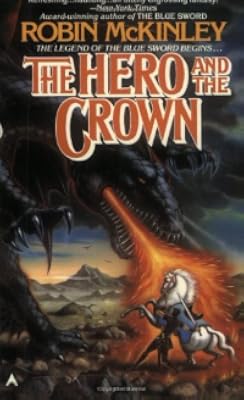
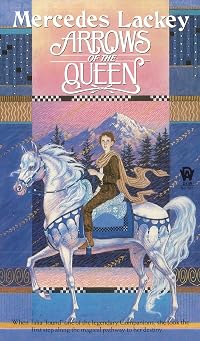
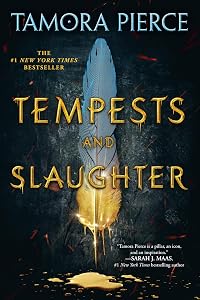
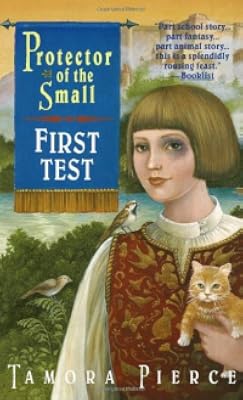
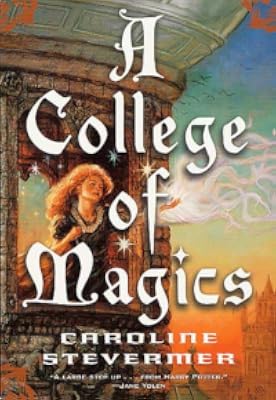
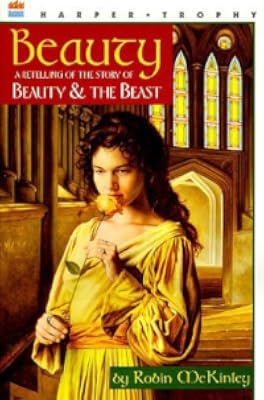
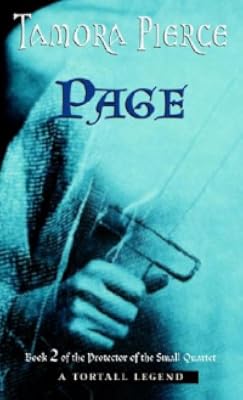
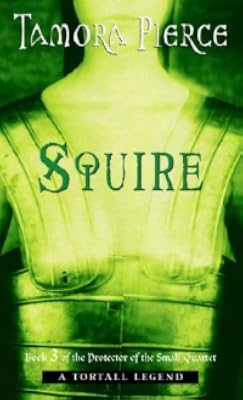
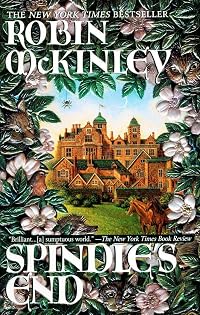
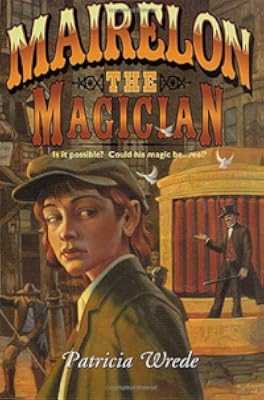
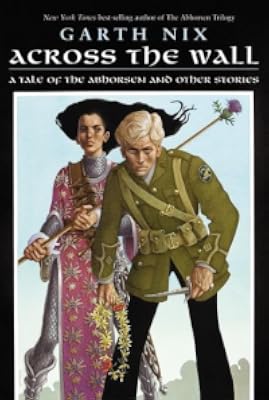
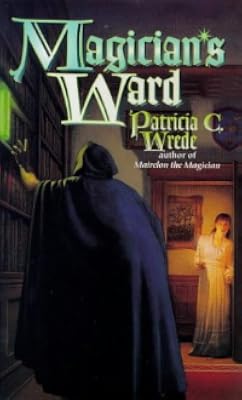
Member Recommendations
Member Reviews
Briar escaped life as a homeless young thief when his magic was discovered. Since then, he has renamed himself and, to a certain extent, reinvented himself. He realizes how much he's changed in skills, outlook and assumptions (like trusting authorities, or actually *wanting* to be clean) when one of his street-rat friends falls ill. And as the illness spreads, and plague envelops the city, Briar is forced to come to terms with his new destiny.
This book is basically everything I have ever wanted in fiction. Outbreak investigation AND structural inequalities of health AND magic? It is like Tamora Pierce wrote this book just for me. So I can't pretend to be even partially objective or trustworthy about this novel, except to say that I am show more so, so thankful that someone is actually writing this kind of story in a fantasy setting. The plot involves garbage collection, waste disposal, differential health care access, medical resources rationing--all the dirty, earthy, banal things that get ignored in traditional sf/f (and, to be fair, most fiction regardless of genre). But it's not without wonder, either; Pierce describes magic in a way that thrills me to my core. You might not assume that plant magic could be written in a way that makes your heart beat faster, but Pierce can do it. The characters in this series have grown far richer since their unsubtle introductions. (And astonishingly, Pierce accomplishes this without making them all assholes, or giving them increasingly unlikely traumatic pasts. Take note, modern grimdark fantasy novelists--it can be done!)
I love that Pierce chose to step outside the easy plots of human antagonists. It opened her plots up to include all sorts of events most authors never get to grapple with, like natural disasters and resource admininstration. In this world, even magic isn't limitless, and magicians need to be wise in their use of it. And they can't do everything--the best way to weave is still to do it by hand, and not all fires can be stopped. That was another aspect of this series that I loved: the acknowledgment that not everything can be fully understood or controlled. Even the most powerful wizard in Pierce's world can't stop the tides, and even if she could, it would lead to even greater disasters. Trying to control too much is actually a serious flaw, which is a fantastically novel viewpoint to find in a sf/f story. I think I'm starting to babble here, but I really just loved everything about this series. It's written for a younger audience, so the writing isn't that sophisticated (except for the descriptions of magic use, which are seriously the most enthralling things ever), but the ideas are. I can't think of another fantasy series that looks at classism, the limitations of a humanist worldview, and the necessity of hard work--all in the midst of a truly entertaining adventure.
Apparently the next series, The Circle Opens, is even better. omg how can this beeee? show less
This book is basically everything I have ever wanted in fiction. Outbreak investigation AND structural inequalities of health AND magic? It is like Tamora Pierce wrote this book just for me. So I can't pretend to be even partially objective or trustworthy about this novel, except to say that I am show more so, so thankful that someone is actually writing this kind of story in a fantasy setting. The plot involves garbage collection, waste disposal, differential health care access, medical resources rationing--all the dirty, earthy, banal things that get ignored in traditional sf/f (and, to be fair, most fiction regardless of genre). But it's not without wonder, either; Pierce describes magic in a way that thrills me to my core. You might not assume that plant magic could be written in a way that makes your heart beat faster, but Pierce can do it. The characters in this series have grown far richer since their unsubtle introductions. (And astonishingly, Pierce accomplishes this without making them all assholes, or giving them increasingly unlikely traumatic pasts. Take note, modern grimdark fantasy novelists--it can be done!)
I love that Pierce chose to step outside the easy plots of human antagonists. It opened her plots up to include all sorts of events most authors never get to grapple with, like natural disasters and resource admininstration. In this world, even magic isn't limitless, and magicians need to be wise in their use of it. And they can't do everything--the best way to weave is still to do it by hand, and not all fires can be stopped. That was another aspect of this series that I loved: the acknowledgment that not everything can be fully understood or controlled. Even the most powerful wizard in Pierce's world can't stop the tides, and even if she could, it would lead to even greater disasters. Trying to control too much is actually a serious flaw, which is a fantastically novel viewpoint to find in a sf/f story. I think I'm starting to babble here, but I really just loved everything about this series. It's written for a younger audience, so the writing isn't that sophisticated (except for the descriptions of magic use, which are seriously the most enthralling things ever), but the ideas are. I can't think of another fantasy series that looks at classism, the limitations of a humanist worldview, and the necessity of hard work--all in the midst of a truly entertaining adventure.
Apparently the next series, The Circle Opens, is even better. omg how can this beeee? show less
What I love about this novel is that it deals with so many issues with so much class, even when you happen to be trudging through the sewers. This is the only novel I can remember Tamora Pierce writing with a male point of view and after reading it I find myself wondering why she doesn’t do it more. You hear about the poor, what happens to them and so much more. You find yourself feeling with them and for them yet you almost feel ashamed for what has happened to them because you can’t help but think that it does actually happen in real life, bringing this novel a realism that you can understand yet a fantasy world you can escape into all at once.
Briar is such a relatable character no matter who you are, simply because he always feel show more so strongly and this novel brings out his best qualities and his worst. He is not some unrealistic hero who only does good. He is a person with a troubled background who has learned to change and become someone who can help others in ways he never would have thought possible before.
Sincerely,
Emma Michaels
http://EmmaMichaels.Blogspot.com show less
Briar is such a relatable character no matter who you are, simply because he always feel show more so strongly and this novel brings out his best qualities and his worst. He is not some unrealistic hero who only does good. He is a person with a troubled background who has learned to change and become someone who can help others in ways he never would have thought possible before.
Sincerely,
Emma Michaels
http://EmmaMichaels.Blogspot.com show less
FOLKS. THIS BOOK. NOT GREAT TO READ IN A PANDEMIC. But also it feels like everything comes so full circle (lol) here in such amazing and powerful ways. I just love these characters so much and every book it has felt like the stakes get a little bit higher and a little bit higher. Some of it was predictable to some extent but I don't think that predictability hurt the book in any way--if anything, it made the tension of it all greater.
I can't wait to read the next series, but this was such an amazing end that deeply highlighted the growth of all the characters, loved it so much.
I can't wait to read the next series, but this was such an amazing end that deeply highlighted the growth of all the characters, loved it so much.
I've now listened to the entire Circle of Magic series on audiobook. This was the last book in the series and instead of Pirates or other human enemy to fight, our young mages have to deal with a plague that's spreading rapidly through Summersea. For most of this book, Briar and Rosethorn are separated from the rest of their housemates, nursing the sick in quarantine because they were exposed to the disease. It's a huge change from the previous books, where the four young mages and their teachers were always together. I loved how they all work together throughout the series, but separating them was a surprisingly refreshing change. Due to quarantine, we see different aspects of Rosethorn and Briar's characters than in other stories. As show more the book [and the disease] progresses, we see more and more of Rosethorn's layered personality, which I loved.
Having a disease that has a magic element,with something created by a malicious mage. But it's more then that. It's not just a matter of tracking down the mage and stopping the spell. This was a true disease that needed a medical cure found with painstaking research and a scientific approach to the disease. It was a joy to read something so true to life in a fantasy novel while still, of course, retaining its fantasy aspects. Then there is the element of Rosethorn contracting the disease and how Briar reacts. I loved the book.
Jack Murphy show less
Having a disease that has a magic element,with something created by a malicious mage. But it's more then that. It's not just a matter of tracking down the mage and stopping the spell. This was a true disease that needed a medical cure found with painstaking research and a scientific approach to the disease. It was a joy to read something so true to life in a fantasy novel while still, of course, retaining its fantasy aspects. Then there is the element of Rosethorn contracting the disease and how Briar reacts. I loved the book.
Jack Murphy show less
The last in the first quartet, and I'm kind of glad it's over with and I can move on. This series as a whole was not Tammy's best work and I think I finished it because each was short, and I listened to the audiobooks while spinning.
In this story, plague hits, and Briar is in the middle of it. This book was interesting in that the four are separated for the first time since coming together. Briar is stuck in quarantine and Daja is off in the forge creating sample boxes.
What I really liked about this book was Tris coming into her own - which was surprising because I've always disliked her previously. Here, she feels the pain of uselessness and loses her irritating edge a bit.
In this story, plague hits, and Briar is in the middle of it. This book was interesting in that the four are separated for the first time since coming together. Briar is stuck in quarantine and Daja is off in the forge creating sample boxes.
What I really liked about this book was Tris coming into her own - which was surprising because I've always disliked her previously. Here, she feels the pain of uselessness and loses her irritating edge a bit.
The final saga in this quartet was not a win for me. The situation Pierce developed for this narrative was perhaps too close to what the Covid-19 pandemic "felt like". Reading about the pox-thing wasn't at all pleasant and dominated the story.
What particularly felt off-kilter was that this was supposedly a story about Briar, who has a type of plant magic. Except the theme didn't centre around plants and Briar, despite a search for finding the cure. Mostly, Briar's role was supporting and rescuing Rosethorn and he wasn't really using this talent. I guess I had so much expectation along a different line. Obviously, other readers have thoroughly gone with the flow and really enjoyed the book.
What particularly felt off-kilter was that this was supposedly a story about Briar, who has a type of plant magic. Except the theme didn't centre around plants and Briar, despite a search for finding the cure. Mostly, Briar's role was supporting and rescuing Rosethorn and he wasn't really using this talent. I guess I had so much expectation along a different line. Obviously, other readers have thoroughly gone with the flow and really enjoyed the book.
Rereading it, I'll say that this is pretty much my favourite book in the original Circle quartet. The first half especially is a love letter to healers, to doctors, to caretakers of any kind, and the second half is much the same for researchers and scientists trying to find cures. And aside from that, it just an incredibly engaging story. It's more closely focused on Briar than the other books (especially the first two) were on their titular protagonists, but the girls are still there, are still very much part of Briar's life, even when he doesn't immediately realise that.
I think my biggest qualm with the book is its final chapter; without spoiling anything I felt like the thing that happened there was added mostly for the sake of a show more twist or, more accurately, for the sake of a more dramatic conclusion, but I just don't think it fit the world (and world building, or even the narrative, though the foreshadowing was there) very well.
But aside from that, I love it dearly: Briar and Rosethorn, and of course Tris, Daja and Sandry and their teachers, are as fun to read about as ever, even though "fun" seems to be the wrong word here, given the intense and all to real situation - an epidemic and an "enemy" as faceless as a disease - they face. Crane got some much-needed development and I really like where this book takes his character and the glimpses we get at who he is. (I also liked how the similarities between him and Tris get pointed out by the narrative when they interact. I like Crane for a lot of the reasons I love Tris: underneath it all, they care.)
So yeah, definitely another excellent read. show less
I think my biggest qualm with the book is its final chapter; without spoiling anything I felt like the thing that happened there was added mostly for the sake of a show more twist or, more accurately, for the sake of a more dramatic conclusion, but I just don't think it fit the world (and world building, or even the narrative, though the foreshadowing was there) very well.
But aside from that, I love it dearly: Briar and Rosethorn, and of course Tris, Daja and Sandry and their teachers, are as fun to read about as ever, even though "fun" seems to be the wrong word here, given the intense and all to real situation - an epidemic and an "enemy" as faceless as a disease - they face. Crane got some much-needed development and I really like where this book takes his character and the glimpses we get at who he is. (I also liked how the similarities between him and Tris get pointed out by the narrative when they interact. I like Crane for a lot of the reasons I love Tris: underneath it all, they care.)
So yeah, definitely another excellent read. show less
Members
- Recently Added By
Lists

NPRs your favorites: 100 Best Ever Teen Novels
237 works; 49 members

tell me where it hurts
36 works; 7 members

Books Read in 2012
816 works; 34 members

Read in 1999
62 works; 1 member
Author Information

83+ Works 122,002 Members
Author Tamora Pierce was born in South Connellsville, Pennsylvania on December 13, 1954. She received a Bachelor of Arts degree from the University of Pennsylvania. Her first book, Alanna: The First Adventure, was published in 1983 and she became a full-time author in 1992. She writes fantasy books, mainly involving young heroines, for young show more adults. She is the author of numerous series including Song of the Lioness; The Immortals; Circle of Magic; Protector of the Small; The Circle Opens; Daughter of the Lioness; The Circle Reforged; Beka Cooper; and The Numair Chronicles. Her novel Battle Magic was a New York Times bestseller. (Bowker Author Biography) show less
Some Editions
Awards and Honors
Series


Work Relationships
Is contained in
Common Knowledge
- Canonical title
- Briar's Book
- Alternate titles
- The Healing in the Vine (UK) (UK)
- Original publication date
- 1999-04-01
- People/Characters
- Briar Moss; Sandrilene fa Toren; Daja Kisubo; Trisana Chandler; Niklaren “Niko” Goldeye; Dedicate Rosethorn (show all 9); Dedicate Lark; Dedicate Frostpine; Duke Vedris IV
- Important places
- Emelan; Winding Circle Temple; Discipline Cottage; Summersea; The Mire
- Dedication
- To James and Clare, who went on ahead far too soon. And to Peter and Bob, who had to stay behind.
- First words
- Briar Moss knew he was only dreaming, but he didn’t care.
- Last words
- (Click to show. Warning: May contain spoilers.)“It ain't running away without us!” he yelled in reply, and climbed back into the house.
Classifications
- Genres
- Fiction and Literature, Fantasy, Teen, Young Adult
- DDC/MDS
- 813.54 — Literature & rhetoric American literature in English American fiction in English 1900-1999 1945-1999
- LCC
- PZ7 .P61464 .B — Language and Literature Fiction and juvenile belles lettres Fiction and juvenile belles lettres Juvenile belles lettres
- BISAC
Statistics
- Members
- 3,213
- Popularity
- 5,390
- Reviews
- 38
- Rating
- (4.08)
- Languages
- Danish, English, German
- Media
- Paper, Audiobook, Ebook
- ISBNs
- 27
- ASINs
- 7