On This Page
Description
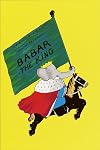
After making peace with the rhinoceros, King Babar and Queen Celeste plan a model city and live happily with their friends and subjects in the country of elephants.Tags
Recommendations


























Member Reviews
Originally published in 1933, this third Babar book picks up just where its predecessor, The Travels of Babar, left off, as Babar, Celeste and the Old Lady adjust to being back in the land of the elephants. When all of the many goods he purchased on his recent travels arrive by special dromedary delivery, Babar puts his grand plan into motion, proposing that the elephants build their own city, to be named Celesteville after their queen. All goes according to plan, and soon the pachyderm metropolis is a reality. But just when all seems well, and the elephants are celebrating their achievement, a double tragedy strikes, in the form of a snakebite that leaves the Old Lady gravely ill, and a house fire which injures wise old Cornelius. As show more Babar slips into a troubled dream that night, the question hangs in the air: which will triumph, Misfortune or Happiness...?
Although I do recall reading them as a young girl, I can't say that the Babar books have ever been amongst my particular favorites - they're interesting, the artwork is lovely, but the stories never really appealed to me, and I did not read them again and again, as I did some other titles. I would imagine that those readers who perceive in these books an apologia for colonialism (see Should We Burn Babar?: Essays on Children's Literature and the Power of Stories) will be incensed at the story here, in which Babar, with the Old Lady by his side, brings "civilization" to the elephants, in the form of urban development. For my part, I continue to waffle, as it concerns the question of Jean de Brunhoff's worldview and storytelling intent. Did he mean these books to be a glorification of France's colonization of Africa, or as a gentle parody (as Adam Gopnick has argued) of it? If the latter, does that mean that they are less problematic? I have no answers, but the parallel between France and Africa in the early twentieth century, and the humans and elephants in these stories, seems fairly clear. There were no "fierce cannibals" here, as there were in The Travels of Babar - something for which I am grateful, given the offensive way in which they were portrayed - but I can't honestly say I enjoyed the story that much. Leaving aside all political and/or ethical issues, it just felt a little disjointed to me. show less
Although I do recall reading them as a young girl, I can't say that the Babar books have ever been amongst my particular favorites - they're interesting, the artwork is lovely, but the stories never really appealed to me, and I did not read them again and again, as I did some other titles. I would imagine that those readers who perceive in these books an apologia for colonialism (see Should We Burn Babar?: Essays on Children's Literature and the Power of Stories) will be incensed at the story here, in which Babar, with the Old Lady by his side, brings "civilization" to the elephants, in the form of urban development. For my part, I continue to waffle, as it concerns the question of Jean de Brunhoff's worldview and storytelling intent. Did he mean these books to be a glorification of France's colonization of Africa, or as a gentle parody (as Adam Gopnick has argued) of it? If the latter, does that mean that they are less problematic? I have no answers, but the parallel between France and Africa in the early twentieth century, and the humans and elephants in these stories, seems fairly clear. There were no "fierce cannibals" here, as there were in The Travels of Babar - something for which I am grateful, given the offensive way in which they were portrayed - but I can't honestly say I enjoyed the story that much. Leaving aside all political and/or ethical issues, it just felt a little disjointed to me. show less
Very socialist. There are no homeless people in Celestville. But the flamingoes have been well and truly displaced. How can they get their food when there are elephants diving into the river? Babar's nightmare is anthropomorphic and allegorical.
Follows the elephants as they build a magnificent city: Celesteville. Life is peaceful and contented, everyone has a job to do, and celebrations are frequent. But one fateful day a snake bites the Old Lady and Babar fears that he may lose his oldest friend
Babar the King of the Elephants decides to create a city by a river. The city is built, the elephants are all given their jobs and after the jobs are done, they get to play different games. Everyone is happy till the Old Lady gets bit by a snake and Cornelius' house burns down. King Babar is worried till he dreams give his the answers. The moral of the story is that everyone has misfortunes from time to time, but if you are not discouraged, and work hard, you can be happy.
Great moral to get at, the fact that the elephants made a beautiful city is fun and showing all of them with jobs before play time is also good. The names of the elephants were a tongue twister and some times the wording was confusing even to me. The description of show more some of the activities were not easily understood by my children and so the story could not flow (because we had to stop to discuss it). My oldest did enjoy the list of names and their jobs, but that was because I had trouble saying all of the names without 'blah blah'. show less
Great moral to get at, the fact that the elephants made a beautiful city is fun and showing all of them with jobs before play time is also good. The names of the elephants were a tongue twister and some times the wording was confusing even to me. The description of show more some of the activities were not easily understood by my children and so the story could not flow (because we had to stop to discuss it). My oldest did enjoy the list of names and their jobs, but that was because I had trouble saying all of the names without 'blah blah'. show less
I think it a safe bet that this might be the oldest memory in my Year of Nostalgic Re-reads. Not the oldest book, but this takes me back to maybe eight years old. I came across it on openlibrary.org and remembered it clearly. We never read any of the Babar stories to our children, so it's been nearly 45 years. I remember loving the illustrations, but being confused at the curious tense, and the references and names (translated from French and written in the 1930s).
I couldn't find an ebook of The Story of Babar, but openlibrary did have this third book. For any interested, some of the scans were off center.
I couldn't find an ebook of The Story of Babar, but openlibrary did have this third book. For any interested, some of the scans were off center.
This book was very suppressing to me. The story starts out showing a young heard of elephants living on the plains of Africa. One of the opening stages of the book shows a hunter shooting Babar's mother. I thought that this was a very violent way of opening the book. There were other very interesting, and almost inappropriate scenes in the story. I would not recommend this story to teachers. This was a book I had read as a child, but I did not remember these kind of themes in this book. This was not the best book to use in the classroom.
Super racist colonial propaganda.
Members
- Recently Added By
Lists

Best children's picture books
377 works; 84 members

Favorite Animal Fiction
359 works; 156 members

Blue Pyramid 1,276 Best Books of All Time
1,248 works; 32 members

Books with Noble Titles
179 works; 11 members
Author Information

181+ Works 8,592 Members
Jean de Brunhoff 1899 - 1937 Jean de Brunhoff (born December 9, 1899) was a French writer and illustrator known for creating the Babar books, the first of which appeared in 1931. He was the fourth and youngest child of Maurice de Brunhoff, a publisher. After the first book Histoire de Babar (The Story of Babar), six more titles followed before show more Jean de Brunhoff died of tuberculosis at the age of 37. He was buried in Père Lachaise Cemetery in Paris. Many people credit Jean's wife, Cécile de Brunhoff, as the real creator of Babar. After Jean's death, his brother Michel de Brunhoff, who was the editor of French Vogue, oversaw the publication in book form of his two last books, Babar and His Children and Babar and Father Christmas. The Babar series continues to be an international bestseller. Babar the elephant is an iconic character who has also been paid tribute by many museums worldwide. (Bowker Author Biography) show less
Some Editions
Series

Belongs to Publisher Series
Work Relationships
Common Knowledge
- Canonical title
- Babar the King
- Original title
- Le roi Babar
- Original publication date
- 1935
- People/Characters
- Babar; Cornelius; The Old Lady; Celeste
- Important places
- Celestville
- First words
- King Babar and Queen Celeste led a happy life in the country of the elephants.
- Last words
- (Click to show. Warning: May contain spoilers.)Ever since that day in the country of the elephants they have all lived in peace and happiness.
Classifications
Statistics
- Members
- 950
- Popularity
- 27,891
- Reviews
- 9
- Rating
- (3.85)
- Languages
- 10 — Catalan, Danish, Dutch, English, Finnish, French, German, Hungarian, Norwegian (Bokmål), Swedish
- Media
- Paper, Ebook
- ISBNs
- 55
- ASINs
- 12