On This Page
Description
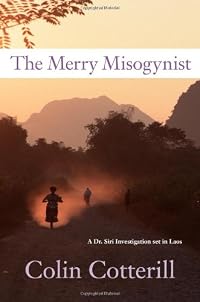
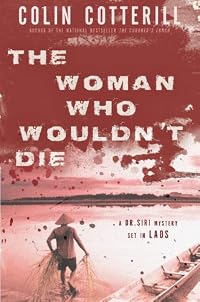
In 1978 in poverty-stricken Laos, a man from the city with a truck was somebody—a catch for even the prettiest village virgin. The corpse of one of these bucolic beauties turns up in Dr. Siri's morgue, and his curiosity is piqued. The victim was tied to a tree and strangled, but she had not, as the doctor had expected, been raped. And though the victim had smooth, pale skin over most of her body, her hands and feet were gnarled, callused, and blistered.On a trip to the hinterlands, Siri show more discovers that many women have been killed in this way. He sets out to investigate this unprecedented phenomenon—a serial killer in peaceful Buddhist Laos—only to discover, when he has identified the murderer, that not only pretty maidens are at risk: seventy-three-year-old coroners can be victims too.
. show less
Tags
Recommendations




















Member Reviews
The sixth installment in a mystery series about a 73 year-old Laotian national coroner, Dr. Siri. A corpse of a young village woman ends up in his morgue, and he and his team take a personal interest in the case. Meanwhile, the Ministry of Housing is investigating the number and nature of illegal residents in Siri's government-supplied housing. As he ruminates with a friend, they realize they having seen Crazy Rajid skinny-dipping in some time, and decide to search for the village madman.
Let me be forthright. I am flat-out turned off by the serial killer perspective, virtually guaranteed to dislike any book that includes it as a secondary narrative. For the most part, I manage to avoid it, but every so often, a mystery novelist is show more tempted to dip their toes into a new narrative, and I get blindsided. When I read the synopsis for The Merry Misogynist, I was tempted to skip it entirely, except Cotterill has been building on Dr. Siri's emotional and social circle from book to book, and I didn't want to miss significant life events.
Why? Too often, it's a crutch towards creating tension and plot movement, a manner of building a sense of impending disaster when the main narrative can't sustain the mystery or sense of danger. Even more often, the killer viewpoint becomes a window into a show of torture porn. Don't need it. Don't want to dwell on it. Lastly, in this particular case, it is a poor narrative choice with the previous series tone, a fact that Dr. Siri and his comrades point out as they discover the killer has multiple victims.
One of the clever hooks of the Dr. Siri series is his connection to the spirits of his homeland, who often show themselves to him in an effort to incite him towards action or vengeance. In this book, the spirits were barely present, appearing only harbingers of doom rather than agents of the dead. Then there was a giant deux ex machina to solve Siri's (political) humorous housing problem, and did I mention how much I hate the serial killer viewpoint? The combination of women-hating/stalking combined with humorous, 'let's make-buffoons-of politicians' are an inharmonious mix.
But you know what I hate worse than a homicidal viewpoint? Making the serial killer a gender-bender with a domineering mother. Seriously. Seriously. I can't get over how genderist that is. Just when I think Cotterill has managed to defy convention with his elderly Laotian, socialist protagonist, he pulls out an antique, moth-eaten trope of sexuality that was dated in Victorian times. I'm not pretending any great knowledge of Laotian culture, but I will put forth that third-gender identity is relatively common in the non-Euro-Western world. Thailand in particular has a third-gender tradition, (http://en.wikipedia.org/wiki/Third_gender#Thailand) and Cotterill was seemly open to the concept with one of the earlier characters in the series. So why dust off this unenlightened trope in a series built on defying convention? Don't know. Not sure I care. But I enjoy a good conspiracy, so maybe we can just blame it on the publishing house or something and hope the old Cotterill comes back with the next book.
That said, there were moments of Siri witticisms that worked exceptionally well. Cotterill's flare for the slightly deconstructed idiom remains. This time, much of the humor is in dialogue or absurd situations with Siri's house guests while he stays at Madame Daeng's.
"'Perhaps you'd like an orange cordial to help you cool down, uncle," sad lady of the night Gongjai.
'I don't want to be cool,' Siri replied. 'I want my head as hot as I can make it so you understand I'm not just speaking for my own benefit.'
'So you don't want a drink?' Gongjai tried again.
'I didn't say that. I just don't want you thinking it's going to make me any calmer.'"
There's an insightful moment when Siri muses on his years in the jungle and the endangered species he's eaten: In those days a man didn't give a hoot about the survival of an avian family lineage. It was them or us... he believed that if God made you colorful, overweight, and delicious and didn't give you any survival skills, you deserved to get eaten." Classic Cotterill--one of those humorous asides that is also so insightful into what the reality of subsistence living is.
I enjoyed Siri's and Daeng's intimate version of 'rock-paper-scissors'--elephant-mouse-ant. "The elephant crushed the mouse, the mouse squashed the ant, and the ant crawled up the elephant's trunk and paralyzed his brain."
Overall, enough flavors of the earlier books remained to hope that Cotterill regains his footing in the next. show less
Let me be forthright. I am flat-out turned off by the serial killer perspective, virtually guaranteed to dislike any book that includes it as a secondary narrative. For the most part, I manage to avoid it, but every so often, a mystery novelist is show more tempted to dip their toes into a new narrative, and I get blindsided. When I read the synopsis for The Merry Misogynist, I was tempted to skip it entirely, except Cotterill has been building on Dr. Siri's emotional and social circle from book to book, and I didn't want to miss significant life events.
Why? Too often, it's a crutch towards creating tension and plot movement, a manner of building a sense of impending disaster when the main narrative can't sustain the mystery or sense of danger. Even more often, the killer viewpoint becomes a window into a show of torture porn. Don't need it. Don't want to dwell on it. Lastly, in this particular case, it is a poor narrative choice with the previous series tone, a fact that Dr. Siri and his comrades point out as they discover the killer has multiple victims.
One of the clever hooks of the Dr. Siri series is his connection to the spirits of his homeland, who often show themselves to him in an effort to incite him towards action or vengeance. In this book, the spirits were barely present, appearing only harbingers of doom rather than agents of the dead. Then there was a giant deux ex machina to solve Siri's (political) humorous housing problem, and did I mention how much I hate the serial killer viewpoint? The combination of women-hating/stalking combined with humorous, 'let's make-buffoons-of politicians' are an inharmonious mix.
But you know what I hate worse than a homicidal viewpoint? Making the serial killer a gender-bender with a domineering mother. Seriously. Seriously. I can't get over how genderist that is. Just when I think Cotterill has managed to defy convention with his elderly Laotian, socialist protagonist, he pulls out an antique, moth-eaten trope of sexuality that was dated in Victorian times. I'm not pretending any great knowledge of Laotian culture, but I will put forth that third-gender identity is relatively common in the non-Euro-Western world. Thailand in particular has a third-gender tradition, (http://en.wikipedia.org/wiki/Third_gender#Thailand) and Cotterill was seemly open to the concept with one of the earlier characters in the series. So why dust off this unenlightened trope in a series built on defying convention? Don't know. Not sure I care. But I enjoy a good conspiracy, so maybe we can just blame it on the publishing house or something and hope the old Cotterill comes back with the next book.
That said, there were moments of Siri witticisms that worked exceptionally well. Cotterill's flare for the slightly deconstructed idiom remains. This time, much of the humor is in dialogue or absurd situations with Siri's house guests while he stays at Madame Daeng's.
"'Perhaps you'd like an orange cordial to help you cool down, uncle," sad lady of the night Gongjai.
'I don't want to be cool,' Siri replied. 'I want my head as hot as I can make it so you understand I'm not just speaking for my own benefit.'
'So you don't want a drink?' Gongjai tried again.
'I didn't say that. I just don't want you thinking it's going to make me any calmer.'"
There's an insightful moment when Siri muses on his years in the jungle and the endangered species he's eaten: In those days a man didn't give a hoot about the survival of an avian family lineage. It was them or us... he believed that if God made you colorful, overweight, and delicious and didn't give you any survival skills, you deserved to get eaten." Classic Cotterill--one of those humorous asides that is also so insightful into what the reality of subsistence living is.
I enjoyed Siri's and Daeng's intimate version of 'rock-paper-scissors'--elephant-mouse-ant. "The elephant crushed the mouse, the mouse squashed the ant, and the ant crawled up the elephant's trunk and paralyzed his brain."
Overall, enough flavors of the earlier books remained to hope that Cotterill regains his footing in the next. show less
A lovely young woman is drugged, brutally raped and murdered. That hardly sounds like a scenario for a funny, sweet and devilishly complex mystery story, but that’s because novelist Colin Cotterill is a master of sleight of hand. He’s a master at balancing brutal crime, which he depicts with heart-wrenching empathy, and the comic milieu of Dr. Siri Paiboun.
The Merry Misogynist is Cotterill’s sixth novel featuring Dr. Siri, national coroner, 73, libidinously alive and well, and married to Daeng the noodle shopkeeper. It’s 1978, the Khmer Rouge have taken over Laos, having ousted the 600 year-old monarchy, and the “novice socialist administration is starting to realize its resume didn’t match the job.”
Siri is on the case, show more along with the local Vientiane detective, but Laos is impossible: what clues the bureaucracy doesn’t ingest the jungle does. The cantonized villages of Laos, further alienated and isolated by a ridiculous but deeply ingrained bias of hill vs. low-land peoples (ridiculous because they’re the same people speaking the same language, but would we be human without racists drawing arbitrary lines between us?), prevents any sort of record sharing — so who knows if similar crimes have been previously committed?
Undeterred by — or, rather, inured to — such impediments to investigation, Siri and crew can rely on the Lao people themselves, hill and dale, on the oral culture that grounds this novel with its exotic setting and tongue-twisting names. It’s the grapevine, or jungle line, that communicates the clues in this novel, at least until we realize at the very end that we’ve been misdirected, suckered by a wonderful bait-and-switch plot that leaves us nodding in bemused agreement and admiration.
No spoilers here, though: Cotterill spins a vivid yarn that is worth reading just for the color and authenticity of the characters and their setting. Bo ben nyang, we go with the flow (to loosely translate the Lao phrase that means just about everything anyway), and are willingly misled by the author, following Siri on hands and knees as he and wife Daeng machete through the underbrush in pursuit of a clue. Here, she says, I’ll go first; that way you can look at my bottom.
To an aging Boomer, that’s perhaps the most charming thing about Cotterill’s novel: the erotic plentitude of the elderly couple at the center of this tale. Close behind, though — no pun intended — is Siri’s burning intelligence and his biting humor borne of brutal experience, all communicated by Cotterill’s lucid and compact prose. That we’re pursuing a dastardly serial killer is all well and good and, when justice in the end is served, we’re satisfied, but it’s the characters we’ve come to love and that will addict us to the series. show less
The Merry Misogynist is Cotterill’s sixth novel featuring Dr. Siri, national coroner, 73, libidinously alive and well, and married to Daeng the noodle shopkeeper. It’s 1978, the Khmer Rouge have taken over Laos, having ousted the 600 year-old monarchy, and the “novice socialist administration is starting to realize its resume didn’t match the job.”
Siri is on the case, show more along with the local Vientiane detective, but Laos is impossible: what clues the bureaucracy doesn’t ingest the jungle does. The cantonized villages of Laos, further alienated and isolated by a ridiculous but deeply ingrained bias of hill vs. low-land peoples (ridiculous because they’re the same people speaking the same language, but would we be human without racists drawing arbitrary lines between us?), prevents any sort of record sharing — so who knows if similar crimes have been previously committed?
Undeterred by — or, rather, inured to — such impediments to investigation, Siri and crew can rely on the Lao people themselves, hill and dale, on the oral culture that grounds this novel with its exotic setting and tongue-twisting names. It’s the grapevine, or jungle line, that communicates the clues in this novel, at least until we realize at the very end that we’ve been misdirected, suckered by a wonderful bait-and-switch plot that leaves us nodding in bemused agreement and admiration.
No spoilers here, though: Cotterill spins a vivid yarn that is worth reading just for the color and authenticity of the characters and their setting. Bo ben nyang, we go with the flow (to loosely translate the Lao phrase that means just about everything anyway), and are willingly misled by the author, following Siri on hands and knees as he and wife Daeng machete through the underbrush in pursuit of a clue. Here, she says, I’ll go first; that way you can look at my bottom.
To an aging Boomer, that’s perhaps the most charming thing about Cotterill’s novel: the erotic plentitude of the elderly couple at the center of this tale. Close behind, though — no pun intended — is Siri’s burning intelligence and his biting humor borne of brutal experience, all communicated by Cotterill’s lucid and compact prose. That we’re pursuing a dastardly serial killer is all well and good and, when justice in the end is served, we’re satisfied, but it’s the characters we’ve come to love and that will addict us to the series. show less
This is No. 6 in the Dr. Siri Paiboun series, and I think I enjoyed it the most of any so far. Lovely young country girls are being wooed and wed by a government employee passing through their villages on a work assignment...and then ending up dead and tied to a tree. Because of the remote nature of the villages, the lack of co-ordination or even communication between various police departments, and the wiliness of the killer, some of the families are not even aware that their daughter has gone missing, and it takes Dr. Siri and his "crew" to realize that there is a serial killer on the prowl. Interest is heightened by sections written from the disturbed killer's point of view. The interaction among the recurring characters is at its show more peak in this story, and there is so much humor in it that it was a delightful read, despite the tragic story line.
August 2019 show less
August 2019 show less
The Merry Misogynist is the next in Colin Cotterill's Dr. Siri series, after The Curse of the Pogo Stick. It's another solid entry. This time the titular serial killer is taking advantage of the law enforcement disarray in Laos in the 70s. As long as the murders and disappearances are spaced far enough apart geographically, they won't get connected up.
Of course, our 73-year-old coroner makes connections others don't, and needs to take on the role of detective again. A subordinate balks initially at helping him:
"I promised my wife I'd pick up some big head catfish on the way home."
"Right. And I promised the parents of a beautiful girl in Ban Xon that I'd catch the maniac who killed their daughter. See any priority here?
"Yes, sir. show more Sorry."
One of the many pleasures of the book is the development of his romantic relationship with renowned noodle seller Daeng:
"They wouldn't have known the real reason everyone flocked to Daeng's shop. A bowl of the most delicious noodles north of the Singapore equator cost the equivalent of twenty cents and few could resist such a temptation. There was nobody like her in the capital. Even travelers from outside the district had begun to turn up as word spread. Delicious food, low prices, minimal chances of contracting hepatitis."
She remembers when he was with his young love Boua, and Daeng had to accept not having him. But she finds it for the best, as they couldn't have the kind of relationship they're enjoying now.
For me, this was the creepiest villain in the series, and following Siri as he tries to find and save the next potential victim kept the pages flying. show less
Of course, our 73-year-old coroner makes connections others don't, and needs to take on the role of detective again. A subordinate balks initially at helping him:
"I promised my wife I'd pick up some big head catfish on the way home."
"Right. And I promised the parents of a beautiful girl in Ban Xon that I'd catch the maniac who killed their daughter. See any priority here?
"Yes, sir. show more Sorry."
One of the many pleasures of the book is the development of his romantic relationship with renowned noodle seller Daeng:
"They wouldn't have known the real reason everyone flocked to Daeng's shop. A bowl of the most delicious noodles north of the Singapore equator cost the equivalent of twenty cents and few could resist such a temptation. There was nobody like her in the capital. Even travelers from outside the district had begun to turn up as word spread. Delicious food, low prices, minimal chances of contracting hepatitis."
She remembers when he was with his young love Boua, and Daeng had to accept not having him. But she finds it for the best, as they couldn't have the kind of relationship they're enjoying now.
For me, this was the creepiest villain in the series, and following Siri as he tries to find and save the next potential victim kept the pages flying. show less
The corpse of a young woman turns up in Dr. Siri Paiboun's morgue and when more women are found dead under similar circumstances, Dr. Siri must roam the countryside of Laos to find a malicious serial killer. Dr. Siri's new wife is his companion in this hunt rather than Dtui and Geung, but she's a great character so that's not a minus. This installment is more gruesome than the previous installations in the series, which raises the stakes, but also takes away a little of the charm of the previous books. This is more of a standard mystery, solved using brains rather than the supernatural, which is sometimes overwhelming in the previous books. As usual, though, the descriptions of Laos and its people are enchanting.
Rating: 4* of five
The Publisher Says: In poverty-stricken 1978 Laos, a man with a truck from the city was "somebody," a catch for even the prettiest village virgin. The corpse of one of these bucolic beauties turns up in Dr. Siri's morgue and his curiosity is piqued. The victim was tied to a tree and strangled but she had not, as the doctor had expected, been raped, although her flesh had been torn. And though the victim had clear, pale skin over most of her body, her hands and feet were gnarled, callused, and blistered.
On a trip to the hinterlands, Siri discovers that the beautiful female corpse bound to a tree has already risen to the status of a rural myth. This has happened many times before. He sets out to investigate this show more unprecedented phenomenon--a serial killer in peaceful Buddhist Laos--only to discover when he has identified the murderer that not only pretty maidens are at risk. Seventy-three-year-old coroners can be victims, too.
My Review: The Doubleday UK meme, a book a day for July 2014, is the goad I'm using to get through my snit-based unwritten reviews. Today's prompt is the twenty-third, favorite novel with an exotic background.
Laos in 1978 counts as exotic to me. I'm not sure the Laotians would agree, probably thinking of Long Island suburbia as exotic. It's all where you stand.
I love the series mystery world for its orderliness and its assurance that Right will be done. In this sixth Dr. Siri mystery, Right is indeed done and just in the nick of time. There's a secondary plot that I wasn't sure was needed, concerning Crazy Rajid the naked Indian who hangs with Dr. Siri, Comrade Civilai, and Inspector Phosy down by the Mekong. It doesn't seem necessary to me, but then why the hell not, it was fun.
The crimes and the punishment are well-handled here, and the believability of the situation created was up to snuff. But the star of the series, pace Dr. Siri, is Laos in all its tropical glory. I thoroughly enjoy my trips there, which I most emphatically would NOT if the trips were physical. As I huddle in front of the air conditioner, cursing temperatures that make me sweat and suffer but which would seem almost wintry to the Laotians, I visit the beauty of the jungle...without the bugs or the sweat.
I love that. Thanks for taking me there, Colin Cotterill!
This work is licensed under a Creative Commons Attribution-NonCommercial-ShareAlike 3.0 Unported License. show less
The Publisher Says: In poverty-stricken 1978 Laos, a man with a truck from the city was "somebody," a catch for even the prettiest village virgin. The corpse of one of these bucolic beauties turns up in Dr. Siri's morgue and his curiosity is piqued. The victim was tied to a tree and strangled but she had not, as the doctor had expected, been raped, although her flesh had been torn. And though the victim had clear, pale skin over most of her body, her hands and feet were gnarled, callused, and blistered.
On a trip to the hinterlands, Siri discovers that the beautiful female corpse bound to a tree has already risen to the status of a rural myth. This has happened many times before. He sets out to investigate this show more unprecedented phenomenon--a serial killer in peaceful Buddhist Laos--only to discover when he has identified the murderer that not only pretty maidens are at risk. Seventy-three-year-old coroners can be victims, too.
My Review: The Doubleday UK meme, a book a day for July 2014, is the goad I'm using to get through my snit-based unwritten reviews. Today's prompt is the twenty-third, favorite novel with an exotic background.
Laos in 1978 counts as exotic to me. I'm not sure the Laotians would agree, probably thinking of Long Island suburbia as exotic. It's all where you stand.
I love the series mystery world for its orderliness and its assurance that Right will be done. In this sixth Dr. Siri mystery, Right is indeed done and just in the nick of time. There's a secondary plot that I wasn't sure was needed, concerning Crazy Rajid the naked Indian who hangs with Dr. Siri, Comrade Civilai, and Inspector Phosy down by the Mekong. It doesn't seem necessary to me, but then why the hell not, it was fun.
The crimes and the punishment are well-handled here, and the believability of the situation created was up to snuff. But the star of the series, pace Dr. Siri, is Laos in all its tropical glory. I thoroughly enjoy my trips there, which I most emphatically would NOT if the trips were physical. As I huddle in front of the air conditioner, cursing temperatures that make me sweat and suffer but which would seem almost wintry to the Laotians, I visit the beauty of the jungle...without the bugs or the sweat.
I love that. Thanks for taking me there, Colin Cotterill!
This work is licensed under a Creative Commons Attribution-NonCommercial-ShareAlike 3.0 Unported License. show less
This is one of the best of the series so far. It is a much more straightforward mystery involving a serial killer, a prime suspect, an established MO, and Dr. Siri off to find the killer before he can wreak more havoc. The good coroner's knowledge of the people throughout the country, his empathy and ability to understand different languages, dialects and customs helps him ferret out the truth. Even through the cruelty of watching the next victim being set up, we are given amusing, entertaining, side-splitting funny dialogue for instance when Siri and his wife Daeng go crawling through the underbrush in hot pursuit of the killer. Cotterill gives us a surprise ending to resolve the mystery but it's the characters we come away remembering.
Members
- Recently Added By
Lists

Swinging Seventies
255 works; 18 members
Author Information

54+ Works 8,108 Members
Colin Cotterill is an author and cartoonist. He was born in London in 1952, and trained as a Physical Education teacher, before setting off on a world tour that hasn't ended yet. Along the way, he has held various teaching positions in Israel, Australia, the U. S., Japan, and Southeast Asia. He would eventually become involved in child protection, show more and it was his work with trafficked children that motivated him to write his first novel, The Night Bastard. The reaction was so positive that he decided to take time off and write full-time. Two of his subsequent novels are child-protection based: Evil in the Land Without, and Pool and its role in Asian Communism. Cotterill may be best known as the author of the Dr. Siri Paiboun series, set in the People's Democratic Republic of Laos. Titles in the series include: Six and a Half Deadly Sins, the Woman Who Wouldn't Die, Love Songs from a Shallow Grave, The Merry Misogynist, Thirty-Three Teeth and The Coroner's Lunch. He also pens the Jim Jurree series, set in southern Thailand. Titles in this series include: The Axe Factor, Grandad, There's a Head on the Beach and Killed at the Whim of a Hat. (Bowker Author Biography) show less
Series

Work Relationships
Is contained in
Common Knowledge
- Canonical title
- The Merry Misogynist
- Original title
- The Merry Misogynist
- Original publication date
- 2009-08-01
- People/Characters
- Dr Siri Paiboun; Nurse Dtui; Mr. Geung; Inspector Phosy
- Important places
- Vientiane, Laos
- Dedication
- To my wife, Jessi, who rescued me from misogynous ways and turned me into a big soft thing.
To Anhan, Valérie, David, Lizzie, Dad, Tony, Kay, Martina, Dr. Pongruk, and Bounlan for their invaluable help and to Ethel Ap... (show all)pleyard, who did me the great favor of producing me.
Long overdue thanks to Richard Curtis and Laura Hruska for launching and subsequently suffering me.
Aaaaand, a special thanks to all of you who have been helping with the Books for Laos project (www.colincotterill.com). - First words
- By the time the calendar pages had flipped around to 1978, Vientiane, the capital of the People's Democratic Republic of Laos, had become a dour place to live.
- Last words
- (Click to show. Warning: May contain spoilers.)With a catch in his voice he whispered, 'Bo ben nyang.'
- Original language*
- Englisch
*Some information comes from Common Knowledge in other languages. Click "Edit" for more information.
Classifications
Statistics
- Members
- 458
- Popularity
- 66,364
- Reviews
- 35
- Rating
- (3.98)
- Languages
- English, German
- Media
- Paper, Audiobook, Ebook
- ISBNs
- 21
- ASINs
- 13