On This Page
Description
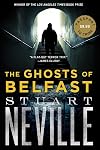
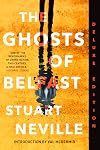
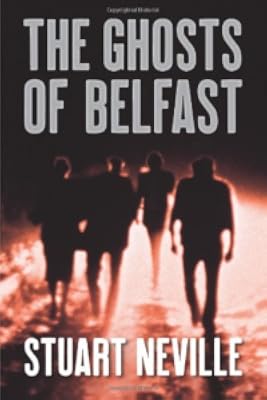
A New York Times Notable Book and Winner of The Los Angeles Times Book Prize, Neville's debut remains "a flat-out terror trip" (James Ellroy) and "one of the best Irish novels, in any genre, of recent times" (John Connolly).Northern Ireland’s Troubles may be over, but peace has not erased the crimes of the past. Gerry Fegan, a former paramilitary contract killer, is haunted by the ghosts of the twelve people he slaughtered. Every night, at the point of losing his mind, he drowns their show more screams in drink. But it’s not enough. In order to appease the ghosts, Fegan is going to have to kill the men who gave him orders.
From the greedy politicians to the corrupt security forces, the street thugs to the complacent bystanders who let it happen, all are called to account. But when Fegan’s vendetta threatens to derail a hard-won truce and destabilize the government, old comrades and enemies alike want him dead. show less
Tags
Recommendations

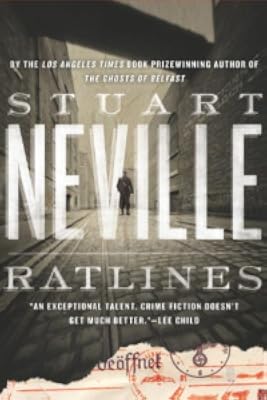












Member Recommendations
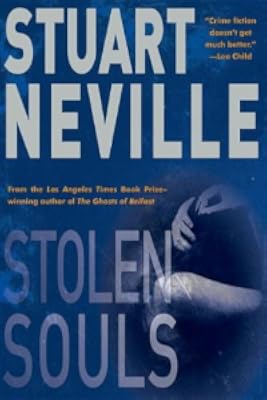
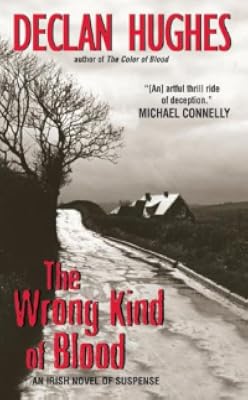
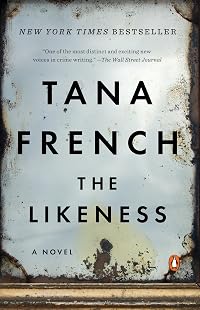
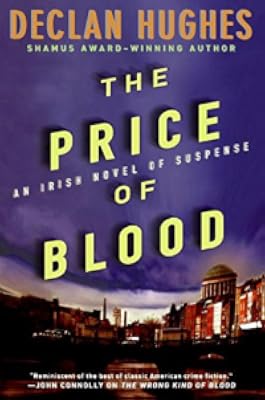
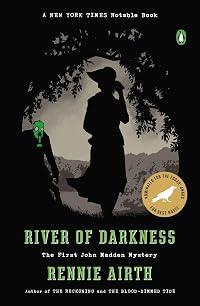
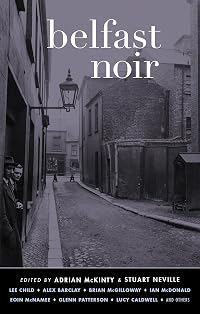
crazybatcow Same setting, same dark tone, same violence (and if you get it in audiobook, same narrator). McKinty's is a bit more "true to life" and Neville's a bit more, err, extreme, but otherwise, very similar novels.
Member Reviews
Real Rating: 4.5* of five, rounded up because I'll seek out the next book in the series
Winner of the 2009 Los Angeles Times Book Prize for Best Thriller.
My Review: First, read this:
That's the logical, and irrefutable, argument against hate. But there's no chance humans will give up hating. It's an addictive drug, a high that can only be bested by the Absolute Assurance that YOU ARE RIGHT, They are Wrong, and therefore they show more deserve _____. Ireland's been in the toils of both, Hate and Rightness, for centuries. They've made it the basis for their identity as a nation. It ain't goin' nowhere.
That grim prognostication delivered, the story we're told in this (debut!) novel is based around a single person's efforts to mitigate the toll Hate takes on society as a whole. That he's chosen, um, a counter-productive solution to the problem is...kind of the core of the read. The way there's no out for a person whose persona is warped by war, by violent and utterly anti-social normative training, whose core is eaten out to nothingness by hatred. That is who such a one will be always. And Gerry Fegan is a stone-cold killer, a person whose life is without the sense of remorse that a normal person would have for depriving others of their entire futures.
Which is why they haunt him. Their ghosts won't let him sleep, or think, or be normal.
Discussions of Gerry's ghosts' reality are circular. Real? Imaginary? Guilt phantasms? Doesn't matter. Gerry is the person he's been made into. The ghosts demand something be done to balance the scales of their lost futures. And Gerry being their instrument means that something will be murderous.
This is a huge problem for the world. Men and women like Gerry exist all over the globe, and they represent a ticking time-bomb of violence and chaos in every place they exist. Conflicts based on such idiotic things as religion and ethnicity and national identity are going to sink any "peace process" that ever gets past the hot-air stage. People like these need their Hate-hit to feel good. Feeling good, about yourself, about your superior place in the world, is fundamental to humans' ability to thrive. In far too many cases, that represents itself as Hate for Others. Nothing effective has ever been done about that...can anything effective ever be done about it? Don't look at Ireland. It's a pink-skinned Rwanda.
And this novel, this brilliant noir tale of revenge if not exactly redemption, brings that to its...conclusion is the wrong word. "Stopping place" in the sense of "the buck stops here" is permaybehaps closer. The man Gerry, expiating his sins, commits others...but do they count as sins? They're balancing scales, not to say that the choice of method is one I approve of. But he's made some attempt to redress the vile acts he's committed. By committing others.
The Mahatma was correct. The world continues to ignore him, and the cycle of violence continues to spiral ever downward into chaos.
Finally, let me say that this book's the first in a series called "Jack Lennon Investigations." This will bumfuzzle most readers. "Who the hell's Jack Lennon?" I hear you ask. Well...don't worry your pretty little head about it is my response. Read Collusion and don't fuss. It's well worth your eyeblinks, just as this delight of a violent, nihilistic noir read is. show less
Winner of the 2009 Los Angeles Times Book Prize for Best Thriller.
My Review: First, read this:
“Hate's a terrible thing. It's a wasteful, stupid emotion. You can hate someone with all your heart, but it'll never do them a bit of harm. The only person it hurts is you. You can spend your days hating, letting it eat away at you, and the person you hate will go on living just the same. So what's the point?”
That's the logical, and irrefutable, argument against hate. But there's no chance humans will give up hating. It's an addictive drug, a high that can only be bested by the Absolute Assurance that YOU ARE RIGHT, They are Wrong, and therefore they show more deserve _____. Ireland's been in the toils of both, Hate and Rightness, for centuries. They've made it the basis for their identity as a nation. It ain't goin' nowhere.
That grim prognostication delivered, the story we're told in this (debut!) novel is based around a single person's efforts to mitigate the toll Hate takes on society as a whole. That he's chosen, um, a counter-productive solution to the problem is...kind of the core of the read. The way there's no out for a person whose persona is warped by war, by violent and utterly anti-social normative training, whose core is eaten out to nothingness by hatred. That is who such a one will be always. And Gerry Fegan is a stone-cold killer, a person whose life is without the sense of remorse that a normal person would have for depriving others of their entire futures.
Which is why they haunt him. Their ghosts won't let him sleep, or think, or be normal.
Discussions of Gerry's ghosts' reality are circular. Real? Imaginary? Guilt phantasms? Doesn't matter. Gerry is the person he's been made into. The ghosts demand something be done to balance the scales of their lost futures. And Gerry being their instrument means that something will be murderous.
This is a huge problem for the world. Men and women like Gerry exist all over the globe, and they represent a ticking time-bomb of violence and chaos in every place they exist. Conflicts based on such idiotic things as religion and ethnicity and national identity are going to sink any "peace process" that ever gets past the hot-air stage. People like these need their Hate-hit to feel good. Feeling good, about yourself, about your superior place in the world, is fundamental to humans' ability to thrive. In far too many cases, that represents itself as Hate for Others. Nothing effective has ever been done about that...can anything effective ever be done about it? Don't look at Ireland. It's a pink-skinned Rwanda.
And this novel, this brilliant noir tale of revenge if not exactly redemption, brings that to its...conclusion is the wrong word. "Stopping place" in the sense of "the buck stops here" is permaybehaps closer. The man Gerry, expiating his sins, commits others...but do they count as sins? They're balancing scales, not to say that the choice of method is one I approve of. But he's made some attempt to redress the vile acts he's committed. By committing others.
The Mahatma was correct. The world continues to ignore him, and the cycle of violence continues to spiral ever downward into chaos.
Finally, let me say that this book's the first in a series called "Jack Lennon Investigations." This will bumfuzzle most readers. "Who the hell's Jack Lennon?" I hear you ask. Well...don't worry your pretty little head about it is my response. Read Collusion and don't fuss. It's well worth your eyeblinks, just as this delight of a violent, nihilistic noir read is. show less
This is a hugely compelling crime novel, a savage but oddly sensitive book about the evil and soul-crushing nature of violence. Gerry Fegan spent his young adulthood as a "foot soldier" for the Catholic leaders during the Troubles in Northern Ireland in the 80s and 90s. Put more directly, he was a thug and an assassin, but always believing he was a soldier fighting for a cause. He has been out for several years after a 12-year turn in prison for his actions. Now peace and compromise are gradually becoming the rule of the day, but Gerry has a giant problem. He is being haunted by the ghosts of 12 of the people whose deaths he caused. They do not speak, but at night those who died painfully scream out their agony. They silently make it show more known to Gerry the price he must pay, and the actions he must take, to earn the right to live out the rest of his live free of their presence and torment. He must use his skills as a killer to be the agent of the ghosts' violent retribution. As Fegan moves through his horrifying odyssey, the reader is provided a vivid window of the Troubles themselves, the bloody struggles to blast the counties of Northern Ireland free of British rule and Protestant domination, and the inevitable push-back by Protestant loyalists and the British themselves, and the society within which all this bloody chaos reigned. This is a disturbing book, in many ways a brilliant one, and the writing is excellent. I found it almost impossible to put down. show less
Well written thriller exploring a very original idea set in post Peace settlement Northern Ireland. Probably my best read of the year so far (April). Pacey, suspenseful, original, authentic, layered, something to look forward to reading at night. The basic idea of the thriller is as simple as it is brilliant. A hired killer for the Republican (IRA) cause can no longer stand life, drowning his feelings of remorse in alcohol, while being haunted by the ghosts of his 12 victims, becoming a drunk and useless insomniac during the 7 years since his release from prison. The civil war is officially over, all parties growing fat on EU subsidies, deliberating in the Stormont Parliament, pampered to Peace by both Britain and the EU. One day he show more encounters the mom of one of his younger victims at the graveyard. She begs him for her son’s corpse – she wants to know where he lies. Everybody has to pay sooner or later, she says. Fegan gives in, in a moment of weakness. And that sets off a chain of motions. Fegan being accompanied by his customary 12 ghosts, kills the first commissioner of an assassination and voila the victim disappears and leaves him alone. At the subsequent funeral he is still treated as the thug hero of the old days and the writer uses this opportunity to introduce us to the choreography of old and new power in the Belfast circles of the Republican side. He also introduces the London-based Minister for Northern Ireland, who is kept abreast of developments in fickle Belfast by the Chief of Police. Two more main characters get introduced, McGinty, a former thug boss, turned slick Politician and Campbell, a deep seated spy run by Westminster who has slowly but irreversibly identified with the cause, and who proves an astute strategist, not least because he gets fed info from all sides. Next the story starts to roll. Fegan sympathises with an outcast, a woman who once had an affair with a British Policeman. I won't reveal any more about the plot, except that it keeps one in suspense and curious about the next move, despite the predictable main concept of the novel. The novel is multi-layered, revealing the choreography of violence and how this changed with Stormont; at some stage Fegan is hunted by both the Brits and the Republicans and the unionists (though the last party is the least elaborated in the thriller). Chapot! We want more... show less
The Ghosts of Belfast are the twelve people that Gerry Fegan murdered while in the service of the IRA. He has served his time in prison, but these ghosts travel with him, never letting him forget. They cry out for vengeance and want Gerry to appease them by murdering the ones who gave the orders that resulted in their deaths.
This first novel by Stuart Neville is a blend of crime, thriller and paranormal that deals with the themes of guilt and redemption. It’s well written and gives the reader many tense moments. The story grabbed me right from the start and I wondered how this one was going to end. With the introduction of Marie McKenna, I was briefly afraid that the author was veering away from the idea of this solitary, dark and show more more than slightly crazed killer looking for his perceived salvation but eventually the plotlines came together seamlessly.
Over and above the main story, this book takes a hard look at the violent history of The Troubles and how this history still casts a long shadow. The Ghosts of Belfast is a gritty, emotional and at times brutal story, and an excellent introduction to this promising author. show less
This first novel by Stuart Neville is a blend of crime, thriller and paranormal that deals with the themes of guilt and redemption. It’s well written and gives the reader many tense moments. The story grabbed me right from the start and I wondered how this one was going to end. With the introduction of Marie McKenna, I was briefly afraid that the author was veering away from the idea of this solitary, dark and show more more than slightly crazed killer looking for his perceived salvation but eventually the plotlines came together seamlessly.
Over and above the main story, this book takes a hard look at the violent history of The Troubles and how this history still casts a long shadow. The Ghosts of Belfast is a gritty, emotional and at times brutal story, and an excellent introduction to this promising author. show less
Gerry Fegan was an IRA killer and served twelve years in Maze prison for his crimes before release as a political prisoner. Seven years later there’s little place for men like Fegan in the new Ireland. Politicians rule now. Even those that were killers in the past.
Fegan spends his time restoring a guitar that belonged to a prison-mate, and drinking. The drinking is an attempt to dull his senses to the ghosts that follow him. The ghosts of the twelve people he killed. They won’t leave Fegan alone until he kills the people he worked for – the ones that controlled the killing.
The Ghosts of Belfast is an original, searing and well-paced bit of Irish noir. Neville displays a deep knowledge of the criminal and political machinations show more that plague life in Northern Ireland. show less
Fegan spends his time restoring a guitar that belonged to a prison-mate, and drinking. The drinking is an attempt to dull his senses to the ghosts that follow him. The ghosts of the twelve people he killed. They won’t leave Fegan alone until he kills the people he worked for – the ones that controlled the killing.
The Ghosts of Belfast is an original, searing and well-paced bit of Irish noir. Neville displays a deep knowledge of the criminal and political machinations show more that plague life in Northern Ireland. show less
In order to be left alone by his victims' ghosts, former IRA hit man Gerry Fegan must find and kill those who ordered him to commit the murders in the first place. This is one of the better Noir stories I've read in a while, although it's not of the detective kind - these characters are not on that side of the law - and has a few seemingly supernatural facets. Fegan is in no way a sympathetic character and be prepared for grim and cruel actions on his part, but it is still impossible not to be on his side in the struggle to stay sane enough to carry out his bloody quest - a quest that may or may not lead to redemption (of some kind).
In addition, this debut novel is quite exceptional in that the author has an pitch-perfect style and show more everything - from the depiction of the tensions bubbling behind the facade at a controversial funeral to a stunningly accurate description of the inside workings of a riot - feels perfectly authentic. It's a time and a place in flux and an ironically insular and highly paranoid community that Neville has managed to catch on these pages; it's not only Fegan's own ghosts, but the ghosts of the infamous armed struggle and its politics that are still haunting these people.
The one tiny weakness in the book is that Fegan's intended victims tend to be one-dimensional (which, let's be honest, isn't rare in the genre), but because this is so well-written, I find that it doesn't bother me at all. I'd highly recommended this to those who enjoy the bloodier side of Noir and especially for anyone interested in "post-conflict" Northern Ireland. show less
In addition, this debut novel is quite exceptional in that the author has an pitch-perfect style and show more everything - from the depiction of the tensions bubbling behind the facade at a controversial funeral to a stunningly accurate description of the inside workings of a riot - feels perfectly authentic. It's a time and a place in flux and an ironically insular and highly paranoid community that Neville has managed to catch on these pages; it's not only Fegan's own ghosts, but the ghosts of the infamous armed struggle and its politics that are still haunting these people.
The one tiny weakness in the book is that Fegan's intended victims tend to be one-dimensional (which, let's be honest, isn't rare in the genre), but because this is so well-written, I find that it doesn't bother me at all. I'd highly recommended this to those who enjoy the bloodier side of Noir and especially for anyone interested in "post-conflict" Northern Ireland. show less
Audiobook: Finally, a book in which the violence serves the story instead of the opposite.This is the first in a series of novels that portray Belfast and Northern Ireland following the peace accords, which left a lot of violent men with little to do and changing loyalties. Gerry Fegan had been an enforcer for one of the groups of thugs ostensibly battling the British. Now beset by guilt for those he had killed, he’s surrounded by imaginary “followers” representing each of the twelve he had killed and they won’t leave him alone until he kills those who had ordered the killings.
Much as slavery and segregation haunt U.S. history, so do the years of the Troubles for the Irish. Preserving the peace becomes a priority for those in show more power and they will sacrifice innocents to maintain political stability. That’s one of the underlying themes of Neville’s book. “"Even now [that] the politicians had taken over the movement," Neville writes of the Irish Republican Army paramilitaries, "even though they were shifting away from the rackets, the extortion, the thieving, people still needed to be kept in line." The British still have their undercover agents and one of those is tasked by his handlers with killing Fegan in order to prevent his killings from upsetting the delicate balance.
Note that even though billed as the first in the Jack Lennon Investigations series, Lennon plays a minuscule role unlike the second. It’s all Gerry Fegan.
I read this book after Collusion, the second in the series, and several things became clear in both volumes. I recommend reading the books in order, as knowing what happens in the second destroys any suspense in the first. Very good reading. show less
Much as slavery and segregation haunt U.S. history, so do the years of the Troubles for the Irish. Preserving the peace becomes a priority for those in show more power and they will sacrifice innocents to maintain political stability. That’s one of the underlying themes of Neville’s book. “"Even now [that] the politicians had taken over the movement," Neville writes of the Irish Republican Army paramilitaries, "even though they were shifting away from the rackets, the extortion, the thieving, people still needed to be kept in line." The British still have their undercover agents and one of those is tasked by his handlers with killing Fegan in order to prevent his killings from upsetting the delicate balance.
Note that even though billed as the first in the Jack Lennon Investigations series, Lennon plays a minuscule role unlike the second. It’s all Gerry Fegan.
I read this book after Collusion, the second in the series, and several things became clear in both volumes. I recommend reading the books in order, as knowing what happens in the second destroys any suspense in the first. Very good reading. show less
Members
- Recently Added By
Published Reviews
ThingScore 100
A crime novel that counts among the best brought out this calendar year... "The Ghosts of Belfast" would have been a superior effort had it been just about Fegan's struggle to assert his inner goodness in the face of larger evil, but its narrative power draws further strength from Neville's acute understanding of Northern Ireland's true state and how, in just a few short years, "the North had show more become the poor relation, the bastard child no one had the heart to send away." show less
added by Shortride
Lists

Top Five Books of 2013
1,562 works; 721 members

Global Reads: Books Set in the United Kingdom and Ireland
109 works; 5 members

Tour of Ireland
40 works; 11 members

Books With Place Names in the Title
215 works; 10 members

Ghosts
278 works; 18 members
Books Read in 2015
3,299 works; 129 members

Books With Numbers in the Title
308 works; 13 members

Ultimate Thriller Guide
52 works; 4 members
Author Information

16+ Works 2,801 Members
Stuart Neville is a Northern Irish author. His books include The Twelve (published in the USA as The Ghosts of Belfast), Collusion, Stolen Souls, Ratlines, and The Final Silence. The French edition of The Ghosts of Belfast, Les Fantômes de Belfast, won Le Prix Mystère de la Critique du Meilleur Roman Étranger and Grand Prix du Roman Noir show more Étranger. (Bowker Author Biography) show less
Some Editions
Awards and Honors
Awards
Distinctions
Series


Work Relationships
Is contained in
Common Knowledge
- Canonical title
- The Twelve
- Alternate titles
- The Ghosts of Belfast
- Original publication date
- 2009
- People/Characters
- Gerry Fegan; Davy Campbell; Paul McGinty; Bull O'Kane; Marie McKenna; Michael McKenna (show all 23); Vincent Caffola; Edward Coyle; Ellen McKenna; Patsy Toner; Eammon Coulter; Eugene McSorley; Edward Hargreaves; Ronnie Lennox; Seamus Hopkirk; Padraig O'Kane; Geoff Pilkington; Declan Quigley; Brian Anderson; Tommy Downey; Francie Delaney; Kevin Malloy; Albert Taylor
- Important places
- Belfast, Northern Ireland, UK; Northern Ireland, UK; Ireland; Dundalk, County Louth, Ireland; HM Prison Maze, Belfast, Northern Ireland, UK; Ballymena, County Antrim, Northern Ireland, UK (show all 8); London, England, UK; Lurgan, County Armagh, Northern Ireland, UK
- Important events
- Northern Ireland peace process
- Epigraph
- 'The place that lacks its ghosts is a barren place' John Hewitt
- Dedication
- For Ellen Emerald Neville
- First words
- Maybe if he had one more drink they'd leave him alone.
- Last words
- (Click to show. Warning: May contain spoilers.)No shadow followed but his own.
- Canonical DDC/MDS
- 823.92
- Canonical LCC
- PR6114.E943
- Disambiguation notice
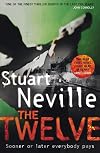
- Published in the USA as The Ghosts of Belfast Published in the UK as The Twelve
Classifications
Statistics
- Members
- 873
- Popularity
- 31,045
- Reviews
- 53
- Rating
- (3.95)
- Languages
- 6 — English, French, German, Greek, Polish, Spanish
- Media
- Paper, Audiobook, Ebook
- ISBNs
- 22
- ASINs
- 12