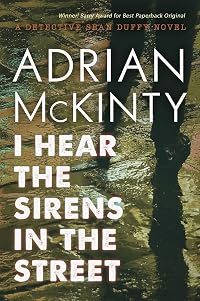
On This Page
Description
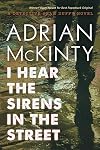
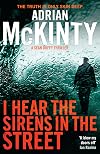
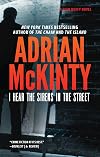
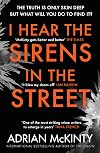
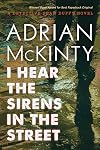
A torso in a suitcase looks like an impossible case, but Sean Duffy isn't easily deterred, especially when his floundering love life leaves him in need of a distraction. So with Detective Constables McCrabban and McBride, he goes to work identifying the victim. The torso turns out to be all that's left of an American tourist who once served in the US military. What was he doing in Northern Ireland in the midst of the 1982 Troubles? The trail leads to the doorstep of a beautiful, show more flame-haired, twentysomething widow, whose husband died at the hands of an IRA assassination team just a few months before. Suddenly Duffy is caught between his romantic instincts, gross professional misconduct, and powerful men he should know better than to mess with. These include British intelligence, the FBI, and local paramilitary death squads—enough to keep even the savviest detective busy. Duffy's growing sense of self-doubt isn't helping. But as a legendarily stubborn man, he doesn't let that stop him from pursuing the case to its explosive conclusion. Longlisted for the 2014 Theakston Old Peculier Crime Novel of the Year Award. Winner of the 2014 Barry Award for Best Paperback Original.. show less
Tags
Recommendations
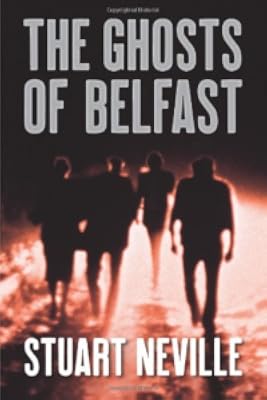


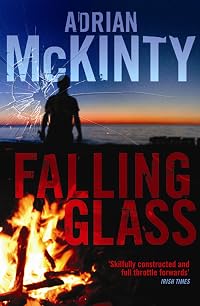
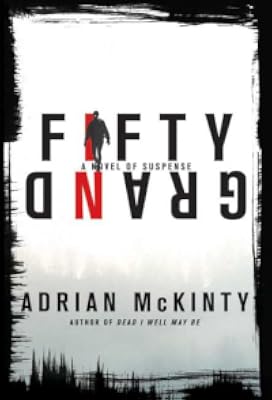
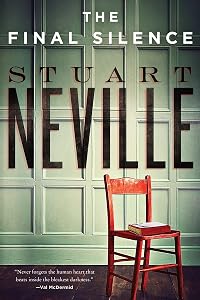

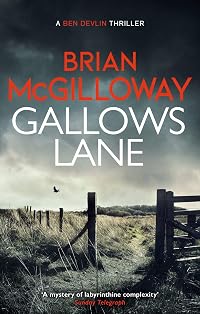








Member Recommendations
crazybatcow Same setting, same dark tone, same violence (and if you get it in audiobook, same narrator). McKinty's is a bit more "true to life" and Neville's a bit more, err, "extreme", but otherwise, very similar novels.
Member Reviews
#2 in the Sean Duffy series, which I am re-visiting via audio.
This one involves a dismembered body in a suitcase, the DeLorean car factory, an apparent IRA assassination, and shady government agencies, both in the UK and America. It's rather convoluted, but all the things that make this a great series are included - Duffy's black humor, good music, a fascinating setting.... I can't wait to get to the next one.
3.75 stars
This one involves a dismembered body in a suitcase, the DeLorean car factory, an apparent IRA assassination, and shady government agencies, both in the UK and America. It's rather convoluted, but all the things that make this a great series are included - Duffy's black humor, good music, a fascinating setting.... I can't wait to get to the next one.
3.75 stars
Having barely survived his troubles with The Troubles in Northern Ireland, Sean Duffy could not know that the torso found in an old suitcase is just the beginning of a whole new set of troubles.
This is the second book in the series and in it we can see more of Duffy’s character emerging. Duffy has a very dry sense of humour and it often comes out when it perhaps shouldn’t especially when conversing with superiors.
Duffy despairs about the music of the eighties, the recurring theme is a valiant attempt to find an appropriate sound track to accompany his trials and tribulations.
"I made a vodka gimlet in a pint glass, stuck on a random tin of soup and with infinitely more care picked out a selection of records that would get me through show more the evening: “Unknown Pleasures” by Joy Division, “Bryter Layter” by Nick Drake and Neil Young’s “After The Goldrush”. Yeah, I was in that kind of mood."
A tangential lead in the mystery torso case has Duffy caught up in the botched investigation of a local Ulster Defence Regiment officer, assassinated by the IRA. Duffy is attracted to the young widow and the cases become intrinsically intertwined.
The book is built around the The Troubles in Northern Ireland and they become a character in their own right forming a basis for much of what motivates every character. Duffy’s ritual every morning is to kneel and check under the car for any mercury bombs that may have been placed there overnight.
“Army helicopters flew low over the lough, sirens wailed in County Down, a distant thump-thump was the sound of mortars or explosions. The city was under a shroud of chimney smoke and the cinematographer, as always, was shooting it in 8mm black and white. This was Belfast in the fourteenth year of the low-level civil war euphemistically known as The Troubles.”
“We stood there looking at north Belfast three miles away over the water. The sky a kind of septic brown, the buildings rain-smudged rectangles on the grim horizon. Belfast was not beautiful. It had been built on mudflats and without rock foundations nothing soared. Its architecture had been Victorian red-brick utilitarian and sixties brutalism before both of those tropes had crashed headlong into the Troubles. A thousand car bombs later and what was left was surrounded by concrete walls, barbed wire and a steel security fence to keep the bombers out.
Here in the north Belfast suburbs we only got sporadic terrorist attacks, but economic degradation and war had frozen the architecture in outmoded utilitarian schools whose chief purpose seemed to be the disheartening of the human soul. Optimistic colonial officials were always planting trees and sponsoring graffiti clearance schemes but the trees never lasted long and it was the brave man who dared clean paramilitary graffiti off his own house never mind in communal areas of the town.”
McKinty brings Northern Ireland alive and all his characters, main and minor, ring true. The plot is full of twists and turns. Highly recommended. show less
This is the second book in the series and in it we can see more of Duffy’s character emerging. Duffy has a very dry sense of humour and it often comes out when it perhaps shouldn’t especially when conversing with superiors.
Duffy despairs about the music of the eighties, the recurring theme is a valiant attempt to find an appropriate sound track to accompany his trials and tribulations.
"I made a vodka gimlet in a pint glass, stuck on a random tin of soup and with infinitely more care picked out a selection of records that would get me through show more the evening: “Unknown Pleasures” by Joy Division, “Bryter Layter” by Nick Drake and Neil Young’s “After The Goldrush”. Yeah, I was in that kind of mood."
A tangential lead in the mystery torso case has Duffy caught up in the botched investigation of a local Ulster Defence Regiment officer, assassinated by the IRA. Duffy is attracted to the young widow and the cases become intrinsically intertwined.
The book is built around the The Troubles in Northern Ireland and they become a character in their own right forming a basis for much of what motivates every character. Duffy’s ritual every morning is to kneel and check under the car for any mercury bombs that may have been placed there overnight.
“Army helicopters flew low over the lough, sirens wailed in County Down, a distant thump-thump was the sound of mortars or explosions. The city was under a shroud of chimney smoke and the cinematographer, as always, was shooting it in 8mm black and white. This was Belfast in the fourteenth year of the low-level civil war euphemistically known as The Troubles.”
“We stood there looking at north Belfast three miles away over the water. The sky a kind of septic brown, the buildings rain-smudged rectangles on the grim horizon. Belfast was not beautiful. It had been built on mudflats and without rock foundations nothing soared. Its architecture had been Victorian red-brick utilitarian and sixties brutalism before both of those tropes had crashed headlong into the Troubles. A thousand car bombs later and what was left was surrounded by concrete walls, barbed wire and a steel security fence to keep the bombers out.
Here in the north Belfast suburbs we only got sporadic terrorist attacks, but economic degradation and war had frozen the architecture in outmoded utilitarian schools whose chief purpose seemed to be the disheartening of the human soul. Optimistic colonial officials were always planting trees and sponsoring graffiti clearance schemes but the trees never lasted long and it was the brave man who dared clean paramilitary graffiti off his own house never mind in communal areas of the town.”
McKinty brings Northern Ireland alive and all his characters, main and minor, ring true. The plot is full of twists and turns. Highly recommended. show less
After the events of the first book, Sean Duffy has been promoted to DI at the Carrickfergus RUC station. It's now 1982 in Belfast but not much has changed. Black smoke from burning buses fills the sky, riots occur like clockwork & cops still check under their cars for bombs every morning.
The bad news is war has been declared in the Falklands & British troops are pulling out of northern Ireland to join the fight. Duffy & his colleagues are holding their breath, waiting for the IRA to take advantage. In the meantime, they have a new grisly murder to investigate. Tossed into a garbage bin, they find a suitcase containing a man's torso.
After autopsy, Dr. Laura has 2 bits of surprising news for Sean. One, despite the lack of appendages, the show more man actually died from poisoning. Two, she's accepted a teaching position in Edinburgh. Sean is not thrilled with either statement.
They eventually trace the suitcase to Emma, a young widow from a rural area. Her husband Martin McAlpine, a spy for the UDR, was murdered several months ago & the local cops assumed it was courtesy of the IRA. But something about their cursory investigation & lack of evidence niggles at Sean.
Miles of legwork later, the dead man is ID's as a retired American IRS inspector. He was a decorated WWll vet supposedly on vacation. But who comes to Belfast for R&R?
Weeks go by with no breaks & Sean is told to toss it on the cold case pile. So he stubbornly starts to dig on his own time & uncovers a connection between the American, McAlpine & John DeLorean whose car factory is the only business in town.
Before it's all over, Sean will have to deal with british intelligence, the FBI & a mysterious woman who may or may not be on the same side. And he'll have a few scars to add to his collection.
Most of the characters from book #1 are back with Crabbie continuing to serve as Sean's conscience. There are a few side stories involving Sean's love life & his uneasy relationship with gangster Bobby Cameron ("Don't worry, Duffy. I like you. We'll kill you last.") that flesh out the plot. It's fast paced & atmospheric with chilling descriptions of the daily carnage & its' effect on the weary residents. The prose is smooth & literate with cultural references that make you smile & dialogue is sharp & believable.
Sean continues to be a bit of a loose cannon & you can't help but cringe in places. You just know some of his decisions will come back & bite him in the ass. But he's an engaging character...smart, witty & committed to his job. He genuinely cares for the people in his neighbourhood & dreams of a Belfast without helicopters & army check points.
The last few chapters will have you turning the pages to see how it all shakes out. By the end, Sean has some decisions to make concerning his future with the RUC & I'll be picking up book #3 to see where he lands. show less
The bad news is war has been declared in the Falklands & British troops are pulling out of northern Ireland to join the fight. Duffy & his colleagues are holding their breath, waiting for the IRA to take advantage. In the meantime, they have a new grisly murder to investigate. Tossed into a garbage bin, they find a suitcase containing a man's torso.
After autopsy, Dr. Laura has 2 bits of surprising news for Sean. One, despite the lack of appendages, the show more man actually died from poisoning. Two, she's accepted a teaching position in Edinburgh. Sean is not thrilled with either statement.
They eventually trace the suitcase to Emma, a young widow from a rural area. Her husband Martin McAlpine, a spy for the UDR, was murdered several months ago & the local cops assumed it was courtesy of the IRA. But something about their cursory investigation & lack of evidence niggles at Sean.
Miles of legwork later, the dead man is ID's as a retired American IRS inspector. He was a decorated WWll vet supposedly on vacation. But who comes to Belfast for R&R?
Weeks go by with no breaks & Sean is told to toss it on the cold case pile. So he stubbornly starts to dig on his own time & uncovers a connection between the American, McAlpine & John DeLorean whose car factory is the only business in town.
Before it's all over, Sean will have to deal with british intelligence, the FBI & a mysterious woman who may or may not be on the same side. And he'll have a few scars to add to his collection.
Most of the characters from book #1 are back with Crabbie continuing to serve as Sean's conscience. There are a few side stories involving Sean's love life & his uneasy relationship with gangster Bobby Cameron ("Don't worry, Duffy. I like you. We'll kill you last.") that flesh out the plot. It's fast paced & atmospheric with chilling descriptions of the daily carnage & its' effect on the weary residents. The prose is smooth & literate with cultural references that make you smile & dialogue is sharp & believable.
Sean continues to be a bit of a loose cannon & you can't help but cringe in places. You just know some of his decisions will come back & bite him in the ass. But he's an engaging character...smart, witty & committed to his job. He genuinely cares for the people in his neighbourhood & dreams of a Belfast without helicopters & army check points.
The last few chapters will have you turning the pages to see how it all shakes out. By the end, Sean has some decisions to make concerning his future with the RUC & I'll be picking up book #3 to see where he lands. show less
This my second Adrian McKinty book and the guy definitely has a way with words and an ear for dialogue.
One of the joys of reading is discovering insights," social commentary or sometimes comments on the human condition that hum in your mind, and linger with you long after the main plot of the book is forgotten. This is one of those books that stays with you after having finished it.
The usual debate between realism and naturalism is quite obvious here, but realism is at its center. I don't understand someone, who wants to read a book that's too real. That would be life, and we read, in part, as an escape from the mundane. What makes a writer like McKinty special is his ability to place realistic characters--people we feel like we show more know--into extraordinary situations and see how they react and are affected by them.
One of the best thing about "I Hear Sirens in the Street" is its depth. It rises above the dualities to show the greater complicity, and to show that the psychopaths on one side are pretty much like the psychopaths on the other side.
I like comfort reads too, but the best noir being written now will have us look into the abyss and the book will then become a mirror as the abyss looks back.
If I wanted to read formulaic plots, I'd go to the supermarket, drugstore or airport book shelves or (alas) to the library's best-seller section." show less
Set in the early 1980's, I HEAR THE SIRENS IN THE STREET is the second book in a trilogy built around Sean Duffy, a Catholic cop working in the reality of Carrickfergus, Northern Ireland in the middle of The Troubles. This is when neighbourhoods and towns are divided by religion and loyalty, when unemployment and community disaffection are soaring, and local cops check under their cars for bombs every single morning they head out for work.
It's a bit disconcerting to think that this is a timeframe that many of us know well, although it's now regarded as "the past" or historical. After all, this is my teenage, young adult years. Hence there's much that resonates, even in another country. The music, the clothes, the vinyl LPs. The way show more that Duffy's evenings are spent with the record collection, because TV is so dire, there's not that much difference between my rural Australia and his Carrickfergus. There is, however, a big difference when it comes to the society in which Duffy is operating. The Troubles override everything. The tensions between religions and alliances are palpable, and the isolation of the unemployed and the powerlessness of people playing out in violence and disruption is visceral.
The complications of the plot in this book are partially the complications of that life, a torso in a suitcase, the need to track down an identity, and a murderer fighting for focus every day with sectarian violence, police station bombings, neighbourhood division and the pressures of political interference. The picture drawn is clearly a society tearing itself limb from limb, and for a while it almost seemed like the idea of a limbless body was some sort of fascinating metaphor. But, as in real life, there's nothing glorious or meaningful about yet another self-interested, self-involved murder and somewhere, deep under the layers, it all comes down to one of the same old same old - money, sex, influence or power. Having said that, there is a bit of heavy lifting going on towards the end of the book and whilst some readers might find some of the plot elements a little bit dodgy, for this reader, it didn't require too much effort to just go with the flow.
As a central character, Sean Duffy is a keeper. He's flawed, complex without being complicated, very real and profoundly likeable. The situation in which he lives his life is stark and beautifully drawn. The dialogue and interaction between the characters is absolutely pitch perfect, you can see, hear, feel these people's presence. The writing is glorious, the books are littered with the most lyrically beautiful passages, particularly where McKinty steps up to describe the worst of possible circumstances and events.
For this reader, I HEAR THE SIRENS IN THE STREET is possibly not quite as perfect as THE COLD COLD GROUND, in the same way that I sometimes ponder whether the Scottish Play is not quite as perfect as Hamlet.
http://www.austcrimefiction.org/review/i-hear-sirens-street-adrian-mckinty show less
It's a bit disconcerting to think that this is a timeframe that many of us know well, although it's now regarded as "the past" or historical. After all, this is my teenage, young adult years. Hence there's much that resonates, even in another country. The music, the clothes, the vinyl LPs. The way show more that Duffy's evenings are spent with the record collection, because TV is so dire, there's not that much difference between my rural Australia and his Carrickfergus. There is, however, a big difference when it comes to the society in which Duffy is operating. The Troubles override everything. The tensions between religions and alliances are palpable, and the isolation of the unemployed and the powerlessness of people playing out in violence and disruption is visceral.
The complications of the plot in this book are partially the complications of that life, a torso in a suitcase, the need to track down an identity, and a murderer fighting for focus every day with sectarian violence, police station bombings, neighbourhood division and the pressures of political interference. The picture drawn is clearly a society tearing itself limb from limb, and for a while it almost seemed like the idea of a limbless body was some sort of fascinating metaphor. But, as in real life, there's nothing glorious or meaningful about yet another self-interested, self-involved murder and somewhere, deep under the layers, it all comes down to one of the same old same old - money, sex, influence or power. Having said that, there is a bit of heavy lifting going on towards the end of the book and whilst some readers might find some of the plot elements a little bit dodgy, for this reader, it didn't require too much effort to just go with the flow.
As a central character, Sean Duffy is a keeper. He's flawed, complex without being complicated, very real and profoundly likeable. The situation in which he lives his life is stark and beautifully drawn. The dialogue and interaction between the characters is absolutely pitch perfect, you can see, hear, feel these people's presence. The writing is glorious, the books are littered with the most lyrically beautiful passages, particularly where McKinty steps up to describe the worst of possible circumstances and events.
For this reader, I HEAR THE SIRENS IN THE STREET is possibly not quite as perfect as THE COLD COLD GROUND, in the same way that I sometimes ponder whether the Scottish Play is not quite as perfect as Hamlet.
http://www.austcrimefiction.org/review/i-hear-sirens-street-adrian-mckinty show less
I really enjoy McKinty's Sean Duffy series. This is the second of a proposed trilogy. I read the first and immediately ordered the second. I have just pre-ordered the third.
It's 1982 and the Falklands have been invaded, not a good thing for the RUC in Northern Ireland, for it means that Thatcher's retaliation will denude Northern Ireland of half the British troops stationed there, leaving the police woefully undermanned to deal with the IRA terrorists now well-weaponed and funded thanks to money and guns flowing in by the bucketful from America.
DI Sean Duffy is faced with a peculiar murder. A headless man is found stuffed in an old suitcase. He appears to be an American given the Big Red One tattoos and shrapnel. But he has been show more poisoned using Abrin, a product of a rare plant known as the rosary pea and one of the most toxic substances known. It's native to India, but can be found in Florida. Then the suitcase is linked to the killing of a UDC captain and things get weirder eventually leading him to the DeLorean factory, which had been seen as Northern Ireland's solution to its economic troubles. Warned off by higher authorities on several occasions, but spurred on by a mysterious woman's phone calls, Duffy can't let it go.
It's not a good time to be a cop (nor anyone, for that matter during the Troubles.) Murders disguised as IRA hits, bombings, attacks on police were common. "Army helicopters flew low over the lough, sirens wailed in County Down, a distant thump-thump was the sound of mortars or explosions. The city was under a shroud of chimney smoke and the cinematographer, as always, was shooting it in 8mm black and white. This was Belfast in the fourteenth year of the low-level civil war euphemistically known as The Troubles. . ."I turned off the radio, made coffee, dressed in a black polo neck sweater, jeans and DM shoes, went outside. I checked under the BMW for any mercury tilt explosives but didn’t find any. Right about now seven thousand RUC men and women were all doing the same thing. One or two of them would find a bomb and after shitting their pants they’d be on the phone to the bomb squad, thanking their lucky stars that they’d kept to their morning routine."
McKinty masterfully recreates a dystopian world that was Northern Ireland for several decades, a world of almost unimaginable despair for those who had to live there. Those who could left, "went over the sea," as it were, to Scotland or England, or better yet, to America.
The ending will have you wondering where McKinty is going to take Duffy in volume 3. I, for one, will be very disappointed that the series will end with only three volumes. They are very good. show less
It's 1982 and the Falklands have been invaded, not a good thing for the RUC in Northern Ireland, for it means that Thatcher's retaliation will denude Northern Ireland of half the British troops stationed there, leaving the police woefully undermanned to deal with the IRA terrorists now well-weaponed and funded thanks to money and guns flowing in by the bucketful from America.
DI Sean Duffy is faced with a peculiar murder. A headless man is found stuffed in an old suitcase. He appears to be an American given the Big Red One tattoos and shrapnel. But he has been show more poisoned using Abrin, a product of a rare plant known as the rosary pea and one of the most toxic substances known. It's native to India, but can be found in Florida. Then the suitcase is linked to the killing of a UDC captain and things get weirder eventually leading him to the DeLorean factory, which had been seen as Northern Ireland's solution to its economic troubles. Warned off by higher authorities on several occasions, but spurred on by a mysterious woman's phone calls, Duffy can't let it go.
It's not a good time to be a cop (nor anyone, for that matter during the Troubles.) Murders disguised as IRA hits, bombings, attacks on police were common. "Army helicopters flew low over the lough, sirens wailed in County Down, a distant thump-thump was the sound of mortars or explosions. The city was under a shroud of chimney smoke and the cinematographer, as always, was shooting it in 8mm black and white. This was Belfast in the fourteenth year of the low-level civil war euphemistically known as The Troubles. . ."I turned off the radio, made coffee, dressed in a black polo neck sweater, jeans and DM shoes, went outside. I checked under the BMW for any mercury tilt explosives but didn’t find any. Right about now seven thousand RUC men and women were all doing the same thing. One or two of them would find a bomb and after shitting their pants they’d be on the phone to the bomb squad, thanking their lucky stars that they’d kept to their morning routine."
McKinty masterfully recreates a dystopian world that was Northern Ireland for several decades, a world of almost unimaginable despair for those who had to live there. Those who could left, "went over the sea," as it were, to Scotland or England, or better yet, to America.
The ending will have you wondering where McKinty is going to take Duffy in volume 3. I, for one, will be very disappointed that the series will end with only three volumes. They are very good. show less
I am not the world’s biggest noir fan. Even if I ignore a lot of things described as noir that really aren’t it’s still not a favourite form of my beloved genre. The main reason for this is that a lot of it is unrelentingly bleak and I find this depression-inducing and a little on the dull side due to its sombre predictability. Funny noir is, however, a whole different ball game and I HEAR THE SIRENS IN THE STREET is bloody hysterical.
It is set in Northern Ireland in 1982. What the locals, masters of understatement, refer to as the Troubles has been raging for more than a dozen years. Unemployment is high, almost anyone who can is leaving for greener pastures oceans away and bombings, riots and murder are as much a part of daily show more life as breakfast. Amidst this version of human chaos a dismembered torso is found in a suitcase and Sean Duffy, one of few Catholic policemen in the Royal Ulster Constabulary, is tasked with identifying the man and finding out who murdered him.
Perhaps not, at first glance, ripe ground for comedy but, particularly in the novel’s cracking dialogue, McKinty has captured a vein of very black humour that is entirely realistic and which lifts the novel from the deep depths of despair that so much noir thrives on. This doesn’t mean the book treats its subject or setting with disdain or disrespect; rather it shows that for some the only way to cope with life’s grim realities is to laugh in face of them, even if at the very same time you are experiencing the bowel loosening fear of forgetting to check that the car you’re driving had no bombs under it that morning.
While his fondness for vodka gimlets might be seen as a precursor to the alcoholism that so many fictional detectives exhibit Sean Duffy does not, for the most part, conform to the tropes of the genre. He’s a bit too upbeat and hopeful for that and not heroic in the traditional sense of the word. He is a tenacious bastard though, usually to the point of his own downfall and, as in the best noir traditions, the reader is never sure if he will irreversibly cross an invisible line into wrongness at some point but there is a delicious tension in waiting to see.
There are crime novels with plots and characters so generic that they could take place anywhere, any time. SIRENS isn’t one of those. Everything from the social backdrop to the musical soundtrack that accompanies Sean Duffy through his days anchors this novel to its time and place (though my ego could have done without quite so many song references reminding me that this work of historical fiction is set at a time I well remember). The traditional investigation soon identifies the victim as an American who served in WWII and not long after is stonewalled by a local community’s avowed disregard for “the peelers”. But the fleeting asides are equally insightful, perhaps especially Duffy’s interactions with his mostly Protestant, mostly police-hating neighbours, the unofficial leader of whom declares with affection that they’ll kill Duffy last if it comes to that.
Despite being noir this is my favourite kind of crime fiction. It transported me to a time and place that is recognisable and enveloping, it taught me things without me really being aware of it and kept me guessing from beginning to end. The fact that it made me laugh out loud on multiple occasions is the icing on the cake. I highly recommend it to all, but only after you’ve read the first book in the trilogy. show less
It is set in Northern Ireland in 1982. What the locals, masters of understatement, refer to as the Troubles has been raging for more than a dozen years. Unemployment is high, almost anyone who can is leaving for greener pastures oceans away and bombings, riots and murder are as much a part of daily show more life as breakfast. Amidst this version of human chaos a dismembered torso is found in a suitcase and Sean Duffy, one of few Catholic policemen in the Royal Ulster Constabulary, is tasked with identifying the man and finding out who murdered him.
Perhaps not, at first glance, ripe ground for comedy but, particularly in the novel’s cracking dialogue, McKinty has captured a vein of very black humour that is entirely realistic and which lifts the novel from the deep depths of despair that so much noir thrives on. This doesn’t mean the book treats its subject or setting with disdain or disrespect; rather it shows that for some the only way to cope with life’s grim realities is to laugh in face of them, even if at the very same time you are experiencing the bowel loosening fear of forgetting to check that the car you’re driving had no bombs under it that morning.
While his fondness for vodka gimlets might be seen as a precursor to the alcoholism that so many fictional detectives exhibit Sean Duffy does not, for the most part, conform to the tropes of the genre. He’s a bit too upbeat and hopeful for that and not heroic in the traditional sense of the word. He is a tenacious bastard though, usually to the point of his own downfall and, as in the best noir traditions, the reader is never sure if he will irreversibly cross an invisible line into wrongness at some point but there is a delicious tension in waiting to see.
There are crime novels with plots and characters so generic that they could take place anywhere, any time. SIRENS isn’t one of those. Everything from the social backdrop to the musical soundtrack that accompanies Sean Duffy through his days anchors this novel to its time and place (though my ego could have done without quite so many song references reminding me that this work of historical fiction is set at a time I well remember). The traditional investigation soon identifies the victim as an American who served in WWII and not long after is stonewalled by a local community’s avowed disregard for “the peelers”. But the fleeting asides are equally insightful, perhaps especially Duffy’s interactions with his mostly Protestant, mostly police-hating neighbours, the unofficial leader of whom declares with affection that they’ll kill Duffy last if it comes to that.
Despite being noir this is my favourite kind of crime fiction. It transported me to a time and place that is recognisable and enveloping, it taught me things without me really being aware of it and kept me guessing from beginning to end. The fact that it made me laugh out loud on multiple occasions is the icing on the cake. I highly recommend it to all, but only after you’ve read the first book in the trilogy. show less
Members
- Recently Added By
Published Reviews
McKinty varies radically from other Irish crime novelists in one significant stylistic department. The difference is mostly a matter of humour. McKinty’s central figure, Detective Inspector Sean Duffy, offers the quota of laughs we’ve been made accustomed to in Ireland’s crime literature, but unlike the rest of the country’s sleuths, there’s nothing mordant about the Duffy brand of show more funny stuff. The DI might even be described as optimistic. This is remarkable considering that events in the highly readable new book take place in 1982 when the Troubles meant that explosions, assassinations and spilled blood were daily routines.
Duffy is from the north, a cop working out of a station in a town next door to Belfast. Since he’s also a Catholic, he gets it from all sides, under siege from both the IRA and the Ulster Defence Regiment. His sense of irony helps him through most crises. Cool and nervy, Duffy drinks his vodka gimlets, watches The Rockford Files on television, and goes about his investigating business with a style that’s mostly unflappable.
Duffy’s latest case begins with the discovery of the dismembered body of an American tourist. The coppers, led by Duffy, chase the clues on a trail that leads our man into dangerous places in Ireland’s political and industrial worlds. If it begins to look as if the country’s unhinged violence is at last going to crush Duffy, we readers remain certain his valour and wit will guarantee survival in the end show less
Duffy is from the north, a cop working out of a station in a town next door to Belfast. Since he’s also a Catholic, he gets it from all sides, under siege from both the IRA and the Ulster Defence Regiment. His sense of irony helps him through most crises. Cool and nervy, Duffy drinks his vodka gimlets, watches The Rockford Files on television, and goes about his investigating business with a style that’s mostly unflappable.
Duffy’s latest case begins with the discovery of the dismembered body of an American tourist. The coppers, led by Duffy, chase the clues on a trail that leads our man into dangerous places in Ireland’s political and industrial worlds. If it begins to look as if the country’s unhinged violence is at last going to crush Duffy, we readers remain certain his valour and wit will guarantee survival in the end show less
added by VivienneR
Lists

Irish writers
87 works; 17 members
Author Information

30+ Works 8,401 Members
Adrian McKinty was born in Northern Ireland. He read politics and philosophy at the University of Oxford. He is a crime fiction novelist, blogger and book reviewer. His novels include the Sean Duffy series and the Lighthouse Trilogy. He made the Ned Kelly 2015 shortlists in the category of Best Novel with his title Gun Street Girl. He won the 2017 show more Edgar Allan Poe Award for best paperback original with his novel, Rain Dogs. (Bowker Author Biography) show less
Awards and Honors
Series

Common Knowledge
- Canonical title
- I Hear the Sirens in the Street
- Original title
- I Hear the Sirens in the Street
- Original publication date
- 2013-01-10
- People/Characters
- Sean Duffy
- Important places
- Northern Ireland, UK; Belfast, Northern Ireland, UK
- Epigraph
- MARTY McFLY: Wait a minute, Doc. Are you telling me that you built a time machine . . . out of a DeLorean?
DR. EMMET BROWN: The way I see it, if you're gonna build a time machine into a car, why not do it with some s... (show all)tyle?
— Robert Zemeckis & Bob Gale, Back to the Future (1985) - First words
- The abandoned factory was a movie trailer from an entropic future when all the world would look li this.
- Last words
- (Click to show. Warning: May contain spoilers.)The small crowd outside the Dunmurry plant chants "We want jobs! We want jobs!" over and over for the cameras; but eventually even they are sent scurrying inside by the bitter rain from a big storm-front which has stalled in its inexorable eastward progress and which is destined to remain over Belfast for a long, long time.
- Blurbers
- Woodrell, Daniel; Rankin, Ian
Classifications
Statistics
- Members
- 475
- Popularity
- 64,154
- Reviews
- 44
- Rating
- (4.00)
- Languages
- 7 — Danish, English, French, German, Greek, Spanish, Swedish
- Media
- Paper, Audiobook, Ebook
- ISBNs
- 30
- ASINs
- 14