On This Page
Description
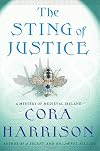
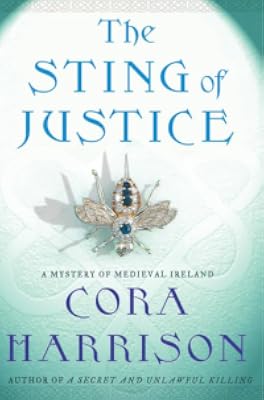
The year is 1509 and autumn has come to western Ireland. When Mara attends the funeral of a local priest, the last thing she expects to discover is a corpse on the church steps. As Mara investigates, she is determined to bring a killer to justice.Tags
Recommendations





Member Reviews
These mysteries, set in the Burren in County Clare, Ireland, just get better and better! The mysteries form the basis for creating a rich cast of characters in this time (1509) and place. While, like all mysteries set in a small population, the number of suspicious deaths mount up in a ridiculous way, Harrison is doing well to make sure the reader is engrossed both by the historical dimension (the use of Brehon law, the customs, food, clothes etcetera of the time) and the way the characters behave when confronted with a mystery, either as a suspect or an accuser, or witness. Mara, the Brehon, involves her students in her cases and uses them effectively to sort out the complexities of Brehon law and the cases, through dialogue and show more action. Can't wait to start the next one! ****1/2 show less
This is the third book in the Burren Medieval Mystery series starring Mara, the Brehon (Judge) of the Burren. The Burren is a limestone covered area on the west coast of Ireland just south of Galway. In addition to being a Judge Mara runs a school for young people to learn to be lawyers and judges.
The year is 1509 and the book starts on Samhain (Hallowe’en as we know it). Mara attends the funeral of the beloved parish priest. As the body of the priest is being carried out to the graveyard another body, of considerably more recent vintage, is discovered blocking the door. It is the silversmith, Sorley, and he appears to have died of bee stings. He was known to be afraid of bees and he was sitting in the churchyard a few feet away from show more a bee hive that had fallen over. On further investigation it is discovered that the niche the beehive was sitting in had a stone taken from the back. The beehive also had a small hole in it as if a stick had been shoved into it. For these reasons Mara believes the death is a murder.
There are plenty of people who didn’t like the silversmith. In addition to crafting silver he also owned a silver mine up in the mountains. His miners lived in squalor and there had been a recent accident at the mine which killed some people and badly maimed another. The effluent from his mine has poisoned the land and cows of a nearby farmer. Sorley also was a moneylender and someone may have thought his debt would be erased if Sorley died. But possibly the ones with the best motives are Sorley’s kin. He had divorced his wife a number of years ago on probably trumped up charges of adultery. Recently he had disowned his son who was starving trying to eke out a living as a farmer. Sorley had recently made a will making his daughter his sole beneficiary and, at the same time, arranged a marriage for her to the local bard. Either the daughter or her fiancé may have decided to get rid of him before he could change his mind.
Mara and her scholars investigate all these connections while also taking part in the region’s activities. The description of this area and the people who live in it are what gives this series its charm. I am also fond of the description of the Irish law that the Brehon administers. There is no concept of imprisonment or corporal punishment for crimes. The penalty for murder is to pay silver or cows in an amount dependant in part on the honour price of the deceased. If the murderer does not admit to the murder within 48 hours then the fine is doubled. This contrasts with the English law which administers a death sentence for even small thefts.
The Irish were also much more liberal in terms of women’s rights. From property ownership to professional standing women in this medieval kingdom had rights that are equivalent to women’s rights in modern European and North American society.
I’ll be looking for more books in this series. show less
The year is 1509 and the book starts on Samhain (Hallowe’en as we know it). Mara attends the funeral of the beloved parish priest. As the body of the priest is being carried out to the graveyard another body, of considerably more recent vintage, is discovered blocking the door. It is the silversmith, Sorley, and he appears to have died of bee stings. He was known to be afraid of bees and he was sitting in the churchyard a few feet away from show more a bee hive that had fallen over. On further investigation it is discovered that the niche the beehive was sitting in had a stone taken from the back. The beehive also had a small hole in it as if a stick had been shoved into it. For these reasons Mara believes the death is a murder.
There are plenty of people who didn’t like the silversmith. In addition to crafting silver he also owned a silver mine up in the mountains. His miners lived in squalor and there had been a recent accident at the mine which killed some people and badly maimed another. The effluent from his mine has poisoned the land and cows of a nearby farmer. Sorley also was a moneylender and someone may have thought his debt would be erased if Sorley died. But possibly the ones with the best motives are Sorley’s kin. He had divorced his wife a number of years ago on probably trumped up charges of adultery. Recently he had disowned his son who was starving trying to eke out a living as a farmer. Sorley had recently made a will making his daughter his sole beneficiary and, at the same time, arranged a marriage for her to the local bard. Either the daughter or her fiancé may have decided to get rid of him before he could change his mind.
Mara and her scholars investigate all these connections while also taking part in the region’s activities. The description of this area and the people who live in it are what gives this series its charm. I am also fond of the description of the Irish law that the Brehon administers. There is no concept of imprisonment or corporal punishment for crimes. The penalty for murder is to pay silver or cows in an amount dependant in part on the honour price of the deceased. If the murderer does not admit to the murder within 48 hours then the fine is doubled. This contrasts with the English law which administers a death sentence for even small thefts.
The Irish were also much more liberal in terms of women’s rights. From property ownership to professional standing women in this medieval kingdom had rights that are equivalent to women’s rights in modern European and North American society.
I’ll be looking for more books in this series. show less
Another mystery set in Ireland of the 16th century, richly written with historical detail and deeply-engrossing characterization. Harrison's stories are all about the Brehon (judge and lawyer) solving the crimes in the Burren, a regional kingdom in County Clare (Western Ireland). The stories are very engaging, peopled by such genuine individuals in their daily lives in a way that brings to life what it was like living in the 1500's.
Of special interest to me was how strongly supportive the communities were and how the practice of Irish law was quite wonderfully sensible (compared to the punitive, arrogant English law that was slowly usurping Ireland's thousands' year-old ruling by Brehon laws). I appreciated that women's rights were show more protected in ways from which today's societies could well learn. This marvellous background keeps the stories fresh and the suspense in solving misdeeds and murders compelling reading. A series well-worth reading for those seeking their next books in historical fiction. show less
Of special interest to me was how strongly supportive the communities were and how the practice of Irish law was quite wonderfully sensible (compared to the punitive, arrogant English law that was slowly usurping Ireland's thousands' year-old ruling by Brehon laws). I appreciated that women's rights were show more protected in ways from which today's societies could well learn. This marvellous background keeps the stories fresh and the suspense in solving misdeeds and murders compelling reading. A series well-worth reading for those seeking their next books in historical fiction. show less
It's 1509, Turlough and Mara have set a date for their wedding and Turlough is fixing up a castle for the two of them to live in. When Mara attends the funeral of a local well-respected priest When people come out of the funeral they find a local merchant Sorley, dead from bee stings. Apparently an accident but Mara isn't completely convinced. So she investigates and discovers plots within plots and hidden truths.
It's an interesting story and I enjoyed the read, even if the name Mara does hit a certain modern resonance with me, the snippets of Brehon Law are interesting, the use of the law as chapter openings and how Mara discusses points of law with her students are an interesting way of reminding me how the law worked. Having studied show more Early Irish Law I find it an interesting series and the comparison with some of the English Law at the time is also interesting. show less
It's an interesting story and I enjoyed the read, even if the name Mara does hit a certain modern resonance with me, the snippets of Brehon Law are interesting, the use of the law as chapter openings and how Mara discusses points of law with her students are an interesting way of reminding me how the law worked. Having studied show more Early Irish Law I find it an interesting series and the comparison with some of the English Law at the time is also interesting. show less
On April 21, 1509, Henry VIII became king of England and Lord of Ireland. His ascension to these titles mattered little to the Irish living in Western Ireland in the kingdom of Thomond ruled by King Turlough Donn O'Brien, descendant of the famous warrior King Brian Boru. Although the English had made inroads into Ireland under the Norman kings, and Dublin was ruled by English lords, Thomond was well beyond the Pale of significant English influence. And in the Burren, the northernmost part of King Turlough's kingdom, the person who was responsible for administering justice was the king's Brehon—investigator, judge, scholar and professor of the ancient Irish laws, Mara O'Davoren.
In Mara O'Davoren, Cora Harrison has created a thoughtful show more and intuitive sleuth who operates in a most intriguing milieu. The daughter of a Brehon, Mara is steeped in the traditions and rituals of ancient Irish law. She not only administers the justice in the Burren, but also educates the young students at the law school at Cahermacnaghten, who will follow in her footsteps. Thoroughly independent, she has long ago divorced her husband (scrupulously following Brehon law) and raised her daughter, now married to a wine merchant in Galway, but Mara is courted by the widowed King Turlough who would make her his queen.
Mara loves her home and school in the Burren. It is a wild land — covered with limestone rocks, etched with grykes full of wild flowers and forage for cattle, hollowed by caves and dotted with ancient megaliths. The residents follow the ancient rhythms of ancient Celtic ritual interspersed with Christian tradition. Each of the novels occurs during the celebration of a communal holiday during the year 1509. In My Lady Judge (2007), Mara's assistant master, Colman Lynch, is found with a knife in his throat after the bonfire celebrations of Beltane (May 1). At the September Michaelmas Fair, the greedy steward of the MacNamara clan is beaten to death in the churchyard—a deadly Michaelmas Tribute(2008: published in the USA as A Secret and Unlawful Killing ). And on Samhain (October 31), the wealthy silversmith, Sorley Skerrett, is stung to death by a swarm of bees as he attends the funeral service of the local priest. Mara must pursue The Sting of Justice (2009).
Aided by her students, Mara carefully uncovers the truth behind each death and renders justice so the peace of the community may prevail. As described in The Sting of Justice, the ancient Irish Brehon law is civil, not criminal: "There were no prisons, no savage punishments. The Brehon delivered judgement; the fine was paid. The clan tradition of responsibility for the family ensured this obedience from its members."
In Cora Harrison's Mysteries of the Burren series, the reader is invited to explore 16th century Irish life, law and history with an engaging set of recurring characters.
First published in Belletrista 3: http://www.belletrista.com/2010/issue3/reviews_10.php show less
In Mara O'Davoren, Cora Harrison has created a thoughtful show more and intuitive sleuth who operates in a most intriguing milieu. The daughter of a Brehon, Mara is steeped in the traditions and rituals of ancient Irish law. She not only administers the justice in the Burren, but also educates the young students at the law school at Cahermacnaghten, who will follow in her footsteps. Thoroughly independent, she has long ago divorced her husband (scrupulously following Brehon law) and raised her daughter, now married to a wine merchant in Galway, but Mara is courted by the widowed King Turlough who would make her his queen.
Mara loves her home and school in the Burren. It is a wild land — covered with limestone rocks, etched with grykes full of wild flowers and forage for cattle, hollowed by caves and dotted with ancient megaliths. The residents follow the ancient rhythms of ancient Celtic ritual interspersed with Christian tradition. Each of the novels occurs during the celebration of a communal holiday during the year 1509. In My Lady Judge (2007), Mara's assistant master, Colman Lynch, is found with a knife in his throat after the bonfire celebrations of Beltane (May 1). At the September Michaelmas Fair, the greedy steward of the MacNamara clan is beaten to death in the churchyard—a deadly Michaelmas Tribute(2008: published in the USA as A Secret and Unlawful Killing ). And on Samhain (October 31), the wealthy silversmith, Sorley Skerrett, is stung to death by a swarm of bees as he attends the funeral service of the local priest. Mara must pursue The Sting of Justice (2009).
Aided by her students, Mara carefully uncovers the truth behind each death and renders justice so the peace of the community may prevail. As described in The Sting of Justice, the ancient Irish Brehon law is civil, not criminal: "There were no prisons, no savage punishments. The Brehon delivered judgement; the fine was paid. The clan tradition of responsibility for the family ensured this obedience from its members."
In Cora Harrison's Mysteries of the Burren series, the reader is invited to explore 16th century Irish life, law and history with an engaging set of recurring characters.
First published in Belletrista 3: http://www.belletrista.com/2010/issue3/reviews_10.php show less
The year of 1509 had brought a golden autumn to the west of Ireland. When Mara attends the funeral of a local priest, the last thing she expects is a corpse to be discovered lying on the church steps - a man stung to death.
Have this title already on Kindle, so charge it up and read away
Members
- Recently Added By
Author Information

67+ Works 1,810 Members
Cora Harrison was born in County Cork. She taught primary-school children for twenty-five years before moving to Kilfenora, County Clare, to live on a small farm where there used to be an Iron-age fort. Her Drumshee Chronicles are highly successful in Ireland, as are her medieval mysteries for adults, including My Lady Judge, which have recently show more been published for the first time in the UK. This is her third book for Piccadilly Press. show less
Awards and Honors
Distinctions
Series

Common Knowledge
- Canonical title
- The Sting of Justice
- Original publication date
- 2009-12 (US) (US)
- People/Characters
- Mara, Brehon of the Burren; Turlough Donn O'Brien, King of Burren; Malachy; Nuala; Brigid; Cumhal (show all 8); Aoife O'Heynes; Muiris O'Heynes
- Important places
- The Burren, County Clare, Ireland
- Dedication
- In memory of my father,
William D. Mockler
1896-1959
He was a lawyer who loved his profession and appreciated all the intricacies of the law, whether Roman Law, Common Law or Brehon Law, and it was from h... (show all)m that I acquired the interest that culminated in these stories of the ancient laws of Ireland. - First words
- There is something evocative about the words: the west of Ireland. (prologue)
The year of 1509 had brought a golden autumn to the west of Ireland. (main story) - Last words
- (Click to show. Warning: May contain spoilers.)And they would talk of their future life together.
Classifications
Statistics
- Members
- 103
- Popularity
- 315,217
- Reviews
- 7
- Rating
- (3.60)
- Languages
- English, French
- Media
- Paper, Ebook
- ISBNs
- 8
- ASINs
- 3